

Support in the Wyoming Legislature remains strong for a bill that would provide greater personnel records access for police misconduct investigations — an issue that arose following an effort to decertify former Albany County law enforcement Derek Colling, who shot and killed local resident Robbie Ramirez in 2018, stalled after a court blocked the investigating agency’s access to his personnel files.
The Senate Judiciary Committee endorsed a bill Wednesday that would allow the Peace Officer Standards and Training Commission to access personnel records it says are necessary to review police misconduct allegations. It’s the second time the Legislature has considered such a bill and the first time the proposal has made it to the Senate.
The issue
The legislation stems from the shooting of Ramirez by then-Albany County sheriff’s deputy Colling.
Ramirez, who was unarmed and living with mental illness, was the third person Colling killed on duty. While it and the previous shootings were ruled justified, critics questioned why Colling was even hired in Albany County after his involvement in two previous shootings in Las Vegas, as well as being fired following allegations he assaulted a videographer there.
Colling resigned from the Albany County Sheriff’s Office in 2021. But he hasn’t been decertified by POST — the state agency responsible for training, certifying and decertifying law enforcement in Wyoming. That means he isn’t disqualified from future law enforcement work in the state.
POST requested Colling’s personnel records from Albany County to investigate him. But Albany County refused to release the records to the agency. While the refusal wasn’t unusual, it highlighted how ambiguity in Wyoming statute limits POST’s authority to obtain records.

The matter went to court. In August, an Albany County judge denied POST’s request for Colling’s personnel files, concluding that the Wyoming Public Records Act provides grounds to deny access to personnel files, as well as medical, psychological and sociological data, and that nowhere in state statute is there an exception granting POST access to this information for investigations.
A potential solution
The proposed legislation aims to address this statutory shortcoming.
The measure would grant POST access to police personnel records for “purposes of investigating or determining a peace officer’s initial certification, continuing certification, suspension, revocation or termination.” It also specifies agencies have to fulfill requests within 30 days. Unfulfilled requests would trigger district court intervention.
A similar version of the bill, sponsored last session by Sen. Cale Case (R-Lander) and Reps. Art Washut (R-Casper) and Karlee Provenza (D-Albany), died before making it to the House floor for debate.
But the Legislature has so far shown strong support for this year’s version of the bill. Lawmakers on the Senate Judiciary Committee gave the measure their unanimous approval. POST Director Chris Walsh also told lawmakers on the committee that he doesn’t “have any concerns with the bill.”
Law enforcement concerns
Other groups have some trepidation about the legislation, saying it could lead to unintended public access to sensitive records.
“Our concern is what does it inadvertently do?” Wyoming Highway Patrol Lt. Col. Josh Walther said of the bill, adding that he believes it “really opens the door to a lot of things that maybe aren’t germane to the complaint itself.”
“So that’s our concern, not at face value, but inadvertently giving access to deeper personnel records that we really have to protect.”

Allen Thompson, executive director of the Wyoming Association of Sheriffs and Chiefs of Police, told lawmakers that some of the language in the bill “does beg the question if the POST commission might be required by law to release something that wasn’t intended by this bill.”
Walsh, the POST director, noted that in cases where he has in the past used personnel files in a court hearing, he has emphasized that he doesn’t want these records to be part of the public file. In these instances, POST only releases the findings and facts from the judge and the final commission order, he said.
Thompson and Wyoming Highway Patrol Col. Tim Cameron suggested the committee strike language in the legislation that they believe could open the door to unintended public access. But the committee didn’t take up the suggestion, arguing that doing so would take out the “meat of the bill.” Provenza also held that viewpoint.
“If we want to protect the sanctity of the legitimacy of law enforcement, we have to allow for an accountability mechanism,” she said. “If you strike those lines, I don’t think that exists anymore,” she said.
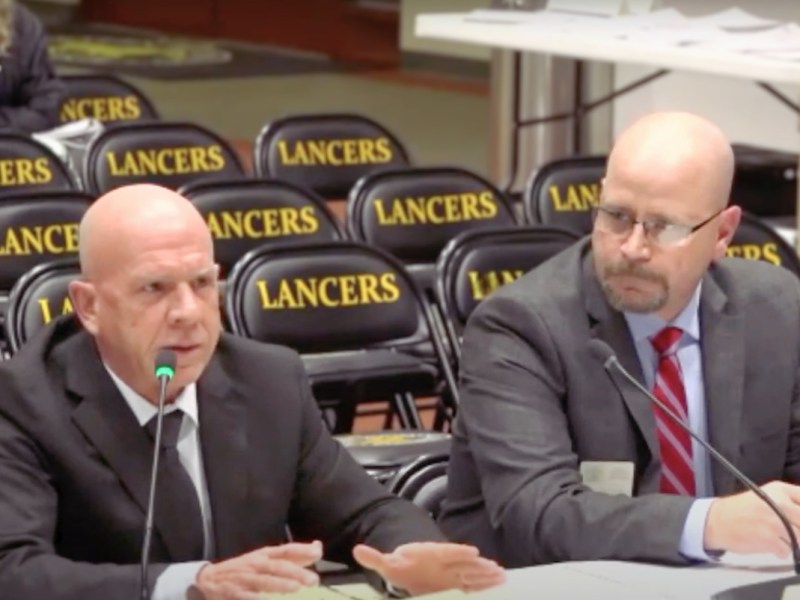

Asked if the Wyoming Highway Patrol would oppose the bill without changes, Cameron told WyoFile after the committee’s vote that the patrol isn’t “opposed to the intent of the bill,” but reiterated the agency’s concern that certain personnel records could unintentionally become public under the measure.
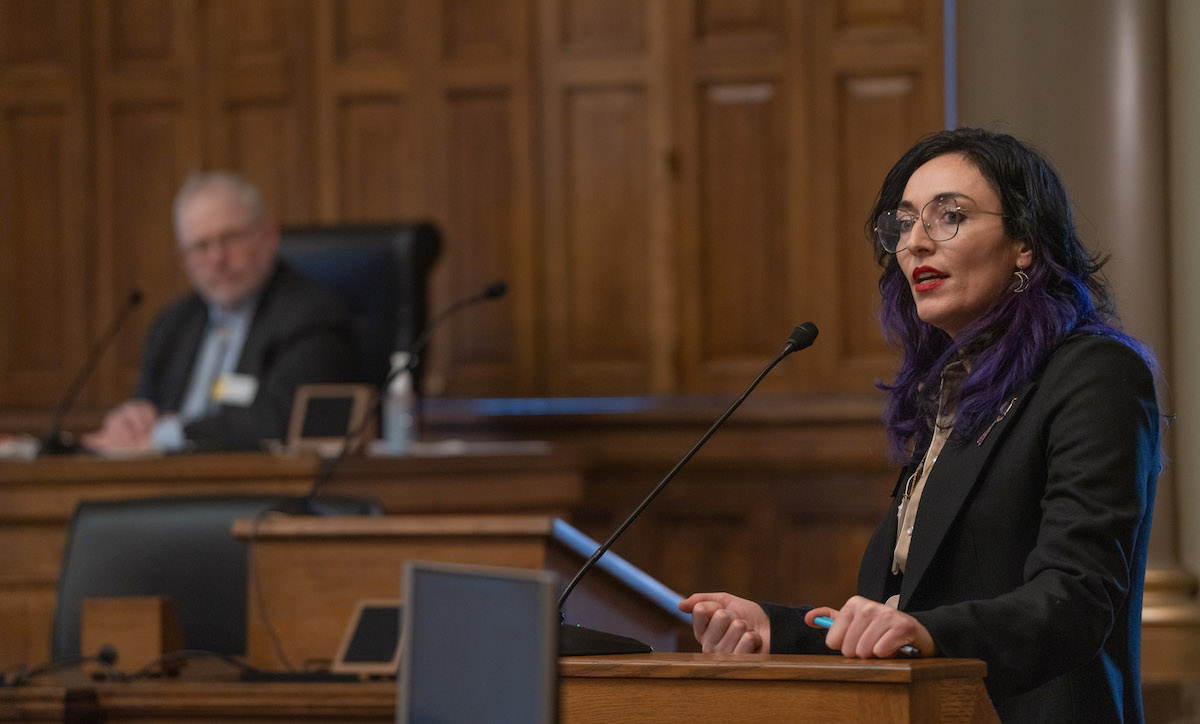
Provenza told WyoFile after the committee’s unanimous vote that she’s optimistic the bill will succeed in the Senate given POST’s testimony on the legislation.
“I don’t know what the Senate will do, but I’m hopeful that they’ll stand with transparency and accountability,” she said.

There’s 2 kinds of cops: bad cops and the supposed “Good” cops that look away and of course both don’t want the public to access records