


This story is part of WyoFile’s collaborative legislative initiative — a coordinated effort by partner newsrooms to deliver comprehensive coverage of Wyoming’s 2025 general session.
CHEYENNE—A bill to offer widespread property tax relief could have adverse impacts on local governments and tax authorities, according to various organizations.
House Bill 169, “Homeowner tax exemption-2025 and 2026,” would exempt 50% of a home’s first $1 million in fair market value from property tax assessment. In Sheridan County, that would mean the median home would be assessed for a fair market value of $143,241.50, rather than an estimated value for 2024 of $386,483.
The bill includes a provision that the exemption would only apply in tax years 2025 and 2026; it would no longer be in effect in 2027 and beyond.
Rep. Tony Locke, R-Casper – the bill’s primary sponsor – said the bill would apply to all residential structures in Wyoming, in part because it’s a short-term effort.
“Wyoming residents are pushing for tax relief, for sure, and this is really just short-term relief in a bigger picture where we’re trying to give initial tax relief and ultimately look at tax relief to avoid the bubble,” Locke said.
Gov. Mark Gordon vetoed a similar bill following the Wyoming Legislature’s 2024 budget session.
The bill also includes a $225 million appropriation to replace up to half of the revenue lost as a result of the exemption. Even with a backfill, many of Wyoming’s 603 entities with taxing authority could be adversely impacted.
“The effect this could have to some of the smaller counties and the smaller districts (and) communities could be devastating,” Converse County Assessor Dixie Huxtable said.
“We acknowledge there’s a backfill of 50% of the exempted revenue, but even a 25% reduction to some of these special districts and smaller communities could be devastating.”
Wyoming County Commissioners Association Executive Director Jerimiah Rieman shared a similar sentiment, adding it would likely force counties to become more reliant on state funding.
“If we don’t make some fundamental changes to this legislation … this will have some serious consequences at the local level,” Rieman said. “You will see a reduction or elimination of certain services; you will see that there are jobs lost in some jurisdictions if we don’t make some changes.”

Should the exemption be signed into law, Wyoming Association of Community College Trustees Executive Director Erin Taylor said it would likely place more of an onus on the students of Wyoming’s community colleges.
“Right now, that’s a harder place to be, especially when we’re trying to train the workforce across the state,” Taylor said.
Locke, who also serves as chair of the House Revenue Committee, said he’d like the committee to break from its schedule to help push the bill through the legislative process.
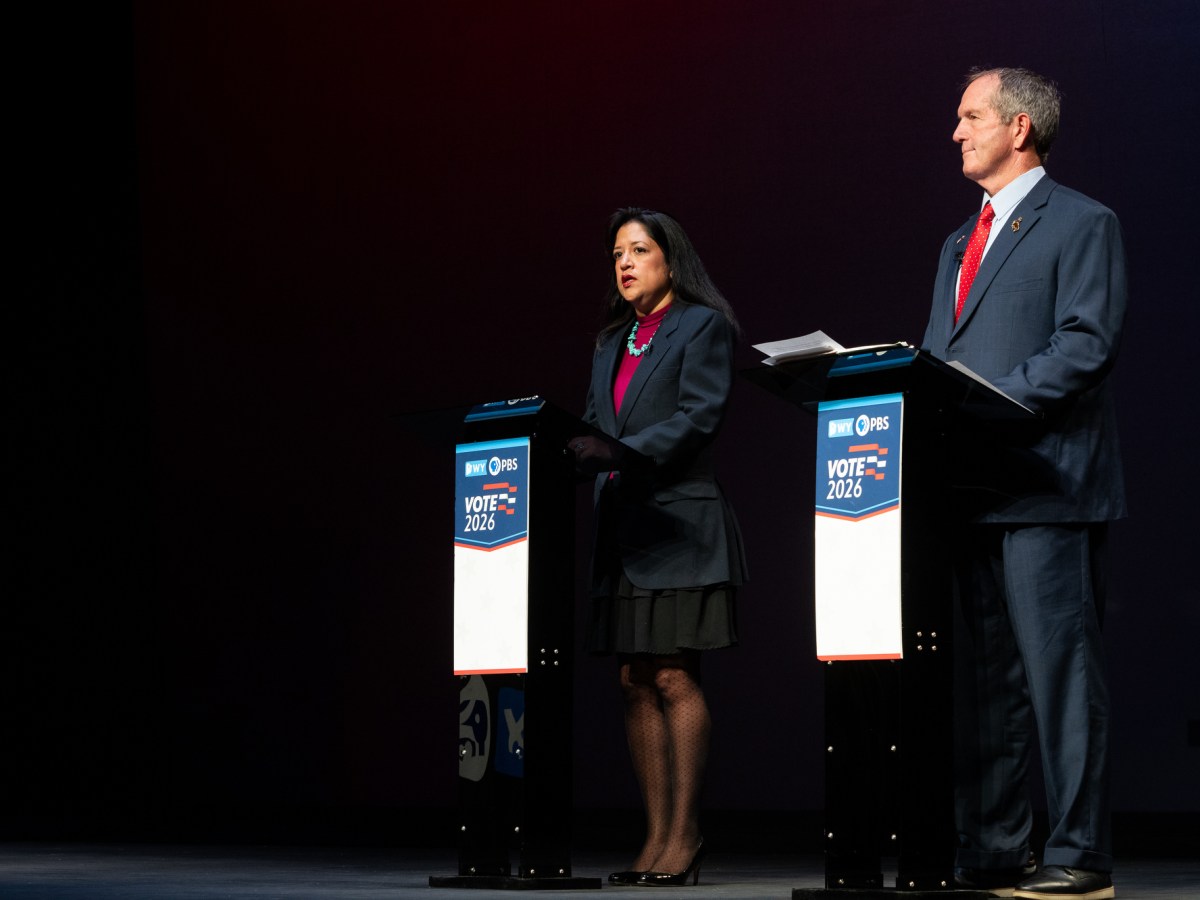
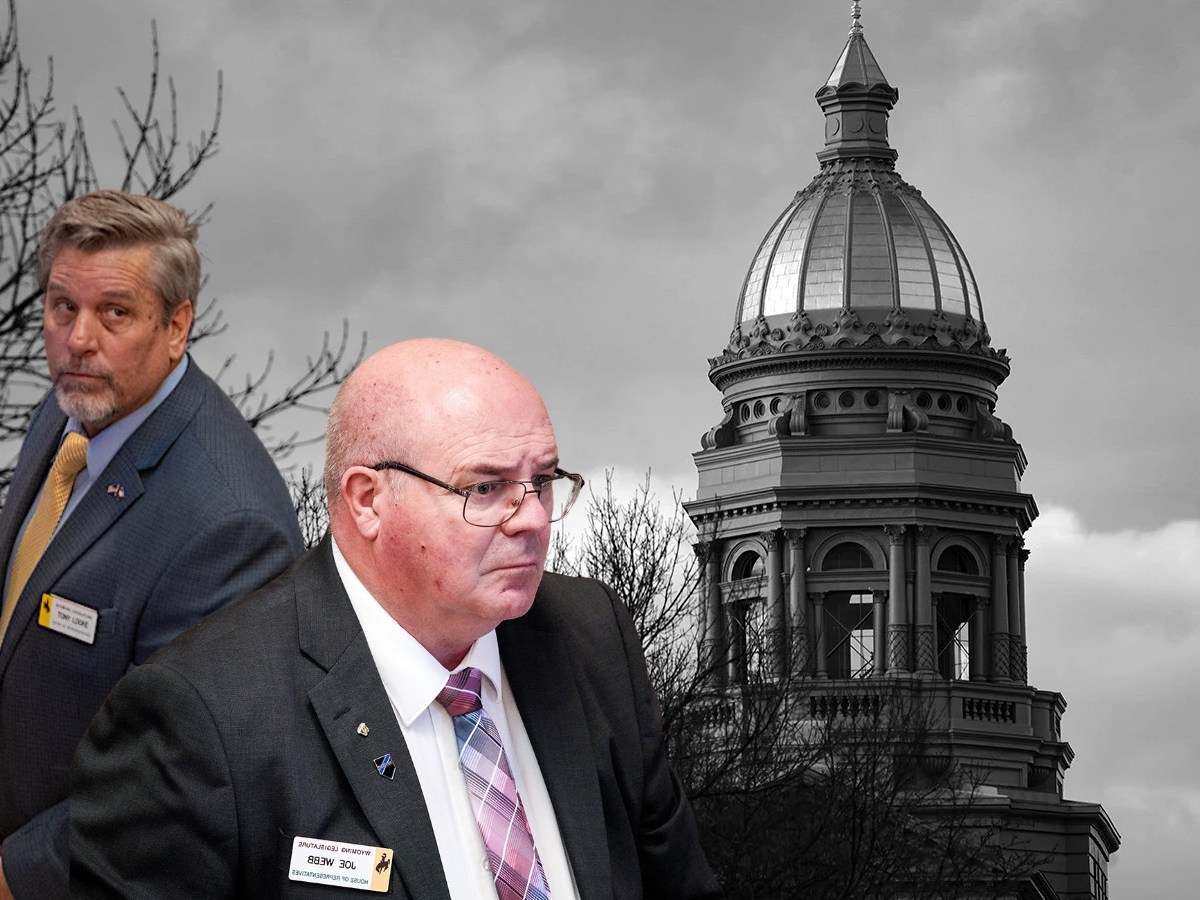
The bill is similar to a priority in the Wyoming Freedom Caucus’ “Five and Dime Plan” – a slate of five bills the caucus hopes to pass through the House in the session’s first 10 days – which aims to provide Wyomingites with a 25% residential property tax cut with a backfill to local governments. Locke was endorsed by the caucus in the 2024 election.
“We’ll probably shoot for (meeting upon adjournment Friday) to try to make sure we get this through the process and moving forward,” Locke said. “That way, we can give it the attention it needs.”
The Legislature began its 37-day general session Tuesday, and it is currently slated to end March 6.


The real issue is the gross increase in property assessment due to inflation of property value by the assessor. A limit of increase of the yearly assessment to 4% would solve the problem without changing our tax structure and would not require a backfill or other drastic measures to make up for the losses by local districts.
Backfill is problematic as the only places available for it are the energy industry or the state savings accounts many of which are inviolate.
The main argument of those who favor this 50% change is that we spend too much and that it will decrease government spending if enacted. I find that to be unlikely. Why don’t they propose a spending cut on it’s own. Instead, they propose a backfill. It shows that they are not sincere about their motivation.
OK everybody, let’s be honest here and admit that the alleged property tax burden, is in fact a red herring to garner political support from Wyoming tax payers. This is directed at you folks out there crying for tax relief, how much money do you spend monthly for cell phone service, internet access, streaming services, cable, or satellite TV. I’ll wager that for the majority of folks, their annual expense for these services are higher than their property tax and yet these are not considered essential services. (essential meaning absolutely necessary) The services provided by your local taxing authority benefit all, and are services that you as voters have deemed “necessary”. Is there room to economize, downsize local government spending, probably. That’s where the issue of property tax relief should start. Not once during the past several years as property valuations skyrocketed did I hear of any county or city government decreasing their mil levy…..more money in their coffers, oh boy, lets spend it! Do you see where I’m coming from. People, get your priorities straight, decide what’s best for you. If you can afford all of the non-essential services that you pay for, I think you can probably afford your property taxes as well.
So how did the Counties and School Districts survive in 2020 and earlier, before increasing property valuations created a windfall of tax dollars?
They paid lower prices because inflation had not gone up yet. It’s not like counties or schools don’t pay higher prices now like the rest of us.
Continuation of previous comments. There is another scenario which could provide back filling money which I overlooked. That being higher prices for our energy production which I would define as oil in the $80-100 per barrel range, natural gas in the 3.50- to 5.00 per mcf, coal over $15.00 per ton, uranium over ____ per lb of yellow cake, trona over _____ per ton, bentonite over ____ per ton, etc. However, these prices are very problematic and could actually decline versus today’s commodity prices; and therefore, are not reliable for purposes of providing future back filling money.
The obvious goal here is to destroy the state’s public education system
Backfill money??? What backfill money?? There’s only one source for backfill money and that is the energy industry in Wyoming which already accounts for about about 75% of our tax revenue. There’s two ways to generate this so called backfill money – increase the taxes on the energy industry or vastly expand the energy industry such that there are more industrial facilities to tax.
My modest property taxes support the school district to the tune of about $900 per year alone — but what about the hospital district, the fair board, weed and pest, county government, cemetery district and so on. Are they proposing cutting all of these districts and then backfilling with industrial taxes on the energy businesses??? Seems that the case. The energy sector is already subsidizing each citizen of Wyoming nearly $2500 in tax reductions – thats a lot folks and accounts for our low taxes and no state income tax. Are you aware that we export our taxes to consumers in other states by collecting severance taxes and ad valorem taxes on energy commodities such as coal??
Should back filling become necessary it can only mean that more energy production projects would be fast tracked in Wyoming to include solar and wind generated energy. The state would become even more dependent on energy income and approve almost every energy related project with minimal review and conditions.
Its a huge mistake to alter the present taxation system – after all, we have some of the lowest taxes in the nation right now. If it ain’t broke, don’t fix it. the hundreds of districts in Wyoming are totally dependent on property taxes and shouldn’t be subjected to backfilling financial support which is problematic at best.
Wyoming is in the list of states of the top ten states with the lowest tax burden, and is in the top ten states with the highest per capita income. “Men decided that it was better to pay taxes than to fight among themselves; better to pay tribute to one magnificent robber than to bribe them all.”
Will Durant
Like most of the proposed legislation that cuts property taxes, HB169 does nothing for renters and small businesses. This could be devastating to our workforce and our local economies as well as to essential government services. We need to redesign our system of taxation, not slash at it blindly.
Of course actual need for spending money depends on who is doing the spending and for what. New plushier chairs for the politician and more money to go more places to inform folks why he should be reelected to decide how much of the money one earns he can be allowed to spend for his own needs. The politician always has a much better place to spend it.
Thank you Wyoming Press Corps for partnering with WyoFile to deliver comprehensive news coverage of the 2025 session.