

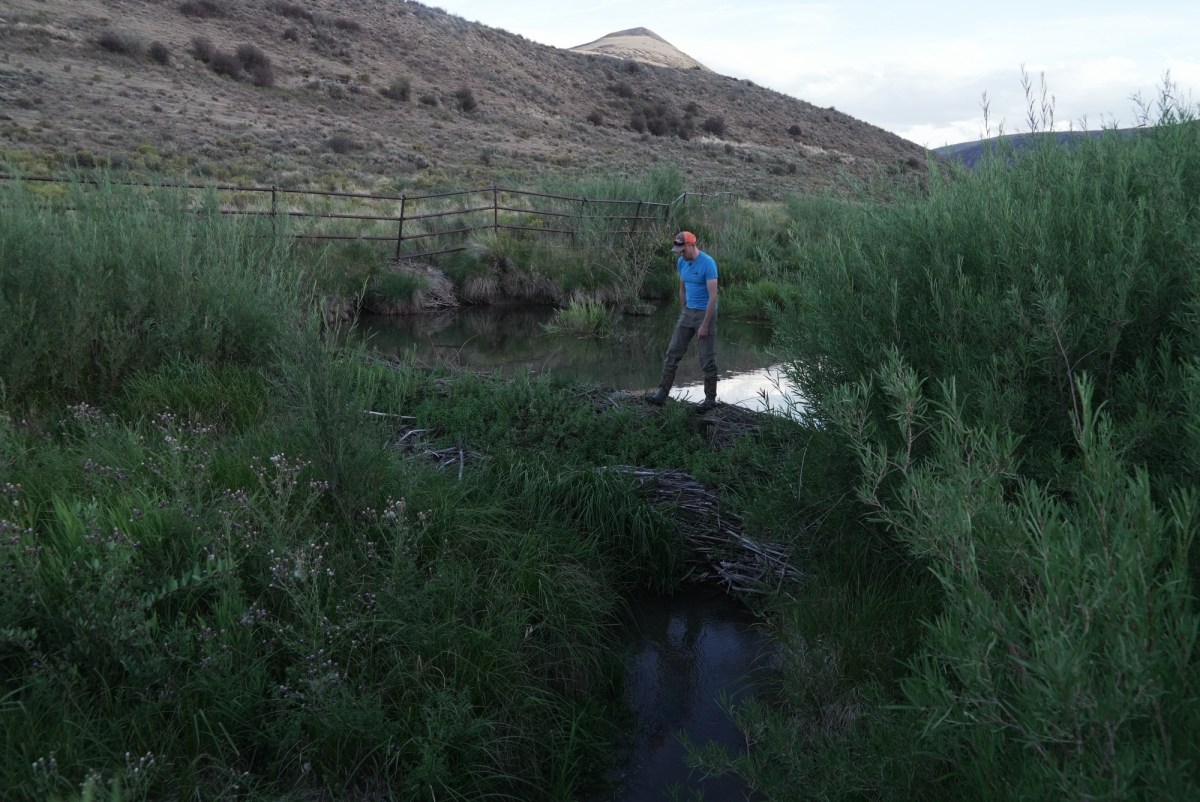
GREEN RIVER—On Jackson Ramsay’s family ranch late in the summer, there were few signs it had just weathered the worst-ever winter snowpack and record-setting heat.
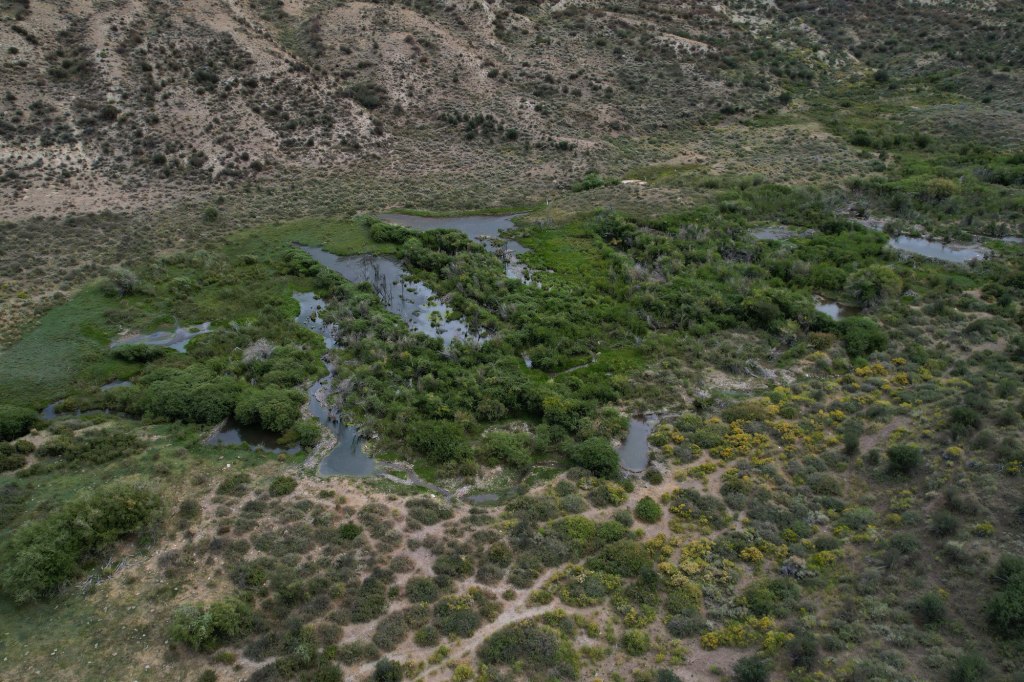
Water twisted unhurriedly through the land, splayed into various branches that rejoined to form pools behind mounds of piled sticks. Young willows stretched from the bank across an expanse roughly the length of a football field, fed from moisture below.
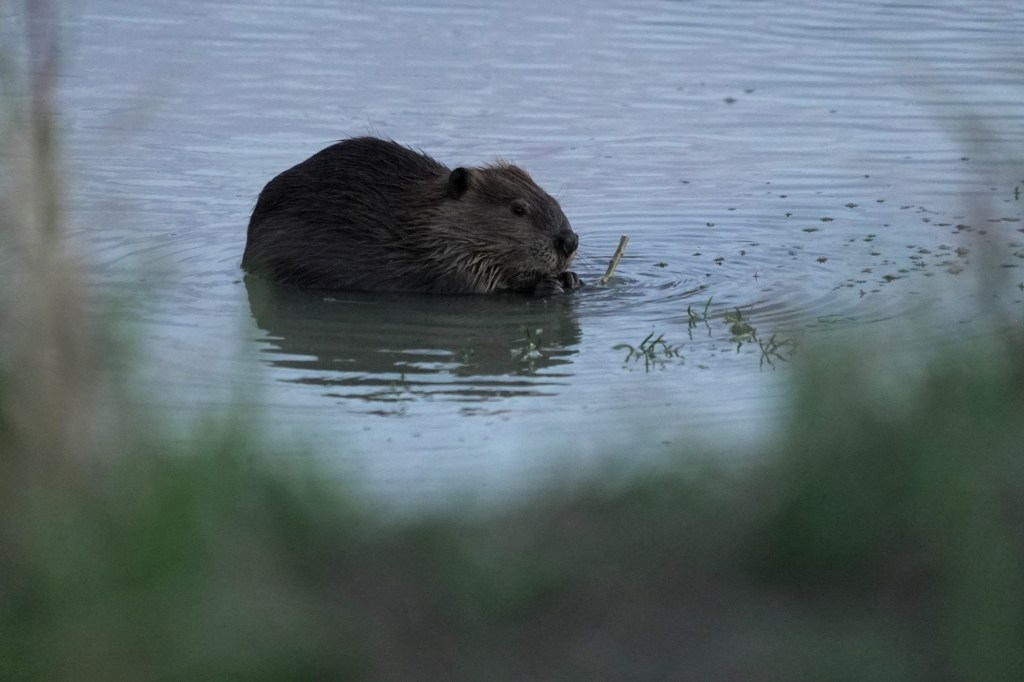
Then a familiar brown head emerged from a deep pool: a beaver.
“They’re thriving here,” Ramsay said, beaming at the creature. “They benefit us, and hopefully we benefit them.”
The Ramsays’ ranch in southwest Wyoming is one of many areas embracing the semiaquatic rodents as nature’s engineers. Conservation groups and government agencies are increasing their use of “starter homes” made of wood and brush to encourage the creatures to move in and expand upon the initial structures. Beaver dams slow moving water in a way that promotes localized year-round availability, creates habitat for native fish and provides a natural break that slows wildfires.
Proponents hope that by increasing active beaver dams, the ecosystem will grow more resilient. This is increasingly vital as climate change and overuse make the American West drier, experts say.
“In their blood, they have one thing and that’s to dam streams up and make deep water habitat so they can survive,” said Nick Walrath, a project manager for the nonprofit Trout Unlimited. He first pitched the idea to Ramsay, who now proudly hosts more than 100 human-made beaver dams in addition to natural ones.
Build it, and they will (hopefully) come
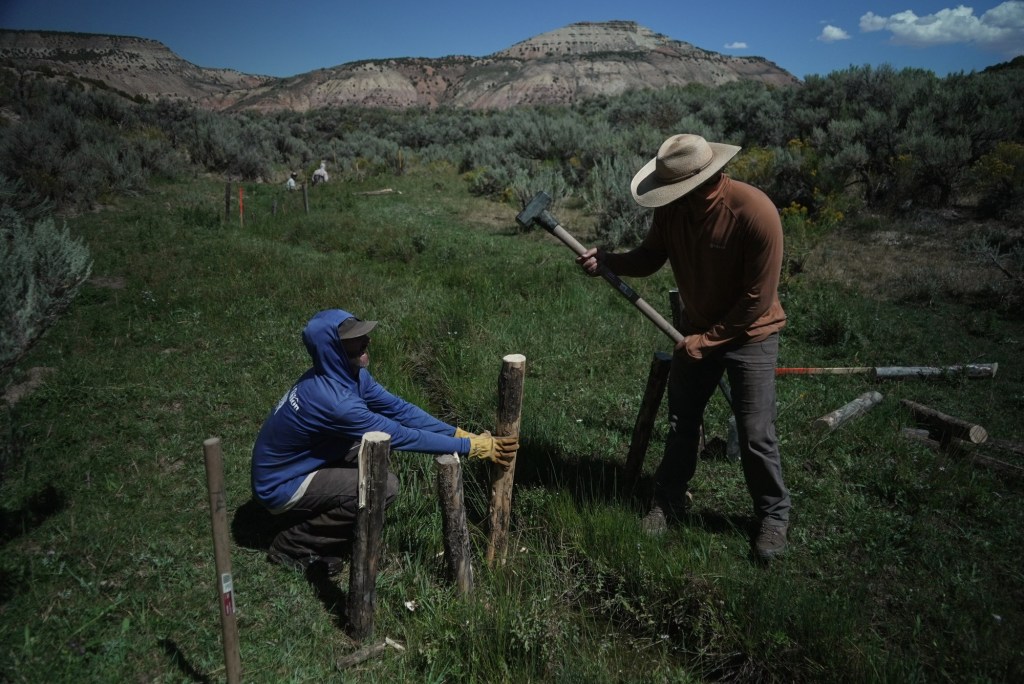
Walrath has overseen construction of some 500 “starter homes” for beavers across snow- and spring-fed streams — including Trout Creek on the Ramsay ranch — that form the headwaters of the Green River, the largest tributary to the Colorado River. The materials are simple: several raw posts jammed vertically into streambeds, branches loosely woven around the posts and mud to pack it down.
The structures, known as beaver dam analogs, are typically built near existing beaver families to encourage them to “move in” and customize them. The ultimate goal is to cultivate thriving beaver populations in key watersheds across both public and private land in the western U.S.
“Beavers are uniquely positioned as our allies in the battle against climate change,” said Samantha Miller, senior carnivore campaigner at the Center for Biological Diversity.
Without beavers, water can also move so fast that it erodes the bank.
“Where the water is held there, sediment builds up, the soils build, vegetation takes off and really makes it lush,” Ramsay said. “They’re really beneficial when they build where you want them to, but they can be a nuisance when they build where you’re trying to divert water.”
Not everyone wants a dam
Flooding caused by beaver dams may be a boon for ecosystems, but can present problems for homes and infrastructure built near streams.
Utah State University operates the state’s beaver relocation program that takes unwanted beavers from private property and moves them to remote streams where they’re needed. It uses live-trap cages and quarantines the beavers at a facility, aiming to keep families together and prevent the spread of invasive species, before re-releasing them in wilder areas. The program has moved approximately 100 beavers each year since 2019.
The state bans lethal beaver trapping along key watersheds where it is trying to grow the population. It also pays trappers to live-trap beavers to hand over to trained experts for relocation.
Aquatic ecologist Nick Bouwes, a Utah State faculty member who helped launch the program, said he received countless requests to get rid of the furry creatures that had caused a nuisance for property owners. But before moving them, he’d recommend solutions to coexist. There’s a flexible tube known as a pond leveler that runs through a beaver dam and acts as an overflow drain, as well as “beaver deceiver” cages that protect drainage pipes from damming and fencing for tree base protection.
Still, if beavers are unwanted, nonlethal means are worth the effort because the animals can benefit other water bodies, Bouwes said.
Beaver populations still need protecting
Beaver populations have made a strong recovery since fur trappers nearly caused their extinction in the 19th century, but protection is still needed because of their role in preserving scarce water resources in the American West, Miller said.
Oregon and Wyoming limit commercial beaver trapping, while California has banned it altogether.
Walrath and other advocates for beaver expansion understand that a lot more work is needed to make a meaningful difference across the Colorado River basin.
“It’s a drop in the bucket,” he said of the work they’ve done so far. But after the worst snowpack ever measured, followed by record-setting summer heat, any effort is “much more meaningful.”
On a recent August morning, Walrath and his crew were putting up several “starter homes” on private grazing land along Spring Creek in western Wyoming. Water rose several feet across the dry, eroded bank in a valley thick with sagebrush shortly after the structures were erected.
“If we can replicate that a hundred, a thousand times over the entire Colorado River basin, we can have a much larger impact to the system itself,” he said.