

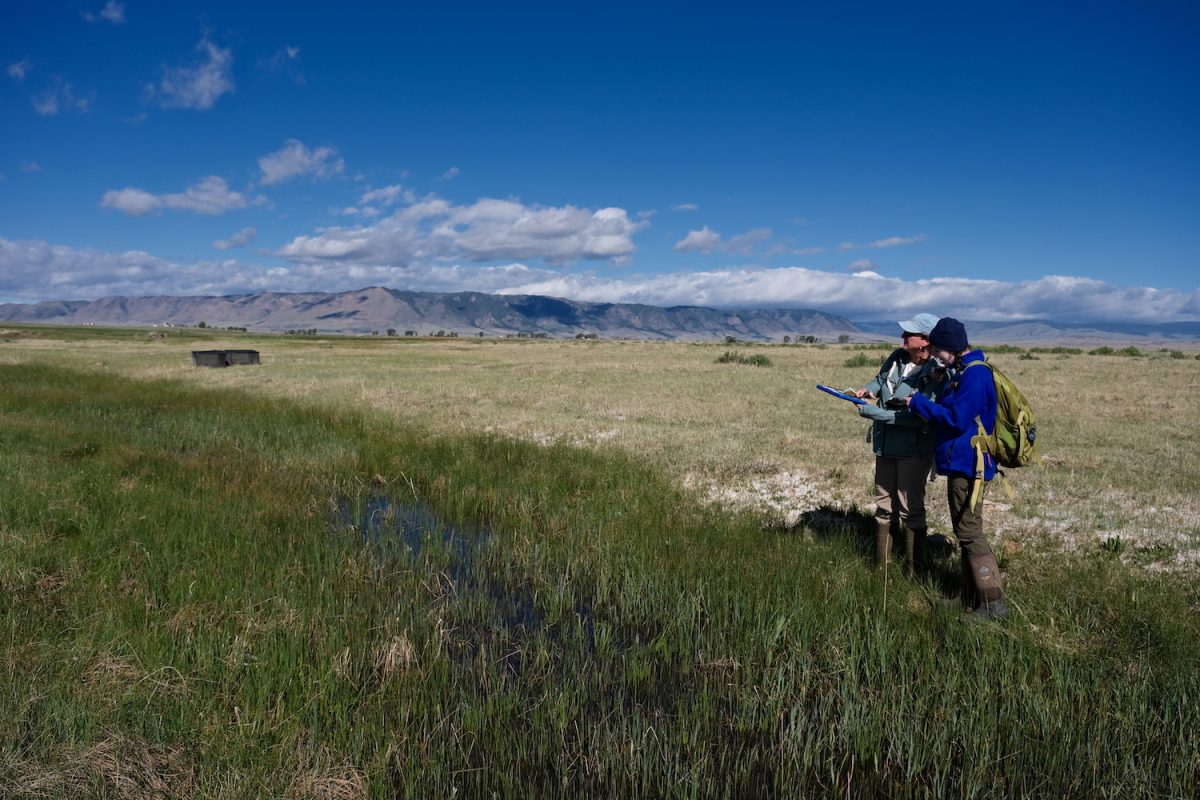
MORTENSON LAKE NATIONAL WILDLIFE REFUGE—In this high and marshy landscape of plains lakes southwest of Laramie lies a haven for the federally endangered Wyoming toad.
Mortenson Lake National Wildlife Refuge, which the U.S. Fish and Wildlife Service established to support the imperiled toad population, is closed to the public to help protect the amphibian in its historic Laramie Basin range. Scientists also aid the population of Wyoming toads here through captive breeding and release efforts.
But on this day in mid-June, a white van travels down the bumpy dirt road and past a sign deterring public visitors. Inside is Sean O’Brien, President and CEO of the biodiversity data organization NatureServe.
NatureServe helps coordinate a network of programs that collect and organize biodiversity data across North America. One of its member programs, the Wyoming Natural Diversity Database, is housed at the University of Wyoming and gathers information on species of conservation concern across the state.
“We are a scientific unit, our job is to develop data, develop information, and pass that along to the agencies,” says WYNDD Director Gary Beauvais, who has driven out for the visit. “We don’t make decisions about land use, but we inform the people that do make those decisions about land use.”
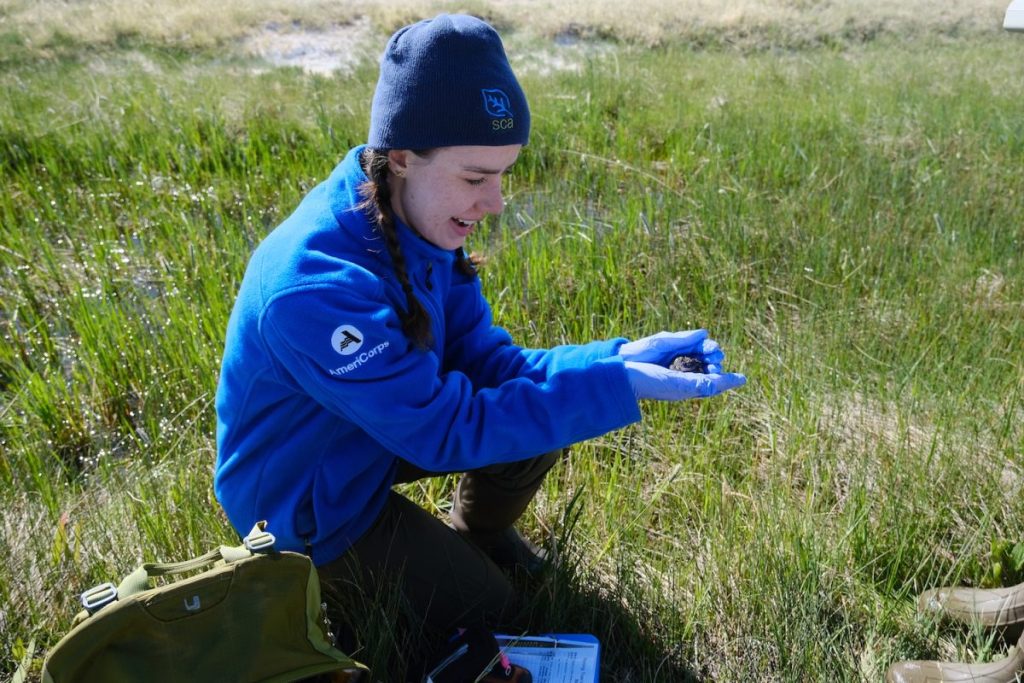
Mortenson Lake National Wildlife Refuge marked O’Brien’s 25th stop on an expedition across the U.S. and Canada to highlight endangered species and to better understand the biodiversity efforts of staff at different NatureServe network programs.
“The idea is that we make it possible for people to keep track of and know what the threats are to threatened and endangered species coast to coast in North America,” O’Brien says.
But while NatureServe has been successful at “big data,” O’Brien says, “what we haven’t been as good at is telling the story of why people should care about biodiversity in North America and what the amazing biodiversity is that we have here.”
That’s the aim of tour stops like this one.
At Mortenson Lake, O’Brien, along with two other NatureServe staffers and Beauvais, joins USFWS employees to survey the Wyoming toad population at the refuge. Clad in waders and boots, the team roams the grasses and sedges of the watery refuge, searching for the creature in all stages of its life cycle.
As a rare amphibian with a restricted distribution, the Wyoming toad is a species of interest to those at NatureServe and WYNDD. The NatureServe website designates the toad as “critically imperiled.”
Once thought to be plentiful around Albany County, the Wyoming toad experienced severe declines in the 1970s before being listed as endangered under the Endangered Species Act in 1984. Changes in the hydrology of the Laramie Basin in part due to irrigation, along with chytrid fungus and possibly pesticide use, are believed to be contributing factors in the toad’s plight, Beauvais says.
After the toad was thought to be extinct, a small population was found at what is now Mortenson Lake National Wildlife Refuge, according to the U.S. Department of the Interior. By 1994, the species numbers had plummeted, prompting managers to bring the last remaining toads into captivity.
With the species currently only existing in the wild at just a few sites across Albany County, wildlife officials continue to work toward the Wyoming toad’s recovery. A planned land purchase would expand nearby Hutton Lake National Wildlife Refuge, adding additional suitable habitat for toad reintroduction.
This story is supported by a grant through Wyoming’s Established Program to Stimulate Competitive Research (EPSCoR) and the National Science Foundation.

Great story–it’s heartening to read about rare attempt on part of a few humans to preserve a species that has been declining due to human beings.
Great story – it’s always nice to read about the MANY efforts by humans to mitigate our damage to the environment . Absolutely NOTHING “rare” about such efforts, as environmental groups are numerous and proliferating like rabbits. Indeed, they are so common, some groups actively work against the interests of modern human life.