

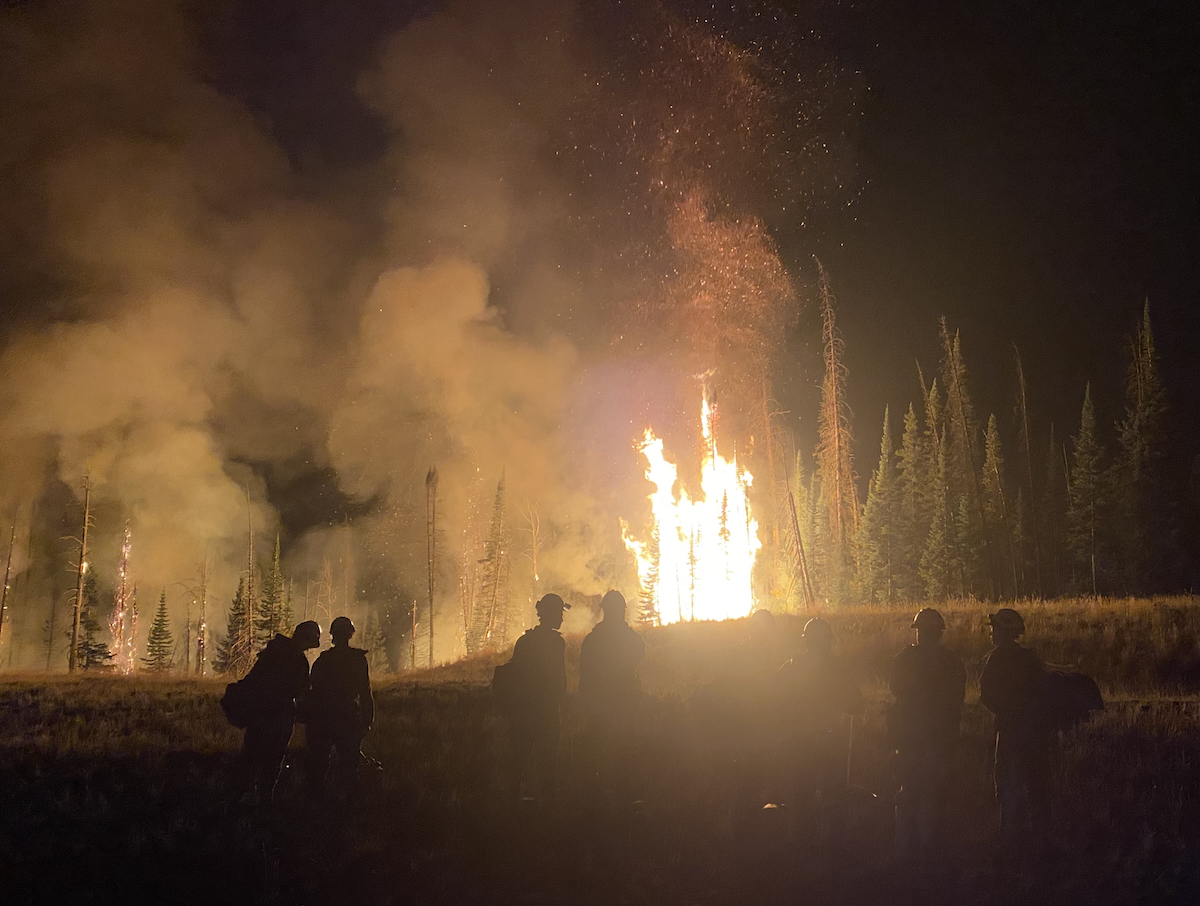
Firefighting crews extinguished eight spot blazes that jumped U.S. 26/287 over Togwotee Pass — the highway barrier between the Fish Creek Fire and 23 summer homes and Brooks Lake Lodge on Tuesday, an official said.
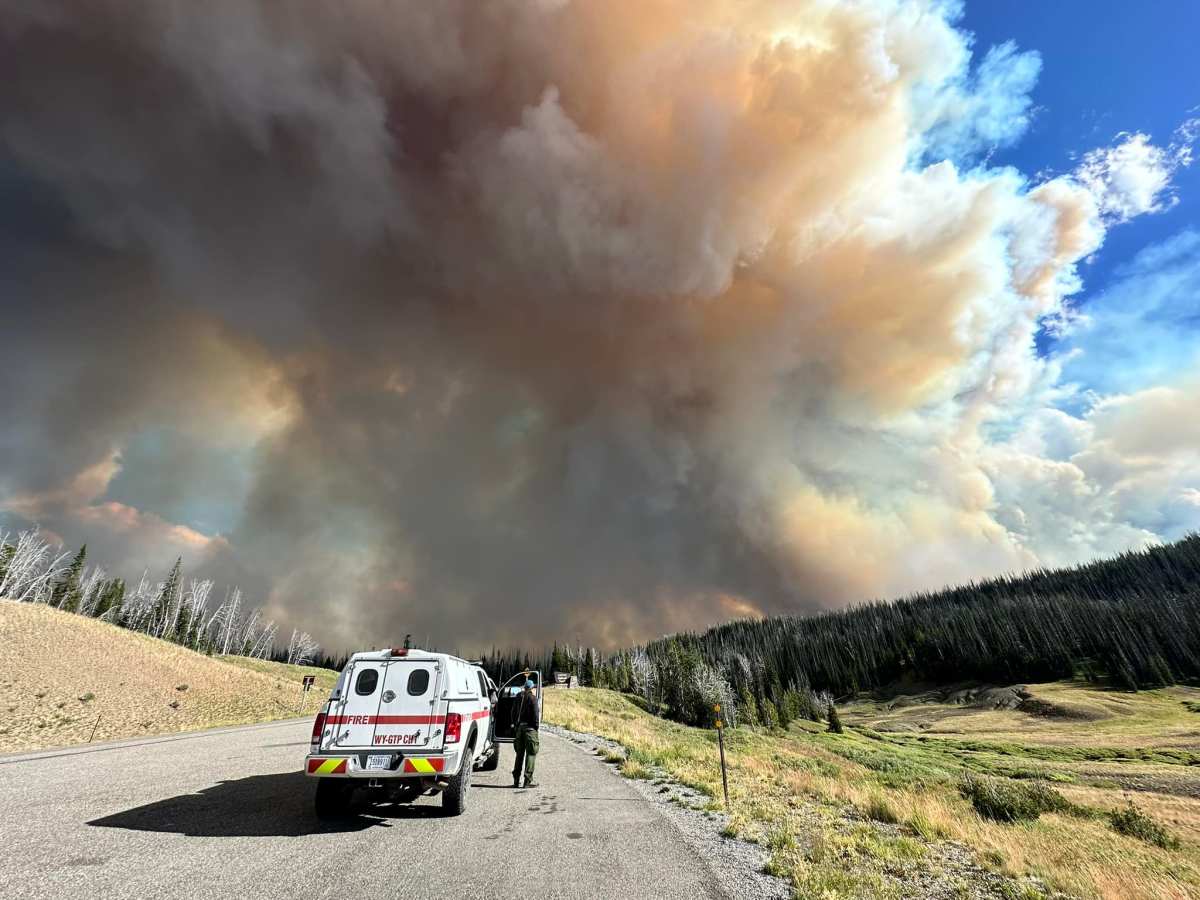
The 20-day-old fire, now 18,000-acres, jumped the road between Moran and Dubois on Tuesday afternoon, prompting Fremont County officials to order residents to evacuate the summer homes and lodge. Most had left before the order, Fremont County Emergency Management Coordinator Milan Vinich said.
“It’s as simple as a leaf flying through the air.”
—Chris Joyner on spot fires
The highway serves as a defensive line between the blaze on rugged national forest mountains south of the road and the structures north of it. But winds carried embers across the asphalt to ignite trees and other vegetation, threatening a run into the cabins and lodge.
“It’s as simple as a leaf flying through the air,” incident spokesman Chris Joyner said Wednesday morning, describing how spot fires can leap ahead of the main blaze.
Some of the 433 firefighters working to contain the Fish Creek Fire fought the spot fires Tuesday night.
“We were able to get those out,” Joyner said. The eight spots were “all addressed,” he said.
Residents at Brooks Lake Lodge and the summer cabins had largely moved out before Tuesday’s “Level Three” evacuation order, Fremont’s Vinich said. The highway remains closed with no estimated reopening time yet communicated.
“Because the fire was starting to move to the north and spot … incident command thought it would be best to do the full evacuation notice,” he said, referring to the federal fire managers. Although a federal team is managing the blaze, evacuations are the responsibility of Fremont County officials.
There are no specified evacuation centers, given the rural nature of the area, Vinich said.
“Most of these people had other residences to go to,” he said. “Some of them had friends. Many went back to homes in other states.”

The land under the summer homes is federal property but homeowners lease it and own the cabins themselves. The lodge, too, is listed on Fremont County tax rolls as “improvements on Forest Land” and not a private land holding.
Crews are prepared to defend the cabins and lodge, Vinich said.
“These are assets they are determined to protect,” he said. “They have different fire breaks cut, sprinklers [set] at Brooks Lake Lodge should that fire aggressively spread to those locations.”
This story was updated to include the WYDOT web cam photograph from Wednesday evening — Ed.


We should all be forever grateful to those firefighters who are out there trying to manage and save our forests. Instead, seems like so many take every opportunity to look on and judge what and how these crews are working. (Isn’t it rich how Looky Loos always are the very first to “weigh in” on how things are being done!!!) Thank you, Firefighters!!!
Angus, I’d very much appreciate a story explaining to what extent protecting a privately-owned structure on public land (or on private land, for that matter) is the responsibility of the federal government (and, ultimately, the American taxpayers), and to what extent it is the responsibility of the structure’s owner. Do the leases for lodges, cabins, and second homes contain language that obligates the Forest Service to set sprinklers, cut fire breaks, and take other such measures? If not, then why are Forest Service employees doing it? I understand that the Forest Service has the unique ability to fight fires on public lands. But I don’t understand why that should extend to hardening or protecting individual structures. Shouldn’t that work be part of doing business, or of owning a second home or cabin, in fire-prone forests? If the owners of the structures cannot do the necessary work themselves, there are private companies throughout the West that they can hire to do it. Could the lodge and cabin owners around Brooks Lake form a fire-protection district and hire a contractor? I wonder if there is some reason, beyond simply custom, that the lodge and cabin owners at Brooks Lake (and so many other places in the West) rely on the publicly-funded Forest Service to protect their structures.