

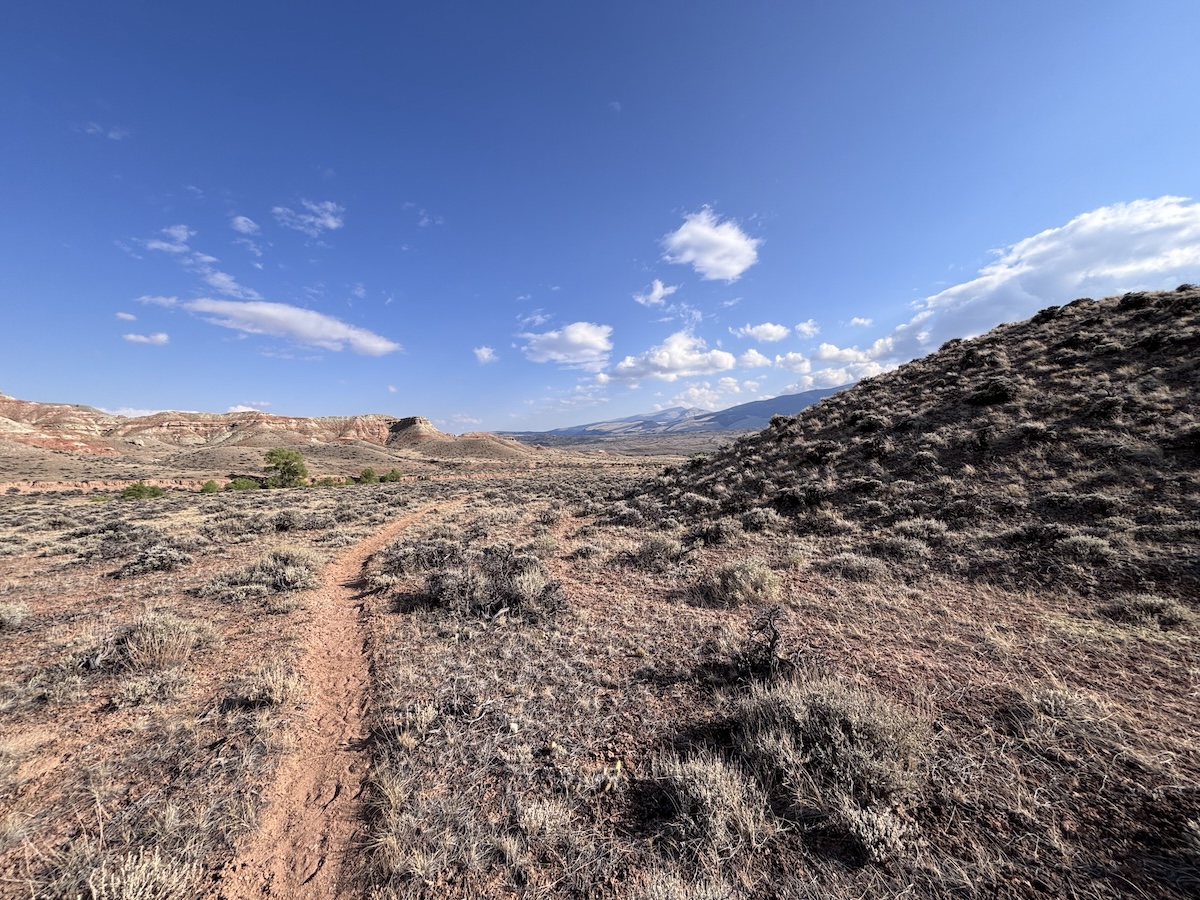
Drive two and a half hours southeast of Yellowstone National Park and you’ll find a different kind of wild. Wind blows sand across dry stream beds, and gnarled, candy-striped hoodoos jut out of reef-like rocks. You’re not on Mars — you’re in the heart of Wyoming in the Dubois Badlands.
The Dubois Badlands are not a remote, difficult-to-find wilderness, but they’re just far enough from the beaten path to feel like it. Located on the north side of U.S. Highway 26 near the small town of Dubois, the badlands are an ecologically unique part of the Equality State with opportunities for recreation and contemplation.
One of the most popular ways to explore the badlands is on foot. After turning off the highway to the main entrance on Kingfisher Road, visitors may park and enter through a chain-link gate. Dusty footpaths wind for miles: first through Wyoming State Trust Land, then land owned by the Bureau of Land Management. There are no marked trails, though visitors may follow the Dubois Badlands Trail found on the AllTrails app. This route offers views of the red rock spires and buttes that make the badlands unique. Visitors should be warned that there is no shade in the easily accessible parts of the badlands, making a hat and water must-brings for an adventure here.
Wildlife lovers visiting the area will find much to appreciate. The greater short-horned lizard, better known as the horny toad — Wyoming’s state reptile — can be seen hurrying alongside hiking trails. Eagle-eyed searchers may also find members of the Whiskey Mountain bighorn sheep herd. Other Wyoming megafauna like elk, black bear and pronghorn may be found in the badlands, too.
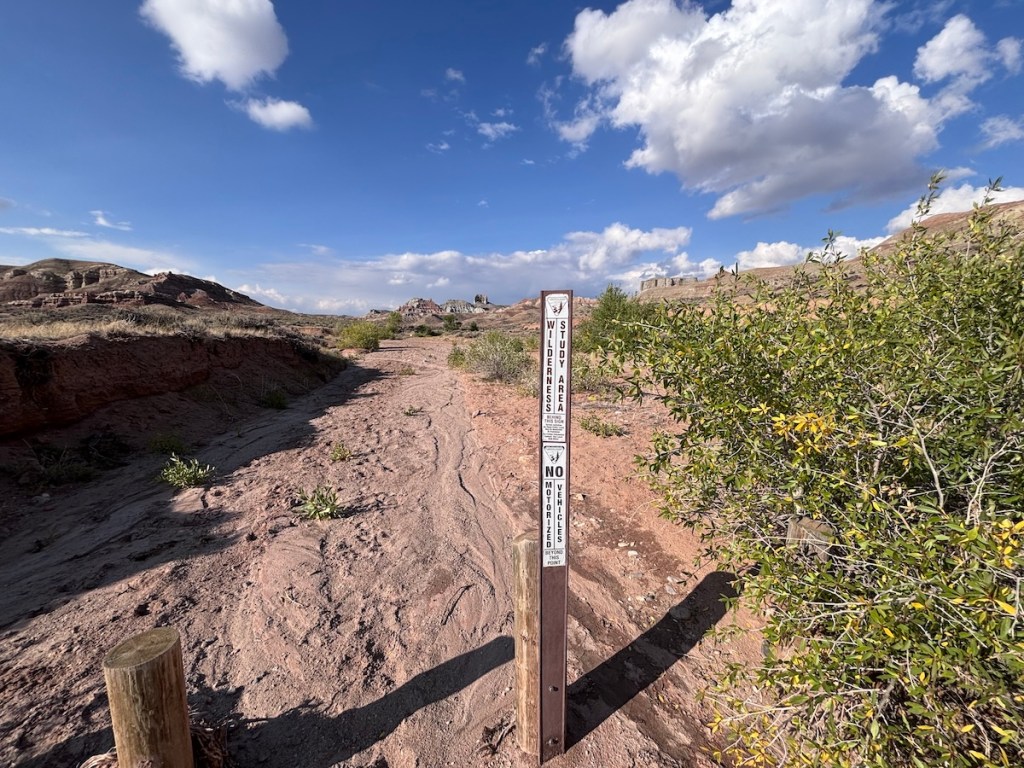
The distinction between Wyoming State Trust and BLM land in the Dubois Badlands is important. Wyoming State Trust lands are managed by the state government to maximize profitability for the state’s K-12 education. While management varies from place to place, the WST lands in the Dubois Badlands allow recreation like hiking, horseback riding and motorized vehicle use. Camping, however, is not permitted.
The State Trust land is mostly flat, with some small hills running through sagebrush and barrel cacti. Late spring and early summer see wildflowers bloom through the basin, and water may rush down the wide stream bed that descends from the crags and buttes of the BLM area.
Situated behind the State Trust land are 4,250 acres owned by the BLM. The land is designated a Wilderness Study Area, which means it is managed as if it has a congressional wilderness designation. A wilderness designation ensures the primitive character of a landscape remains intact. Visitors to the area may hike, ride, hunt or fish, but mechanical items like mountain bikes or side-by-sides may not be used there. Visitors to the area may camp in the BLM land.
Deeper into the badlands, the BLM land is geologically fascinating. Visitors may get closer to the red, white, and orange stripes that feature prominently on the area’s rock walls. Adventurous souls may attempt to visit the gray spires of Joe Back’s Throne, a soaring cirque named for a local artist and outfitter.
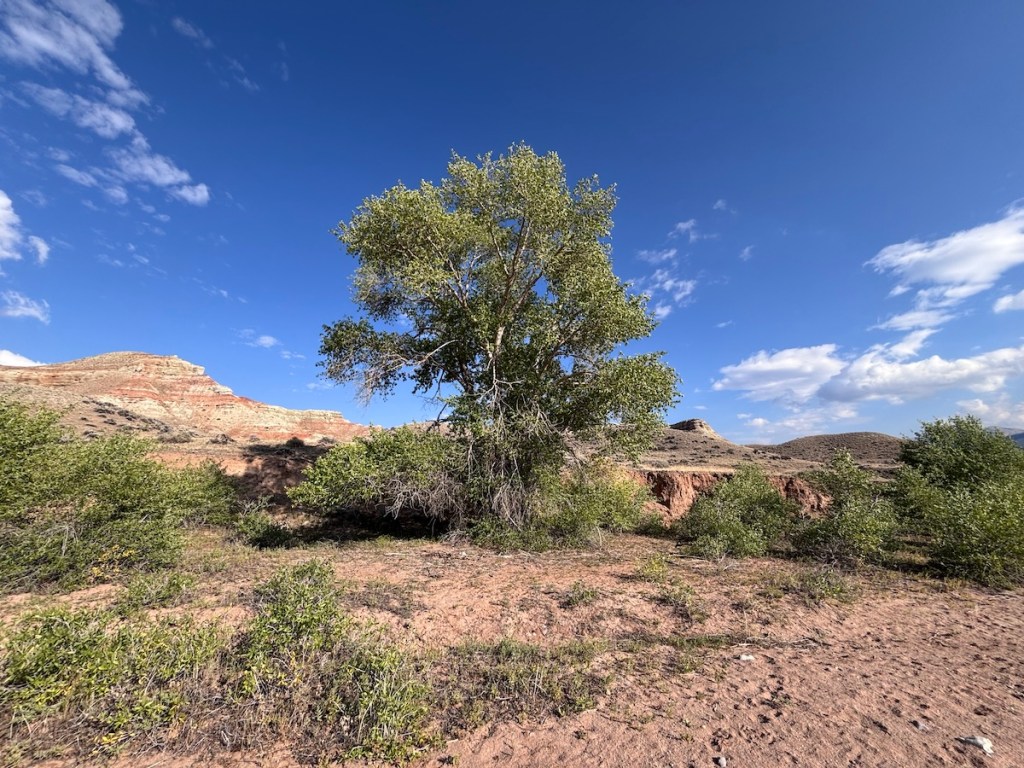
The BLM does not advertise the space as particularly user-friendly. “Day hiking would be possible, but the WSA’s size and lack of water limits its attraction for extended backpacking,” the BLM’s webpage states. Challenges aside, “the area’s relatively unique geology and its scenery are major attractions.”
The Friends of the Dubois Badlands is a local nonprofit dedicated to preserving and protecting the area with the Wilderness Study Area designation. The group of local artists, scientists, sportspeople and more “want people to appreciate how beautiful this is but also want them to know what to do/not do in order to protect this marvelous gift.”
The group holds regular events that promote engagement with the badlands, including lectures on ecology and guided hikes, and collaborates with government agencies. In 2024, the Friends and the Wyoming State Lands office cleaned up an illegal garbage dump, while in 2022, the group teamed with the Lander BLM office to pull over a mile of unneeded barbed wire from the Wilderness Study Area.
Though not very well-known, the Dubois Badlands offer an excellent, quiet place for Wyoming locals and tourists alike to visit. As the weather cools, visit this unique area for hiking, wildlife viewing and to experience another side of wild Wyoming.

Sounds like a great place to dirtbike.
Designated lands for riding seem to be harder to find. The wilderness study should be protected Bikers need to stay off of that. Managed multiple use is a great compromise.
The Badlands is indeed a beautiful place, especially at dawn and dusk. It’s also an incredibly fragile place, a practical desert between the Wind River and the Shoshone National Forest. That’s why years ago locals pushed to have it declared a Wilderness Study Area, mainly to keep ATVs and dirt bikes out. That’s how fragile the land is. With climate change, it’s becoming more fragile. So, the Badlands does not need more tourists tramping around at any time of the year. Go elsewhere.