

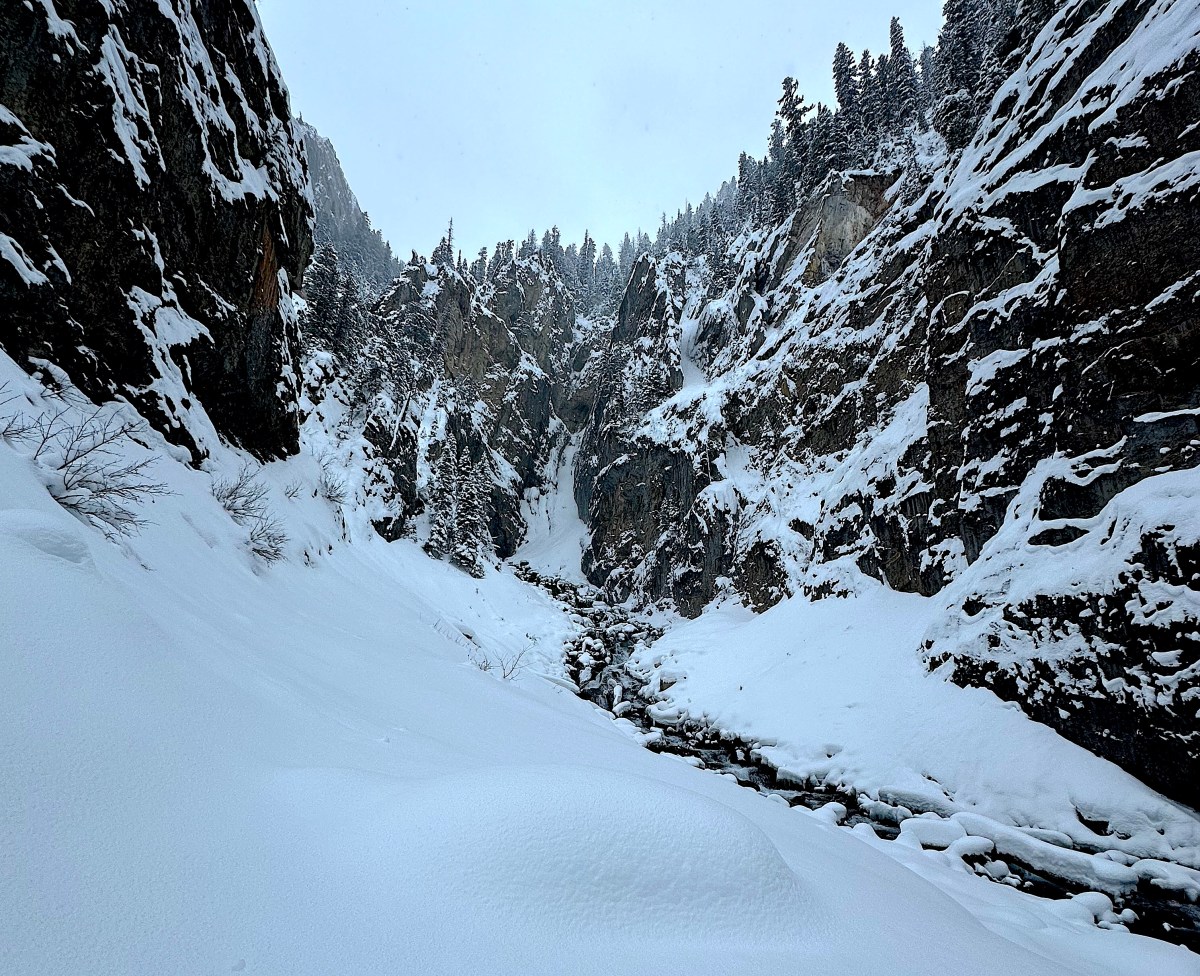
Josh Peavler doesn’t want to relitigate the past, but he feels vindicated by the outcome of the town of Afton’s fight to source its drinking water from the Periodic Spring.
Peavler works as the town of Afton’s utility director, a role that brought him into the thick of a dispute with the U.S. Environmental Protection Agency that rose to such prominence that Wyoming’s congressional delegation got involved. The spat was over whether the Star Valley community needed to treat drinking water being piped from the exceptionally unique Periodic Spring, a coldwater geyser that pulses out of the Salt River Range.
“They were telling us that we needed to build an $11 million treatment plant,” Peavler told WyoFile. “The whole thing was kind of a bunch of bullshit.”
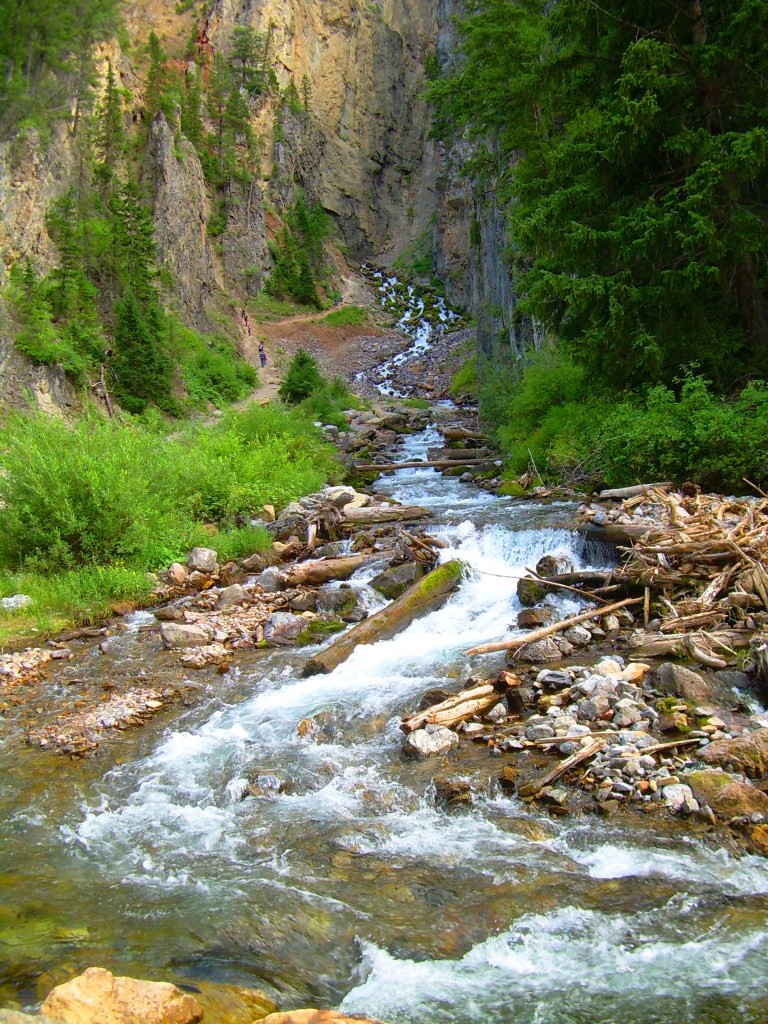
The EPA based its decision on tests that found algae which suggested surface water was contaminating the spring. But then in late March, the federal agency sent word that it was withdrawing its decision.
“It was pretty awesome,” Peavler said.
Public comments ultimately led to the agency’s decision reversal, EPA documents show.
Several of the 80 people who commented shared concerns that a “surge tank” that captured the intermittent water was the source of the algae — not the spring itself. In late September, an EPA contractor took additional water samples, including samples above and below the tank. Samples above the tank suggested that there was a “low risk” of surface water influence,” but below the tank algae and diatoms were again detected suggesting “moderate risk.”
Those results corroborated the commenters’ contentions.
“The Periodic Spring will remain classified as a groundwater source requiring no filtration treatment,” Douglas Minter, the acting branch manager for the EPA’s regional safe drinking water program, wrote in a letter to Afton officials.
Although there’s no filtration plant to guard against surface water contaminants like E. coli, cryptosporidiosis and giardiasis, chlorine is added to the 5 million gallons of water piped daily from the mouth of Periodic Spring before it reaches faucets and spigots in the Lincoln County town of 2,200 residents.
During a 2022 public hearing, residents spoke loudly in support of the town’s status quo drinking water system, perhaps out of pride in the uniqueness of the Periodic Spring, a tourist attraction up Swift Creek Canyon right outside of town. Nobody who addressed the audience at the hearing supported the EPA.

Going forward, federal environmental regulators are OK with the current system, though they’re requiring that the town seal all the openings in the surge tank, officials wrote to WyoFile in an email.
“We have some ideas on what we’re going to do [about the surge tank],” Peavler told WyoFile, “but it’s still to be determined.”
Afton’s water supply will continue to be routinely monitored for the possibility of surface water influence, the EPA email said.
Issues with the Periodic Spring as a drinking water source have sprung up occasionally in the decade since it was connected to the municipality’s water system via a pipe in the late 1950s. In the early 2000s, E. coli was detected in the water system and boil orders were issued. More generally, Star Valley has struggled to rein in fecal bacteria pollution from domestic sheep and cattle production. Its main drainage, the Salt River, which Periodic Spring flows into via Swift Creek, was classified as “impaired” from E. coli until 2015.
U.S. Sen. Cynthia Lummis said in a statement that she’s “thrilled” with the EPA’s decision to not alter management of Afton’s water source.

“It would have been catastrophic for the small town of Afton to have to pay millions of dollars to build a water treatment facility if the EPA had decided this was not a groundwater source,” Lummis said. “This is a huge win for Afton, and I applaud the community leaders who fought hard against the EPA when it decided to try to change the classification of Afton’s Periodic Spring.”
Peavler, one of the town officials who fought the initial decision, said that he agreed with the spirit of what the EPA sought to do — he just wasn’t fond of how the federal agency went about its business.
“If there was bad stuff in somebody’s water, they still need to do their job to make sure that the public is safe,” he said. “Without [environmental regulators], somebody might get hurt.”
Wyoming is the only state that doesn’t manage its own public water program to ensure compliance with the Safe Drinking Water Act. The state has not applied for that authority, according to the EPA.
“I wish Wyoming would undertake primacy,” Peavler said. “Then we would be dealing with somebody locally instead of somebody out of Colorado.”


We build water plants in Afghanistan Iraq and other parts of the world and never get a dime back from those people. So maybe if we quit funding useless wars in say Ukraine and Israel just maybe we could fix our own water sewer systems. Replace lead pipes. Rebuild our bridges and roads. America first! After all it is our tax money. Now there a novel idea.
This is a perfect example of why the unconstitutional EPA should not even exist. Article 1, Section 8, Clause 17 lays out the ONLY lands the Feds may control, and your mountain spring is not one of them.
BAN THE EPA
Big congratulations to Afton!
“Public comments ultimately led to the agency’s decision reversal”
I would contend that the EPA took more samples based on the comments which resulted in a different interpretation of the GWUDI. The comments did not change any laws or future determination, they just pointed out issues with the place EPA chose to identify potential contamination of the spring. The sampling event revealed two issues, poor siting of the initial MPS selection by the EPA due to expediency and that the surge tank requires evaluation.
There are two EPA rules that come into play with drinking water; the Groundwater Rule and the Revised Total Coliform Rule. The EPA has moved its evaluation of the groundwater source (spring) to before the surge tank. The issues with the source have been resolved for now, but the surge tank will now be evaluated under the Total Coliform Rule.
Evaluating springs as sources is tricky business compared to actual wells as some springs are definitely under the influence. I looked at one that had a diverter put in place to ensure that the salamanders emanating from the spring survived. Afton’s was far more nuanced and will remain so into the future.
PS: the sanitary surveys in Wyoming are done under contract and I feel sorry for the poor soul that gets the short straw and has to perform the next sanitary survey of this public system.
It won’t be Ramar!