
As spring brings its fickle mix of wind, sun and showers to the state, WyoFile bids winter adieu with our final Cold Snap images of the season.
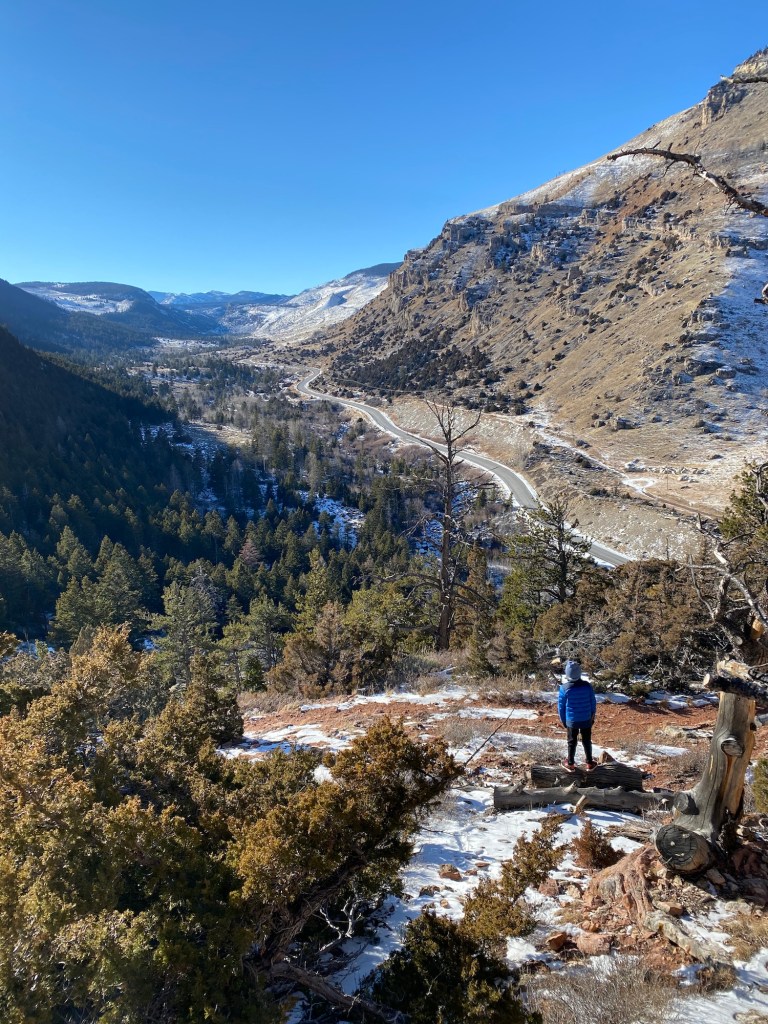
A hiker takes in the view in Sinks Canyon State Park on Jan. 1, 2022. (Rose Vowles)

Readers submitted a marvelous variety of photos depicting everything from hardy wildlife to humans at play, crystalline patterns of ice and wind-scoured landscapes. Thanks to everyone who submitted.

A train car stands in contrast to the background in snow-coated Lions Park in Cheyenne. (Wendy Lowe)

Now that it’s warming up, it’s time to switch gears. Photographers: Stay tuned for another announcement, and start snapping signs of summer — flower blooms, river flows, alpine lakes and more.
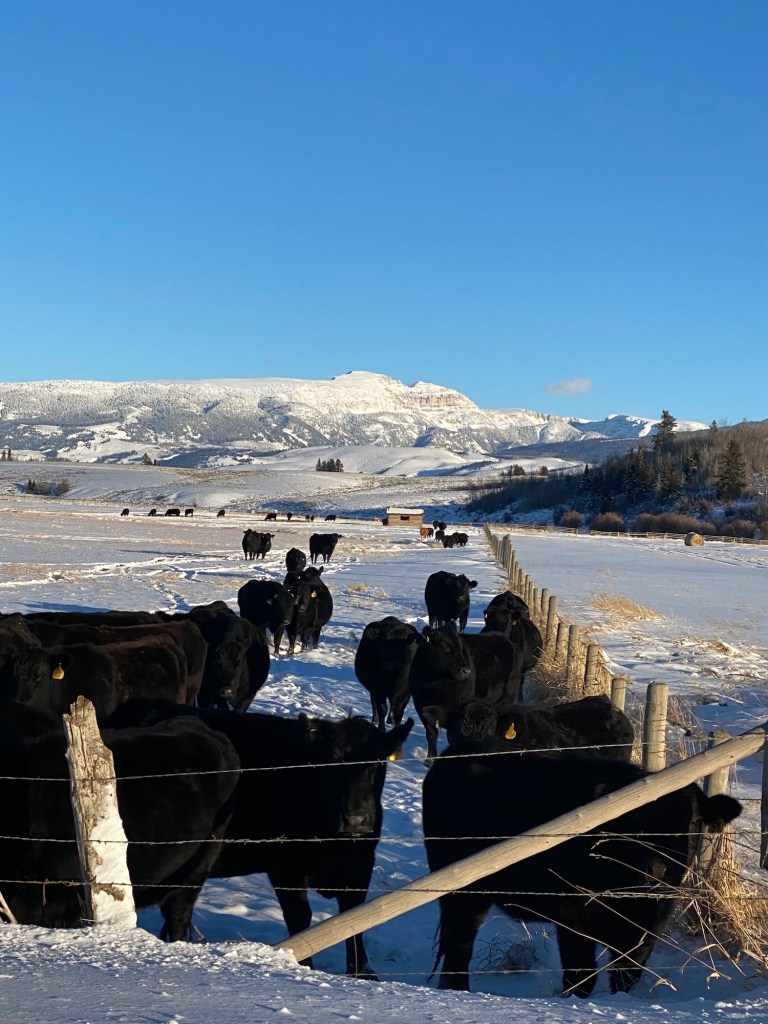
Lucas Ranch cattle huddle in an enclosure near Jackson Hole. Sleeping Indian rises in the background. (Kathleen Neiley)

Katie Klingsporn reports on outdoor recreation, public lands, education and general news for WyoFile. She’s been a journalist and editor covering the American West for 20 years. Her freelance work has...

Join the Conversation

2 Comments

WyoFile's goal is to provide readers with information and ideas that foster constructive conversations about the issues and opportunities our communities face. One small piece of how we do that is by offering a space below each story for readers to share perspectives, experiences and insights. For this to work, we need your help.

What we're looking for: 

  • Your real name — first and last. 
  • Direct responses to the article. Tell us how your experience relates to the story.
  • The truth. Share factual information that adds context to the reporting.
  • Thoughtful answers to questions raised by the reporting or other commenters.
  • Tips that could advance our reporting on the topic.
  • No more than three comments per story, including replies. 

What we block from our comments section, when we see it:

  • Pseudonyms. WyoFile stands behind everything we publish, and we expect commenters to do the same by using their real name.
  • Comments that are not directly relevant to the article. 
  • Demonstrably false claims, what-about-isms, references to debunked lines of rhetoric, professional political talking points or links to sites trafficking in misinformation.
  • Personal attacks, profanity, discriminatory language or threats.
  • Arguments with other commenters.

Other important things to know: 

  • Appearing in WyoFile’s comments section is a privilege, not a right or entitlement. 
  • We’re a small team and our first priority is reporting. Depending on what’s going on, comments may be moderated 24 to 48 hours from when they’re submitted — or even later. If you comment in the evening or on the weekend, please be patient. We’ll get to it when we’re back in the office.
  • We’re not interested in managing squeaky wheels, and even if we wanted to, we don't have time to address every single commenter’s grievance. 
  • Try as we might, we will make mistakes. We’ll fail to catch aliases, mistakenly allow folks to exceed the comment limit and occasionally miss false statements. If that’s going to upset you, it’s probably best to just stick with our journalism and avoid the comments section.
  • We don’t mediate disputes between commenters. If you have concerns about another commenter, please don’t bring them to us.

The bottom line:

If you repeatedly push the boundaries, make unreasonable demands, get caught lying or generally cause trouble, we will stop approving your comments — maybe forever. Such moderation decisions are not negotiable or subject to explanation. If civil and constructive conversation is not your goal, then our comments section is not for you. 

Your email address will not be published. Required fields are marked *

  1. FWIW, the image actually shows the aft end of the tender for locomotive 1242, not a rail car. The locomotive, built in 1890, and tender were donated by the UPRR to Cheyenne in 1955. It was previously used on on the now abandoned rail line that ran from Walcott to Encampment from 1921 to 1954. Fun fact, the tender was used to carry 7,000 gallons of water and 12 tons of coal.