


CHEYENNE—Amidst multiple investigations into campaign checks being distributed on the House floor at the start of the 2026 legislative session, several Republican lawmakers have objected to how and when the public learned of the controversy. Instead of going to the media, the Legislature’s confidential, internal process should have been used to examine and resolve the issue, they argue.
A formal process does exist for lawmakers to raise ethics complaints, known as Joint Rule 22-1. By its design, the process is intended to occur away from the public eye.
But Rep. Karlee Provenza, the Laramie Democrat who shared a photograph with journalists of a conservative activist handing out checks to Republican lawmakers on the House floor, says she went to the press to prevent the incident from being “swept under the rug.”
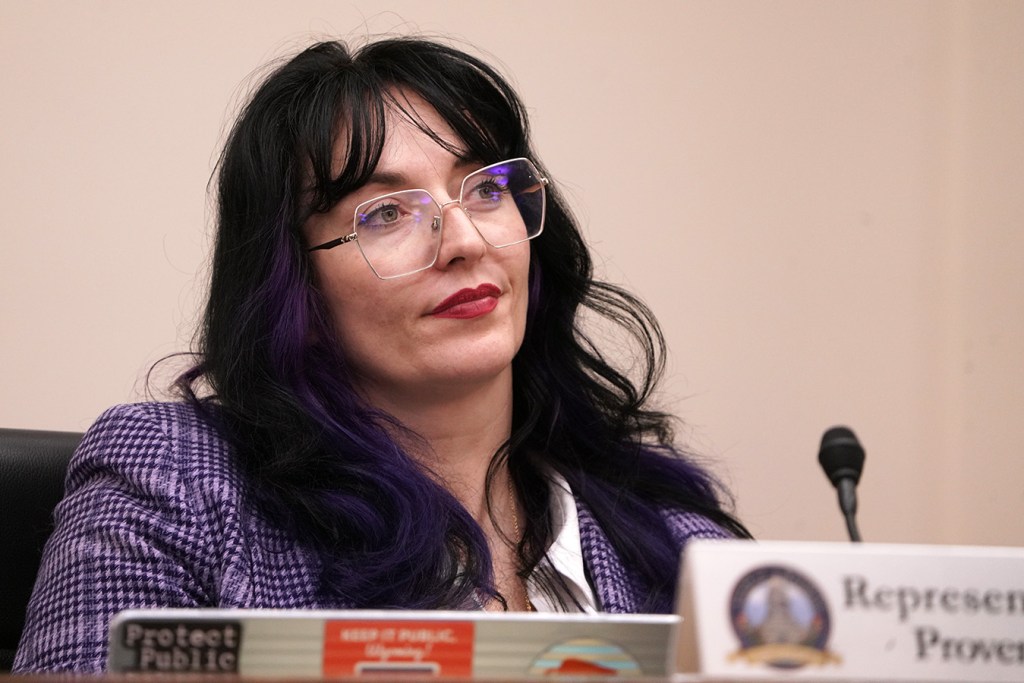
“Do I find their efforts to shift blame on me rather than themselves disappointing? Sure,” Provenza told WyoFile. “But I knew when I came forward with that photo, there would be consequences for my transparency.”
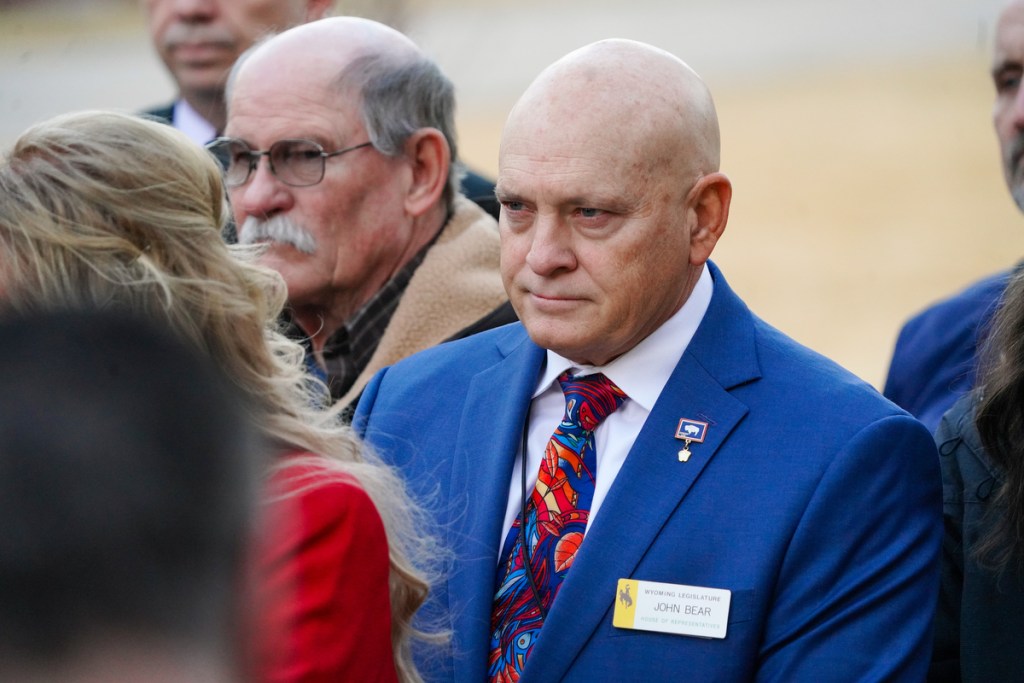
Provenza is not the first lawmaker to go to the press with concerns about lawmakers’ actions. Last year, former Wyoming Freedom Caucus Chairman Rep. John Bear sent out a press release accusing some of his legislative colleagues and Gov. Mark Gordon of violating a state law governing spending. Two of those lawmakers say no one filed an ethics complaint related to their alleged actions.
Checkgate goes public
On Feb. 11, WyoFile and the Jackson Hole News&Guide broke the story on what would soon be dubbed “Checkgate.”
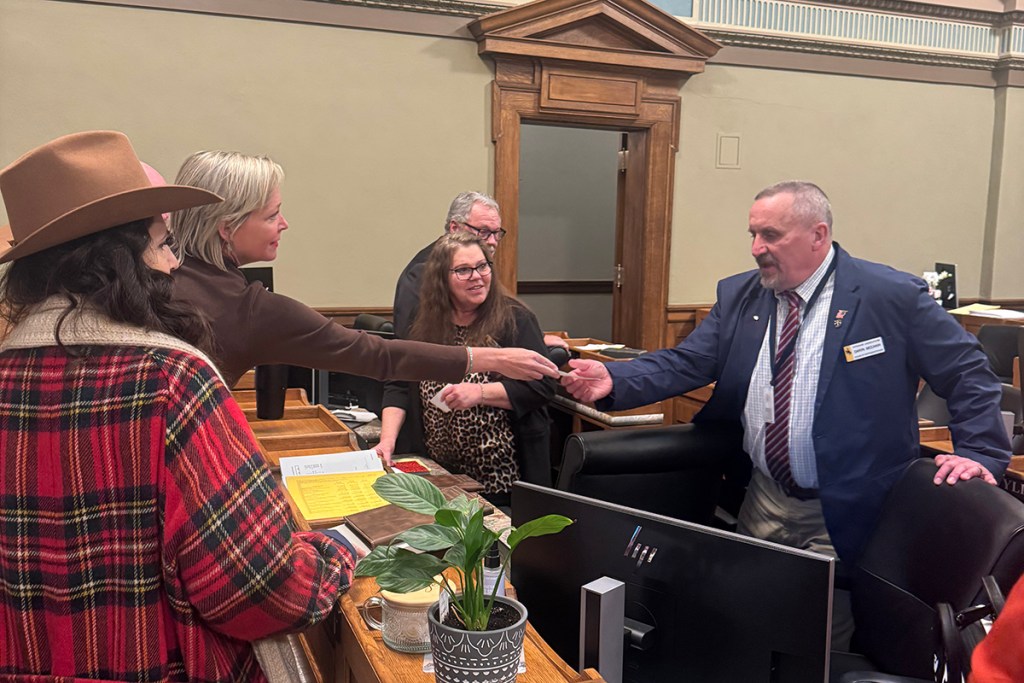
The outlets did so after Provenza tipped off a reporter with a photograph she’d taken of Rebecca Bextel, a conservative activist, handing a check to Rep. Darin McCann, R-Green River, on the House floor. Before publishing, the outlets used security footage, interviews with lawmakers and Bextel’s own statements on social media to substantiate what the photograph appeared to show. McCann also confirmed to a reporter ahead of publication that Bextel handed him a campaign check from a Teton County donor.
Additional reporting confirmed other details, including the name of the Teton County donor — Don Grasso — and the 10 politicians he said he wrote campaign checks for, including: McCann, Speaker of the House Chip Neiman, R-Hulett; Reps. John Bear, R-Gillette; Marlene Brady, R-Green River; Gary Brown, R-Cheyenne; Christopher Knapp, R-Gillette; Tony Locke, R-Casper; Joe Webb, R-Lyman; Sen. Bob Ide, R-Casper, and former lawmaker Mark Jennings of Sheridan. All 10 have a tie to the Wyoming Freedom Caucus.
McCann, Bear, Neiman and Webb are the only lawmakers to have publicly confirmed that Bextel hand-delivered a check to them. Others have spoken about the issue without clarifying whether Grasso’s statement concerning them is true.
“What we have here is a situation where people saw things, didn’t know what they were, reported them, and blew them out into the media,” Locke said on the floor last week.
At the time, House lawmakers were debating whether to honor an investigative committee’s request to pause its inquiry into the checks until the Laramie County Sheriff’s Office concluded its criminal investigation into the matter. The committee’s chairman had raised concerns about interfering with law enforcement.
Locke, however, said he wanted to draw the chamber’s attention to how word about the checks got out, and without naming names, whether Provenza’s decision followed the body’s own rules. More specifically, Locke said the issue should not have been “blasted out to the media,” but resolved instead through the Legislature’s formal process for dealing with ethics complaints: Joint Rule 22-1.
“I’d like to say that when you look at 22-1, there are ways to approach this, that we should handle this internally. And I’d like to understand why we’ve kicked this out.”
“Democracy dies in darkness, so I brought a flashlight.”
Rep. Karlee Provenza
Several other Republican lawmakers backed Locke’s suggestion on the floor — some of whom were also identified by Grasso as lawmakers he directed the checks to. Provenza, meanwhile, said there’s a reason she went public with what she saw.
“I chose that path because I felt I owed it to the people of Wyoming to be honest about how some of their legislators are conducting themselves here,” Provenza said in a statement.
“I also wanted the truth,” she said. “Going forward to the press meant that journalists would have to corroborate what I saw. It meant that it wasn’t just my word against theirs. And going public meant it couldn’t be swept under the rug and that the people of Wyoming could make up their own minds about what I saw and they could determine what accountability they thought was appropriate.
“Democracy dies in darkness, so I brought a flashlight.”
Joint Rule 22-1
Joint Rule 22-1 is the process both House and Senate leadership use to handle complaints of legislative misconduct.
“The ethics complaint procedure under this rule shall be reserved for substantiated allegations of legislative misconduct and in all other circumstances, the members of the House and Senate shall be ultimately responsible directly to the electorate,” the rule states.
Complaints must be written, signed and submitted to either the Speaker of the House or the Senate President to initiate the process. Once received, a copy of the complaint must be provided to the accused member. The scope of legislative misconduct under the rule includes violating Article 3 (Legislative Department) of the Wyoming Constitution, the Ethics and Disclosure Act or the state’s conflict of interest laws.
It also includes “violence or disorderly conduct during legislative meetings, sessions or during the performance of legislative duties,” bribes or offers of bribers, violating House or Senate rules “pertaining to ethical standards for legislators or preventing disorderly conduct,” or any other conduct that constitutes a felony.
“All records, findings and proceedings including the filing of the initial complaint shall be considered confidential information,” according to the rule. “But the complaint shall be available for public inspection upon the dismissal of the complaint, a referral of the complaint for formal investigation or other final dispositive action regarding the complaint.”
In 2023, lawmakers began to consider how to update the rule to account for the rise of social media and increased incivility. Ultimately, in 2024, the Legislature broadened the rule’s scope of conduct and made it easier for leadership to dismiss frivolous complaints.
“We have a process in place in rules, and we didn’t follow that,” Knapp said on the House floor following Locke’s remarks.
Knapp has declined to confirm whether he accepted a check from Bextel.
“I think it’s important, too, because I believe this could have been solved in an hour of our [Legislative Service Office] getting to the facts of what actually happened: what the checks were, if there was a rule violation, if those went to [campaign] committees, or if they were personal checks for cash, that could have been solved,” Knapp said.
Rep. Ken Pendergraft, a Sheridan Republican and Freedom Caucus member, also said he had “serious questions about how this process was initially adhered to.”
Neiman, who’s also part of the caucus, took things a step further, stating that what had happened was unprecedented in his time as speaker.
“As long as I’ve been in leadership, if there was a complaint, it was brought to leadership, and they were asked to investigate. We’ll look into it. If there’s something wrong, and we’ll get on to it,” Neiman said. “It didn’t go to the media first. It went to leadership, and that is clearly laid out in our rules.”
However, just over a year ago, one of Neiman’s Freedom Caucus peers went to the media to accuse lawmakers of wrongdoing.
‘There’s a new sheriff in town’
On Feb. 3, 2025, Rep. Bear sent a press release to dozens of Wyoming news outlets, accusing Gordon and sitting lawmakers who formerly served on the Joint Appropriations Committee of failing to follow a state law governing spending. He did not identify those lawmakers by name.
As the incoming House Appropriations Chairman, Bear wrote, “there’s a new sheriff in town,” in the statement. Appropriations is arguably the most powerful committee in the Legislature, serving as its primary budgetary arm.
“After being sworn in to the 68th Legislature, I and my colleagues on the House Appropriations Committee got right to work investigating Wyoming’s budgetary obligations, restrictions, reserves, and more,” Bear wrote. “We have learned a lot. We have also uncovered inconsistencies between state spending law and practice by the governor and former legislative appropriators.”
Bear pointed to 2016 legislation that revised the state’s spending policy. More specifically, he said the law prohibits the governor from recommending an appropriation of the state’s rainy day fund that exceeds 5% of the balance of that account as of the first of the fiscal year in which the recommendation is made.
Without specifying how the money was used, Bear accused the governor of “recommending appropriations from the rainy-day fund well in excess of the 5% limit laid out in statute.” Bear also accused certain lawmakers of looking the other way.
The funds in question were used to respond to Wyoming’s historic wildfire season in 2024.
“The direct firefighting cost exceeded $55 million,” Gordon said in his State of the State, a few weeks before Bear went to the press.
“This fully depleted the funds you appropriated to firefighting, my contingency account, Homeland Security’s contingency funds, and virtually all of the governor’s authority to borrow from the [rainy day account],” Gordon said.
When WyoFile reported on Bear’s accusations, the governor provided a statement.
“We submitted a balanced budget with substantial savings and we have cooperated with the Joint Appropriations Committee as they have worked the budget since November,” Gordon said. “Perhaps Representative Bear should be more interested in helping the people of Wyoming recover from devastating wildfires than running his next campaign.”
Bear did not respond to a request for comment on whether he used the Legislature’s formal process to submit an ethics complaint against the lawmakers he had accused of breaking the spending law.
Two of the lawmakers who were on the committee that was subject to Bear’s accusations — Reps. Steve Harshman, R-Casper, and Lloyd Larsen, R-Lander — confirmed to WyoFile that no ethics complaint had been filed against them regarding the matter.
Both lawmakers also said Bear’s accusations in 2025 were different from the current situation involving campaign checks.
Bear’s complaint “was on the process,” while the question with Checkgate is whether quid pro quo took place, Harshman said.
What now?
Thursday afternoon, the House Special Investigative Committee will hold its first proceeding. Fifteen witnesses have been asked to testify, including Dawn Marquardt, who writes for the Open Range Record, a media outlet co-owned by Bextel and conservative podcaster David Iverson.
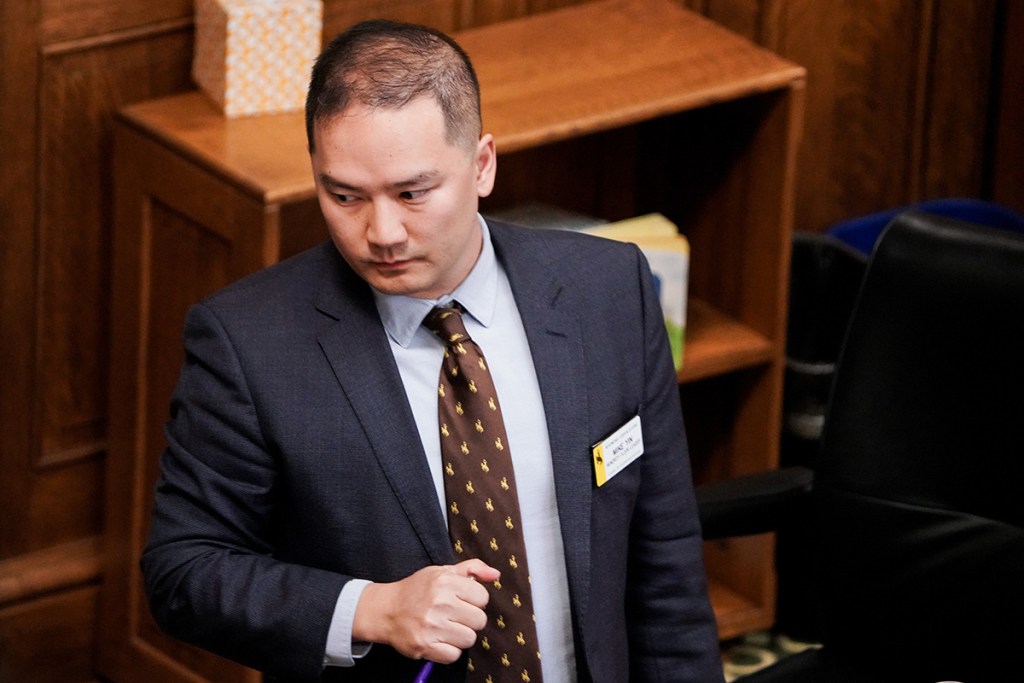
The day before Locke and other lawmakers raised concerns on the floor about Joint Rule 22-1, Iverson made a more pointed version of the same argument in an Open Range Record story published Feb. 17. By not using Joint Rule 22-1, Iverson said Rep. Mike Yin, D-Jackson, Provenza and LSO staff violated legislative rules.
It was Yin who, without naming any specific lawmakers, broached the subject of the checks on the House floor. Bear and Neiman, who later acknowledged receiving checks, responded that day by accusing Yin of making statements that could not be substantiated or verified.
Yin, for his part, said the publication co-owned by Bextel “can’t even get the facts straight,” he told WyoFile in a text. “Also the fact that they attempt to smear our staff too is beneath contempt.”
As for her decision not to file a complaint through Joint Rule 22-1, Provenza said she stands by it.
“An ethics complaint process is one option, not the only option, for a lawmaker to take issue with the behavior of other legislators,” Provenza said. “I stand by the Freedom Caucus’s First Amendment rights just as strongly as I stand by my own.”
Provenza is one of the 15 witnesses expected to testify at Thursday’s meeting, which begins at 3. The proceedings are public and will be streamed on the Legislature’s YouTube channel.
For more legislative coverage, click here.

It was predictable that the republican grifters in the legislature would blame the messenger rather than the participants in the checkgate scandal.
“Accusations should be handled in private except when we accuse you then make it public.” -FC idiots
Ms. Bextel supposedly passed out the checks as campaign contributions ; however the next campaign does not begin until the candidate declares for reelection in May. So at this time, those receiving the checks are not really candidates!
There they are: GOP legislators practicing good politics.
Had Rep. Provenza filed a Rule 22-1 complaint, it would have gone to the Speaker of the House. He could have summarily dismissed it if he thought that the actions it specified, even if true, did not constitute legislative misconduct. Neither Rep. Provenza nor anyone else has ever, to my knowledge, accused the legislators who received the checks of bribery. So, she’d have had to allege simply that legislators had accepted checks on the House floor.
The Speaker would almost certainly have dismissed such a complaint because (first) House rules apparently do not prohibit that, and (second) the Speaker apparently sees no impropriety in accepting such checks. He received a campaign check (not on the House floor, it’s important to note, but in his adjacent office) and has stated emphatically that he was not bribed and therefore did nothing wrong. Whether he thinks that accepting checks on the House floor is more serious than accepting them elsewhere in the Capitol, I don’t know.
Rep. Provenza’s critics might say that dismissal of the complaint would show that legislators had done nothing wrong in accepting the checks. Yes, they accepted campaign checks on the House floor, but there’s nothing improper in that. Rep. Provenza was wrong to cause such a mess over it.
Are her critics right? Is it okay for legislators to accept campaign checks on the House floor, or in the Speaker’s office, or elsewhere in the Capitol? Rep. Provenza clearly thinks not. Neither do some of her colleagues in the House, who have said so publicly. Nor do the members of the Wyoming Senate, who just unanimously passed a rule prohibiting it. Judging from the furor that this has caused outside of Cheyenne (per reports in WyoFile and other sources), many voters around the state also think not.
They’re right. Our elected legislators should not accept campaign checks where they are conducting our business. It’s not that they’re crooked: I doubt that more than a handful of legislators in Wyoming’s entire history have been bribed, I do not suspect that any of our current legislators take bribes, and I do not worry that future legislators will be bought off. But we ought to be sure. And I think we should worry that, because it looks bad, it will make cynics out of too many voters.
Any legislator with even a minimal sense of self awareness quickly realizes that the House and Senate floors are fishbowls. Both are surrounded by galleries open to the public throughout the day and evening, and the high level of acoustics means that anything above a whisper can be heard anywhere in the chambers. These places of work belong to the People, not legislators. Rep. Provenza’s photo documented what anyone on the House floor and in the gallery at the time likely saw and heard. Blaming her for taking it is simply shooting the messenger.
The usual distraction about questionable behavior the Freedom Caucus and GOP has made standard practice these days. If you didn’t do anything wrong, it shouldn’t matter. When you have a supermajority and with the history of lies, gaslighting, and ignoring reality, I really don’t blame her for what she did – and I guarantee they are just mad they got caught.
Joint Rule 22-1 does not provide for the exclusion of the press. Read it and you will understand.
I have a better idea for these lawmakers, how about not doing unethical, questionable, and possibly illegal things, let alone in plain sight on the House floor. This is on you, and you alone. Rep. Provenza is right to have done this the way she did, because it’s obvious to everyone it would have gotten swept under the rug otherwise. I got a feeling that the self proclaimed “new sheriff” may not be in his power role much longer. Remember, the primary election is August 18th, vote them out!
Talk about gaslighting! The problem is not accepting checks on the House floor, but Provenza taking a pic and sending it to news outlets. The Freedom Caucus view of pretty much everything is the opposite of reality.
Hats off to Provenza and Yin, if they had followed normal procedures then the lying SOBS would of swept it under the rug and checkgate wouldn’t of seen the light of day. But they were too smart for that. Reminds me of Nixon blaming Woodward and Bernstein during watergate. Shooting the messenger isn’t boding well for the NoFreeDumbasses Circus.
I would have rather had Rep. Karlee Provenza take the high road. But I cannot blame her for using the press. Back in the day, conservatives filed ethics complaints against her for a Facebook post. They straightaway put it in the press. Anthony Bouchard has had an ethics complaint that was made public through the press. I know of other ethics complaints that have completely followed the rules and were confidential from the start.
The worst case was when a lobbyist made a false claim, and the Westernmost body of the legislature denied all due process to the accused. Following no rules should have resulted in a constitutional right lawsuit… but sometimes citizen legislators do not have the means to engage in judicial proceedings.
Surrounding all of this is a system where ethics laws and rules are some of the lowest in the nation. There have been much worse cases where legislators have taken lavish trips and gifts and then come back to Wyoming with a Bill in their hand to run in the next session. There is not one darn thing taking those boys and girl to task for their actions.
Ethics reform is ripe after this incident… let’s see if it makes the interim topics list… suggestions are due tomorrow.
She did take the high road.
Not really. She took a road, but it was not the high road. She did not follow the ethics rules. The problem will be that due process rights will fall by the wayside. She isn’t a reporter, and she has a duty as a legislator to follow the rules for the body and laws of the State.
From my perspective, I now see a hastily convened investigative committee in a budget session questioning citizens, and elected officials with no training and no processes in place to safeguard people’s rights. They are not properly briefed. They are not properly staffed, they have not properly deposed witnesses. They have not properly collected evidence. They are conducting a legislative committee (legislative branch) while a law enforcement investigation (executive branch) is running parallel to this one. What could go wrong?
Rep. Karlee Provenza knows the rules. She has had the ethics complaint against her that was handled badly. She does know the right way to handle an ethics complaint… but she did not take that path.
Whether you like it or not Gordon, this process is wrong. Whatever comes from an ill conceived process will smell badly.
I wonder if the Laramie County Sheriff is in the room? What would a prosecutor say about this process when it goes awry? What would a defense attorney say? This is a mess, and those running this mess will only have one thing when it is over… regrets.
Bextel, et al performed a crass, in your face ‘I can do whatever I want’ circus act. She knew it was wrong, although I doubt it was illegal. The ethics rules are designed to keep the public from knowing the truth- which is wrong. Provenza brought it out in the open for all to see.
When liars and cowards act like liars and cowards, it’s no surprise.
Rep. Provenza did the right things.