

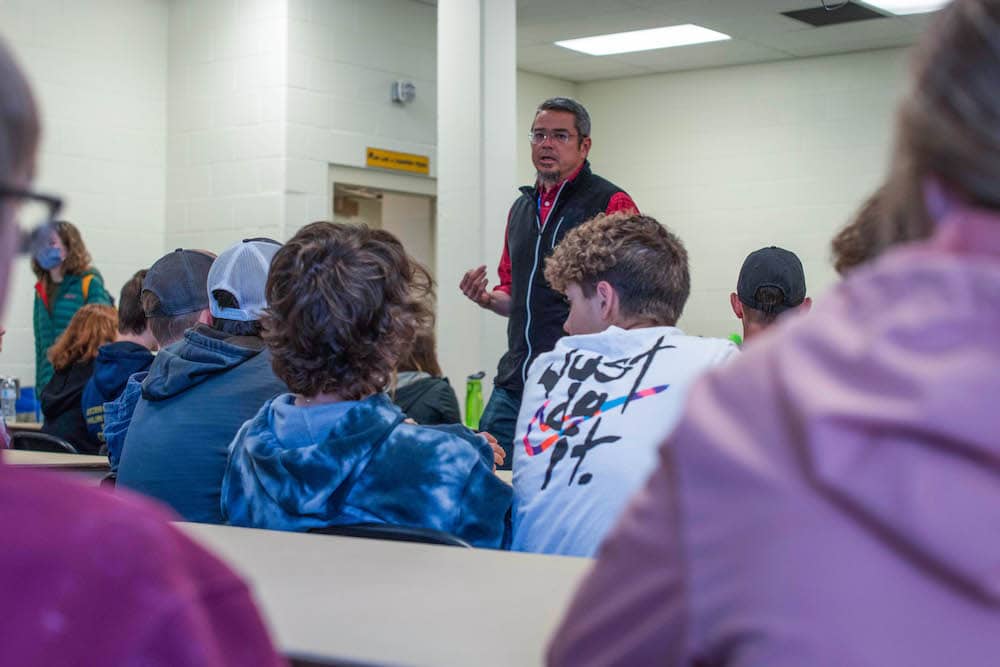
Nine school districts — ranging from Jackson to Upton to Cheyenne — are piloting a new K-12 education model that could fundamentally change how kids learn in Wyoming.
It’s a bit of an experiment. That’s because Gov. Mark Gordon’s Reimagining and Innovating the Delivery of Education initiative rethinks some facets of Wyoming’s educational status quo — like traditional assessments or classroom time — and incorporates concepts like competency-based learning and credits for learning outside the classroom.
It’s also a bit cloudy, as it’s short on specifics and obscured by educational jargon. But as pilot districts work to build new systems, the RIDE initiative is making progress, Adam Rubin told the Wyoming Board of Education in an update last week.
“There’s really great work going on throughout your state,” he told the board. Rubin cofounded 2Revolutions, a firm that specializes in helping states transform education.
The state will open the second round of applications for pilot schools before the end of next week, Gordon’s office said. It has seven slots remaining for interested districts.
History
Gordon established the RIDE Advisory group in May 2021 to study and develop recommendations for elevating Wyoming’s K-12 education system. The 11-person committee consisted of three state legislators, two Gordon staffers, two business owners, one educator, one school board trustee/parent, one education advocate/parent and Cheyenne-based attorney John Masters, who served as chair.
The group surveyed more than 7,000 stakeholders and held 17 listening sessions to gather feedback from the state. Most survey respondents identified themselves as parents or guardians. Nearly 60% of respondents said they do not believe children are being adequately prepared for the future, and the most commonly identified areas of needed improvement included “learning outcomes and expectations” and “class content and structure.”

Based on the information gathered, the committee proffered two top-line recommendations: First, students should be able to progress through academic content as soon as they are ready; advancement should be a product of mastery, not seat time. Second, students should have more opportunities for career and technical education.
Other key priorities for the education system include improving mental health support and increasing kindergarten readiness.
Of the 17 school districts that applied for the pilot, Albany 1, Converse 1, Laramie 1, Lincoln 1, Park 6, Park 16, Sweetwater 2, Teton 1 and Weston 7 were selected.
What have they done?
The districts began to build their programs in October, and are at various stages of progress as each has customized areas of focus. Sweetwater 2 in Green River is focusing on work-based learning experiences, Superintendent Craig Barringer said. An example of that is allowing students to earn educational credit through things like shadowing workers on the job.
In Jackson’s Teton District 1, Assistant Superintendent Scott Crisp told the education board, student school board members have taken the lead in creating a student version of the so-called “portrait of a graduate” — a template of expectations that Wyoming high school grads will meet.
“What we’re doing is taking a very student-centered approach,” said Crisp, who also sits on the state education board.
Other districts are rethinking the transcript, how assessments are conducted and what a student’s senior year can look like, Rubin said. The nine districts “are in really different places” in their progress. He said the work will eventually trickle into classrooms.
“So we’re really focused on a state-level conversation about this work, state-level learning, and then being in the trenches in classrooms with teachers and building leaders to implement this work,” he said. “And letting those two things inform each other.”
Current pilot districts plan to hold “celebrations of learning” in February and March to share and celebrate the process and plan next steps.
CORRECTION: This story has been updated to reflect Scott Crisp’s title as assistant superintendent. -Ed.

Best not to change horses in midstream.
Here goes a massive expenditure. Results won’t change. Be scrapped in 10 years or less. They will be left seeking “solutions”. Again
At least from the details in this article, RIDE is as Katie Slingsporn writes: “a bit cloudy, as it’s short on specifics and obscured by educational jargon.”
For example, the idea of mastery rather than seat time as the standard for advancement sounds worthy. But how exactly will mastery be determined?
Nothing on public pre-K? WY is one of the few states not to offer it, despite studies which show its educational value.
I puzzled why universal pre-k programs are nor incorporated. Research has repeatedly shown the long term benefits.
Very informative article. Thank you!