

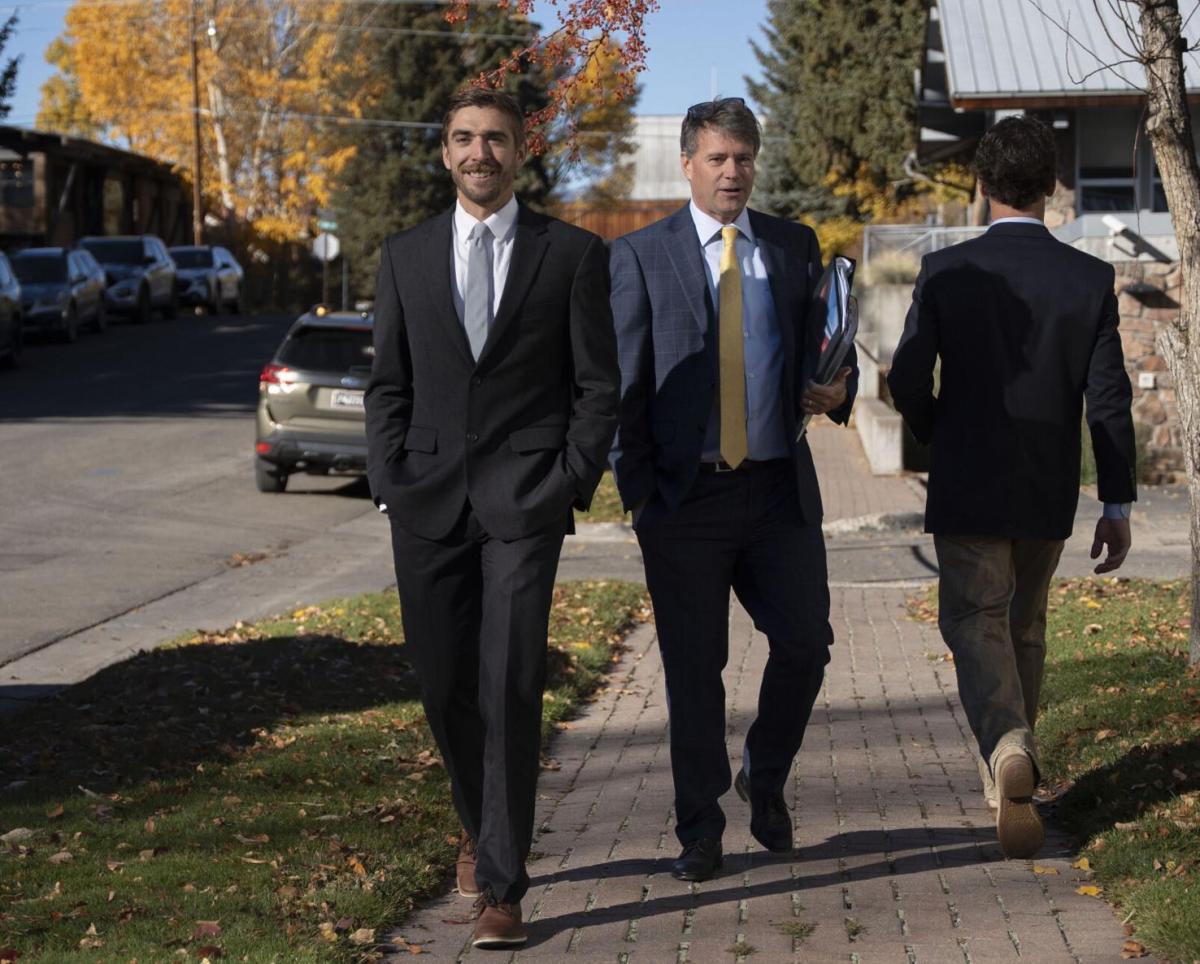
U.S. Magistrate Judge Stephanie A. Hambrick was not pleased Tuesday when she entered the courtroom.
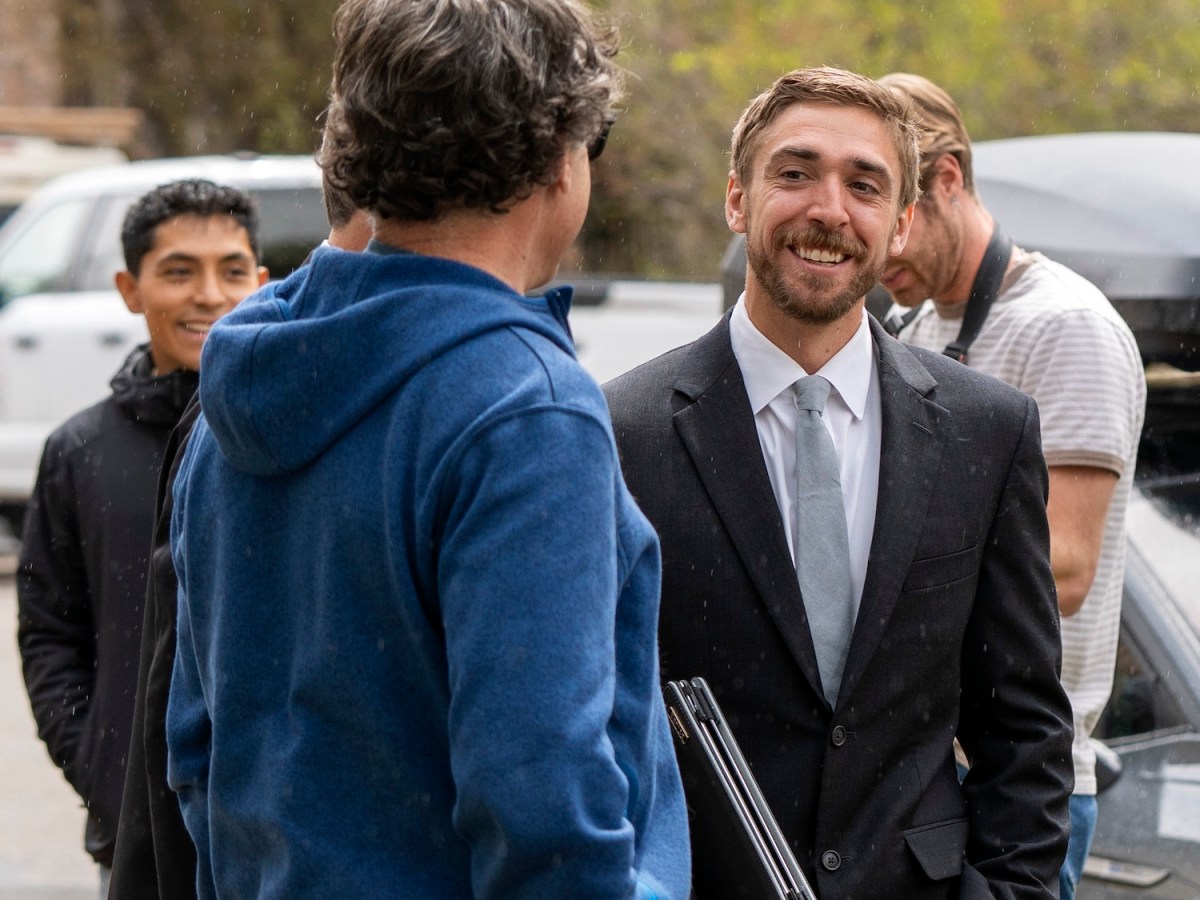
Until late last week, Hambrick had been preparing to sentence Michelino Sunseri that morning, closing the first chapter of a legal fight that began a little over a year ago when the mountain runner attempted to set a speed record on the Grand Teton. But in a surprise twist, Sunseri’s attorneys reached a deal with the newly appointed U.S. attorney for Wyoming on Friday. The deal would impose a milder penalty for their client and wipe the misdemeanor charge from his record in exchange for community service and an educational class.
Judge Hambrick was unconvinced.
“It’s an interesting message you send to the public,” Hambrick told Sunseri’s attorney, Ed Bushnell, Tuesday morning in Jackson. “If you whine and cry hard enough, you get your way.”

Bushnell pushed back, arguing the message in the deal is about finding a punishment that fits the crime.
“It holds the defendant accountable in ways that are more stringent than higher-level crimes,” Bushnell said of the deal, comparing it to a DUI. “I hope it’s not ‘you whine and cry hard enough to get your way.’”
Ultimately, Hambrick declined to accept the proposed deal, instead seeking 30 days to review the proposal. She set a status conference to discuss the proposal at 2:45 p.m. Nov. 18.
The case stems from Labor Day 2024, when Sunseri bounded up and down the Grand Teton in 2 hours, 50 minutes and 50 seconds — about two minutes faster than the previous record holder. But because Sunseri took a shortcut known as the “Old Climbers Trail” on his descent, the arbiter of mountain running speed records rejected his record. Shortly after, the National Park Service charged Sunseri with cutting a switchback, a misdemeanor that comes with a fine of up to $5,000 or six months in jail.
In court, Sunseri’s defense team argued that the trail he took was not properly closed. Prosecutors said the opposite, and that the closure was commonly known. Hambrick found Sunseri guilty in September.
‘Really, really rare’
Technically, the deal proposed Friday and discussed Tuesday is called a “deferred prosecution agreement.”
While Sunseri’s case is being handled in federal court, similar agreements are used in state court to handle cases such as first-offense DUIs in which the defendant doesn’t injure anybody. If the accused follows the terms of the agreement for an agreed-upon time, the conviction can be expunged from their record.
In Sunseri’s case, attorneys for the prosecution and defense are now asking for 60 hours of community service, a required education class and a year of probation — a much lighter penalty than first proposed by the government.
Afterward, Sunseri’s conviction would be expunged from his record, and his defense team would forgo its right to appeal the conviction.

That’s significant because attorneys with the Pacific Legal Foundation, a conservative law firm that fights government overreach, are representing Sunseri pro bono. They’ve already said they plan to appeal the decision.
Deferred prosecution agreements are rare in federal court, according to Grant Smith, a former federal public defender who now runs the University of Wyoming’s public defense clinic. Between 97% and 98% of all federal cases end in a plea bargain, and a deferred prosecution agreement is not, by definition, a plea.
“These are really, really rare,” Smith said.
In federal court, deferred prosecution agreements are typically used in corporate crimes. Rather than going to trial, a judge will require a firm to pay restitution, or amend board practices, later clearing a conviction.
But the timing of the proposal in Sunseri’s case is odd. Prosecutors and the runner’s defense attorneys had stalemated earlier over deferred prosecution proposals. Typically, similar agreements are used to avoid court costs and taxpayer expenses that come with a trial. Sunseri’s trial happened in May.
“From a taxpayer perspective, if all that’s going to be for naught, it could be viewed as a waste of resources,” Smith said. On the other hand, if a prosecutor realizes they have a weak case on appeal, they could buy into the sunk cost idea and accept an agreement like this late in the case.
Like the agreement, the timing is also “very atypical,” Smith said.
Hambrick agreed, calling the proposal an “abrupt change in course” by the U.S. Attorney’s Office.
Influencing Smith?
The remarkable, terse exchange between Hambrick and Bushnell was one of many in the 30-minute hearing Tuesday in the Clifford P. Hansen Federal Courthouse. In contrast to Sunseri’s May trial, in which Hambrick was convivial and objective, the magistrate asked pointed questions and was sharply critical of the proposal before her, which had been approved by U.S. Attorney Darin Smith.
President Donald Trump appointed Smith, a former state lawmaker from Cheyenne, as U.S. Attorney in August. At the time, Sunseri’s legal team had made inroads with powerful people on Capitol Hill skeptical of the prosecution, painting it as an example of “overcriminalization.” Sunseri received pro bono legal assistance from the Pacific Legal Foundation and backing from U.S. Reps. Harriet Hageman, R-Wyoming, and Andy Biggs, R-Arizona. Both are members of the House Judiciary Committee and sent a letter in July criticizing the prosecution and seeking answers.
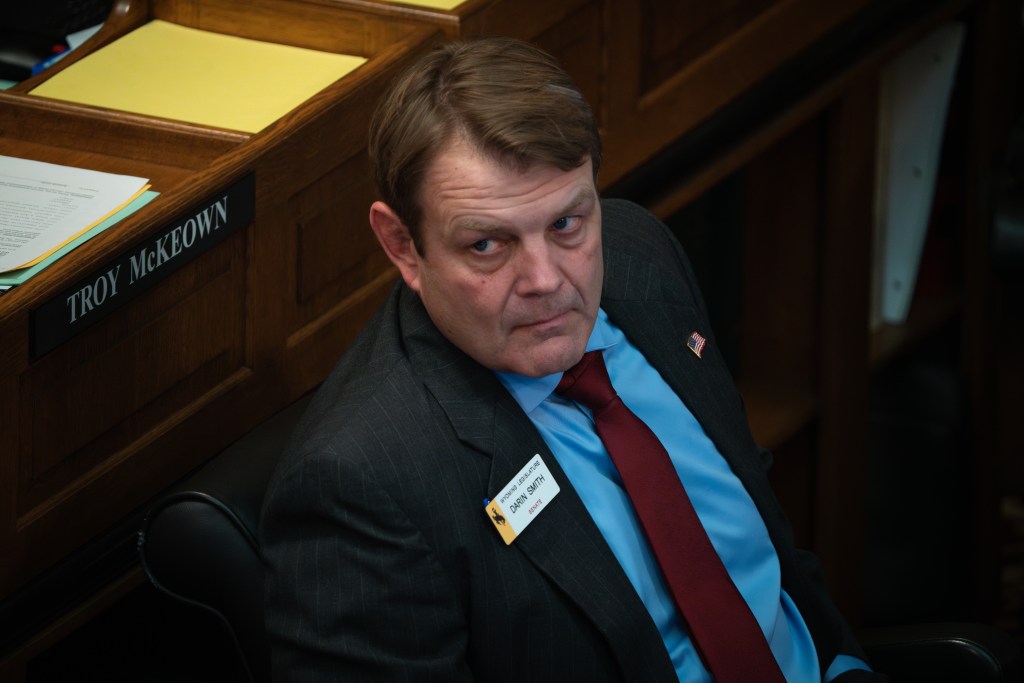
Hambrick was clearly skeptical of Smith’s motives. In general, federal prosecutors are expected to act independently of political influence to preserve the independence of the judicial branch.
In the filing that Sunseri’s defense team submitted along with Smith and his deputy, lawyers cited federal law and case law to say that when a prosecutor seeks to dismiss an indictment, a judge can deny the motion only when it is “clearly contrary to manifest public interest,” like if the prosecutor sought dismissal to attend a social event rather than attend court — or if the prosecutor in question accepted a bribe.
“Unless the court finds that the prosecutor is clearly motivated by considerations other than his assessment of the public interest, it must grant the motion to dismiss,” the lawyers wrote, citing case law.
Hambrick keyed in on the language surrounding bribes.
“I don’t know if USA Smith has been bribed, or …” Hambrick said at one point, using the acronym for U.S. attorney, before trailing off.
Outside the courtroom, Sunseri declined to comment until after the trial concluded, punting to his attorneys a question about how the agreement with Smith was reached. Bushnell in turn referred the question to Alex Rienzie, his co-defense on the case along with the Pacific Legal Foundation. When asked explicitly whether the team had offered a bribe or exerted other influence over Smith, Rienzie emphatically said, “No.”
Rienzie said he had only ever emailed about the case with Ariel Calmes, the assistant U.S. attorney who has led the prosecution, and Nicole Romine, the head of the District of Wyoming’s criminal division.
A spokeswoman for Hageman said the congresswoman won’t comment on the case until it’s resolved. Hageman did not return a phone call seeking comment. The U.S. Attorney’s Office did not answer a direct question about influence and bribes in a statement provided late Tuesday evening.

The proposed deal “holds Mr. Sunseri accountable but allows him an opportunity to defer prosecution and sentencing in this matter on the condition that he complete certain terms,” spokesperson Lori Hogan wrote. “U.S. attorneys have discretion to make prosecutorial decisions based on what they feel is in the best interest of the public and the justice system, without consideration of outside influences.”
In court Tuesday, Calmes, the prosecutor under Smith’s supervision, appeared to distance herself from the deal. When Bushnell said that “she” had accepted the proposal, she stood up and objected.
“I do want to remind Mr. Bushnell that it’s USA Smith accepting the offer,” she said in response.

It’s too bad they don’t go after REAL criminals with such enthusiasm. You know, like all the “people” on the epstein tapes?? How about the israheli pedo they allowed to go home?? et.al. how about the pedo sherf in sublette??
Entitled always get their way. If you have enough money you can……….
I would argue that even this proposed plea deal is too harsh for the offense. This is truly a victimless crime. Can anyone with a straight face really say “on this day Mr. Seunseri commmited this offense against the peace and dignity of the United States of America?” This magistrate and assistant prosecutor Ariel are just giving ammunition to those that want to politicize and usurp more control over the justice system. This is alphabet government agency federal code to the extreme. Should we the taxpayer spend $30,000 to house someone in jail for six months for this ? No one was hurt, it is obviously a short cut many others have taken. There is a name for the route ! There is no honor in bringing the dangerous and deviant offenders of using a closed trail to face a harsh punishment .To Stephanie I would say there is no need to become visibly frustrated over this agreement with a guy who stepped off a trail. Let it go, no more wasting time and money on a frivolous and malicious prosecution.