

In a new nationwide assessment gauging student reading and math recovery since the COVID-19 pandemic, Wyoming ranks 36th out of 38 states for academic growth in math and 20th out of 35 states for reading between 2022 and 2025.
With fewer and shorter COVID-related school closures, Wyoming also experienced less learning loss than other states, which means it didn’t have as much to make up. Still, Wyoming students in 2025 worsened their performance on math tests by the equivalent of -.42 grade levels compared to 2019, according to the Education Scorecard, a collaboration between Harvard University and Stanford University.
On reading tests, meanwhile, Wyoming students in 2025 worsened their performance by the equivalent of -.41 grade levels compared to 2019, the report found. While still above the pre-pandemic national average in both categories, these results illustrate significant slips.
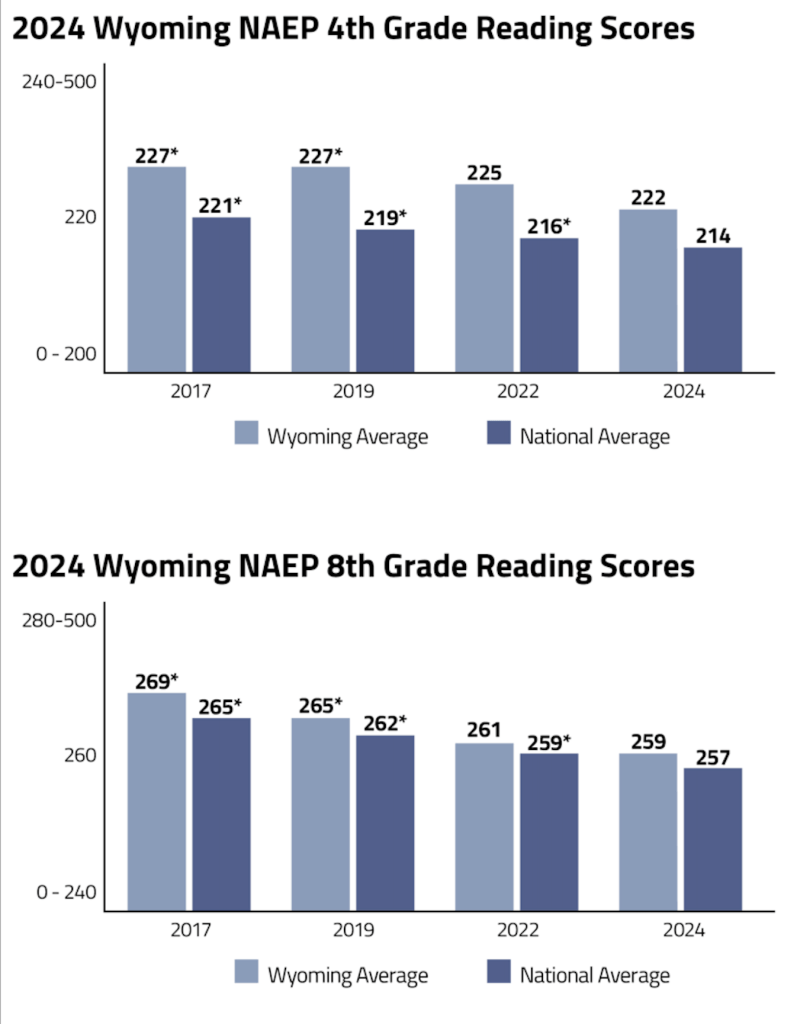
The findings, however, track with Wyoming’s test scores on the National Assessment of Educational Progress, or NAEP. Wyoming students’ test scores in 2024 — the most recent available — remained above national averages but continued a five-year downward trend in both math and reading. NAEP scores for 2025 will be released in June.
Wyoming also uses ACT test scores and the Wyoming Test of Proficiency and Progress — commonly known as WY-TOPP — to assess performance, Wyoming Department of Education Chief of Staff Dicky Shanor told WyoFile in an email. Those tell a slightly different story, he said.
“Our state assessment scores … reflect continued improvement post-COVID,” Shanor wrote. “In both [English language arts] and science we have met or exceeded pre-COVID proficiency. In math we are just .4% below pre-COVID levels. In all areas we are improving. And with ACT, we continue to be a top three state when it comes to the states that test all their students on ACT.”
Wyoming’s track record could also make gauging “recovery” tricky, Shanor added.
“One factor that could weigh against us in this new recovery scorecard is that our already high performance makes recovery comparisons at the national level more difficult for us,” he wrote.
Wyoming passed a school funding bill this spring that represents a significant overhaul in how the state pays for public education. This followed lengthy debate on academic achievement, teacher pay, local district control and constitutional obligation to pay for public schools. In the months since it passed, district leaders have struggled to implement the complex overhaul.
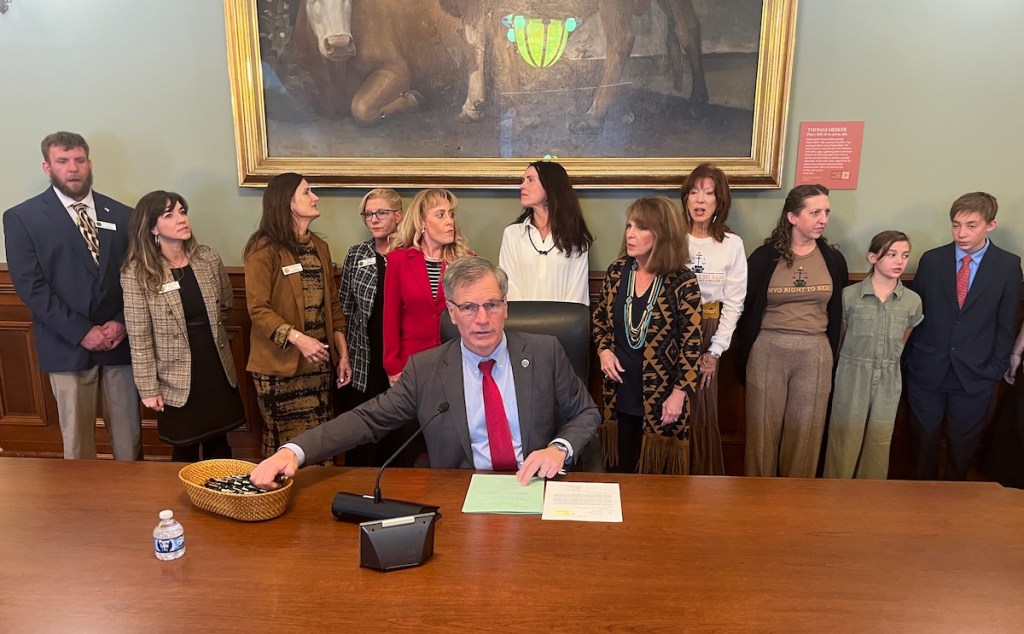
Lawmakers also passed a literacy bill that aims to ensure that every K-12 Wyoming student develops strong language skills and that struggling readers do not fall through the cracks. Several states have passed similar legislation in recent years, with positive results.
Nationwide ‘learning recession’
The new Education Scorecard findings are part of a trove of data that shows how American kids have fared academically over the past seven years in more than 5,800 school districts across 38 states and Washington, D.C.
Only five states plus the District of Columbia had meaningful growth in reading test scores from 2022 to 2025, the scorecard found. Nationally, students remain nearly half a grade level behind pre-pandemic reading scores and only slightly better in math.
To compare states accurately, the researchers, Harvard’s Tom Kane and Stanford’s Sean Reardon, converted state test scores for third to eighth graders into a common metric known as a grade-level equivalent. They used NAEP as a benchmark.
Though the researchers were studying pandemic recovery, several factors outside of the COVID-19-related disruptions have been undermining America’s academic performance for years, said Kane, faculty director of the Center for Education Policy Research at Harvard.
“The pandemic was the mudslide that followed seven years of erosion in student achievement,” Kane said. Declining test-based accountability, the rise in screen time and social media and other factors contributed, he said. In the report, Kane and Reardon strove to highlight what’s working.
The entire country entered a “learning recession” in 2013, the study authors wrote, as student progress in math and reading stalled and achievement began to decline. “In reading, the average annual loss in achievement immediately before the pandemic (2017-2019) was just as large as during the pandemic (2019-2022),” according to the researchers. “Grade 8 reading scores in NAEP are now at their lowest point since 1990 and Grade 4 is at pre-2003 levels.”
Since 2022, the recovery has been “U-shaped,” with larger improvements among the highest- and lowest-income school districts in the country. Middle-income districts have seen the least improvement on average. The recovery in achievement in the highest-poverty districts seems largely due to federal pandemic relief, the authors concluded.
Wyoming in detail
Some Wyoming districts bucked the trends and saw better recovery. Albany County School District 1 in Laramie is outperforming its peers in both math and reading recovery, the Education Scorecard found. Others excelled in one category or the other: Lincoln County School District 2, Natrona County School District 1, Sheridan County School District 2 and Teton County School District 1.
Other districts struggled. In math, districts like Converse 1, Big Horn 1, Sublette 1, and Sweetwater 1 continue to lag more than a full grade equivalent behind 2019 levels, the Scorecard found. In reading, districts like Fremont 1, Converse 1, Sweetwater 1 and Big Horn 1 continue to slip, and remain more than a full grade equivalent behind their 2019 levels.

To many, Wyoming’s new literacy bill offers hope about the future of reading instruction. It will establish an evidence-based system of instruction, intervention and professional development to provide teachers, families and students with comprehensive and effective tools for teaching reading. The bill also addresses deficiencies and aims to bring all Wyoming districts in line.
That may bode well for the state, according to the Education Scorecard. It found what it described as the beginning of a turnaround in reading, which “appears to be related to state early-literacy reforms … All of the states which improved in reading between 2022 and 2025 were implementing comprehensive ‘science of reading’ reforms.”
Though implementation will be a heavy lift, Shanor wrote, the legislation “should really boost our [English language arts] performance.”
The Wyoming Department of Education has also asked the Legislature’s Joint Education Interim Committee to study why Wyoming NAEP scores drop from fourth grade to eighth.
— Sharon Lurye and Jocelyn Gecker of The Associated Press contributed reporting.

I wish the author of the article had told readers where to go to find information on how each district performed. Without that information, the article is of little help in determining how a home town district is doing. So if a person reads the headline, they may think there own district is scoring low, while exactly the opposite may be true. For certain, some classrooms struggle most years. But I’m also certain many teachers are consistently successful in getting kids to learn. They should be commended. But they’re not, because many will only read the headline.
Another possible explanation for the decrease in performance is the the Department of Education was getting worse under Degenfelder who became Superintendent in 2023.
“Scoring above the U.S. average is not an accomplishment to be touted because most policymakers and educators across the country view the U.S. average student performance as being inadequate.”
From the 2020 Wyoming Education Recalibration Report
Fits right into Trump’s plan that he likes uneducated voters. Keep up the good work!
The people (children) that had the least to fear from Covid, have suffered the most.
No one has been held to account for all the HORRIFIC decisions that were made during that period, that had devastating effects on our entire country.
Large organizations do “after action” reviews of their handling of situations. Nothing has been done regarding Federal State and Local handling of Covid.
So, are you referring to the ”horrific” decisions to follow basic infection control procedures such as masking and distancing? If not those, what “horrific” decisions would you be referring to? There is no doubt that remote learning had a profound effect on individual performance through all grade levels. I feel however, that without social distancing the mortality toll would have been much greater.