


Biologist Ben Wise received the first feedground reports of lethargic elk calves on Feb. 25.
He had a hunch about what was coming. As the Wyoming Game and Fish Department’s disease biologist for the Jackson Region, Wise has been around long enough to know what was likely about to happen. Hoof rot. And death.
There were too many elk on the Horse Creek Feedground where a feeder had spotted the sick juvenile ungulates: nearly 40% more than the 1,250-elk goal for the state-managed site just south of Jackson. The already long, cold and snowy winter would likely mean a long feeding season. That meant 1,733 elk being fed every morning on top of feces-filled ground in the feedground’s flat valley floor.
Hay mixed with alfalfa, which can cause mouth abrasions and lead to infections, was being distributed. The icy snow could do the same with hooves.
“Because of our feedground counts and because of the severity of the winter,” Wise said, “in early February I could tell we were going to see a hoof rot outbreak here.”
Hoof rot is the colloquial term for a disease caused by Fusobacterium necrophorum bacteria, which occurs naturally in ungulates’ guts. But when it gets into the bloodstream through an abrasion, it can be a killer — especially for calves, which have softer hooves and less robust immune systems.
For nearly two straight months after the first sighting, Wise fielded nearly daily reports of dead calves or lame calves needing to be euthanized.
“We stopped feeding there like April 15,” Wise said. “They were definitely starting to pile up at that point. Probably five to 10 animals a day were succumbing to it.”
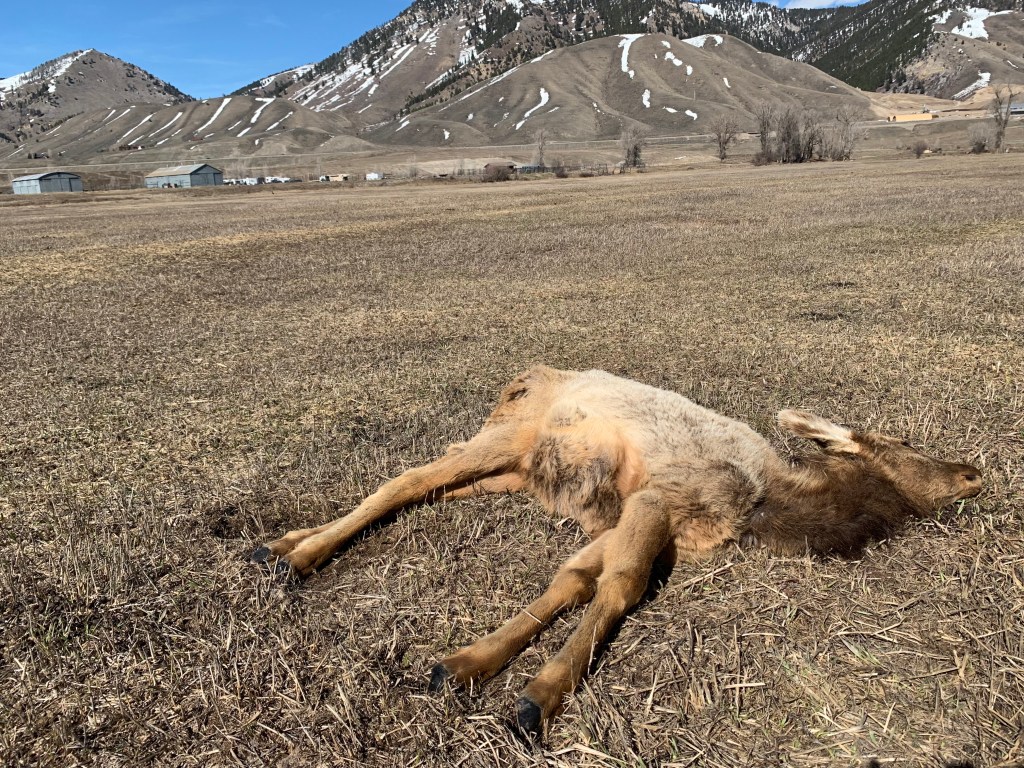
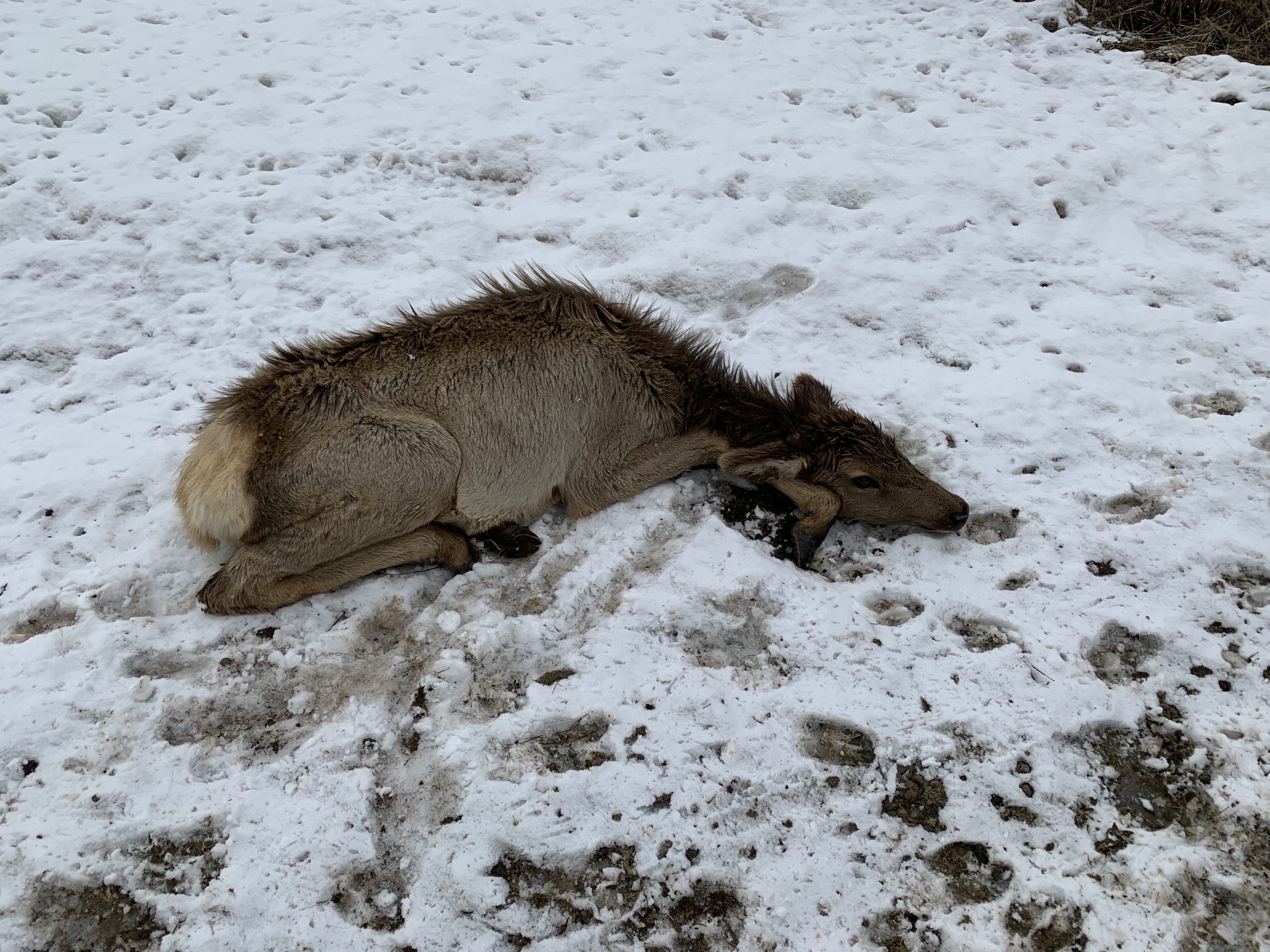
The final toll was staggering: Nearly half of the calves counted on the Horse Creek Feedground last winter died.
Game and Fish did not publicize that deadly spate of hoof rot amid a devastating winter and spring for western Wyoming mule deer and pronghorn. But the state agency did detail the outbreak in its seldom-read “Job Completion Report” for Jackson Region ungulates released months later.
Major die-off
According to the report, 155 calves died or had to be killed on the Horse Creek Feedground, and “most” had to be killed by Wise and other wildlife managers “due to inability to move.” Another 64 dead calves suspected to have succumbed to hoof rot were discovered on the nearby Bridger-Teton National Forest or on private land. All told 45% of the calves counted on the Horse Creek Feedground died.
“That many calves is a huge percentage of the overwintering population,” Wise said.
Is that the largest hoof rot die-off documented in the nearly century-long history of Wyoming’s elk-feeding program west of the Continental Divide?
“I would guess it’s probably up there,” Wise said. “It’s not a new thing. Olaus Murie wrote about this in the 1930s, so it’s not something that just cropped up.”
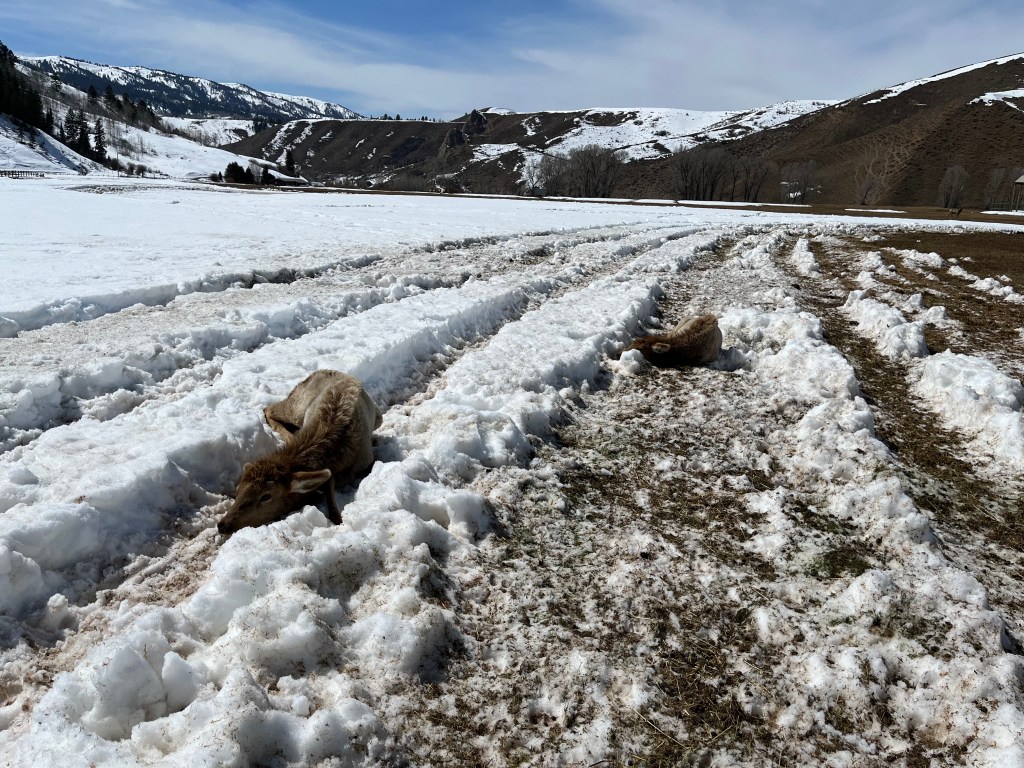
Veteran biologist Eric Cole, who’s on staff at the National Elk Refuge, was also struck by the numbers.
“I’ve never seen anything of that magnitude,” Cole said.
There have also been major hoof rot-related losses on the nearby National Elk Refuge, which is managed by the U.S. Fish and Wildlife Service, but not at the same rates as the recent die-offs at the state-run feedgrounds. While there are more elk on the federal refuge — oftentimes more than 8,000, despite goals — there’s a lot more room to spread out feed on the federal property, which uses ground and pelleted alfalfa to feed elk instead of hay.
“We had regular fresh snow on the [federal] feedgrounds all winter long, and almost no melting until the end of the season,” Cole said. “So the animals basically we’re walking on clean snow for the entire winter.”
Winter 2022-’23 was a whopper, and relatively deadly by National Elk Refuge standards. Some 189 calves died, 19% of the surveyed population. But they died from a whole gamut of causes: predation, starvation, disease, etc.
“I can say that foot rot was relatively minor,” Cole said. “Only about 7% of calves that died were exhibiting signs of foot rot, and in previous years we’ve seen that [figure] as high as 80% of the calves that died.”
Overpopulation in the winter likely exacerbated issues at the Horse Creek Feedground.
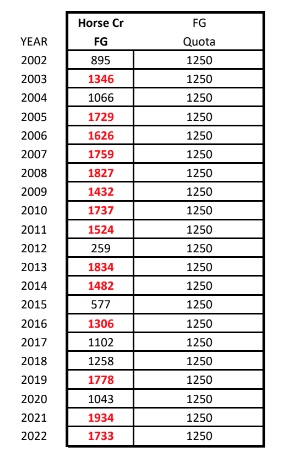
Elk that gather there and at three other feedgrounds south of Jackson are part of the Fall Creek Herd, which summers in the northern Wyoming Range, Snake River Range, Gros Ventre Range and on ranchland straddling the Snake River. The herd as a whole is only 9% larger than Game and Fish’s 4,400-animal goal, but it’s the elk gathered at the hard-to-access Horse Creek Feedground that are most out of whack. Elk attending that site have exceeded the state’s goal 14 of the last 20 years, surpassing objective by 55% as recently as 2021.
Hunter pressure lags
There’s no public road access to the feedground, and it’s proven tough to entice enough cow and calf hunters to trek three miles in to suppress numbers. This year, the state agency extended the season down there for over-the-counter “general” tag elk hunters later into November in hopes of increasing the kill.
Overall, there’s been a precipitous drop in hunter pressure on the Fall Creek Herd, according to Wyoming Game and Fish biologist Gary Fralick, who’s managed the herd for 30 years. He noted it’s the second largest elk population west of the Continental Divide in Wyoming, second only to the Jackson Elk Herd.
Fralick ran through the numbers for elk unit 84, which covers a lot of the Fall Creek Herd’s territory.
“From 2013 to 2022, we’ve seen an 83% decline in the number of harvested elk in area 84 by general license hunters,” Fralick said. “In 2013, general license hunters killed 345 elk. In 2022, they harvested 59.”
Fralick isn’t sure why hunter interest is so dramatically reduced. But it’s fallen off throughout the season, including a stark reduction in horse hunters headed into the backcountry. Fralick used to count between 55 and 65 trailers at the Bryan Flats trailhead (just across the highway from the Horse Creek Feedground) during the opening week of elk hunting. In recent years that figure has ranged from 11 to 14, he said.
“I wonder what it is?” said Fralick, who feels stumped by the shift.
Concurrent with the huge decline in hunting pressure, the Fall Creek Herd has become increasingly dependent on the four elk feedgrounds within its habitat: Camp Creek, Horse Creek, Dog Creek and South Park. That’s a dynamic that the neighboring Jackson Elk Herd shares.
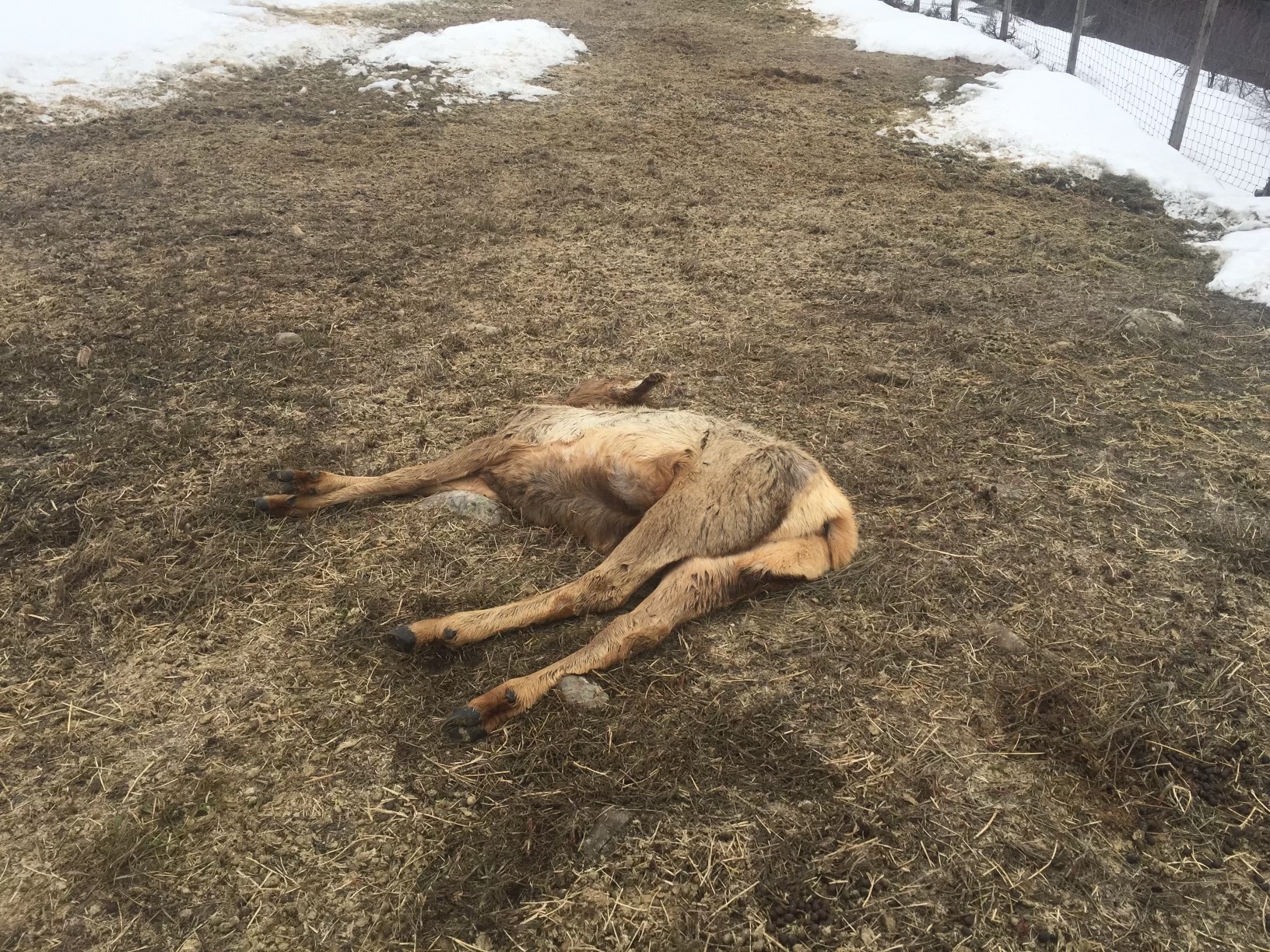
Fralick has watched as the so-called “native range” outside of the feedgrounds in places like Munger Mountain and Grayback Ridge has steadily lost elk in the winter.
“That seems to be a bygone era,” Fralick said.
Instead of elk, what Fralick sees in those places now are the signs of human recreation: snowmobile and ski tracks. “It doesn’t take much to displace elk,” he said.
Fralick and his fellow managers have inherited a herd that’s more dependent on the feedgrounds — and, at Horse Creek, more susceptible to disease, like the necrobacillosis outbreak last winter.
Fix in the works?
The Wyoming Game and Fish Department, now partway through finalizing its first-ever elk feedground management plan, could soon have a new charter on how to respond to that and other diseases.
“I hope that the department is able to follow what has been written,” said Hank Edwards, Wyoming Game and Fish’s recently retired Wildlife Health Laboratory supervisor. “There are things that we can do to improve the welfare of those animals, so hopefully the department is able to do that.”
The draft plan calls for preventing hoof rot outbreaks by taking steps like feeding on clean snow and removing elk manure with a tractor. If a die-off does start, there’s another list of steps to take: reducing elk densities where possible, and euthanizing elk unable to stand.
Wise wants to avert another deadly outbreak.
“We’re going to do several alterations in the feeding regime at Horse Creek this winter to see if we can break that mortality cycle,” he said.
At the peak of the spring hoof rot die-off, he was dealing with putting calves out of their misery, handling dead elk, and trailering the carcasses away day after day.
“It definitely grinds on you,” Wise said. “My wife was like, ‘You were definitely not in a good place at the end of the winter.’”
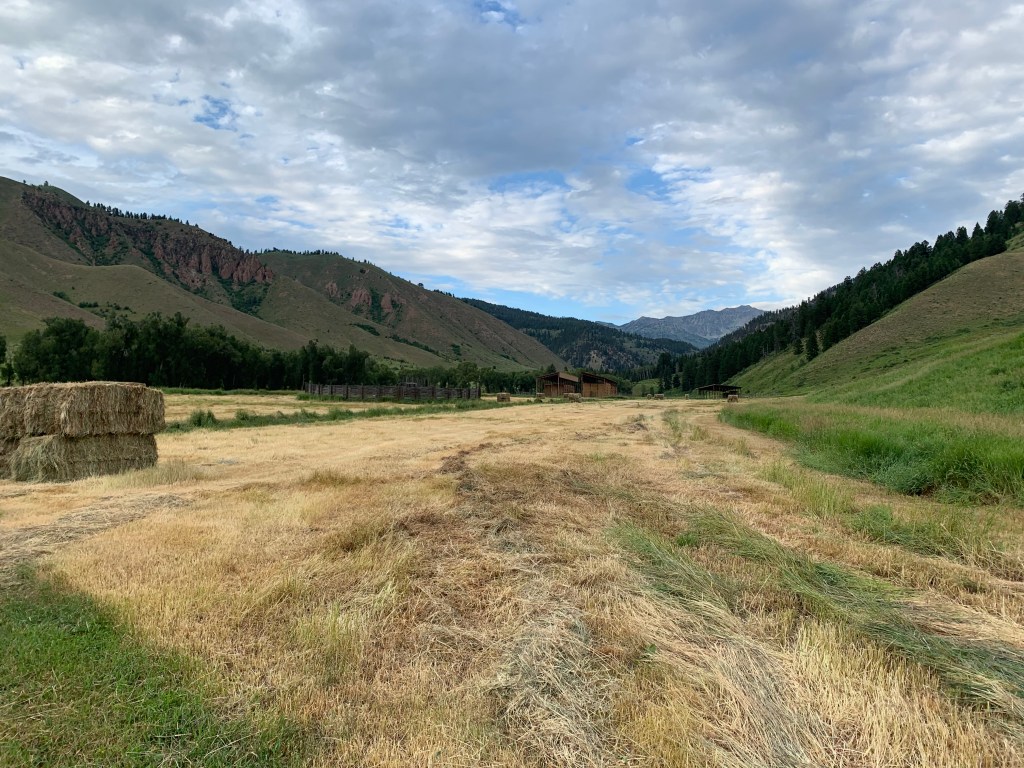
As a precautionary measure for winter 2023-’24, Wise left a bunch of cut hay higher up on the state-owned land overlooking the traditional Horse Creek elk feeding site.
“It’s a big, open mesa where we can really spread the elk out,” he said. “Our goal this winter is to see if it’ll work.”
The state also stocked predominantly grass hay instead of alfalfa-mixed hay, he said, which could cut down on mouth abrasions that can lead to infection.
Last, there are likely to be fewer elk. That’s partly because of the later general season, which opens the door for heavier hunting, and partly a product of the last deadly winter.
“It’s sad to say, but one population management tool is not even a tool,” Wise said. “What’s managing the population now is calf mortality.”

Elk are suffering mightily in SW Washington also. It is terrible to watch Wapiti dragging them selves around with obvious extremely painful feet and legs. I suffer from neuropathy in both feet now and can only imagine what the Elk are going through.
In Washington, they made a new dept. in Fish and Game, hired a high dollar scientist a couple years ago, and built a new facility all for hoof rot study. So far, in three years they have only managed to obtain these results: if you grind up the hooves of hoof rot infected Elk, then feed that to other uninfected Elk, disease transmission is imminent. DUH.
It is interesting that Wyoming biologists are now pegging hoof rot to a treponema bacteria as the cause and Washington scientists have poo-poohed this and have selected a different bacteria as the root cause. Their was a local biologist that tried to inform Washington Fish and Game for years that Treponema bacteria were the cause of hoof rot, but he has died and of course Washing State Employees no better. Can’t these two states with the same problem so some concurrent studies or investigations that will offer some kind of treatment for this ugly disease effecting the Wapiti? I would expect that Wyoming G & F might come up with a plan, as Elk are treated with way more concern than Washington. Elk in Washington, at least where I now am living, are treated with no respect or any kind of management that might be seen as Elk friendly. The big bulls have been shot to extinction here, and all that is left are some lame or pitiful looking Elk. Hoof rot seems to be affecting some and not others, but the hunters with special tags meant for harvesting the sick and lame only want the ones that are seen as almost healthy.
Please, Wyoming and Washington get together and start combatting this disease what ever it takes. Hunters and Elk organizations need to take the forefront in this battle and start holding the G & F depts. of both states to higher standards of work effort. Oregon has a additional problem with the CWD that is going to decimate hunting in all the Western states and is now being found in Oregon herds. At least Oregon is instituting a routine and all encompassing review of harvested animals in effort to get a handle on the CWD. Sad, Sad state of affairs human management has arranged and instituted.
State wildlife agencies narrowly focus on producing an abundance of recreational killing opportunities. But treating wild ungulates like livestock apparently has some drawbacks. These agencies are slow to learn and change. It looks like the WGF elk feeding program is “needing to be euthanized.”
When the MILLIONAIRES and BILLIONAIRES buy up the traditional deer and elk winter habitat this is what happens. Look at Jackson Hole the meadows that were once used by wildlife are now housing developments. The ranches that were once open to hunting are locked up by the rich so that now one can hunt the land. When the hunters can’t access the elk and deer over population happens.
In the article it was mentioned several times that the deaths of all these animals was “suspected” to be a feeding station gone wrong. With so many dead why are you not taking a few elk to a lab so that the deaths can be not left to guessing? Tests would confirm all factors related to the deaths. Many of us find it odd that you don’t seem to want to confirm cause or causes of death. Good animal management dictates the truth be confirmed. Anything outside of that is sloppy incompetence.
Looks like CWD to me!
So only(!) hoof rot – what about CWP? That many animals in a relatively small space whether wildlife or domestic is asking for trouble – I live in NYS – dont have experience with the wildlife like this – mainly white tails, foxes, some coyotes. But how was this ever ever considered a good idea?
I know this is a hinky subject out there – but are there no wolf packs nearby?
How can there not be predators in this area with all this prey?
Cannot imagine having to put down young animals in these numbers – I realize not letting them suffer, but that had to so depressing.
Did the agency not realize the damage that mixing alfalfa with the hay could do?
1. Stop feeding these ungulates in congregated areas.
2. Stop killing bears, wolves, cougars, and other predators.
It’s all about energy. Predators will kill the easiest to kill: they young, the old, the injured and the sick; i.e. they clean the bottom of the gene pool.
Hunters want to kill the largest, most prime animal, whether for the trophy or for the meat; i.e. they take the best genes out of the gene pool.
Bring back the predators. Stop managing predators on public land for the benefit of ranchers and hunters.
Good points
“We cannot solve our problems with the same thinking we used when we created them.” A. Einstein. Folks interested in this issue can google ‘What Happens When Elk Feeding Ends’, to find a comprehensive Q&A-style narrative about phasing out the elk feedgrounds.
Why wasn’t the Wyoming Game and Fish Department, in particular the Director’s Office, as well as the Wyoming Game and Fish Commission forthcoming in reporting this tragic event to the public when it was discovered? Instead of informing the public at the time this was happening , WGFD administration chose to hide it from the public by essentially sweeping it under the rug by reporting it in the seldom read job completion report as reported by WyoFile.
I have great respect for our local game wardens and local biologists in the management of our wildlife resources. I can’t say the same for the upper echelon at WGFD. Given that, consider what WGFD administrators are doing (or not doing) in protecting critical pronghorn and mule deer migration corridors, or effectively dealing with CWD beyond just testing and monitoring.
The excellent reporting in this story is the reason why I support WyoFile with a financial contribution. I hope more WyoFile readers will do the same! If it wasn’t for WyoFile’s report on this issue, none of us would know what’s going on with these wildlife diseases!
This is a well done story that needed to be told my daughter and her family were at Jackson for spring break and rode through the elk herd feedlot. She said it was very sad from the big bull elk to the Calf’s they were dying off from hoof rot. The pellets they feed get in between their toes and with the snow and ice packs in and they can’t clean it out. I feel the feeling should continue without it that elk herd might not exist. The ranchers feed alfalfa hay and I have not heard of this problem I know it’s more labor however I feel it if you’re going to do it do it right or don’t do it at all there was a crazy amount of snow up there this year they were antelope they were dead all over it was very bad up there.
What a spectacular failure. Never once did WGFD question the efficacy of feeding elk like domestic cattle. If WGFD actually followed its own advice and stopped feeding wildlife, this would not happen.
…not the Game & Fish’s whole cloth fault. The majority of problems about elk feedgrounds fall squarely in the laps of the cattle baron Stockgrowers. It’s why we have the feedgrounds in the first place… keep the elk and deer out of their haystacks and fallow pastures in winter… the same ground the elk and deer used to winter on before barbed wire fences and Old World bovines appeared.
This is a great article, and the photos compelling as well as intensely sad. I completely agree with the first 3 comments here, and I really don’t know about the one regarding out of state hunters. I wonder if a higher percentage of Wyoming hunters are only interested in going where their 4 wheeler can take them or where they can step out of their truck to take a shot….?? Obviously the animals are out there, what has happened to the “hunt” part of hunting??
As always, Mike Koshmiri does incredible reporting. This is just one in a great series that have informed and provided source information to the public. He is a real asset to the public who are attempting to work on this issue against a political environment that will not allow management to proceed on a scientific basis, instead continues this antiquated practice of feeding while all our neighboring states do not feed, yet have healthy elk populations. The WGFD draft feedground management plan does not bode well as it treats symptoms, not causes, and delays needed feedground closures. It is too bad for our wildlife.
This should prove to all wildlife lovers that destroying all apex predators is the only solution to the over population of the elk.
I misread your comment, Mr Olsen, and agreed with it in my initial comment. I believe that predators ARE necessary in the big picture of management…how much more obvious could it be from what this article reports?
We wouldn’t want the big, bad wolf keeping the herds healthy!
Gary Fralick— you can’t figure out why the numbers have dramatically dropped for hunters in those areas? Well Mr. 30 year biologist, it’s because there’s a grizzly around every tree and no one wants to risk going to prison for protecting themselves! Thank goodness you’ve loaded up all the carcasses, you sure wouldn’t want all those predators to get a sniff of all the death out there and show the true numbers and mismanagement of predators!
thanks for bringing this to the general attention of the public – without knowing what is going on citizens can’t help find solutions to the problem.
Wyoming doesn’t seem to like out-of-state hunters anymore. Lower the cost of tags and and make accessibility easier. Out of state hunters put more money into your economy. Run the numbers!