


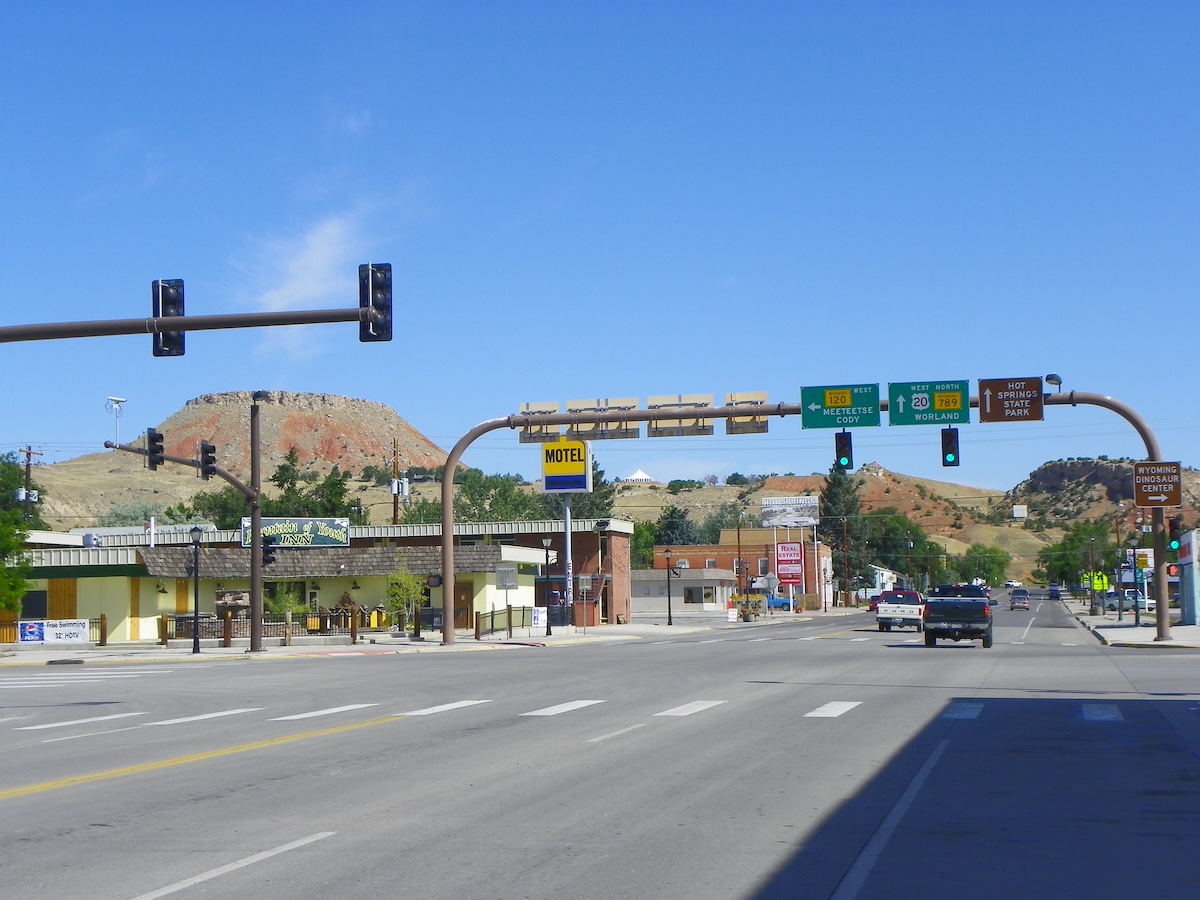
A recent news report highlighted trouble in Hot Springs County. The county commission was forced to make spending cuts, including withdrawing funds from the county 4-H program and laying off an employee at the county extension office due to a lack of revenue for the upcoming year. Hot Springs County residents were surprised by these cuts, correctly pointing to the great things these programs and personnel do.
Opinion
They shouldn’t have been. This is precisely what was to be expected following the Legislature’s actions this past legislative session, as they cut one of local governments’ few sources of funding by implementing across-the-board residential property tax cuts. This is only the first small drop in the bucket of what is to come. We should all expect many more stories just like this in the coming years.
Hot Springs County is a fitting first place to see these impacts, as it illustrates an important coming trend. The places that are likely to see the most drastic impacts of the Legislature’s undercutting of state and local government funding are our small counties and communities. Places like Cheyenne, Casper and their counties have a broader tax base and more maneuverability in their budgets. Small communities don’t. Small communities are also less likely to have the reserves to smooth out the bumps that come with sudden revenue losses.
That is not to say that large communities will be immune. Cuts will hit them just as hard; they just may have a little more runway until the full impacts are felt. Cheyenne and Casper should also expect to see government services decline and personnel go away. And while the idea of “cutting government” sounds good, when we think about exactly what is being cut, the appeal often quickly fades. Local government in Wyoming does a lot of things that we often do not even think about, but may soon very acutely notice as they go away. When there is no longer plowing of city streets after a snowstorm, when ambulances or other first responders are cut and response times increase — or when communities do not provide rural services at all, or potholes go unfixed, we must all remember that this is what you get for that reduction in property taxes. We must also remember who are the people championing these reductions in government service.
The irony in this situation is that those directly responsible for making this situation worse are acting like they are here to save us from their own bad decisions. Several Freedom Caucus members recently arrived at an Appropriations Committee meeting wearing bright red jackets to highlight the projected $700 million shortfall in education funding by the 2029-2030 biennium. The implication here was not that we need to find increased funding for education. Rather, this was a salvo in what is likely to be a direct assault on Wyoming’s public education system. The irony arises because part of the reason the projected shortfall is so high is the very cuts imposed by this group of legislators. The impending education budget shortfall is a major concern, but these legislators cannot in good faith say that it was caused by someone else. This is a problem born from our state’s constitutional requirement to provide a free, equal and high-quality education to our students, the cost of providing that education, and the most recent Legislature’s decision to specifically undercut its ability to do so.
The truly scary thing is that the recent property tax cuts may only be the first step. One recent proposal would have the state do away with all property taxes. A report by Wyoming AARP on the potential impacts of such a proposal pointed to a similar idea in Nebraska. The analysis in Nebraska showed that, to replace the revenue from doing away with property taxes there, sales taxes would have to be increased to a whopping 21%! That is not a tax cut; it just changes who is paying it, and it places more, not less, of the burden on those who are least equipped to handle it.
It is fair for all of us to think about how our state should be organized and funded. Those are legitimate questions, but that is not what has been happening over the past several years. Instead, we have fallen prey to talking points lifted from national debates where spending is a legitimate issue and the scope of government has far exceeded what most of us would prefer. Not so in Wyoming. Our local governments are already hard-pressed to perform their necessary functions. Our Legislature has made it even more difficult. Let’s hope the damage is not too great.

How much Dark Money is coming out of Teton County to fund the freedom caucus?
I would rather pay my property taxes than lose services or quality public education or have a greater repressive sales tax.
If sales tax is raised significantly to cover this loss of revenue, what then stops a person from going to another state to purchase at least some of their needs?
My Wife and I held off on major purchases for a few years before moving from a location with 10.25% sales tax to a state without sales tax. Then, we bought 2 new trucks, a UTV, large diesel mower, and a good amount of shop tools. In essence that was about a $20,000 tax loss to our previous location.
Watch for Wyoming border stores to lose business to those across the border if there is a lower tax rate there. Also, some even set up a LLC in another state, like Montana, then buy a half million dollar mega RV so as to pay no taxes in their home state.
Certainly not all can or will do this, but there will be an impact.
Tax wealth not work!
My, My, My! How quickly the wheel of karma comes round. The counties that will feel the impact hardest and fastest are the counties who elect the Freedumb caucus legislators who have no idea how government is funded or how revenue is distributed. All they know is what their Beltway Puppet Masters (who couldn’t care less about Wyoming communities) tell them to do. It is very unfortunate that so many innocent people will have to suffer because of their incompetence, but I guess the Wyoming maga movement is entering the “find out” phase.
I don’t remember county funding 4-H when I was kid
How do you think it was funded? Obviously, the little fund raisers you held didn’t pay the whole bill.