

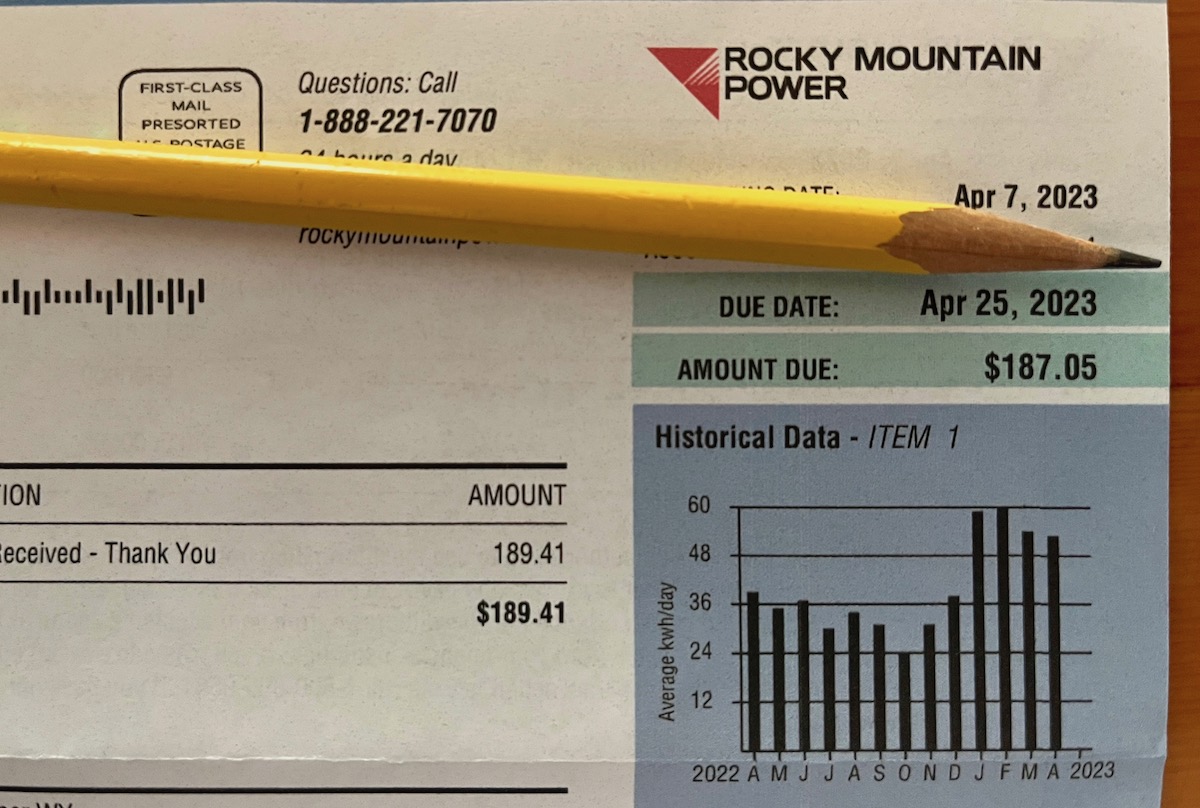
Last winter, many people in Wyoming bundled up at home as best they could because they couldn’t afford to pay skyrocketing utility bills. When you’re already trying to absorb increases for rent, food, gas and healthcare, putting on a few extra sweaters or coats doesn’t cost any more money.
Opinion
The state of Wyoming, at the same time, wasn’t in despair. Its tax revenue from record-high natural gas prices shot through the proverbial roof. The state raised $175 million.
Although good for Wyoming’s coffers, those higher natural gas prices created hardships for low-income customers struggling to cover higher heating costs, as well as higher electric bills for utilities that burn natural gas and coal to generate electricity.
Here’s the kicker: seven years ago, when mineral tax revenues took a nosedive, the Legislature cut $4.5 million from the state’s primary resource to help low-income Wyomingites with their utility bills. That was the entire state funding for the Low-Income Energy Assistance Program, and the money has never been restored.
The good news is that federal funds helped keep the program afloat during the COVID-19 pandemic. The bad news? Some of that money has either already expired or will disappear within the next year.
The timing couldn’t be worse as Rocky Mountain Power customers brace for a rate hike.
Are you looking for a bright spot in this confluence of terrible trends? There’s potential for one: It’s the perfect time for lawmakers to restore the program’s state funding.
Many elected officials spent the past few months at Wyoming Public Service Commission rate hike hearings, lamenting about how poor residents, as well as businesses, have been treated by RMP.
While the PSC significantly reduced the utility’s increase from $140 million to an estimated (but still unverified at this writing) $54 million, the threat posed to consumers by Wyoming’s prolonged sub-zero temps is still very real. Lawmakers who sounded the alarm about the devastating impact of the proposed increase should immediately turn their attention to protecting constituents’ health, safety, and pocketbooks.
Wyoming can afford to pick up the slack if federal funds take a major hit. In October, the Consensus Revenue Estimating Group — state experts who forecast how much money will be available for legislators to allocate — told the Joint Appropriations Committee that Wyoming has $177.3 million more than it anticipated at the beginning of 2023. That’s largely due to the tenfold increase in natural gas prices that hit in December 2022 and January 2023.
CREG Co-chair Don Richards said natural gas prices were extraordinary. “Natural gas isn’t just a story, it’s the entire story,” he said.
Rather than use that boon in revenue to restore programs like the Low-Income Energy Assistance Program, lawmakers couldn’t rush fast enough to sock it into savings.
Historically, state officials have avoided new spending and put unanticipated revenue in reserve accounts that can bail out Wyoming in future economic crises. Some amount of saving makes sense given that mineral prices and production are volatile and depend on many factors, including extreme weather, research costs, larger market shares from renewable energy like wind and solar and how federal and state governments address climate change.
Industry experts expect coal production to keep shrinking over the long term, and the health of oil markets depends largely on foreign production and competition.
With natural gas prices back to normal, lawmakers want to squirrel revenue away. But how much in savings is enough, when there are pressing needs to help people now?
Wyoming is a very wealthy state. It has about $15 billion in total permanent savings, and a “rainy day” fund at $1.6 billion and growing. Earlier this year, the Legislature put a record $1.4 billion into savings. Gov. Mark Gordon is proposing more than $500 million in additional savings in the upcoming two-year budget cycle.
But what about preparing to replace federal funds from the Coronavirus Aid, Relief, and Economic Security (CARES) Act, the American Rescue Plan Act, and the Infrastructure Investment and Jobs Act, that have boosted Wyoming’s ability to provide low-income energy assistance?
Between 2000 and 2020, Wyoming received an average of $10 million annually for LIEAP. Last year federal funding more than doubled, but what figure Congress will approve in the future is uncertain.
LIEAP is a terrific program, but it’s never been consistently funded well enough to serve all the residents who need assistance. In the winter it helps with utility bills, and it operates a weatherization program year-round.
“With the available resources, we can service a small fraction of the need,” Wyoming LIEAP Manager Brenda Ilg told WyoFile last summer. “Maybe in a good year, we hit 20% of the households that are income eligible in the state. So, it’s just a drop in the bucket.”
Residential consumers already have a lot of other bills in their buckets. Unaffordable utility bills can push many stressed-out people over the edge, including those who have lost their energy-related jobs.
Congress could approve additional funding to keep the program from backsliding when all relief funds are gone, but U.S. House hardliners continue to threaten a federal government shutdown in 2024.
In its September pitch for the Continuing Appropriations Act, the extreme right that has wreaked havoc within the GOP Congressional Caucus proposed cutting the national LIEAP budget by 60%.
The reduction didn’t pass, but the U.S. House’s Freedom Caucus likely hasn’t given up. Depending on who’s in charge next year and how many bargaining chips the caucus has to play with, it could still take an ax to LIEAP.
That’s why Wyoming lawmakers must act during the budget session to ensure the state program will serve as many low-income residents as possible. Instead of saving every single dollar, it’s time to think about what could happen if there’s a repeat of last winter’s intense cold.
Wyoming LIEAP prioritizes applications from seniors and disabled people on fixed incomes, and families with young children. It’s this population many officials expressed concern about during the RMP rate hearings, and rightly so.
“This rate increase will destroy many of the families I represent,” Sen. Tim Salazar (R-Riverton) said at a September PSC hearing in Fremont County. “Any prudent person looking at the facts can see this is price gouging.”
Salazar said people shouldn’t have to choose between paying their electric bill or buying prescription drugs.
The Corporations, Elections and Political Subdivisions Committee will sponsor six bills to curb rising utility costs. However, none of them would add state funding for LIEAP.
PSC Chair Mary Throne reminded the October RMP rate hearing audience in Cheyenne that LIEAP no longer receives state funding.
Throne asked Joelle R. Steward, the company’s vice president of regulation if RMP would advocate for LIEAP state funding. Steward said it hasn’t, but would consider it in the future.
Since the company only held rate meetings with its largest industrial customers and government officials — not people struggling to pay their bills — strongly backing LIEAP and showing it cares about freezing seniors and children might slightly ease that public relations fiasco.
If we’ve learned anything about dealing with high utility prices, it’s that maintaining the status quo isn’t an option. Legislators shouldn’t need much encouragement to take a little out of the bank to support a worthy program that deserves all the financial help it can get.
