

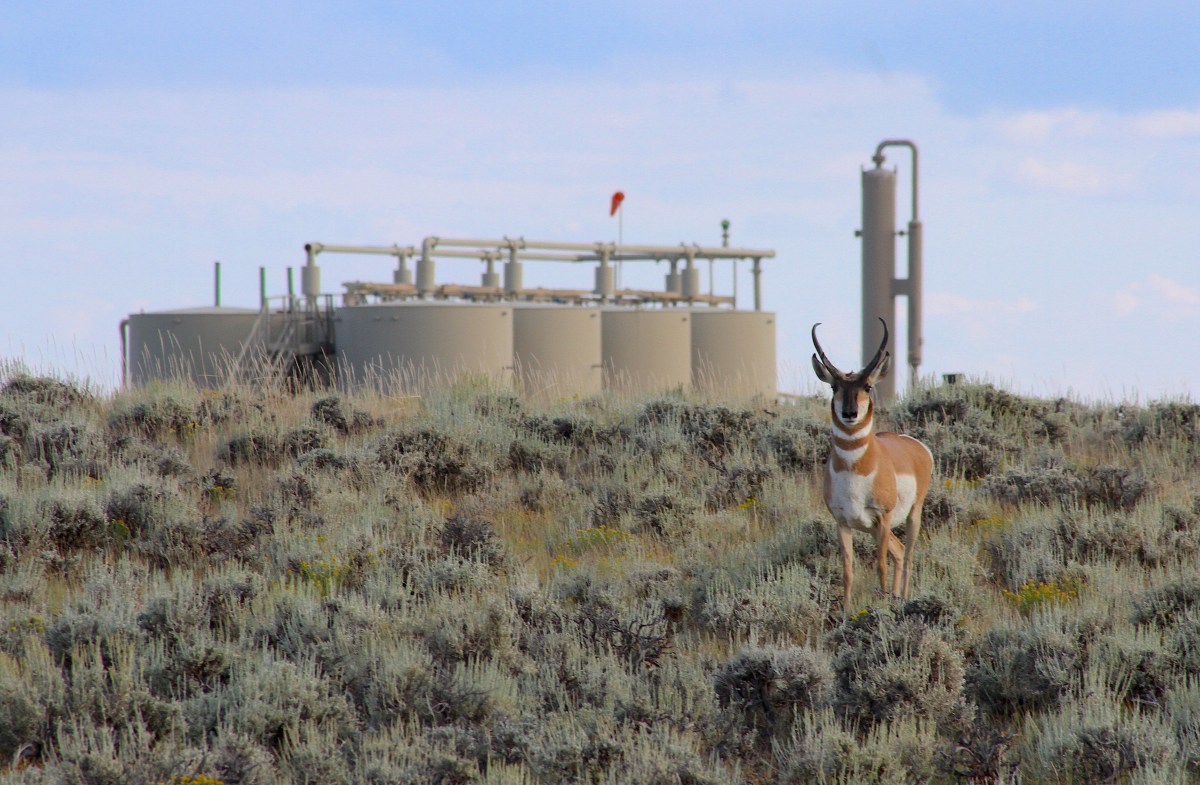
Wyoming wildlife officials will face immense political pressure if they proceed with a plan to designate the migration corridors the Sublette Pronghorn Herd relies on to survive.
Based on the track record of Wyoming’s migration policy, it’s unclear how much effect designating the route commonly called the “Path of the Pronghorn” would have on safeguarding the acreage that tens of thousands of Green River Basin pronghorn move through seasonally.
But influential parties in Wyoming — county government, the oil and gas industry and ranching interests — have made it clear that they question or outright oppose even going as far as designating the western Wyoming route at all. The sprawling migration corridor, which treads through much of the Green River Basin, connects south from Interstate 80 all the way north to places like Bondurant and Jackson Hole.
Petroleum Association of Wyoming Regulatory Affairs Director Colin McKee was blunt when he wrote the Wyoming Game and Fish Commission. He asked the panel to drop the idea of designating the corridor, suggesting that it was a “reactionary” response to a deadly winter.
“PAW believes there is insufficient data and basis to support further review of the [Sublette Antelope migration corridor],” McKee wrote in a public comment letter.
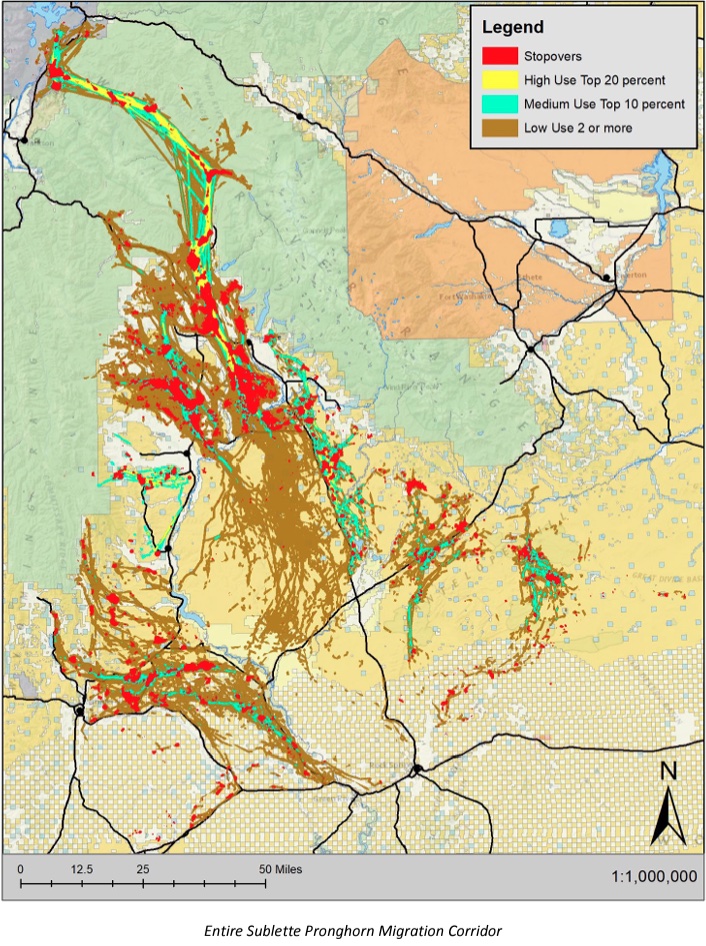
One energy company is taking a similar tack, asking Game and Fish to scrap its plans to recognize a migration corridor that overlaps the Anticline and Jonah fields, which are two of the largest natural gas fields in the country. A third major field is in the early stages of development.
“Kirkwood questions the need for an actual designation,” wrote Steve Degenfelder, land manager for Casper-based Kirkwood Oil and Gas.
Degenfelder, the father of Wyoming Superintendent of Public Instruction Megan Degefelder, previously pressured the state to allow his company to drill in the most constricted “bottleneck” portion of the pronghorn path. Three of the five State Board of Land Commissioners — Secretary of State Chuck Gray, State Auditor Kristi Racines and Treasurer Curt Meier — OK’d that plan, tossing aside requests from two state agencies to alter Kirkwood’s lease terms. Megan Degenfelder recused herself from that vote.
Steve Degenfelder questioned the science underpinning the Game and Fish’s migration corridor proposal in his letter to commissioners. Pronghorn, he wrote, continued to use “stopover and high use areas” subject to “more [drilling] activity than the state has ever seen.” His assertion, however, doesn’t stand up to research that shows pronghorn were displaced in the Anticline Field.
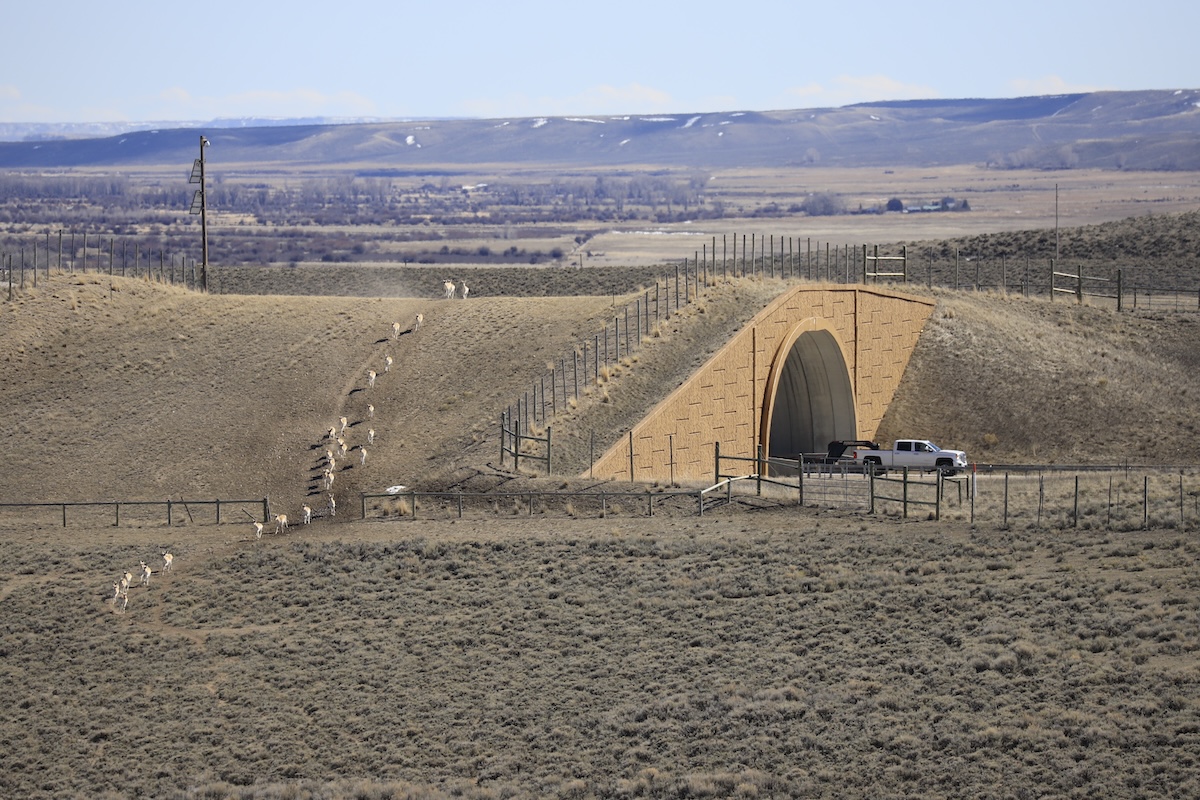
State biologists believe that the migration corridors used by the Sublette Pronghorn Herd are at “high risk” of being lost due to human population growth and habitat fragmentation from industrial activity, including renewable energy development.
There are also ample voices in favor of the science and the state’s bid to maintain the Path of the Pronghorn. A half-dozen hunting groups active in Wyoming wrote in support.
“Designation of the Sublette pronghorn migration corridor comes at an important time,” representatives for the Theodore Roosevelt Conservation Partnership, Wyoming Wildlife Federation, Muley Fanatic Foundation, Backcountry Hunters and Anglers, Mule Deer Foundation and American Bear Foundation wrote.
“The harsh winter of 2022-2023 proved to be devastating for the herd which suffered a massive die-off of 75 percent of collared does which was exacerbated by an outbreak of Mycoplasma bovis,” the groups added. “We know that pronghorn who were able to migrate further south to lower elevations had lower mortality rates, a clear indication of the importance of landscape permeability for ensuring the future of this herd.”
The vast majority of individuals who submitted comments to Game and Fish also supported Wyoming taking a step toward protection. So did the superintendent of Grand Teton National Park, where a subpopulation of the Sublette Herd spends the summer.
State officials will have to weigh those sentiments with those of more skeptical parties, like the Sublette County Board of Commissioners. Sam White, who chairs the commission, suggested that the state revise its migration policy to “give protection to industries.”
Notably, the Sublette Pronghorn corridor would be the first designated under the protocol prescribed in the state’s migration policy. It’s gone unused since 2019, when the state pressed pause at the urging of industry groups, and then subsequently overhauled the policy so that it’s under the governor and not solely the Wyoming Game and Fish Department.

While many of the same voices are still contesting using the policy to protect wildlife migration, others have taken a different tone. Jim Magagna, the longtime executive vice president for the Wyoming Stockgrowers Association, wrote that his organization supports moving toward designation — at least in areas.
“The primary corridor originating near Grand Teton National Park and stretching to Highway 28 west of Farson faces unique challenges from energy development and subdivisions,” Magagna wrote. “This corridor should be the focus of consideration for designation.”
Magagna was less enthused about designating two distinct shorter corridors east of Highway 191 along the foot of the Wind River Range, where there’s less energy development and nearer to where his sheep ranching operations occur.
One person who wrote emphatically in support of designating the Sublette Pronghorn Herd’s migration paths was John Fandek, a longtime Game and Fish elk feeder. Fandek criticized industry contentions — since parroted by some media outlets — that oil and gas infrastructure could somehow be beneficial to wildlife like pronghorn, sheltering them from winter storms.
“This is the kind of shallow, self-serving thinking that allows some people to believe that no matter what obstacles — industrial development, increased traffic, endless subdivisions, more people — that we place in their way, wildlife will adapt and will always be there,” Fandek wrote. “Looking at other over-populated and industrialized landscapes tells a different story. The time is now to give more consideration to the wealth of wildlife remaining here in Sublette County.”



Seems the two special interest groups mentioned in this article are always the ones against anything benefiting wildlife unless they get something out of it . Maybe someday people will wake up and realize these groups could care less about wildlife and only care about their greedy selves .
The thousands of wells in the Upper Green River Basin have devastated big game herds. Populations of Mule deer and Pronghorn have plummeted since the industrialization of this region from natural gas development. It’s not a debatable issue, just facts. In ten years when the wells are depleted and the wildlife eliminated what is Wyoming left with? Probably a bunch of orphaned well bores that the taxpayers will end up pay for plugging. When is it enough? A very few people get rich, and Wyoming gets some severance tax money to waste. The wildlife have no voice and no chance. We should be so proud…
Hell, they’re almost gone already. Let Sam White spray the survivors and then he can wallow in his pathetic greed. If they’re all gone, who needs the corridor?
It is shameful that anyone (or group) would oppose designating this or any other migration corridor. The vast majority of comments were in favor of designation. Let’s get on with it!!!!!!
THE DOCTRINE OF MULTIPLE USE INCLUDES CONSERVATION: The more traditional usage of Federal lands such as livestock grazing mining, timber harvesting, easements for pipelines and electrical transmission lines, recreational usage of the public lands by the public, water development projects including massive dams, etc. are slowly being augmented by more and more conservation related usages. Migration corridors through Federal lands certainly qualify as a legitimate “multiple use” along with other designated uses such as native American religious sites and historic trails. Aren’t wildlife migration corridors a form of historic trails pre-dating our occupation of the west???
Wyoming Game and Fish has a very impressive amount of research gathered over the last 50 years which firmly document the usage and location of the migration trails in the Green River drainage – the best available science is there. It all goes back to multiple use of the Federal lands and that should include migration corridors.
The pronghorn need to migrate to survive. It would be tragic if they succumbed ultimately to “death by a thousand cuts” resulting in too many pieces eliminated to leave a viable path to function. The “Path of the Pronghorn” is worth much to past, present, and future generations of animals and people to be preserved.
There are no easy answers, but it is pretty clear that our state needs to have free ranging wildlife, however we have to accept that a lot of the money supporting that comes from ranching and energy production. I doubt the state could afford much of what goes into protecting our land and wildlife without the income from energy production. Ranching and farming also contribute with expanding watered areas and raising food for both humans and wildlife.
This decision is more weighty than one might imagine. The loss of the corridor by encroachment cannot be recovered, and the damage to wildlife numbers may never rebound. The preservation of the wildlife is much more valuable than giving in to industry. I am not an anti energy person, but I believe there must be a balance to this question.
I don’t have the words nor the history/experience of Mr. Fandek. (If you’re wondering, I do question our feeding grounds and will not get into this now.) I am thankful Mr Fandeck has spoken up for the migration corridor and the health of Wyoming’s wildlife. “Looking at other over-populated and industrialized landscapes tells a different story. The time is now to give more consideration to the wealth of wildlife remaining here in Sublette County.” I don’t live in Sublette County. I’m over in Fremont and appreciate we can support breeding antelope and mule deer on our property and donated conservation easement. The elk move through and will hang out here as well. I so wish we could all make a little more room for those who came before us. Yes, I’m old, but we sure aren’t wealthy, and making money is not all there is to a good life.