
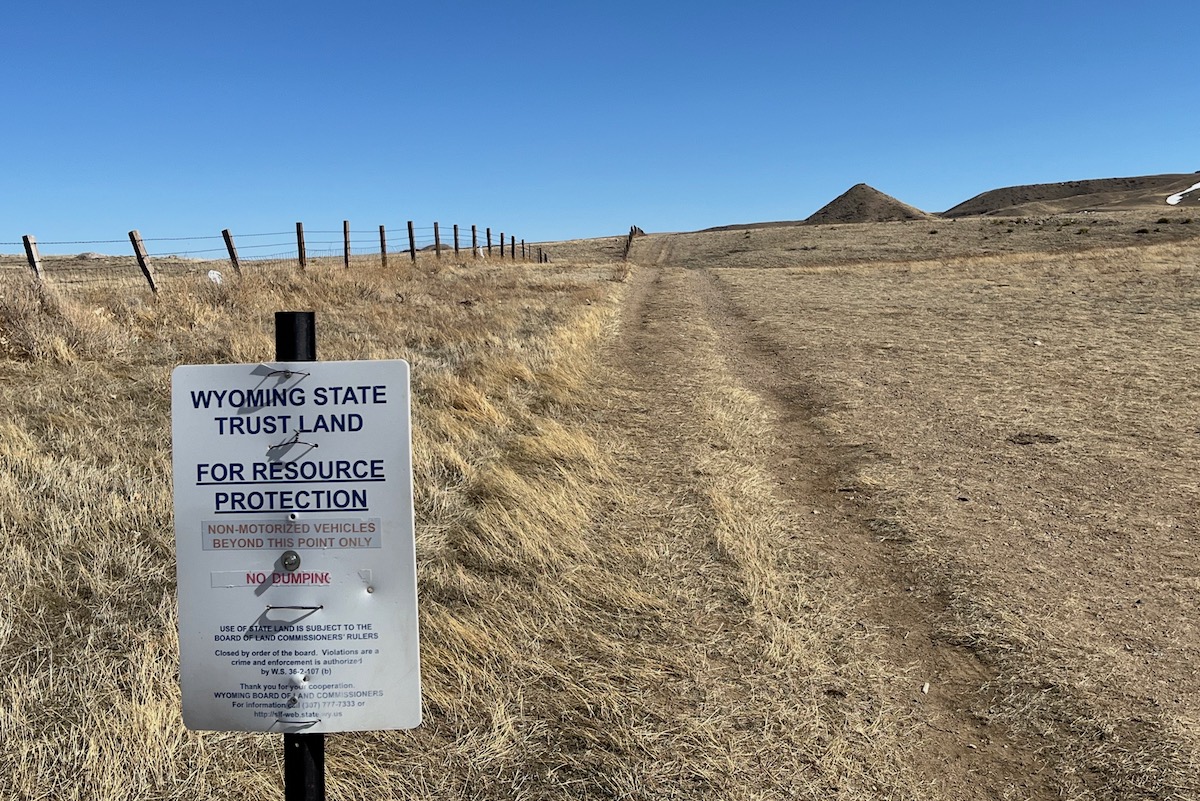

The Wyoming Supreme Court heard arguments Wednesday in a case concerning counties’ authority to regulate gravel and sand pit operations on some 3.4 million acres of state trust lands scattered throughout the state.
“There are 84 active solid-mineral gravel leases currently before the [State Board of Land Commissioners], so this impact is far and wide,” Cheyenne-based attorney Deborah Roden told the justices.
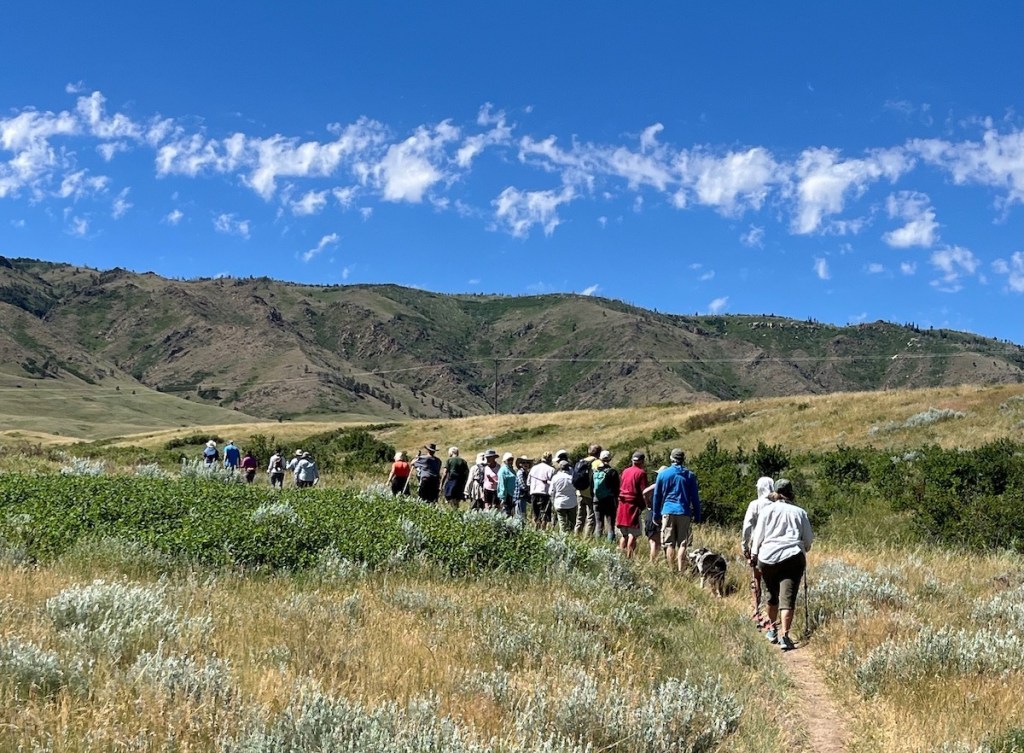
Roden represents Casper-based gravel operator Prism Logistics, which acquired state approval to pursue gravel mining on a cluster of state trust lands next to a rural neighborhood at the base of Casper Mountain, a popular recreation spot. The appeals case centers on whether the Natrona County Board of Land Commissioners acted within its authority when it rezoned the area back to a previous designation that prohibits heavy industrial use after a county-wide public outcry against the proposed gravel operations.
In response to the project, Coates Road area neighbors formed the Casper Mountain Preservation Alliance, which gathered more than 20,000 signatures from residents throughout the county in opposition.
“My gosh, I just don’t think we can ignore that,” William Schwartz, an attorney for Natrona County, told the justices.
At stake is whether counties can impose zoning regulations to protect homeowners from industrial impacts, Schwartz added, as well as activities that would disrupt recreation areas and sensitive habitats. “And this is the crown jewel of Casper, Wyoming,” he said. Counties, in his legal opinion, have the authority to impose such restrictions and, if the high court agrees, it’s highly unlikely they would shut down gravel and sand operations en masse on state lands.
“As we know, there are lots of counties in Wyoming that don’t even have zoning,” Schwartz told the justices, “and these [county-level] decisions about whether to regulate gravel pits, I think, are probably highly dependent upon their location. Counties ought to have the ability, where they do have zoning, to regulate something as sensitive as this.”
Legal wrangling
In response to the county’s rezoning, Prism asked the Natrona County District Court to review whether the county had the authority to make the change. A judge sided with Prism, and Natrona County appealed to the Wyoming Supreme Court.
Legal arguments Wednesday centered on whether Wyoming law views gravel pits narrowly as mining a mineral, or more broadly as commercial and industrial operations. Attorneys for both parties agree that counties have little authority over mineral production activities like coal, oil and natural gas operations. But they disagreed about whether state law views gravel and sand as a mineral in the classic sense of mining and processing.
The State Land Board regards gravel and sand as a mineral — a misinterpretation of the Wyoming Legislature’s intent when it comes to county authority, Schwartz said, pointing to case law.
What are state trust lands?
Upon granting statehood in 1890, the federal government bestowed some 4.2 million acres of “state trust lands” to Wyoming, which now manages about 3.4 million acres of trust land. The Wyoming Constitution prescribes that the primary use of those lands, which are scattered throughout the state in a checkerboard pattern, is to support public schools, including activities that generate revenue for schools.
The Office of State Lands and Investments commonly leases those lands — often referred to as “school sections” — for grazing and industrial development such as mining and oil and gas drilling.
“I think what the district court missed here is the really vital question of who decides whether it’s mineral or commercial or industrial,” he said. “Who decides here is the Legislature.”
Roden countered that although counties have authority to “weigh in,” or impose local zoning on industrial and commercial operations, they may not override the state’s authority regarding “mineral” extraction, which includes gravel and sand.
“Our position in this case is simple,” Roden said. “The statutes and the case law and the regulations clearly demonstrate that Prism’s state land leases are not subject to local zoning, and we would ask this court to find as such.”
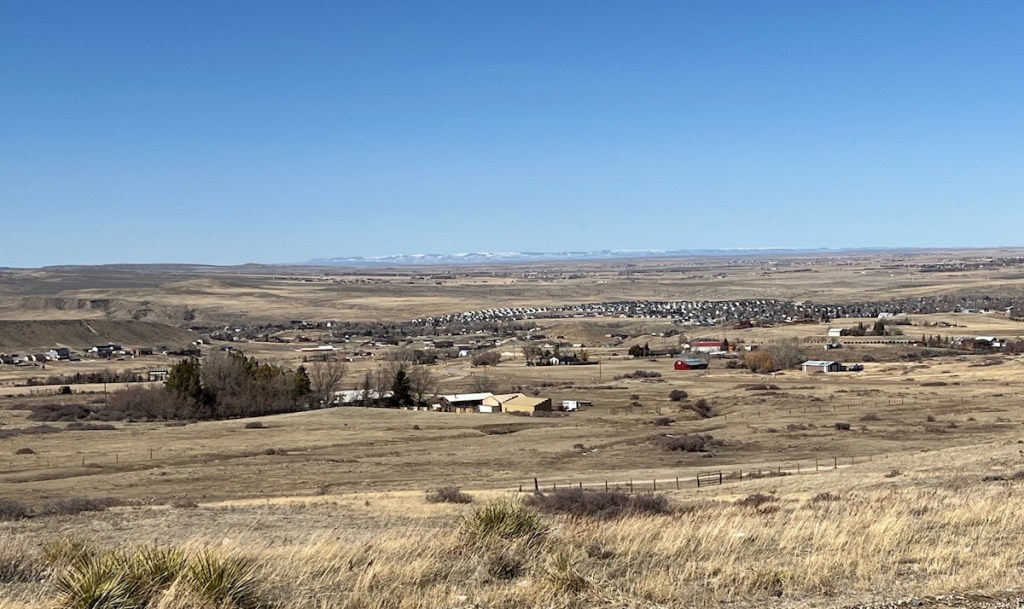
Regardless of how the court rules, the legal wrangling has revealed a need to allow for more local input about what should happen on state-managed lands, said Carolyn Griffith, who lives near the proposed mine and chairs the Casper Mountain Preservation Alliance.
“It’s now evident that additional legislation may be needed to ensure that industrial activities on state lands align with responsible standards required of everyone else within that planning zone,” Griffith told WyoFile.
The court will issue a written decision, Chief Justice Lynne Boomgaarden said. High court decisions often come months after oral arguments.
Meantime, stakeholders await the court’s decision in a closely related case.
Under public pressure, the State Board of Land Commissioners denied a request by Prism Logistics to grant an extension for the same gravel leases in question. A subsequent Natrona County District Court ruling in January sided with the gravel miner. The state appealed to the Wyoming Supreme Court.


Let see now … digging back to my college days earning a degree in Petroleum Engineering and those darn geology classes I suffered through … if I recall the official designation of a mineral as: A solid inorganic compound with a definite crystalline lattice. I don’t think gravel quite fits that definition. Chime in if you have a different definition.
Kyle True, a Casper native and direct beneficiary of the vast fortunes of the True Companies is the owner of Prism Logistics. Kyle True insists on developing gravel resources along the north flanks of Casper Mountain despite the fact that more than 20,000 people in Wyoming have signed petitions opposing his proposed gravel mining venture.
Kyle True is also a member of the Casper Rotary Club. At each Rotary Club meeting that Kyle True attends he recites the Rotary Four Way Test:
1. Is it the TRUTH?
2. Is it FAIR to all Concerned?
3. Will it build GOODWILL and BETTER FRIENDSHIPS?
4. Will it be BENEFICIAL to all concerned?
The statement and the principles that the Four Way Test embodies has helped many businesses and others find their own ethical compass, as well as providing an exemplary guide for personal and business life.
I’m hoping that at some point in time Kyle True will come to the realization that his proposed gravel mining venture violates his pledge to Rotary and the Four Way Test.
He has demonstrated to me that everything he has said and done regarding his gravel mining venture violates every single point contained in the Four Way Test.
Huh, this past week in Laramie co./city of Cheyenne public officials said their “hands are tied” when it comes to data centers because of “constitutional land rights”. Why is a gravel pit not falling under the same constitutional rights? I’d argue gravel is much more useful for the advancement of society than massive AI datacenters. That pit would employ more people than one of these data centers would as well.