
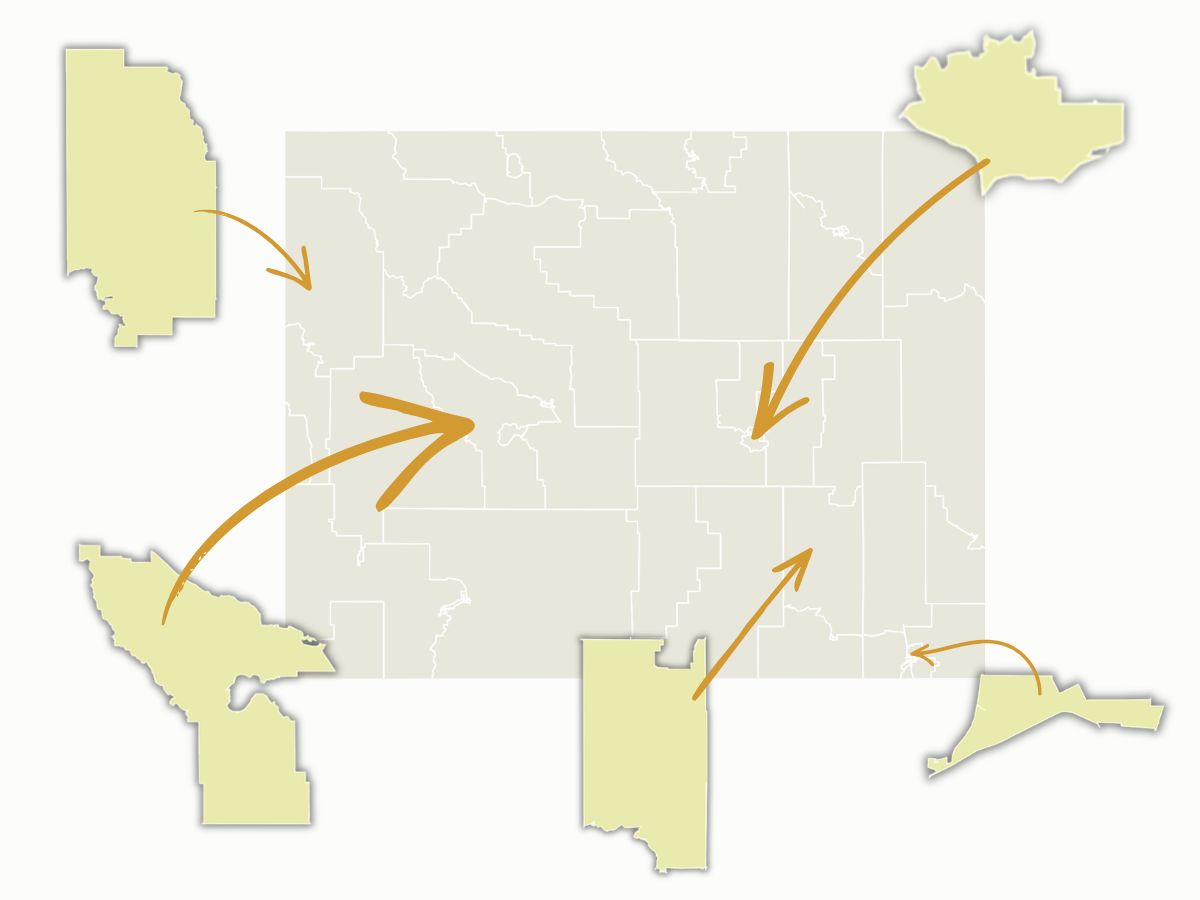
While voters determined most of the incoming Wyoming Legislature’s composition in the primary election, 32 legislative races will be decided in November.
The contests vary widely in competitiveness with progressive candidates running in deep-red districts, Republican hopefuls challenging incumbents in Democratic strongholds and a couple of three-way races involving minor party candidates.
Regardless of the outcome of November’s races, the 69th Legislature will look different than the last one after the Wyoming Freedom Caucus lost its House majority and backslid in the Senate in the primary election. As such, voters’ choices next month will largely decide to what extent Republican lawmakers retain their statehouse power.
Here are five races to watch.
House District 33 is one of the Legislature’s few swing districts.
Stretching across Fremont County, House District 33 encompasses the Wind River Indian Reservation towns of Fort Washakie, Ethete and Arapahoe, as well as the small non-tribal communities of Atlantic City, Crowheart and Hudson. Over the years, its representation has flipped back and forth between Democrats and Republicans, as well as enrolled tribal members and white ranchers.
Earlier this year, Secretary of State Chuck Gray called for a reexamination of the district’s boundaries in light of a U.S. Supreme Court decision on racial gerrymandering. Lawmakers declined his request after several of the district’s constituents, including non-tribal members, argued the boundaries weren’t simply drawn with consideration to race but also to keep communities of interest, such as sovereign governments, intact.

Rep. Ivan Posey, a Democrat and Eastern Shoshone educator, has represented the district since 2024, when he ousted a Freedom Caucus-backed incumbent Republican. Posey is now running for a second term against Republican Justin Morgan, a Marine Corps veteran who owns and operates a horse training business.
In their responses for WyoFile’s 2026 election guide, the two candidates diverged on campaign finance reform, public land transfers and what the Legislature can do to make healthcare more affordable and accessible.
House District 37 will have a new representative for the first in over two decades.
Since 2003, Republican Rep. Steve Harshman has represented Natrona County’s House District 37, including two terms as speaker of the House. The district spans Casper Mountain and several west-side neighborhoods, including Wolf Creek and Valley Hills.
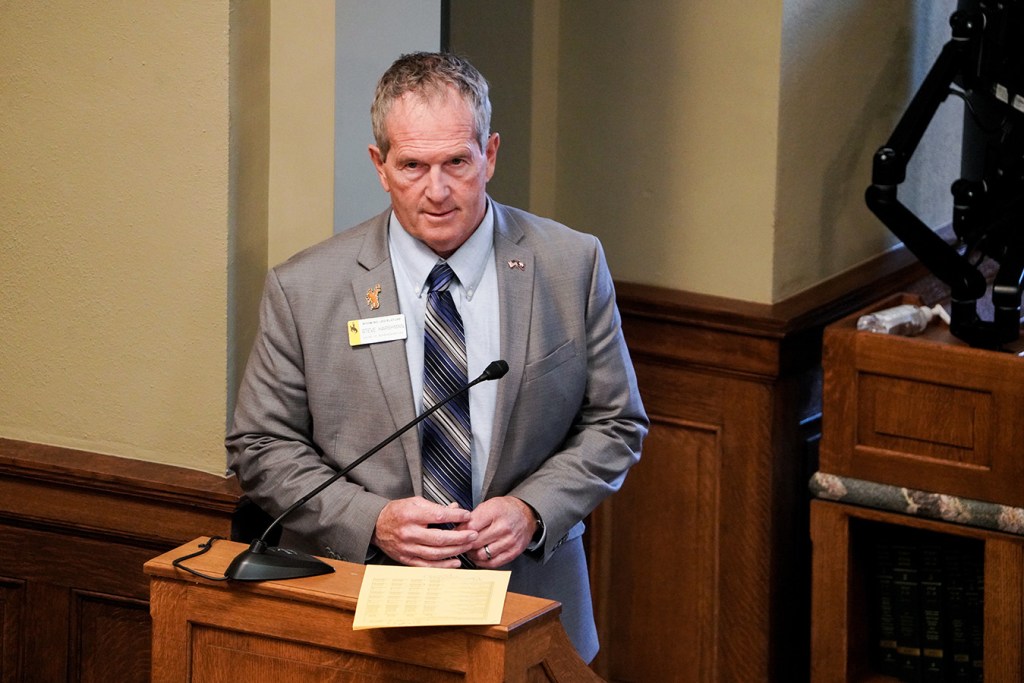
Harshman’s decision to run for superintendent of public instruction this year left his longtime House seat open. Three Republicans vied for the nomination with Brian Costello, an educator, ultimately winning the primary election against the two candidates more closely aligned with the right flank of the GOP. Costello will face Democratic candidate Betsy Erickson, who is also an educator in Casper.
In their responses for WyoFile’s 2026 election guide, both candidates pointed to young people leaving the state — sometimes called brain drain — as one of the biggest challenges and opportunities facing Wyoming today, but diverged on how to address the problem.
For over the last decade, a Democrat has represented House District 23.
Since 2015, voters in Teton County, one of Wyoming’s two blue bubbles, have sent a Democrat to Cheyenne to represent its northern half, including Teton Village, an eastern section of Wilson as well as the communities of Kelly, Moran and Moose.
Democrat Rep. Liz Storer has represented House District 23 since 2022, when the race between her and Republican candidate Paul Vogelheim set a new campaign-finance record for a Wyoming legislative race. As a lawmaker, Storer has largely focused on abortion rights, tourism and tax reform.
(Storer is the president and CEO of the George B. Storer Foundation, a financial supporter of WyoFile. The foundation has no role in WyoFile’s editorial content.)
Republican candidate Shannon Brennan is challenging Storer in the general election. Brennan did not respond to WyoFile’s candidate questionnaire. She works as an energy and environmental management consultant and identifies as a constitutional conservative, according to her campaign website.
House District 14 will also host a showdown between a Democratic incumbent and a Republican challenger.
Voters first elected Democratic Rep. Trey Sherwood in 2020 to House District 14, which spans north Laramie and the Albany County communities of Rock River and Bosler. Until then, the district had been represented by a series of Republicans for the last three decades. In 2022 and 2024, Republican candidates failed to recoup the seat.
As a lawmaker, Sherwood risen through the ranks of the minority party while focusing on housing, supporting rural schools and suicide prevention. Most recently, she served as the sole Democrat on the House Appropriations Committee — the Legislature’s most powerful panel and one responsible for crafting the budget bill.
Sherwood will face Republican candidate Emily Study in the general election. Study did not respond to WyoFile’s candidate questionnaire. According to her campaign website, Study has worked with the military and the Department of Veterans Affairs for over two decades.
Voters in House District 11 will decide a three-way race.
Republican Dan McIntosh, Democrat Britney Tennant and Libertarian Ryan Shollenberger are all competing to represent Laramie County’s House District 11, which spans a central section of Cheyenne.
Republican Rep. Jacob Wasserburger, who currently represents the district, did not run for reelection after serving one term.
The district’s boundaries shifted significantly during the Legislature’s 2022 redistricting process. Years before then, several Democrats represented the district, but for the last decade, it has favored Republicans.
McIntosh works as an educator at Laramie County Community College, Tennant runs the Cheyenne Animal Shelter and Shollenberger is a wildland firefighter and substitute teacher.
In their responses for WyoFile’s 2026 election guide, all three candidates highlighted the economy, the state’s workforce and community development when asked about Wyoming’s biggest challenges.