

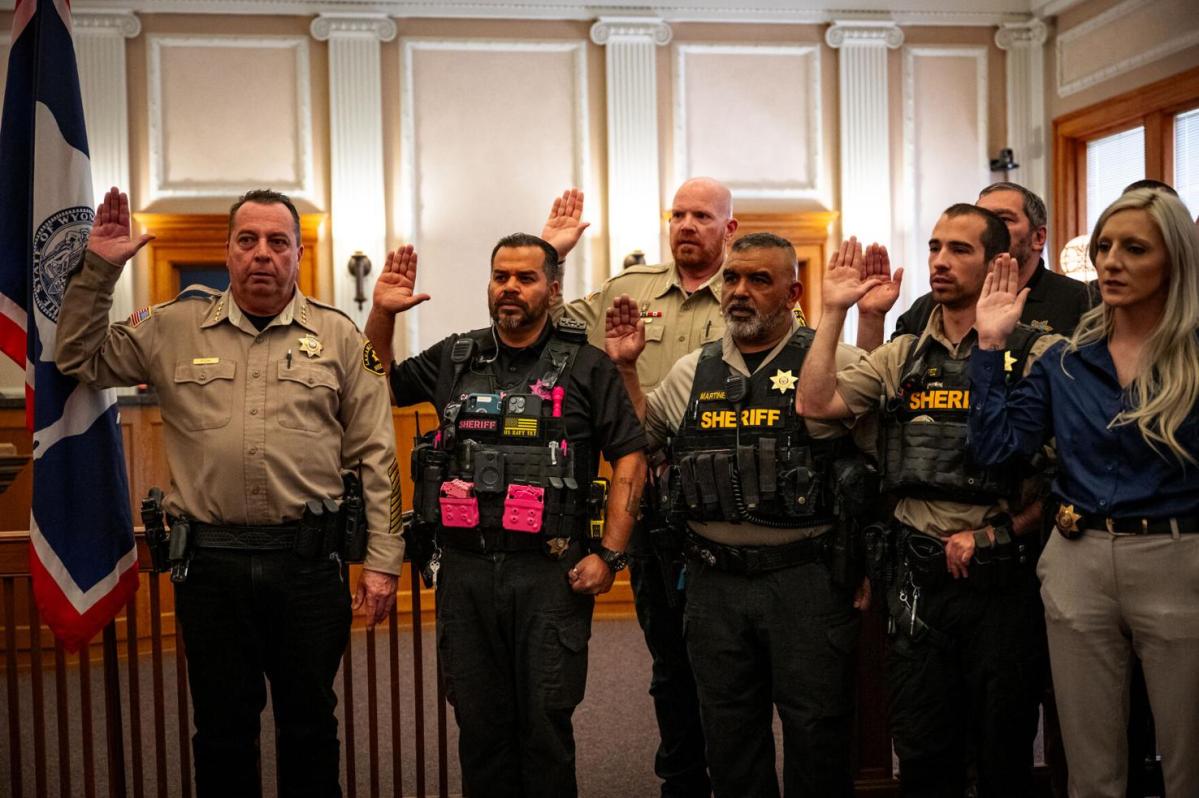
CHEYENNE—A lawsuit against Laramie County Sheriff Brian Kozak regarding his 287(g) immigration agreements with U.S. Immigration and Customs Enforcement was dismissed by a judge Tuesday.
The lawsuit was filed May 26 in Laramie County District Court by the Unitarian Universalist Church of Cheyenne, Drew’s Barbershop and local immigrant advocacy group Juntos Wyoming, with support from the ACLU of Wyoming.
The 287(g) agreements consist of Jail Enforcement, Warrant Service Officer and Task Force. They allow local, county and state law enforcement to conduct some federal immigration duties. Only the Sweetwater County Sheriff’s Office and Laramie County Sheriff’s Office have all three types of these agreements with ICE.
According to previous Wyoming Tribune Eagle reporting, the lawsuit described how an employed barber at Drew’s Barbershop named Carlos Montes was pulled over by a deputy for an inoperable headlight and subsequently deported to Nicaragua under the authority of the 287(g) agreements.
The barbershop’s owners were led to make the decision to sell the business due to “lost revenue from Montes no longer working at the shop.”
The Unitarian Universalist Church previously told the Wyoming Tribune Eagle that it had to redirect roughly $10,000 in charity funds, food and supplies to support families impacted by the 287(g) agreements.
Rachel Martinez, communication coordinator for Juntos Wyoming, previously told the Cheyenne newspaper that the sheriff’s actions have alienated marginalized communities.
The three plaintiffs brought three allegations against Kozak in his official capacity as sheriff.
The first claim alleged Kozak exceeded his authority and violated a state law, which details general powers held by county governing bodies, by signing three ICE agreements without first obtaining approval from the Laramie County Board of County Commissioners.
The second alleged Kozak exceeded his authority and violated a state law which prohibits the sheriff from incurring county expenses without written approval from commissioners, except where otherwise allowed by law, by signing the ICE agreements and incurring expenses without authorization from county commissioners.
The third allegation claimed that Kozak violated the Wyoming Administrative Procedure Act by signing the three agreements without following the act’s mandatory rulemaking procedures. Those require state agencies to draft a rule, obtain approval from the governor, publish a notice of intent for a 45-day public comment period, undergo legislative review and file the final rule with the secretary of state before it becomes effective.
The dismissal order
Laramie County District Judge Robin Cooley stated in the dismissal order that although the three plaintiffs alleged “sufficiently particularized and non-conclusory injuries arising from the defendant’s immigration enforcement activities,” they did not have sufficient evidence to prove how these alleged injuries had any connection to them defending the commissioners’ authority through counts one and two in court.
Therefore, Kozak’s request to dismiss the first two allegations was granted.
For the third dismissal request, Cooley asserts in the dismissal document that the plaintiffs’ alleged organizational and economic injuries arose from ICE activities, rather than the alleged failure to comply with the Wyoming Administrative Procedure Act rulemaking procedures.
Therefore, the third allegation was dropped due to the plaintiffs’ lack of standing.

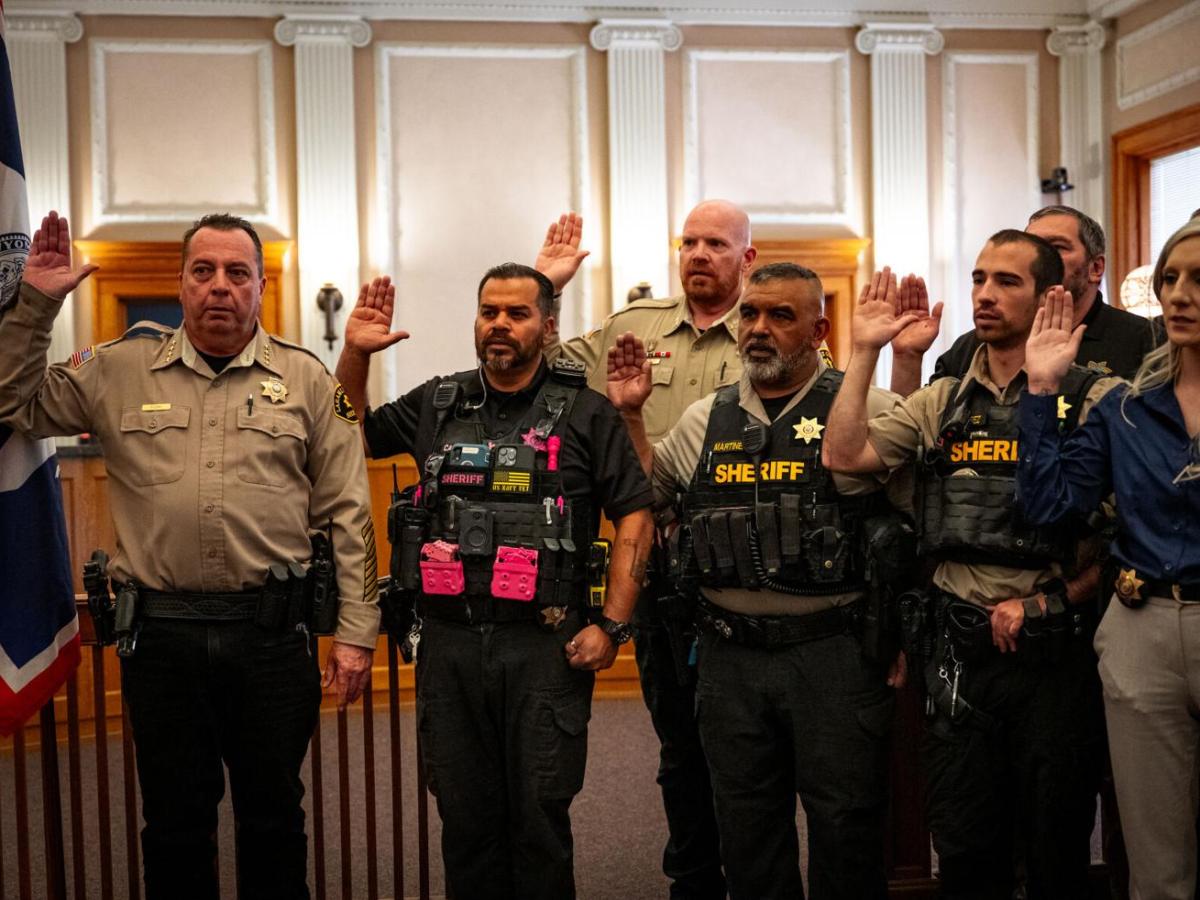
However, the court document reads that although the motion to dismiss was granted, the court has no authority to decide whether Kozak possessed authority under Wyoming law to enter into the ICE agreements without approval from the Laramie County commissioners.
“The commissioners are not party to this action and have not asserted any resulting injury,” the document reads. “Although plaintiffs allege concrete harms arising from immigration enforcement, they have not alleged a particularized injury arising from the alleged infringement of the commissioners’ authority. Accordingly, the underlying question of defendant Kozak’s authority and statutory authority remain unresolved.”
The sheriff faces a separate legal case related to 287(g) enforcement agreements filed on behalf of Mario Fabian Valenzuela Robles, a Mexican citizen, who was pulled over for a traffic violation on April 23 before being detained by the sheriff’s office and taken to an ICE facility in Aurora, Colorado.

The judge made the right call.