

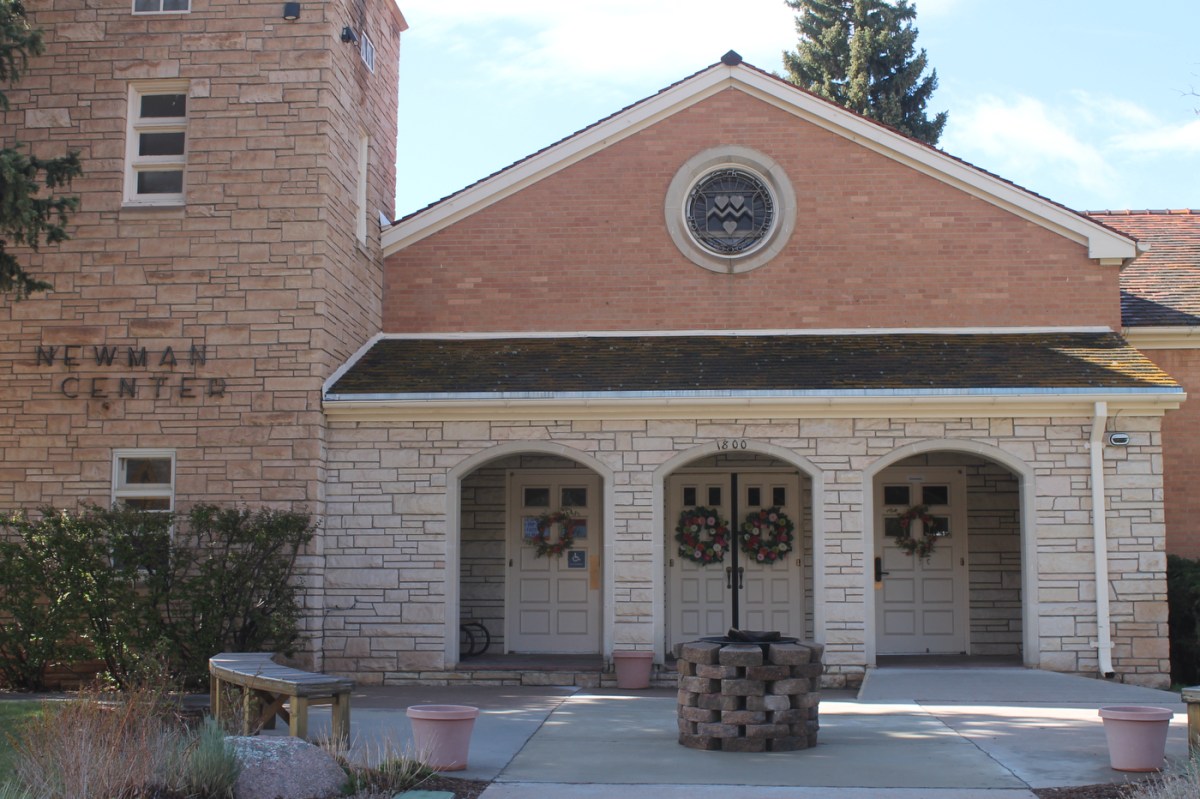
They began in prayer:
God, Almighty Father,
We are your pilgrim Church
Journeying towards the Kingdom of heaven.
We live in our homeland,
but as if we were foreigners.
Every foreign place is our home,
yet every native land is foreign to us.
Though we live on earth,
our true citizenship is in heaven.
Do not let us become possessive of the portion of the world
you have given us as a temporary home.
Help us to keep walking,
together with our migrant brothers and sisters,
toward the eternal dwelling you have prepared for us.
Open our eyes and our hearts
so that every encounter with those in need
becomes an encounter with Jesus, your Son and our Lord.
Amen.
Former Pope Francis shared the prayer in 2024 for the 110th World Day of Migrants and Refugees. One Sunday afternoon early this month, a small group of parishioners sat in a circle in an office of St. Paul’s Newman Center in Laramie. Together, they read these words.
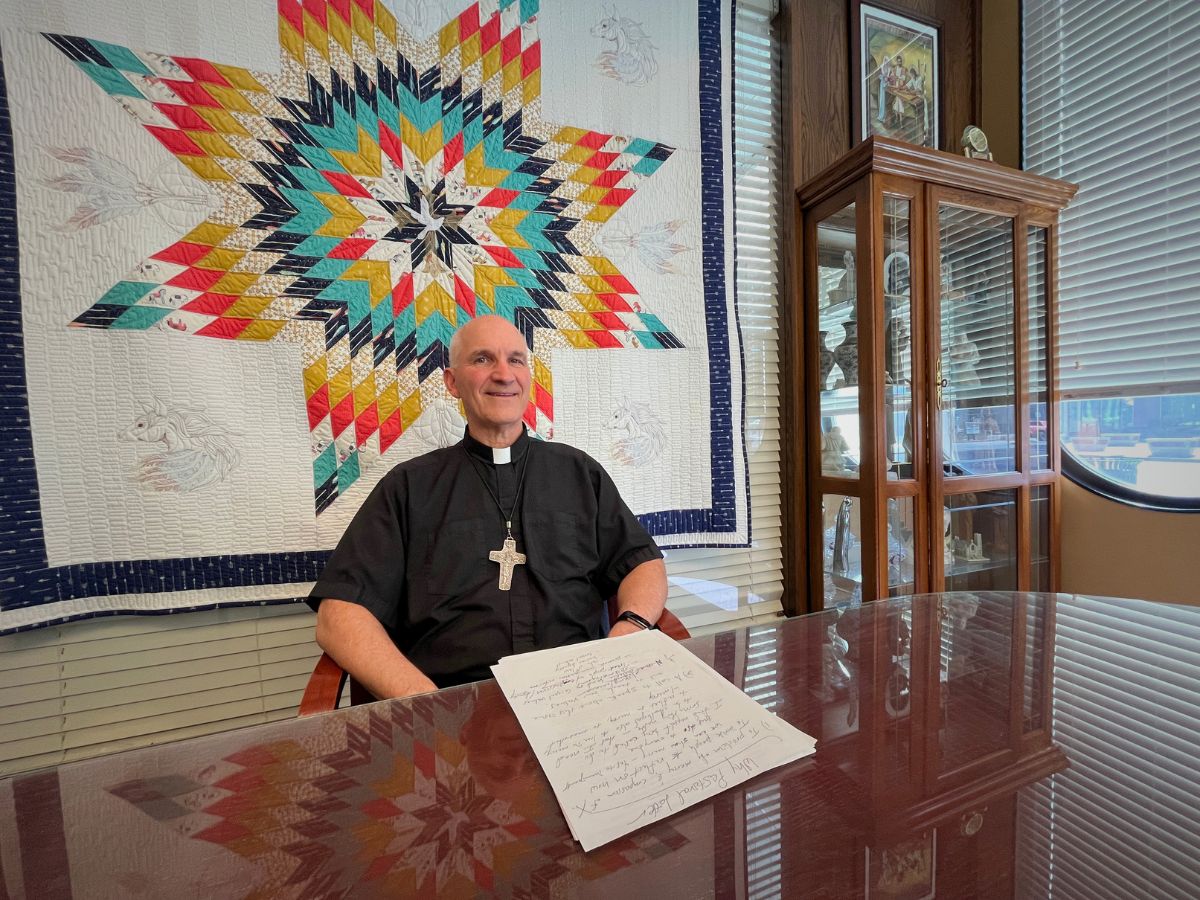
Last month, Wyoming’s bishop, Steven Biegler, published a pastoral message about immigration. In the letter, titled “Be a Merciful Neighbor,” Biegler said he hoped to encourage reflection upon the “rights and dignity of migrants and refugees in our community.” The message sought to step away from a partisan lens and consider these issues through scripture and principles from Church teaching.
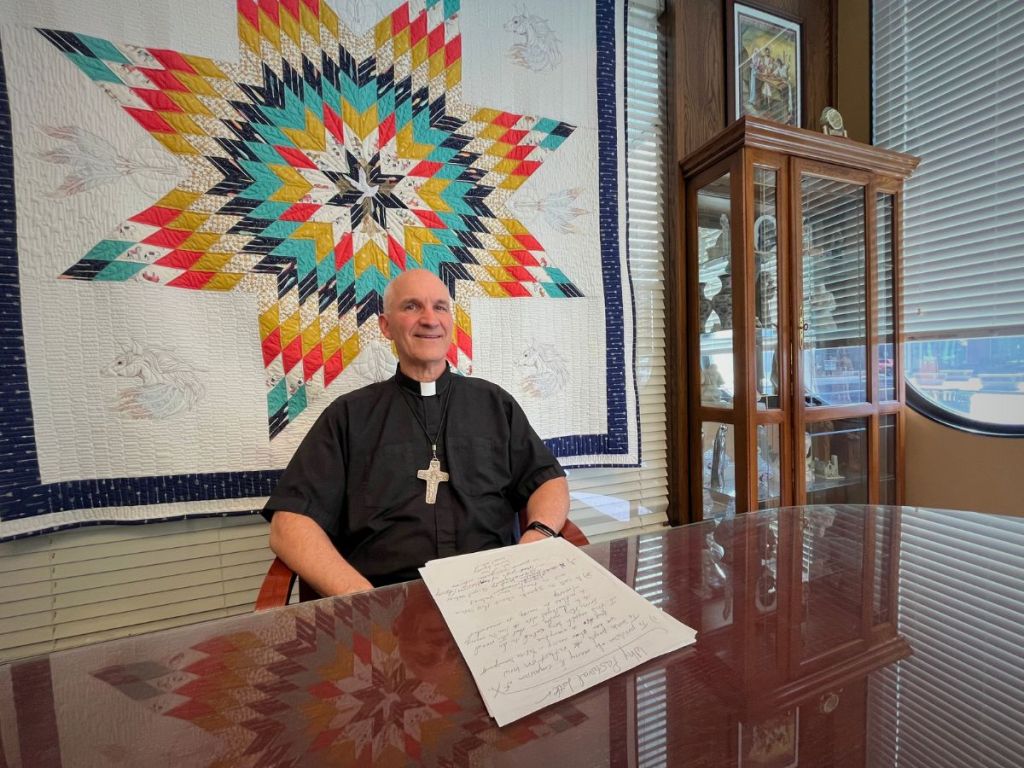
“Catholic teaching is clear that enforcement efforts aimed at protecting the community should be targeted, proportionate and humane,” Biegler wrote. “Indiscriminate mass deportations are targeting our neighbors and generating fear and terror.”
St. Paul’s Newman Center gathered parishioners in small groups to discuss Biegler’s message over two Sundays. On May 3, in the office where church members sat in a mismatched ring of chairs, the Very Rev. Rob Spaulding passed around a sheet with questions. “What have I experienced the past two Sundays that is affecting my heart/guts?” the discussion guide asked. “What would it mean to live in solidarity with others…especially migrants?”
Mike McElroy, Chris and Dan, who asked to not use their last name, lingered at a table in Bishop Newell Hall after the discussions. They had been part of another group with differing views on immigration enforcement. The group had received those varied perspectives, they said — Mike, Dan and Chris recognized participants brought different life experiences and appreciated how the conversation wasn’t an echo chamber.
“We stuck to the guidelines of not trying to comment on what other people were saying,” Dan said.
“We needed to hear that everybody isn’t exactly the same, you know?” Chris added. “That was helpful.”
“We need to work past that, because the problem is bigger than, you know, what we personally believe,” Mike said — they are trying to figure out, as Catholics and human beings, how they can work together to make sure everyone is treated the way they would want to be.
The gathered parishioners waded into this question. Some struggled to bridge the gap between intellectually understanding the bishop’s message and truly taking it to heart. Some felt surprised and sad to realize that current immigration policies directly impact people they know, even in Laramie. Some described the disorienting dichotomy of their own lives as people who don’t live in fear of being detained and deported compared to those who do. Some wrestled with anger and frustration and confusion at people — particularly other Christians — who don’t share their beliefs around immigration enforcement.
Throughout, parishioners strived to focus on the application of Christian teachings rather than veer into the divisive politics around immigration issues. “We were to keep our discussion 100% on the Christian view, not bring in any politics whatsoever, which is not reality,” Dan said. “We live in a political reality and a religious reality, and we, in this church, realize there’s a difference.”
“Be merciful, just as your Father is merciful,” Biegler’s message began. And in their discussions, the parishioners contemplated what it would look like to live these words in a world where partisan talking points so often speak louder.
“At the end of the day, as a Christian, it’s a moral, social justice, human dignity issue,” Mike said.
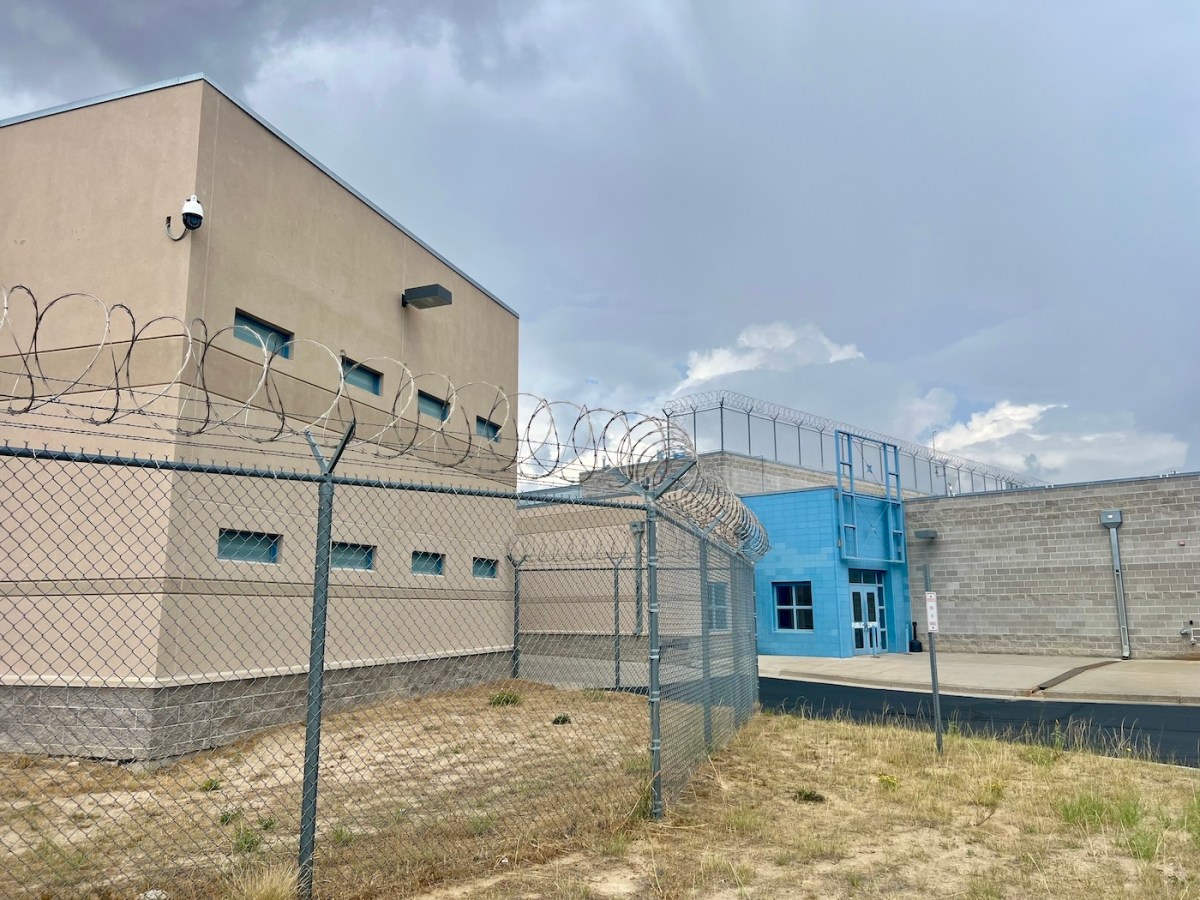
He doesn’t support unregulated borders, nor does the bishop’s message encourage that. But he doesn’t agree with the ways in which immigration is being enforced now and that it’s being done in the name of citizens like himself. The U.S. should provide humane living conditions for people who are detained, he believes. And people who are here shouldn’t have to live in fear.
“They’re not less than. They’re still human beings. And that’s why I’m here. I want to make sure that we treat people with dignity.”

Organized 4 year invasion of over 10 million people from 3rd world countries has consequences.
Catholic Charities along with countless other NGOs were responsible for the invasion, CC alone received 1.4 billion dollars to do EVERYONE involved a disservice.