

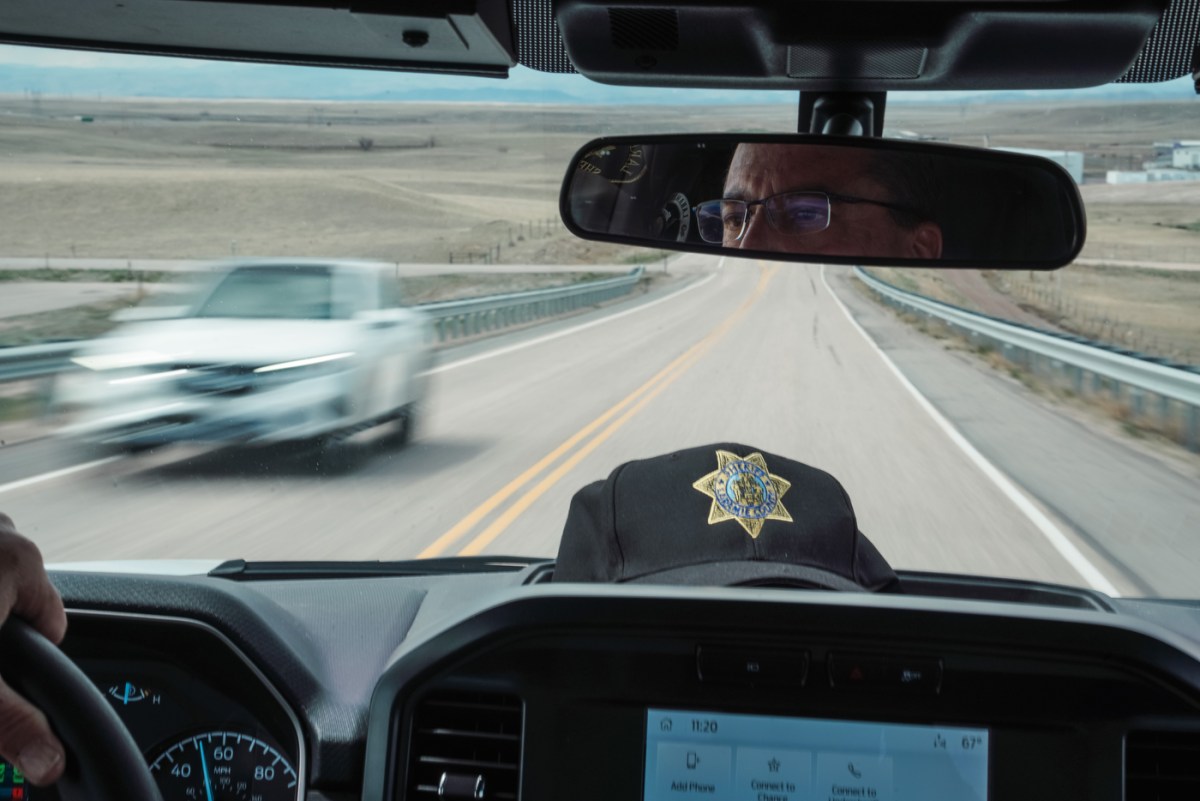
After “a change of heart,” the Laramie County Sheriff’s Office handed over video footage of an immigration arrest that a law firm suing the office had requested, Drake Hill, the attorney representing the law firm, said at a hearing on Thursday.
Kevin Lewis, an investigator for the law firm, Lichter Immigration, confirmed that he had received a thumb drive with the footage, but said he had not viewed it yet. Laramie County Attorney Mark Voss, who is representing the sheriff’s office, said at the hearing that the drive also includes an additional report by a deputy who was involved in the arrest.
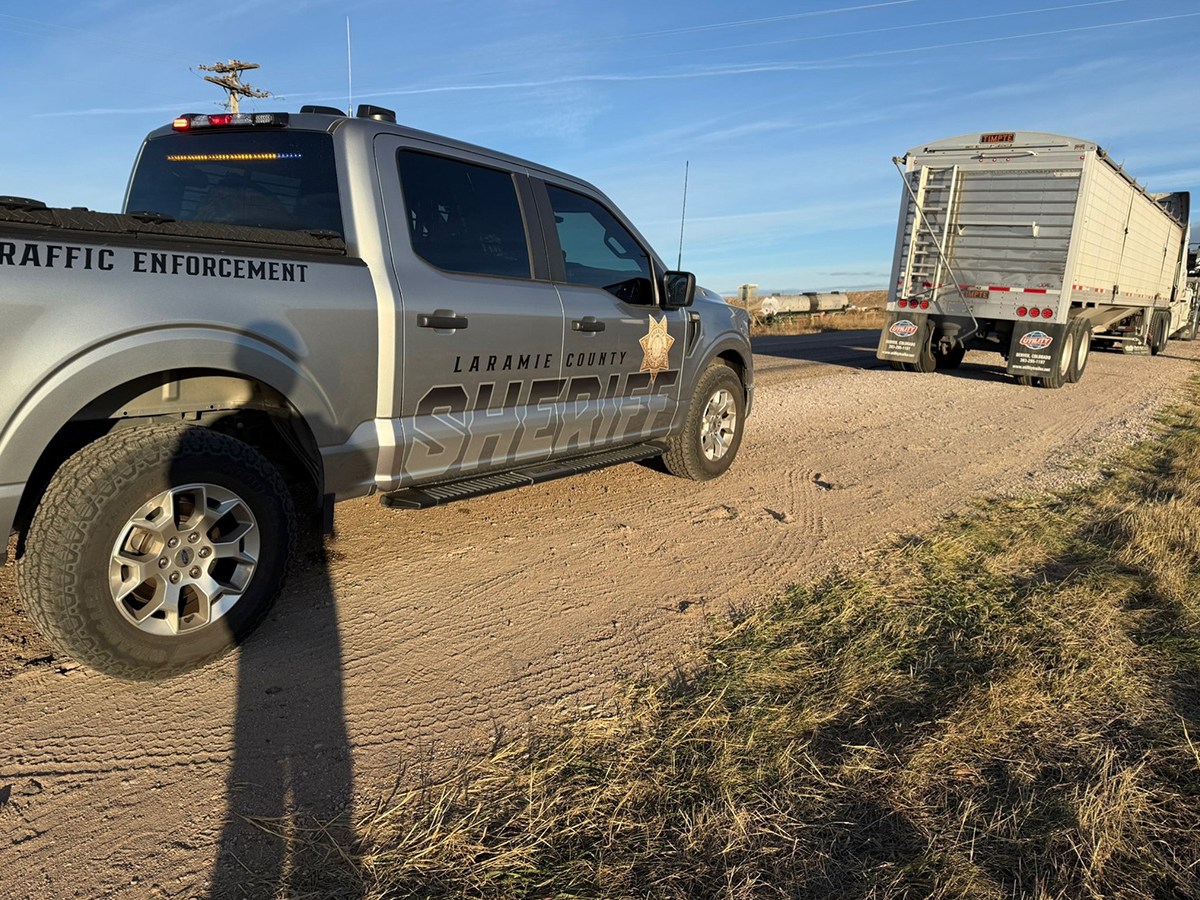
The hearing came after Denver-based Lichter Immigration and Lewis, a Laramie County resident, filed a complaint last month accusing the sheriff’s office of blocking access to evidence related to an ongoing deportation case. The law firm also alleges the sheriff’s office released a false report, which was later corrected, about the arrest of long-time Laramie County resident Mario Fabian Valenzuela Robles, a Mexican citizen with three children. He was arrested after being stopped by a sheriff’s deputy.
The plaintiffs say they faced various obstacles to obtaining records from the sheriff’s office related to Valenzuela Robles’ arrest, jeopardizing his two court proceedings ongoing in Colorado. “Blocking” access to records in such a proceeding “rises to the highest level of law enforcement misconduct,” Hill said.
Hill, a Cheyenne attorney, is a former Wyoming GOP chairman and the spouse of former Wyoming Superintendent of Public Instruction Cindy Hill. He has served as an attorney for Honor Wyoming, a conservative political group. Lewis was a staffer in Cindy Hill’s office when she was state superintendent.
The sheriff’s office and County Attorney Voss responded to the law firm’s allegations, stating that they had not received confirmation from the plaintiffs that they represented Valenzuela Robles, which they needed to release the requested video footage.
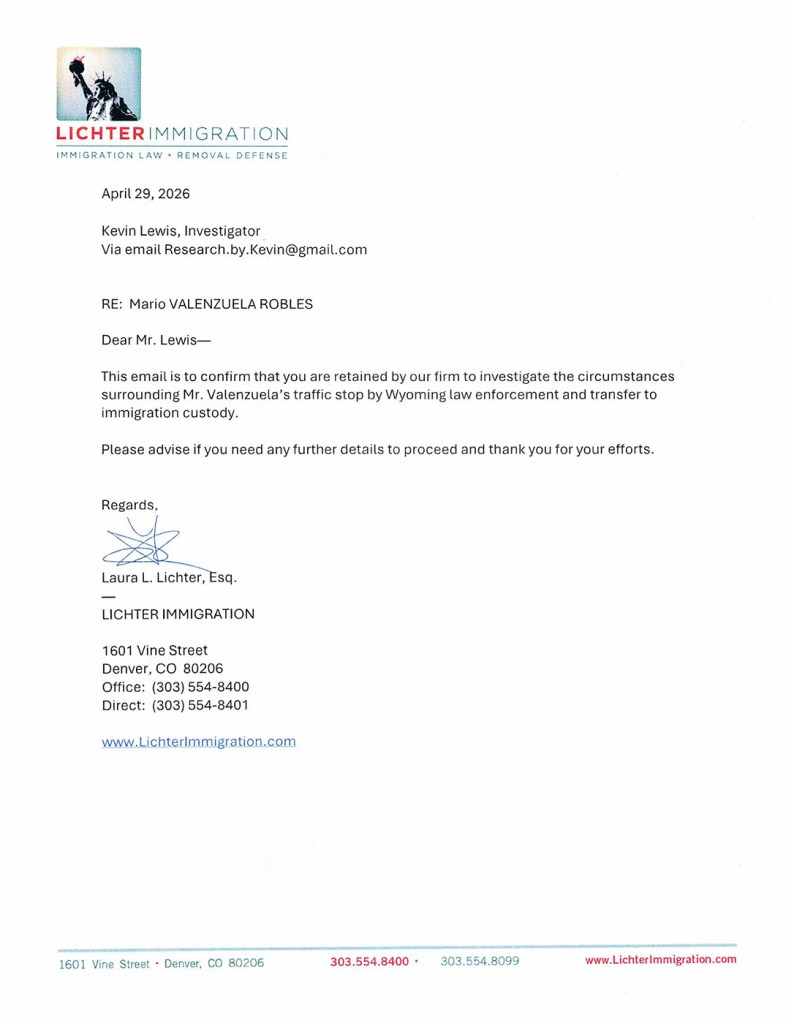
Lewis provided a retainer letter on Lichter Immigration letterhead to the sheriff’s office and the county attorney, but the letter didn’t include a declaration that he or the law firm represented the detained man. Since the law firm filed the complaint, the sheriff’s office has “not received any further communication from Plaintiffs indicating that representation,” Voss wrote.

Laramie County Judge Robin S. Cooley ordered Laramie County Sheriff Brian Kozak to appear in court and explain why Lichter Immigration shouldn’t be allowed to inspect the records it requested related to Valenzuela Robles’ arrest. Kozak and chief deputies Perry Rockvam and Aaron Veldheer attended the Thursday hearing. Seven others, including Cindy Hill, sat in the audience.
On Thursday, at the request of Lewis and Lichter Immigration, Cooley told the sheriff’s office to perform a certified computer search to find records that the plaintiffs had requested related to Valenzuela Robles’ arrest. She told the parties to get together to agree on search terms. “Given the events that have transpired, that provides complete transparency, so there are no questions,” Cooley said.
She also ordered an “in camera” review of certain records that the plaintiffs had requested. This review is a legal process in which a judge privately inspects records to decide if they can legally be released. Voss, unsure whether he was legally permitted to release some of the records the law firm wanted, requested the review so that the court could determine whether they could be released.
Voss, who is representing Kozak and the sheriff’s office and provides legal guidance on records requests the office receives, explained that he is careful about releasing digital records. “Once they are out in the world, there is no pulling them back,” Voss said. Videos “can end up on the internet and haunt someone for the rest of their life.”
But since Voss saw that Lichter Immigration is listed as the representative of Valenzuela Robles in his habeas corpus case, the county attorney said he believes he has enough assurance that the law firm indeed represents the man, allowing the sheriff’s office to legally hand over the arrest video footage.
Wyoming law doesn’t currently require law enforcement to make recordings public. In some situations, agencies have discretion whether to release those records. Agencies can, however, be required to release footage to the public through a court order.
Going forward
In the past, Kozak said his office has sometimes allowed in-person video inspections that include a lieutenant sitting in while someone watches a video. “I’ve kind of been transparent and allowed that on a case-by-case basis,” he said. But Kozak told WyoFile that, as a result of this lawsuit, the office will no longer allow in-person video inspections unless there is a court order.
“The statute says ‘May,’ and so we’re just not going to do it unless someone puts a request in through the county attorney, because the statute does say unless ordered by a court,” Kozak said. “So maybe we’ll just take the route that we have to wait for a court order. That way there’ll be no more confusion.”
Kozak said the office will develop a statement communicating the office’s policy that video inspections require a court order.
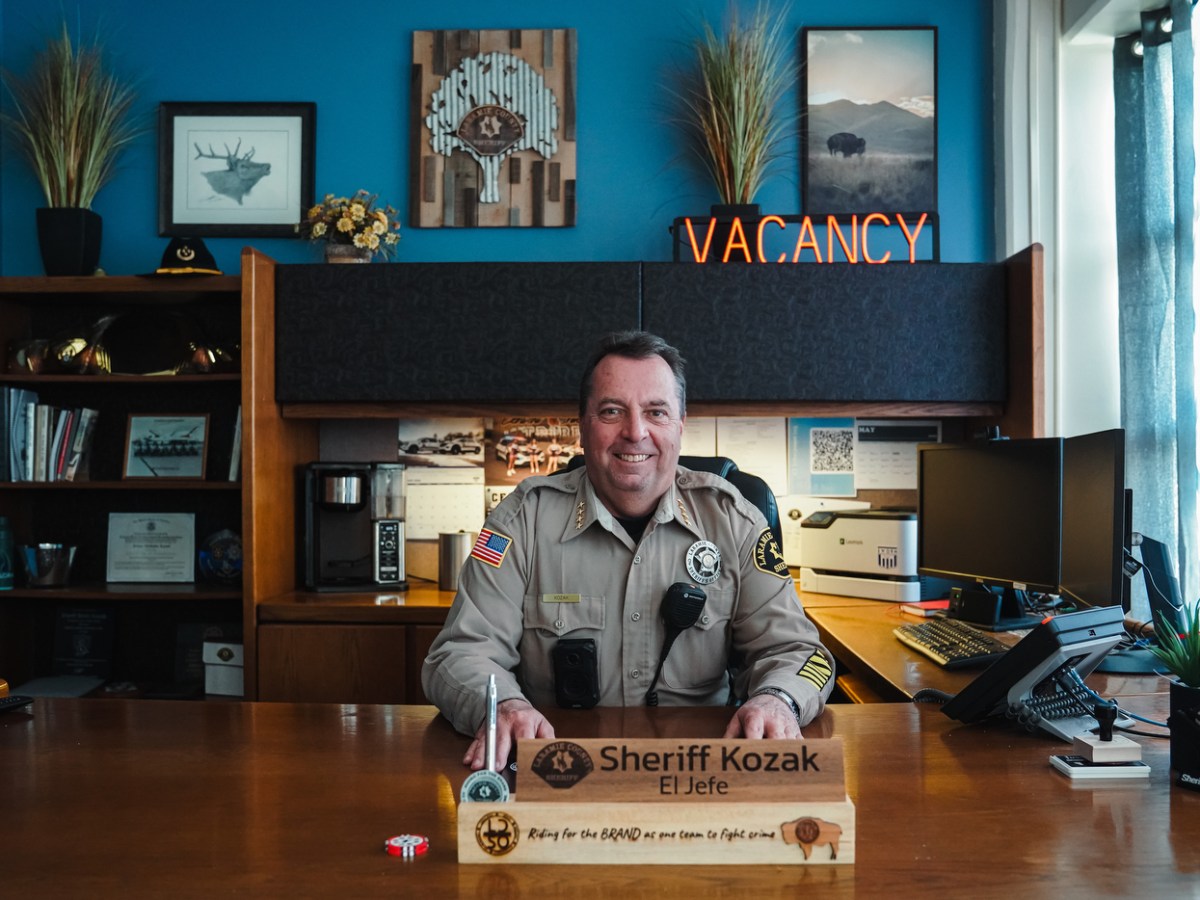

Voss described the plaintiffs’ language regarding the sheriff and his office as “performative, hyperbolic and incorrect.” He noted that the office gets around 40 records requests each day, and that it’s difficult to parse through these requests and determine what the office can legally release.
But while denying that the sheriff’s office had acted with negative motives, Voss apologized for the delay in processing the law firm’s records request and any impact the delay may have had on Valenzuela Robles’ immigration case. He noted that Valenzuela Robles has been in the U.S. for a long time and has three children. “This took longer than it probably should have,” Voss said, adding later that he is “more than sympathetic” to Valenzuela Robles’ situation.
The hearing didn’t address the discrepancy between the initial and corrected report on Valenzuela Robles’ arrest that the sheriff’s office handed over to Lichter Immigration. But Kozak had previously explained in a social media video that the inaccuracies in Valenzuela Robles’ initial arrest report resulted from a copy-and-paste error. The deputy who wrote the report made the error while copying the “video camera advisement” from a previous document, Kozak said.
To avoid this mistake going forward, Kozak told WyoFile that deputies won’t use this advisement, but instead start from zero and just “explain what happened” during an arrest. He said the office may create a template in the future that includes the advisement.
Rockvam, a chief deputy with the sheriff’s office, told WyoFile that he’s also reviewing the sheriff’s office policies to “make sure that staff and the county attorney’s office” are “all on the same page” when it comes to fulfilling records requests.
“I thought there was an inefficiency on our part in the fact that we have someone coming over here and then we’re sending them over to the county attorney’s office and then they’re coming back over here,” Rockvam said. “I don’t want us to do business like that.”
Lichter Immigration also asked in its complaint that the sheriff’s office be penalized. Whether or not the office will face any penalties has yet to be decided.
Another lawsuit
Kozak and the sheriff’s office also face a lawsuit from the American Civil Liberties Union over the agency’s immigration contracts with U.S. Immigration and Customs Enforcement. The lawsuit accuses Kozak and his office of violating legally required procedures and exceeding their legal authority when entering into three 287(g) agreements last year. Last week, the sheriff’s attorney asked the court to dismiss the complaint, arguing that the plaintiffs lack standing and didn’t follow notice requirements. A court hearing to consider the dismissal is scheduled for July 27.
ICE has three types of contracts — Jail Enforcement, Warrant Service Officer and Task Force — that allow state, county and local law enforcement to conduct immigration enforcement, expanding the federal agency’s reach. The Trump administration revived the most controversial of these three agreements, the Task Force model, in 2025 after the Obama administration had phased it out in 2012. Kozak’s office is one of two law enforcement agencies in Wyoming — the other being the Sweetwater County Sheriff’s Office — that have all three enforcement agreements with ICE.
Asked if he had second thoughts about his decision to sign onto these 287(g) agreements, Kozak said he didn’t. He had expected people to challenge his decision, the sheriff said, but still believes the agreements help protect the community.
Update: This story has been updated with additional information about why the sheriff’s office decided to hand over the video footage.

Sure is comforting to know that local, county, and state LEOs in Wyoming can defend us against people who have chosen to establish a home, secure productive work, raise their children, pay taxes, and contribute to the general welfare of our city, county, state and country! I hope all of us sleep better knowing we don’t have to put up with these kinds of citizens on our streets!
“Equality state”? Sure, assuming one is a white, Anglo-Saxon Protestant, is too ill-educated to speak any language other than English, and has been successfully indoctrinated to actually believe that “Freedom Caucus” supporters are good for America. Try electing educated, liberal progressives for a change and bring Wyoming into the 21st century (and keep suing this sheriff’s office until it stops aiding and abetting Trump’s racist agendas).
This, folks, is what living in a fascist nation is like.