

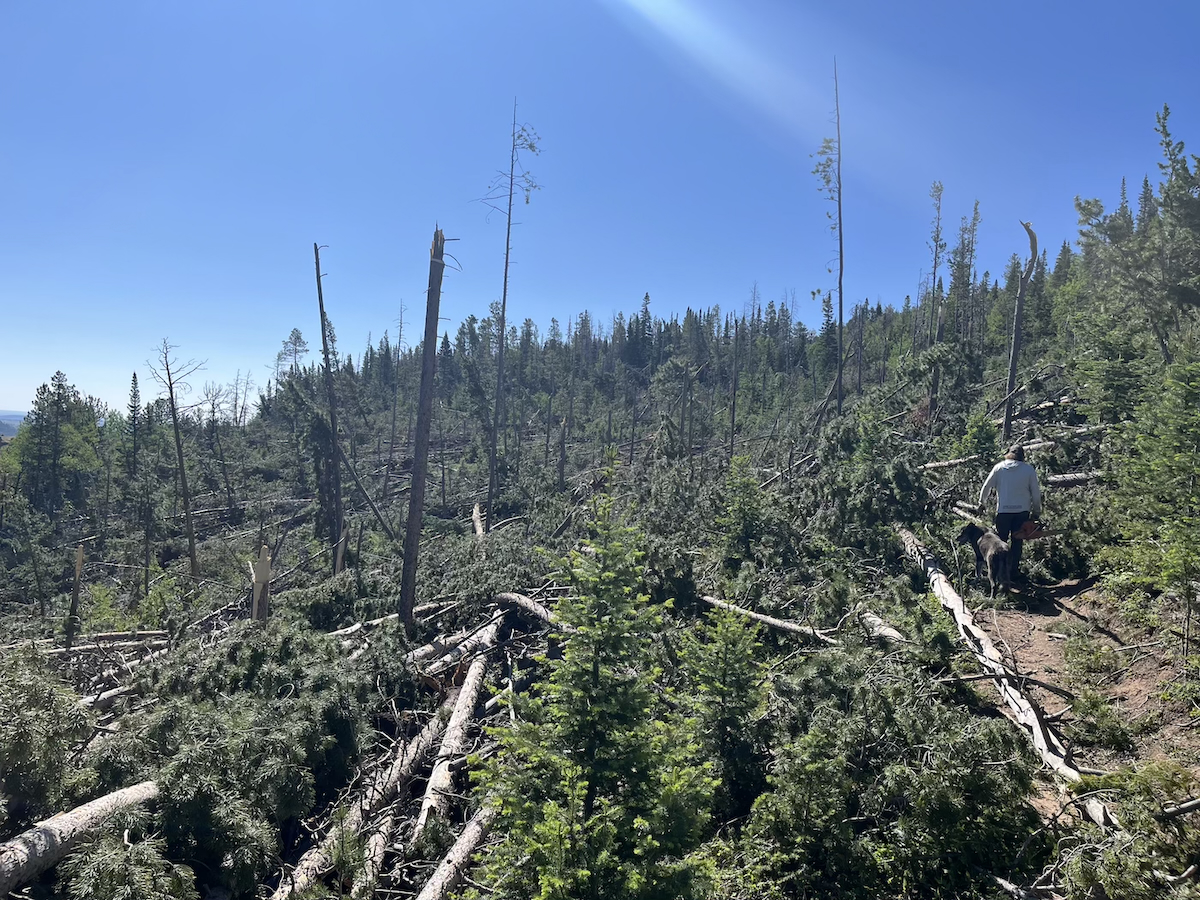
Amid a dramatic summer storm that brought hail and thunderstorm warnings, a tornado touched down June 17 outside Laramie and was on the ground for around five minutes, according to Albany County Emergency Services.
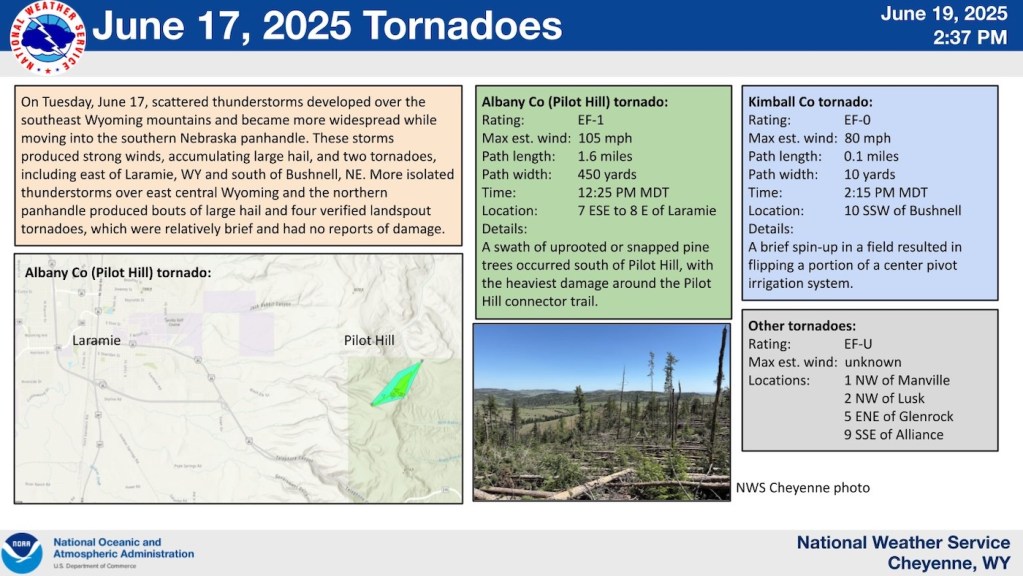
The tornado ran 1.6 miles and its maximum wind speed reached an estimated 105 mph, according to the National Weather Service. Its path cut through a section of U.S. National Forest land, and there were no injuries or damage to structures.
A harmless weather event. Unless, that is, you’re part of southeastern Wyoming’s passionate and growing mountain bike community.
The tornado spent its brief time on Earth knocking down a dense swath of trees across a beloved and critical piece of the growing Pilot Hill trail network.
That trail section’s name? Windy Windy.
The title invokes two homonyms, Richard Vercoe, one of the volunteers who maintains the trail network, told WyoFile — it is windy, as in curving across the landscape, and also windy, as in buffeted by Wyoming’s steady blow.
“It’s the only section of trail named after the wind, and that’s where the tornado hit,” Vercoe said.

Windy Windy is a stretch of the trail connecting the pathways of the Pilot Hill area, a grouping of public land owned by various government entities and managed to the benefit of recreationalists, with the sprawling forest service land that includes the Happy Jack trail network. It’s a principal thoroughfare for mountain bikers linking together trails for long rides, Vercoe said.
Windy Windy climbs and descends gently as it carries cyclists between forest and wide-open, high-country views, according to Vercoe, earning it devotion from area riders both for the flow of its trail and its aesthetics.
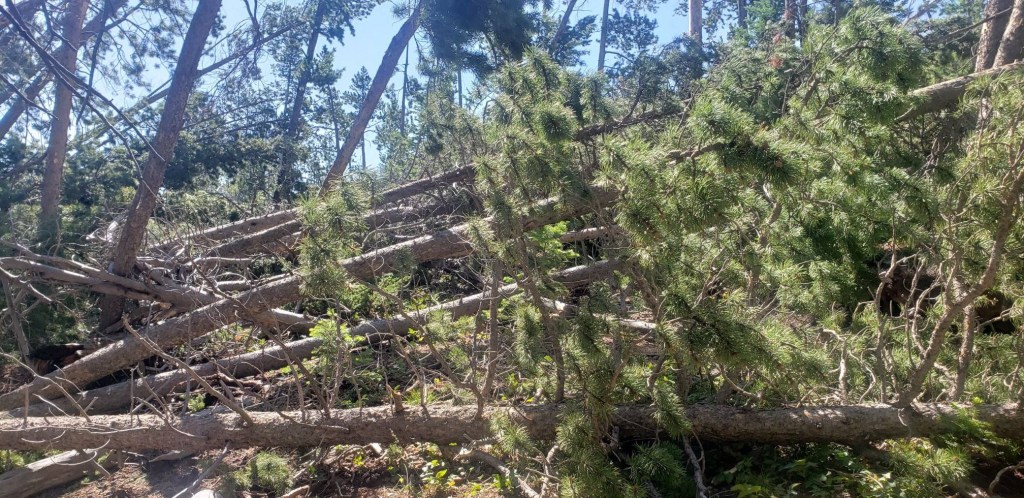
But when a long-distance rider reached Windy Windy the day after the funnel struck, he found downed trees layered on top of each other.
Vercoe, who visited the site the next day, said the tornado left the downed trees in a pattern so circular it made him think of the otherworldly crop circles that puzzle farmers and intrigue UFO enthusiasts. He estimated the diameter of the circle at about 200-300 yards.
According to NWS, the tornado’s path was 450 yards wide, with the heaviest damage occurring along the connector trail.
Vercoe belongs to a volunteer group called the Trail FAIRIES (short for Fast Acting Initial Response Indefatigable Environmental Stewards). Those stalwart cyclists, through arrangements with the agencies that own the public land and the nonprofit that stewards the Pilot Hill biking area, clear downed trees and other trail obstacles quickly. The idea is to keep the cycling community from having to wait on the timelines of government agencies.
It was two U.S. Forest Service sawyers who first worked to restore Windy Windy, Vercoe said. They began their work the day the rider reported the damage. Using chainsaws, the government sawyers cleared as many as 60 downed trees that first day, Vercoe said. The following day, he and two other volunteers resumed the task and cleared a similar number. The following day, two more volunteers repeated the performance. All told, Vercoe said they might easily have had to saw through 200 downed trees to reopen a 6-foot wide swath of trail through the damage zone.
“You’re sawing trees at multiple heights — chest high, ground level, head high,” he said. Some trees had their tops snapped off 20 feet up, others were tossed entirely out of the earth, he said.
Four days after the storm, bikers were again passing along Windy Windy.
The tornado hasn’t ruined the scenic stretch, Vercoe said, especially for those who call the area home.
“As we ride through there you will see these crazy acts of physics, and then soon these really unique ecological processes,” he said. “Over the next 10 years, you’re going to get to watch a tornado ecological succession story. I think it added a whole new flavor to Windy Windy.”
