

CHEYENNE—The future of Wyoming’s primary economic development agency remains a point of deep contention as state lawmakers move forward with a sweeping effort to reform — and in some cases dismantle — its core functions.
In the most recent budget cycle, lawmakers slashed the Wyoming Business Council’s biennial funding from a recommended $54.6 million to just $15 million. This was designed to sustain the council only while lawmakers reexamine its mission and contemplate permanent statutory changes.
At the heart of the debate is a clash between those who view the agency as an essential partner for state growth and those who characterize it as an inappropriate use of taxpayer dollars that picks winners and losers.
On the hot seat
Critiques of the Wyoming Business Council have grown increasingly pointed, particularly from members of the Wyoming Freedom Caucus on the Legislature’s Joint Appropriations Committee. Multiple committee members cast the agency as an entity that skews the free market by providing state-backed incentives.

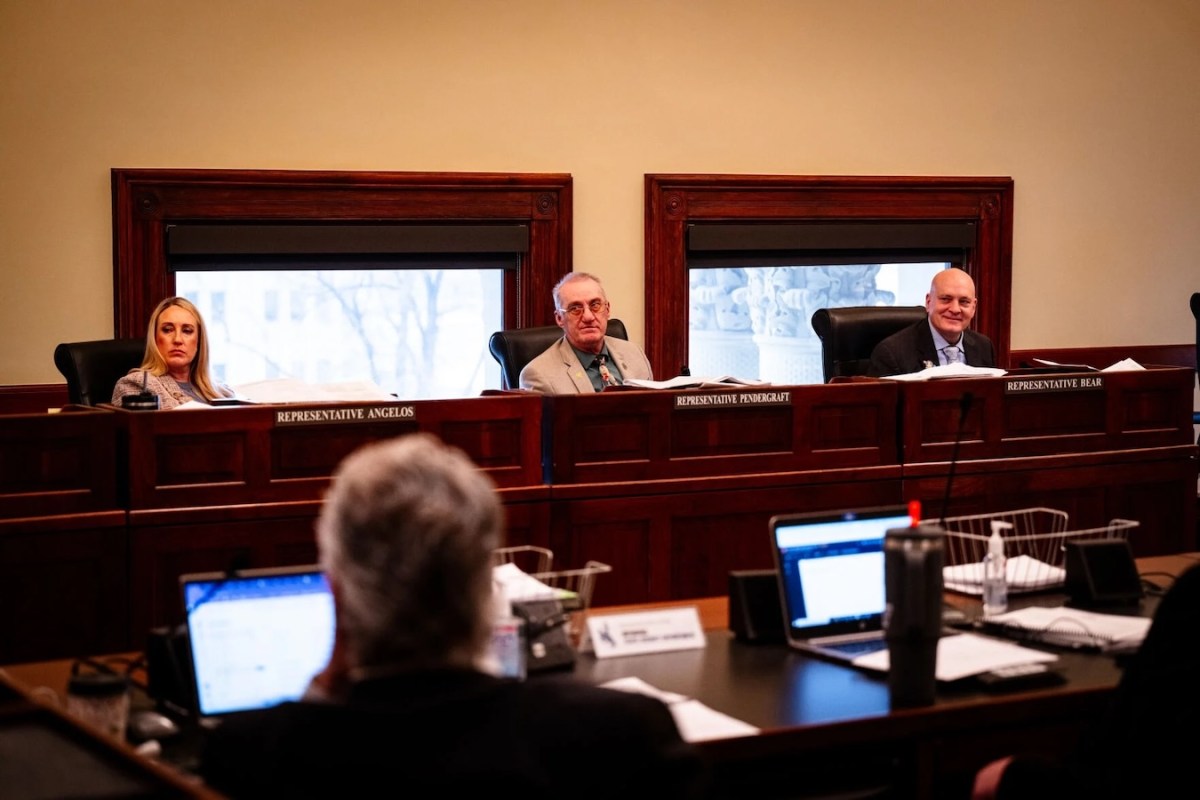
During the committee’s meeting Monday, Chairman Rep. John Bear, R-Gillette, and other lawmakers took time to question Josh Dorrell, the Business Council’s CEO, while he was on what Bear described as “the hot seat.”
Bear expressed skepticism about taxpayers’ responsibility to help private companies find new customers through the Business Council’s market development programs.
“I’m just curious why the taxpayer is being tapped to help these companies,” Bear remarked, noting that many other Wyoming businesses would appreciate subsidized customer acquisition.
Rep. Jeremy Haroldson, R-Wheatland, echoed these concerns, questioning whether many of the Business Council’s grant programs fit the traditional role of government.
“We would not have made America what America is if we would have used this policy to build our economics,” Haroldson stated during a discussion on Wyoming’s Kickstart Grant Program, the council’s effort to help growth-oriented startups within the state to overcome initial hurdles.
Other lawmakers grew frustrated with Dorrell’s lack of immediate answers and figures about his agency, while Dorrell said the council cannot provide those numbers at this time.
Rep. Ken Pendergraft, R-Sheridan, was one of those lawmakers. When he pushed for answers on why certain past investments failed and specific numbers for the upcoming supplemental budget requests, Dorrell could not provide a response.
“I’m not trying to be confrontational, but I’m frustrated,” Pendergraft said. “You were asked, ‘What would it cost you to be successful?’ No answer. You were asked, ‘What is the average cost of administration for a year?’ No answer. … No answer, no money.”
Lawmakers also revisited a 1997 report that led to the agency’s creation, suggesting that after nearly 30 years, many of the same problems — such as the need for regionalization — remain unresolved.
Business Council response
Dorrell said he didn’t see his position Monday as being on the “hot seat,” as Bear suggested.
“I appreciate the discussion. I appreciate the hard questions,” he said. “I don’t feel like it’s a hot seat at all because I hope that we’re all on the same team. … I see people who care about their communities. … We’re all on the hot seat on trying to figure this out.”
He countered lawmakers’ criticisms by focusing on the “practicality” of economic development and the harsh realities facing Wyoming families.
Dorrell argued that economic development is the only viable path to prosperity in the face of stagnant job growth and soaring inflation, arguing that state investments create an economic “flywheel” that attracts significant private capital.
Defending programs like market development and business loans, he asserted these tools bring outside money into Wyoming and keep local businesses in the state.
Addressing failed past projects, Dorrell noted the agency now says “no” more frequently to ensure investments meet strict economic criteria, rather than political ones. He pushed back against the demand for a “top-down” vision, stating the Business Council’s role is to unlock and support the existing vision of local communities.
When lawmakers grew frustrated with his inability to provide specific budget figures or staff costs during the session, he maintained that detailed requests must first go through “proper channels,” including his board and the governor, before being presented in August.
Dorrell also pushed back against the push for immediate dismantling, warning that destroying an executive branch agency without fully understanding its functions would be a mistake. He highlighted the agency’s recent successes, noting that since 2020, wages for projects supported by the Business Ready Community program grew by 35%, significantly beating the national average.
“I don’t think you should be going to every community in Wyoming and asking them to do economic development,” Dorrell said, instead suggesting the Business Council should be a tool for those who proactively seek help to remove barriers to growth.
Proposed legislation
The Appropriations Committee is currently considering four major bill drafts that would reshape the council’s statutory authority and oversight.
One bill draft targets specified programs for repeal — specifically, those that are “old or unfunded” or no longer fit the state’s mission. This includes the winding down of the Brownfields Revolving Loan Fund, with its activities potentially transferred to the Department of Environmental Quality. It also addresses the reversion of nearly $12 million in unused state broadband funds, as the state has already received more than $400 million in federal funding for broadband expansion.
Another bill draft would create formal legislative liaisons — one senator and one representative — to serve as “conduits of information” between the Business Council and the Legislature. It also proposes significant changes to the Business Ready Community program, including potential requirements for grant funds to be returned to the state if an asset is sold before a project is closed out.
A third bill draft seeks to increase legislative oversight of federal funds awarded through the American Rescue Plan Act. While the state expects to receive about $50 million for venture capital, the Appropriations Committee working group wants to ensure these taxpayer funds are subject to the state’s appropriation process.
Dorrell warned that requiring legislative approval for individual investments could “gum up the process,” as venture rounds open and close at the speed of business, not the speed of government.
The final bill draft would codify the countywide consensus funding, allowing for infrastructure dollars to be distributed directly to counties and municipalities that reach a local consensus on priorities. This program, which has not been funded since 2014, is preferred by some lawmakers because it bypasses the Business Council’s competitive grant process.
Next steps
Appropriations has yet to take a final vote on these drafts, but the committee’s working group has incorporated many of the reductions and modifications discussed during the interim. Chairman Sen. Tim Salazar, R-Riverton, noted that the committee would continue to “ferret out” answers and likely bring amendments to the drafts in future meetings.
A joint meeting with the Legislature’s Joint Minerals, Business and Economic Development Committee is scheduled for late August. This meeting will continue to discuss which Business Council programs the state will continue to support and which will be left behind as the 2027 general session approaches.

Bottom line: The WBC does nothing to help Wyoming businesses. Dorrell merely wants to keep his incredibly exorbitant salary. And his opaque, bureaucratic, wasteful agency wants to keep picking winners and losers, handing out political favors, and disadvantaging homegrown businesses while favoring out-of-state ones. Best to dismantle it and establish a referral system which refers inquiries that come in at the state level to local economic development agencies.