


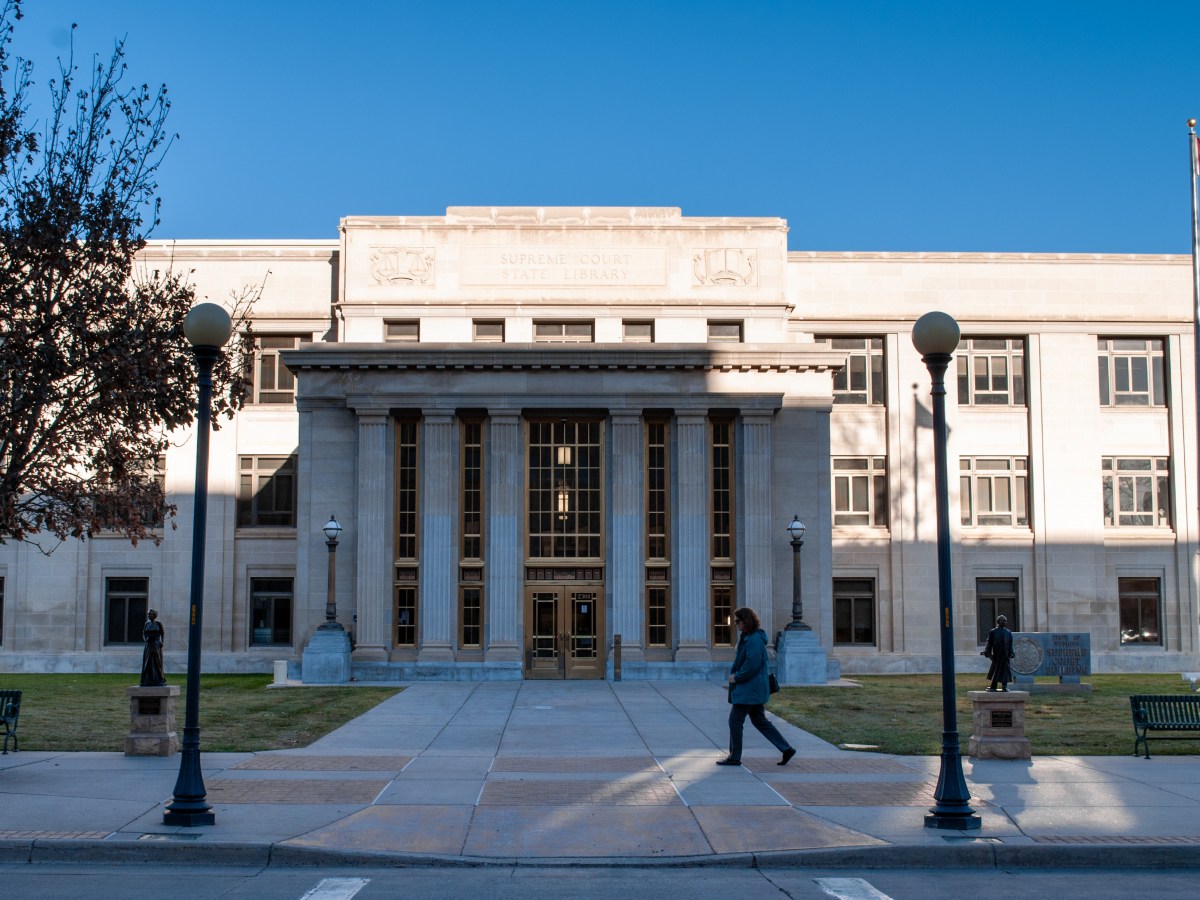
The Wyoming Supreme Court declined Tuesday to intervene in a Cheyenne lawyer’s dispute with the Wyoming Attorney General’s Office over its handling of an election complaint against Secretary of State Chuck Gray.
In April, George Powers, a private attorney, filed an election code complaint with Attorney General Keith Kautz. In the complaint, Powers alleged that Gray may have broken state law when, in August, he gave the driver’s license numbers and partial Social Security numbers of every registered voter to the U.S. Department of Justice. The Trump administration began seeking that information from all 50 states in 2025.
Because Kautz had advised Gray in his response to the Justice Department request, Powers asked the attorney general to recuse himself from the matter. When Kautz would not say whether he would do so, Powers asked the Supreme Court to intervene.
More specifically, Powers’ attorneys filed a petition for a writ of mandamus — a legal action that allows a court to order government officials to perform their public duties. Because it is considered an extraordinary remedy, courts will only grant such a petition if it meets certain requirements, including a clear right to relief, a defined duty to act and the absence of any other legal recourse in the matter.
The petition asked the high court to command Kautz, himself a former Wyoming Supreme Court justice, to recuse himself and his office from investigating the allegations contained in the complaint, and to appoint an independent prosecutor to handle the matter.
Tuesday, the high court denied the petition.
“We find Petitioner has not cited any ‘absolute, clear, and indisputable’ law specifically requiring these actions,” the two-page decision states. “As such, Petitioner is not entitled to mandamus relief.”
The ruling spells the petition’s end, but does not necessarily conclude the dispute. Ryan Semerad, attorney for Powers, told WyoFile they are considering next steps, especially since the petition process provided both “more information and more questions.”
In his response to the petition, which was filed earlier this month, Kautz disclosed publicly for the first time that two groups of attorneys who reviewed Powers’ complaint declined to bring criminal charges against Gray.
The attorney general’s office evaluated the complaint by creating a “Chinese wall,” or an internal information barrier, the filing states. An unnamed private Wyoming law firm, alongside a Wyoming county and prosecuting attorney, conducted the second evaluation.
Both groups of attorneys decided not to pursue criminal charges, the filing states.
Kautz’s office has not responded to inquiries by WyoFile about the identities of the law firm or the county and prosecuting attorney.
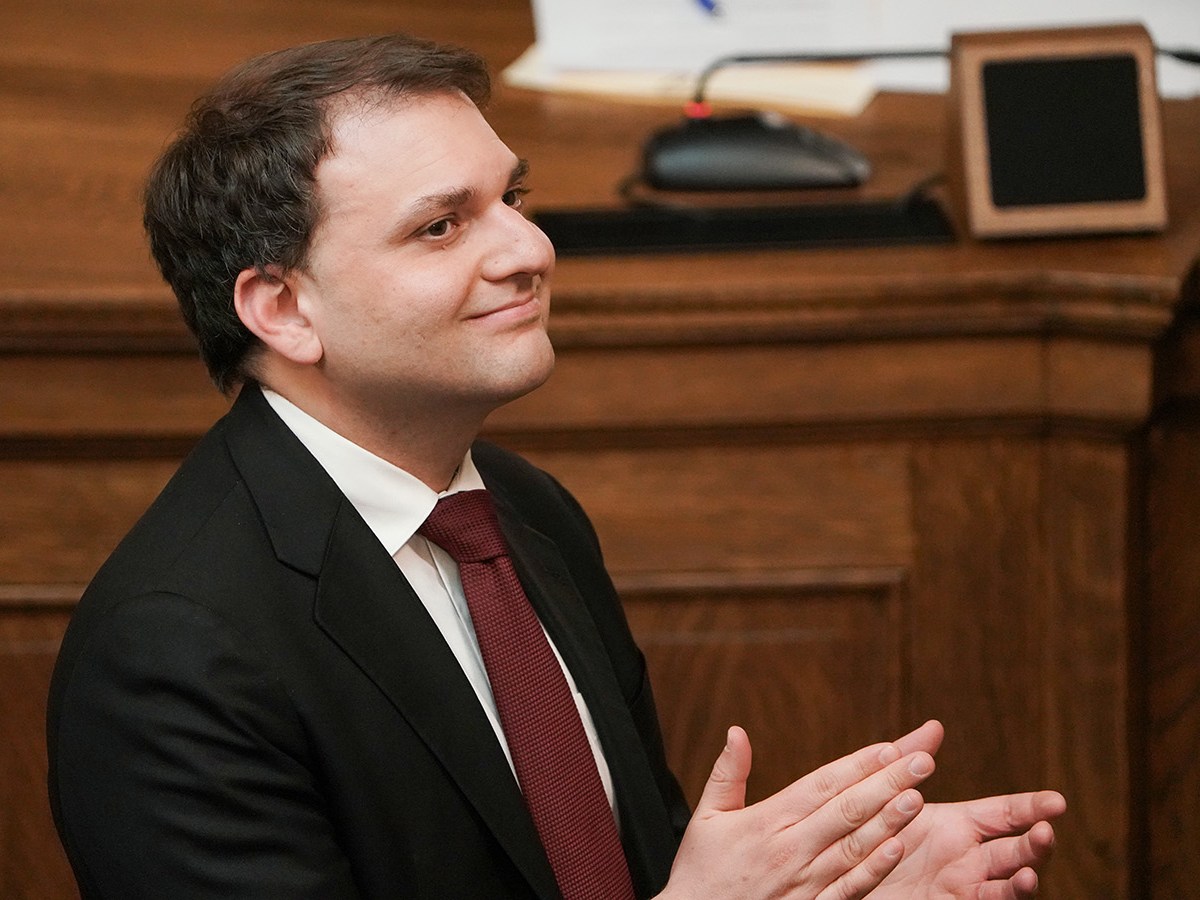
Gray has stood by his decision, maintaining he made it in consultation with the attorney general’s office and in support of election integrity. He has accused Powers of trying to undermine his office’s work.
“From the very beginning, this has been nothing more than a political witch hunt from Leftist George Powers and an attempt by the Left and the media to damage my Congressional campaign,” Gray said in a text message, adding that “over 20 states” have complied with the Justice Department.
Most states have responded to the request by either providing publicly available versions of their voter registration lists — i.e. data sets without sensitive information — or altogether declining to provide lists, according to the Brennan Center, which has been tracking states’ responses.
This is a breaking news story and may be updated.

Footnote: Do you really think Americans with any intelligence are going to sit back and allow this corrupt president, who already was caught cheating in the 2020 election, tally our nations votes during midterms?
Don’t count your chickens before they hatch, we’re still in the second quarter, there is still plenty of time left for Trumpigula and his vermin to rig- or outright steal the mid-terms. If October polls suggest that the redistricting he pushed may not succeed in securing the house or senate, expect to see team Trumpty pull out all the stops. I won’t try to predict exactly what sort of obviously illegal garbage they have planned, but rest assured most of us will be flabbergasted that even this Felon in Chief would attempt it, and appalled that our country has sunk so low that such chicanery could work.
A federal judge named Sparkle Sooknanan killed the database Donald Trump built to hoard millions of Americans’ Social Security numbers and purge the voter rolls, in Texas it was already flagging real citizens and canceling their registrations.
On Monday she set aside the administration’s 2025 overhaul of a federal system called SAVE, the tool states use to decide whether a registered voter is a citizen.
Once a state ran its rolls through the revamped database, anyone the system flagged got a letter in the mail demanding they prove their citizenship. Thirty days of silence and your registration was canceled. No hearing. No knock on the door. A form letter and a clock.
Texas signed up first. Last October it flagged 2,724 people as “potential noncitizens,” and shipped the list to county officials to sort out.
In Travis County alone, officials dug into 97 of those names and confirmed that at least eleven were citizens. Real ones. Naturalized Americans who had already handed the state proof of citizenship years earlier to get a driver’s license. The machine flagged them anyway.
Sooknanan, in a 75-page ruling, found that officials had pooled the Social Security numbers and citizenship records of millions of people, run them against the voter rolls five months before a midterm, and done it with data they already knew was unreliable.
The government, she wrote, had trampled the privacy rights of American citizens and threatened the sacred right to vote.
A machine sold as a shield against noncitizen voting was disenfranchising the exact citizens it claimed to protect, and the people running it knew the data was junk before they ever switched it on.
The League of Women Voters brought the case. The judge handed them the win and pulled the plug on one of the central pillars of Trump’s plan to put the federal government in charge of who gets to vote. Anyone already flagged or purged by the system now has a ruling to wave in their state’s face.
And the administration’s response told you everything you need to know about who they were ever protecting.
Faced with a decision built on actual Americans stripped of their vote by data the government admitted was garbage, the Homeland Security lawyer defending the thing did not mention a single one of them.
He complained instead about how hard the Left fights to stop him from solving a problem that the citizens in Travis County could have told him, from experience, does not exist.
Wyomingites’ personal, confidential information that Sec. Gray turned over to the Trump administration is now part of a national database that the U.S. District Court for D.C. on Monday ruled “…violates federal privacy laws meant to protect Americans’ personal information and Social Security numbers” (https://www.yahoo.com/news/politics/articles/judge-kills-trump-voter-database-185826712.html?fr=yhssrp_catchall, https://ecf.dcd.uscourts.gov/cgi-bin/show_public_doc?2025cv3501-111). The court found that the administration is using the database to remove lawful American citizens from voter roles, and the order prohibits the administration from using it. We’d all be better off if Sec. Gray was one-tenth as interested in upholding the U.S. and Wyoming constitutions as he is in promoting some hysterical idea of “election integrity” and his political career.
The chrump lemmings will, no doubt, blame an “activist” judge for the ruling.
I am counting down the days to August 18th when I get to ink in that little oval that will send Chuck Gray straight to the unemployment line.