

My aunt on my father’s side took her own life when I was a young girl. That one act created a lifelong cascade of pain for the people who loved her in my family. Her young daughter, my young cousin, went on to face her life, bereft without her mother. I remember the pain I felt learning for the first time in my young life that a mother — my mother, perhaps — could die. My father went on without a sibling, and his family felt that absence their entire lives. We still feel her loss.
Opinion
Suicide does not just take one life: It forever changes so many more. And it leaves a hole not just in our families, but in our larger communities. We lose the mother who read to children in the classroom, the friend who baked the best cinnamon rolls in the neighborhood, the police officer famous for his grilling, the young student who was brilliant at art, the cherished doctor loved by everyone, the giving person who volunteered at the animal shelter.
Jordan Peterson, someone who has struggled himself with depression and suicidal thoughts, said something I really agreed with: “Don’t underestimate the hole your absence would leave. Each of us, we’re remarkable creatures, and we have something to offer to the world, to the people we love, to the world at large. And it’s our responsibility to make that manifest and we move a little farther away from paradise every time that doesn’t happen.”
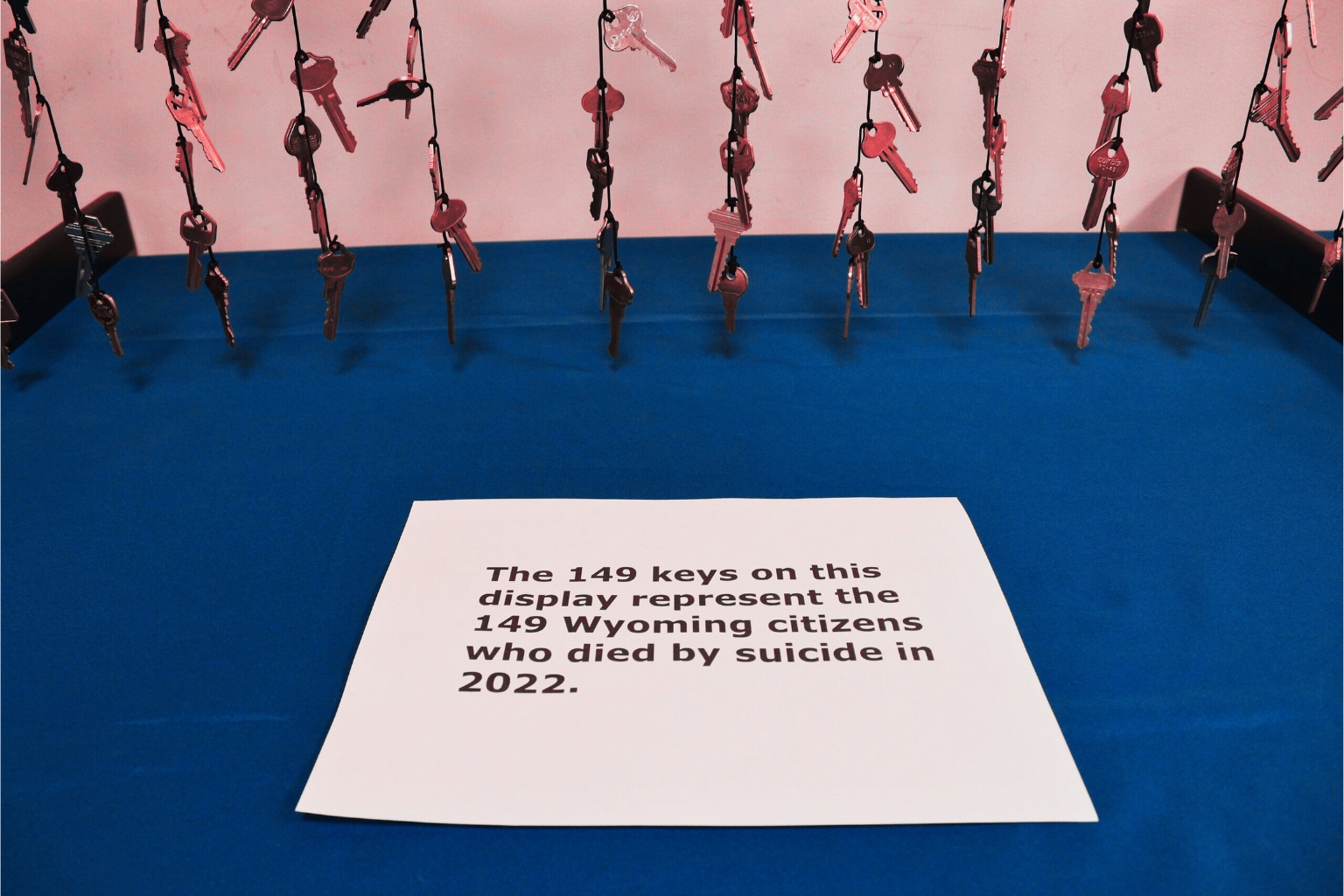
Wyoming’s suicide rate should alarm us all. In the past five years, about 800 Wyomingites have taken their own lives, estimates show. That’s 160 people a year who are gone from their families and our communities forever. They were our police officers, high school students, store clerks, railroad workers, moms, dads, brothers, sisters, children, precious ones. Gone.
Last month, a deputy at the Sublette County Sheriff’s office died by suicide. In the United States, police officers are at higher risk of suicide than any other form of death in the line of duty. Think about that for a moment.
And our veterans are suffering at a much higher rate than other demographics as they grapple with post traumatic stress disorder and other mental health issues after returning home. They often struggle to get the care they deserve.
Wyoming PBS programs and recent stories in WyoFile have been telling the stories of Wyomingites who struggled with depression and suicide and those who have lost someone. It’s a stark tale of the lasting pain inherent when family and friends lose someone from suicide.
So, what has Wyoming done about the high rates of suicide, and what more can be done about it?
Most of Wyoming’s focus has rightly centered around community-based solutions and tools. The state launched the WY We Care program that values community solutions while creating a process for collaboration between local government, private sector providers and other stakeholders. The program focuses on strengthening the state’s behavioral health care workforce, a critical issue for patients who desperately need access. The PROSPER project is a pilot program moving forward in the next few years under the Wy We Care Initiative and will help youth substance abuse programs to improve mental health. There are also programs like Safe To Tell, a tips hotline for school aged children to report school safety concerns confidentially through an app.
The Legislature has had disagreements on how money should be used to help the state incentivize solutions. In 2023, there was extensive debate over how many state dollars should be spent to augment the dwindling federal funding that keeps the Wyoming-based 988 hotlines up and running using Cowboy State personnel.
During the debate, some members of the Wyoming Freedom Caucus brought up the faith community. The comments seemed to over spiritualize the critical role faith can have in our lives and in the lives of those who suffer from depression and suicidal ideations. Faith is incredibly important, and many survivors of attempted suicide and chronic depression have known their faith to be an important part of their overall regimen of recovery. However, any comment placing faith as the sole solution to a medical condition like depression is short-sighted at best and downright dangerous at worse. Faith can be an important part of the solution, but certainly not the only one.
And our faith communities have such an important role in assisting others, like our governor, in bringing light to the darkness of depression and to end age-old stigmas that discourage talking about suicide and seeking help.
Gov. Mark Gordon has taken a lead role in bringing public engagement and awareness to this issue while working to remove the stigma around depression and suicide. We might be a state full of tough, independent people, but he has emphasized the need for even the toughest among us to seek help when they need it. His work to present ideas to the Legislature that center around community-based solutions is the correct course for our state.
Every act of suicide breaks the beating heart of our vibrant state, and none of us should sit back and ignore or marginalize the devastating impacts it has on all of us. The legislature has taken the time and deliberation needed to make informed decisions and they should continue to do so in the future. Gov. Gordon should continue to present them with possible solutions.
If you or anyone you know is suffering from suicidal thoughts, call 988 to speak to someone immediately.
We are each of us remarkable creatures, and we do indeed have destinies to fulfill here in Wyoming and beyond. As Jeremiah 29:11 says in the Bible, “‘For I know the plans I have for you,’ declares the Lord, ‘plans to prosper you and not to harm you, plans to give you hope and a future.'”

When I moved to Wyoming 25 years ago suicide was a public health crisis. Legislative action consisted of the same rhetoric Edmonds points out in her oped piece – faith and family are the “Wyoming Way” answers to mental health and wellness promotion. When per capita incidence of domestic violence, bullying, alcohol and drug abuse are included in the discussion it is apparent that the family is way too often the cause of individual problems.
The legislature wants to maintain the right of the family to close off access to persons with mental health or substance abuse issues. It points to the church as primary solution to personal and family issues. Sadly no church, no minister or elder can begin to recognize and work through the issues faced by so many of us, especially youth whose worlds have never not known social media.
Personal faith may be a foundation for someone who is hurting. However, way too often, the social institutions of church and family render the power of faith invisible because they cannot sit with the intensity of someone’s pain. These institutions need support, need to be given the tools to help someone in pain feel visible.
A preventive intervention adopted by the State years ago is the QPR program, (Question, Persuade, Refer) which essentially teaches regular folk how to engage in a conversation with someone who is hurting, who might be thinking of killing themselves, and what to do if they are.
https://qprinstitute.com/about-qpr
Church and family need to be given this incredibly effective tool. State money needs to be allocated and funneled into the small pockets of Wyoming’s counties far more than it is now. There is a thin infrastructure in place right now. The Department of Health needs to come up with a branding campaign that normalizes learning QPR so that the rugged individuals can talk about personal pain, and thoughts of suicide if there.
When a QPR trainer spends an evening in a bunkhouse with a rancher’s support, teaching young cowboys how to recognize when a friend is suicidal, and how to check in, to persuade and go with the friend for help – then the Legislature can pat itself on the back for having done good work. Until then, there is much work for it to do.
Thank you, Amy.