

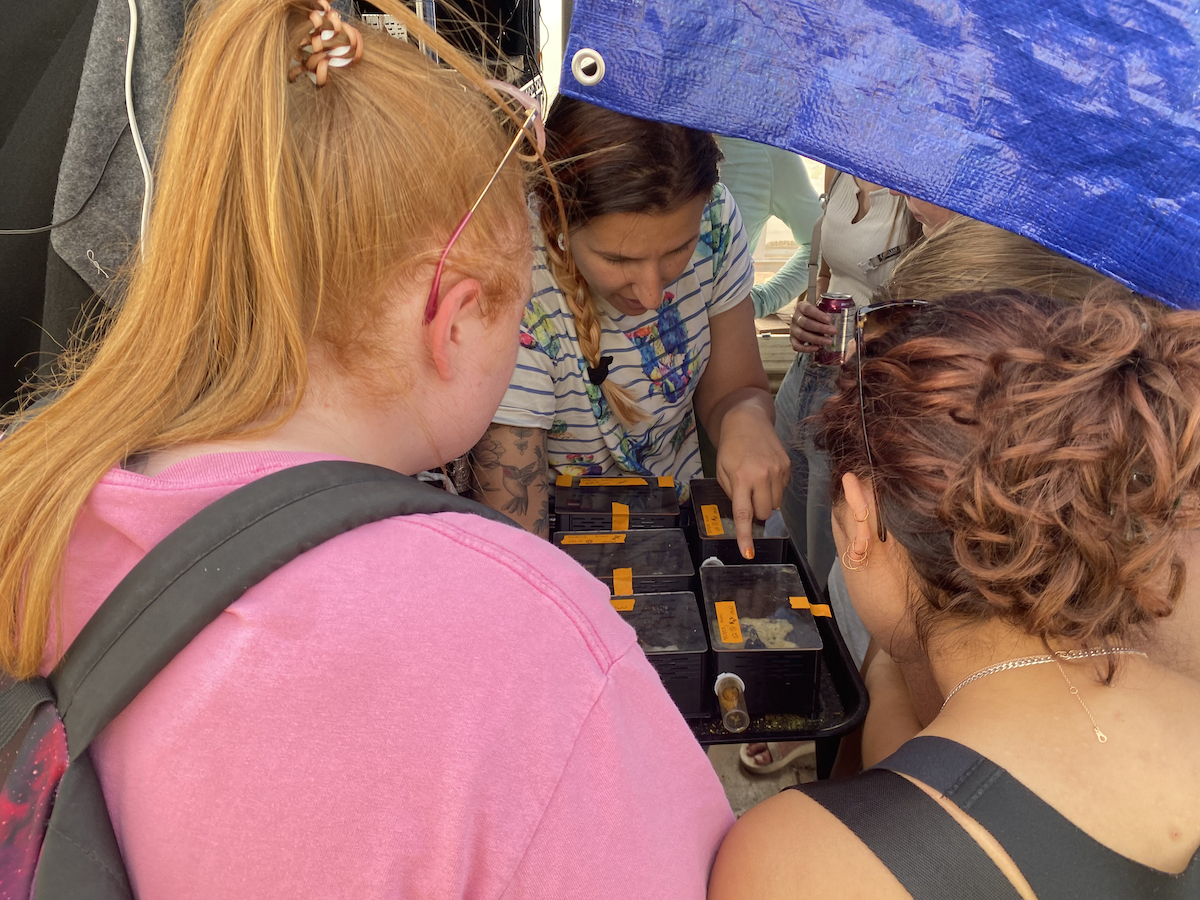
LARAMIE—Two women peered into the engine of a Chevrolet Suburban as a mechanic explained how to check brake fluid, how to locate and check an oil dipstick and how to replace an engine air filter.
Over at another vehicle in one of the University of Wyoming’s fleet buildings, three women took turns replacing windshield wiper blades and asking questions about power-steering fluid and four-wheel drive.
Later that day, after learning how to check tire pressure, change a flat and jump-start a battery, the students traveled to the mountains near Laramie to try using telemetry to work with big game. It was all part of a pilot program aimed at female-identifying undergraduate students from UW and community colleges interested in gaining skills that could translate to seasonal jobs and ultimately full-time work.
In the span of five days, the seven women learned about everything from capturing and photographing bees to sifting through soil on archeological digs to dealing with menstrual cycles in the woods. Nearly all their instructors were women, giving them not only a way to gain skills, but also to see themselves in each field.
“Something that keeps getting reiterated to me is that it’s nice to have a safe space to learn, to ask questions and not feel silly,” said Tana Verzuh, one of the program’s co-creators and a UW Ph.D. student. “We’re trying to provide that.”
While women are increasingly represented in science and technology fields, they’re still a far cry from an equal portion of the scientific population.
Nationally, about 40% of post-doctoral positions are held by women, but only 18% of full professors are women, according to the Massachusetts Institute of Technology. Statewide, women comprise 31% of the temporary biologist technician jobs in the Wyoming Game and Fish Department and 17% of the full-time biologist positions, according to the department.
So Verzuh and Riley Bernard, a UW zoology and physiology assistant professor, looked for a way to offer basic skills for women interested in pursuing those careers. They not only want to give women the confidence to apply for seasonal field jobs, but the skills they need to advocate for themselves and ultimately continue into full-time positions or professorships.

Gaining confidence
It’s a generalization, Verzuh admits, but one based in reality: Women often won’t apply for positions if they don’t meet every criteria.
Women often see requirements, or preferred requirements, and don’t throw their resumes in the mix fearing they won’t be selected. A few years ago, as Verzuh worked on her second master’s degree at UW, she heard from Wyoming game and fish biologists who said they weren’t receiving many women applying for field technician positions.
The seasonal jobs rarely require extensive experience — they don’t need advanced education or years of field work — but they do often require people to be outside days or weeks at a time driving trucks or dragging trailers and setting up basic equipment. They also often call for a few people to spend months together.
“I grew up in the country and knew how to change a tire and how to ask questions, but a lot of people don’t know how to do that,” Bernard said. “They may not know to ask what kinds of safety procedures there are, or where the nearest hospital is.”
A pair of technicians once found themselves stuck in sand in the Red Desert on a UW research project. They put the truck in 4-wheel drive without realizing some vehicles require drivers to hop out and lock the wheels’ hubs. They walked to the top of a hill and called a fellow technician in Lander, who came out and helped, Verzuh said.
So Verzuh, now finishing her Ph.D. at UW, worked with Bernard to create a curriculum to provide some of those basic skills and empower women to feel they have the experience they need to apply for positions. Verzuh and Bernard received a grant from the Wyoming NASA Space Grant Consortium to run the first year with up to 10 students.
“It’s all about women in science, from telemetry to archeology, and see that there’s other jobs in the field, not just in wildlife,” Bernard said.
Hands-on experience
Caroline Hansen, a junior at UW who recently transferred from Casper College, enrolled in the class because she wanted more field experience. Heather Hoffman, a sophomore who transferred from Northwest Community College, hoped the week could give her skills to put on her resume for the next time she found an interesting-sounding seasonal job.
Hoffman knew how to change tires and check oil — her dad worked at a tire and auto shop — but many of the other skills were new.
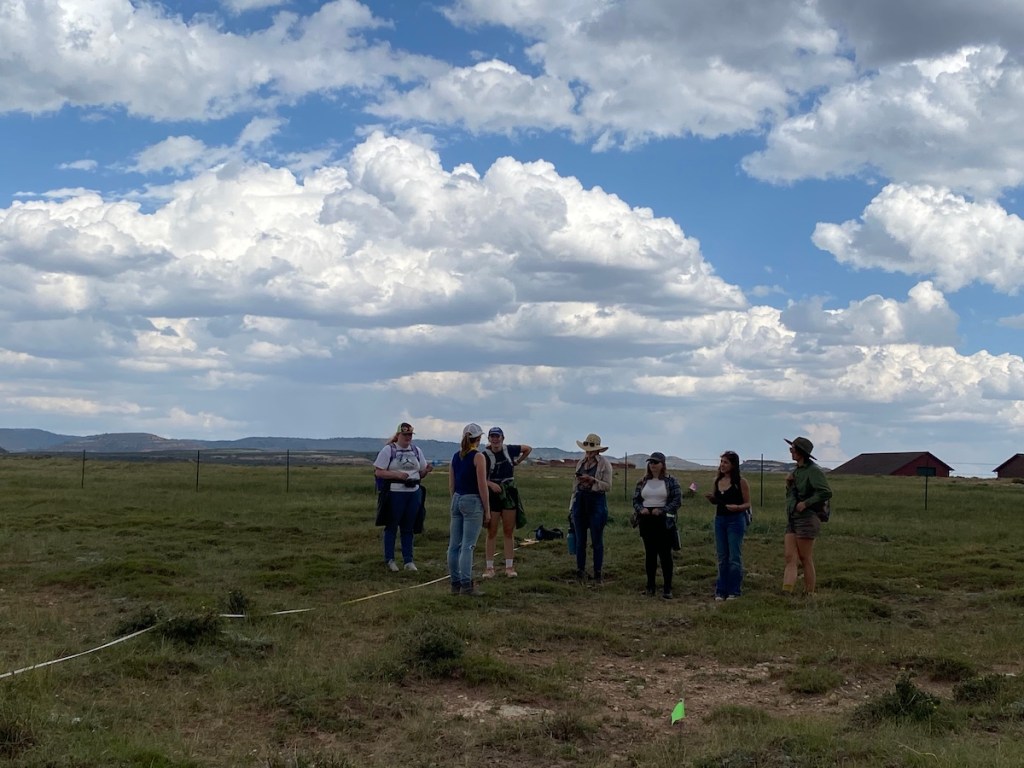
Any hands-on experience, even just for a few afternoons, can help set an applicant above the rest, said Dan Thompson, Game and Fish’s large carnivore section supervisor. The large carnivore section usually hires six or eight seasonal employees annually to work outside in the summer.
“When we interview anybody, a lot of our questions are based on experience,” he said. “We don’t expect everybody to be a grizzly bear capture expert, but we want people who can work in adverse conditions and work with the public and know you’re representing somebody and something bigger than yourself.”
He also prioritizes applicants who have taken extra steps to learn more about the field through volunteering, education or other experiences.
Verzuh and Bernard hope eventually boosting the number of women in seasonal positions will trickle up to full-time jobs.
“We’re seeing better representation at these lower levels, and even in our graduate programs, but we’re just not seeing that translate up,” Verzuh said. “And representation matters. Seeing lots of women, women of different ages at different stages of their careers, women with families and women without families, matters.”


What is the name of this class(s) and who do we contact about enrolling? Thanks?