

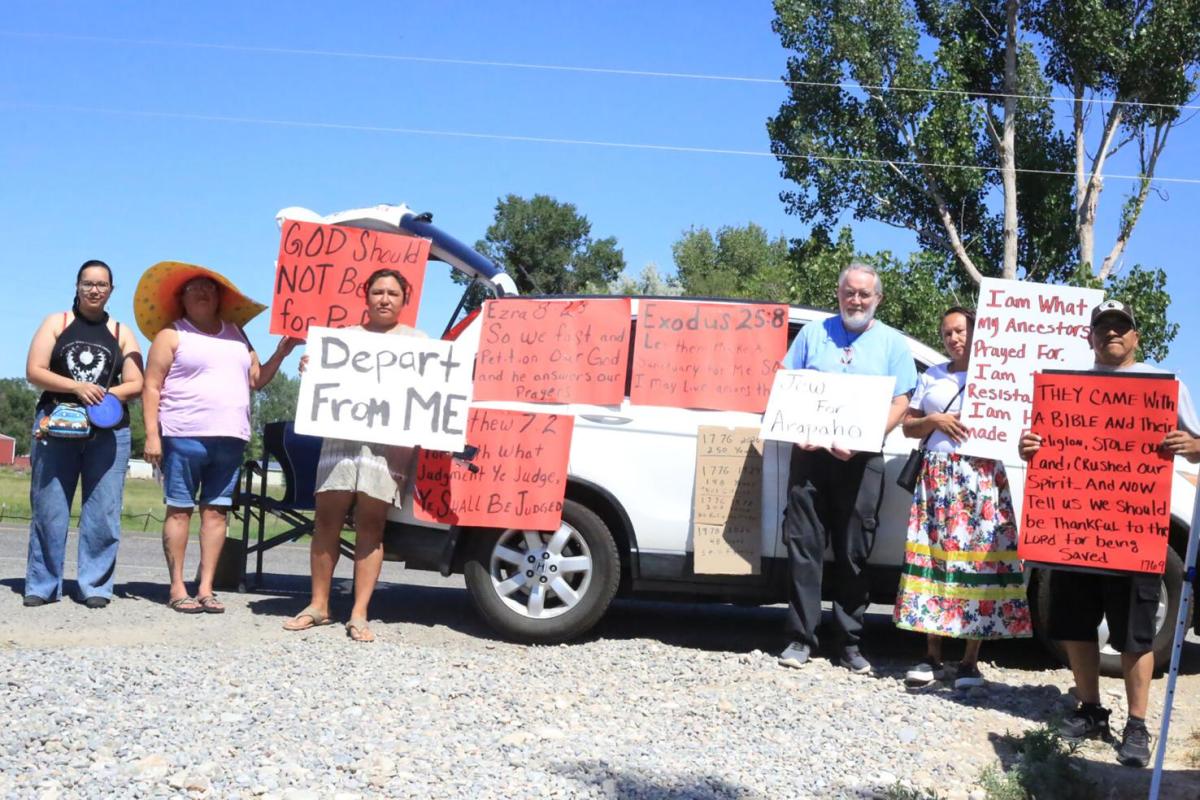
RIVERTON—The fallout after a controversial July 5 sermon by Foundations For Nations Pastor Sarah Lucas has endured, and this week, the Northern Arapaho Business Council announced a new policy: Outside organizations like the church must consult with and receive authorization from the business council to conduct activities on land under the tribe’s jurisdiction.
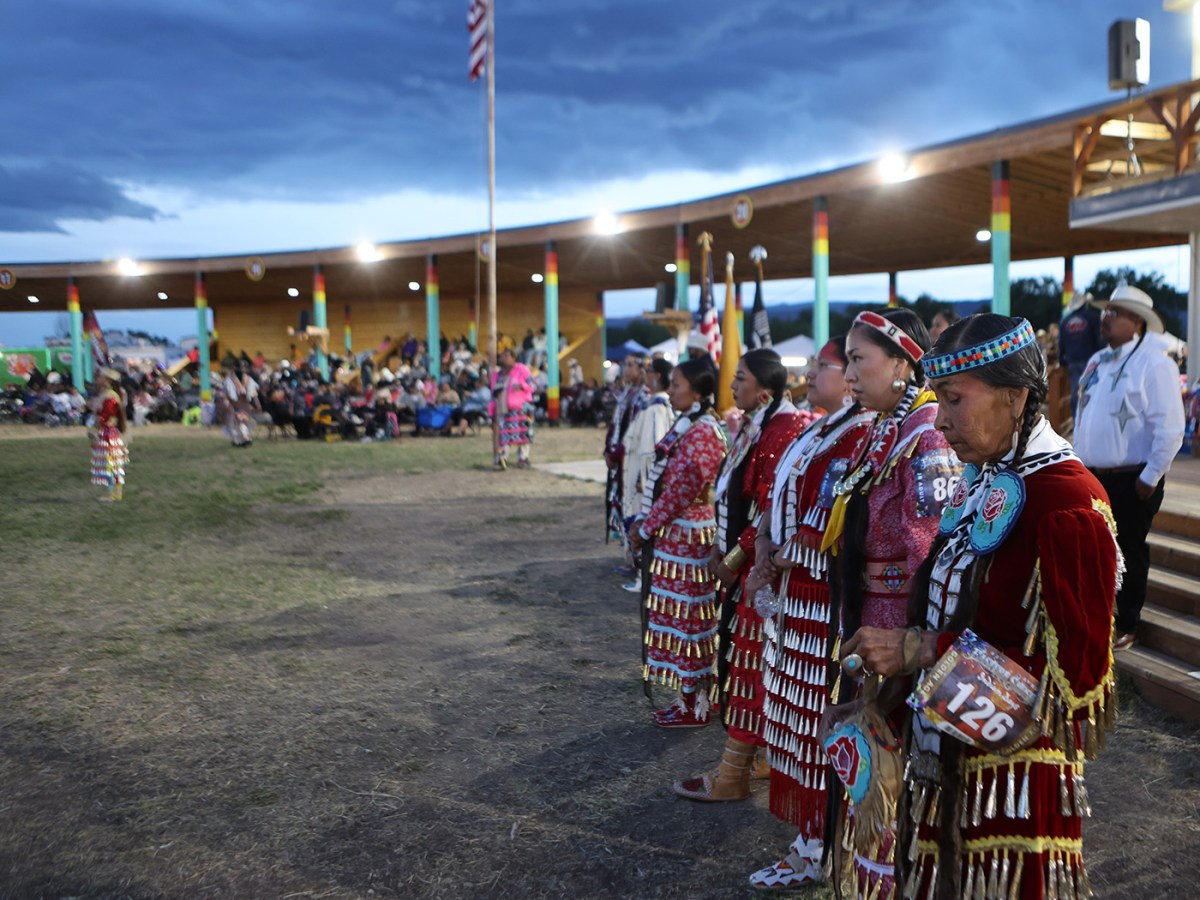
The sermon sparked outrage and national headlines for its call on tribal members to reject their traditional spiritual ways. On the last day of the Northern Arapaho Sundance Celebration, Lucas condemned traditional practices as idol worship.
“The pipe cannot hear your prayers,” she told parishioners in a video that has since gone viral. “It’s just a piece of material, right? And this is a cycle that they’re caught up in, and this is all they’ve ever known.”
As protesters gathered last Sunday outside the church on the Wind River Reservation just outside Riverton, Northern Arapaho’s records department was busy conducting an extensive audit, scouring documents to determine whether Foundations For Nations had ever received authorization from the business council to set up shop on the reservation.
Turns out, according to a Northern Arapaho Business Council statement outlining the new policy, Foundations For Nations Church had not.
The business council has sent a formal notice to the church’s leadership requesting a meeting within 10 days to discuss Foundations For Nations’ “mission, leadership, funding, activities and any documentation it believes demonstrates authorization to operate on lands under tribal jurisdiction,” the business council wrote in its Monday statement.
The new request for a meeting with church officials comes on the heels of an initial meeting shortly after the sermon, on July 10, when the Northern Arapaho Business Council told Foundations For Nations it was no longer welcome on the reservation and needed to leave.
But church officials have doubled down, instead continuing to hold Sunday services as protesters gathered along the highway. Foundations For Nations instead asked its membership for donations for an anticipated legal battle over the tribe’s directive to leave.
The sermon
Established on the reservation in 2017, the church also operates a food shelf in Riverton. Its website advertises a “multi-cultural, multi-generational church made up of people from all different backgrounds,” and focuses much of its ministry on children’s programming.
The church shared a video of the July 5 sermon online, as it typically does each Sunday. But this time, the video quickly spread on social media as tribal members decried Lucas’ portrayal of traditional practices and recalled a painful history of forced assimilation.
In her sermon, Lucas urged her congregation to be watchful in the “spirit realm” and reflected on a busy week for the church.
“But are we fighting the spiritual temperature in the atmosphere?” she asked. “Where it says ‘tear down the altars, tear down the idols?’ And this nation gathered this week and they prayed, and they prayed to pipes, and they prayed to their ancestors, believing that this is their way for their freedom to get free from addiction, for people to be healed from their sickness, and this is what this culture did this week.
“And we went on as church as normal, but here’s the thing. I feel like we’ve got to pray this morning before moving on. I feel like we’re going to pray for this nation this morning, and we’re going to pray for our Indigenous nation, for our tribe this week as they’re coming out of this, because we know that Jesus is enough. He’s enough. It’s not Jesus plus. It’s Jesus everything, he’s everything … Jesus is the chain breaker. He is the only god that we should be praying to.”
The backlash was swift, and with it came threats. A large protest was held July 7 outside the church, which quickly moved to its food shelf in Riverton and then outside city hall. The food shelf was temporarily closed in response.
While the church itself has not released a statement, it has engaged in comments on Facebook.
“No wonder we have to carry guns,” the church wrote. “But keep agitating the protestors, you are part of the problem!”
In another comment, Foundations For Nations described harassment the church and its parishioners have faced: “Your protestors aren’t peaceful! Yelling profanity as church goers going into church. Driving onto the property at the end of service trying to block our exits. Flipping us off as we leave! The threats of danger and violence that your protestors are writing on their signs or social media post[s] does not show you are a peaceful people!”
By July 10, church officials had met with the Northern Arapaho Business Council, which reportedly ordered the church to leave the reservation. The meeting, church leaders wrote in a statement to members, was “marked by intense opposition.”
Church leaders’ message to members was clear about their intent to remain on the reservation and continue preaching there.
“We are standing firmly on the truth of the Word of God concerning idol worship,” they wrote, describing “ongoing death threats and threats to burn our church.”
Legally, they said, the church “cannot be removed in this manner.” The message added: “We are in contact with legal counsel and are preparing to pursue this in federal court as soon as possible in order to uphold our Constitutional rights to preach the gospel … We are not stopping.”
A new tribal policy
“This policy is not about preventing anyone from practicing their religion,” Northern Arapaho Business Council Chairman Keenan Groesbeck said in the Monday statement from the business council. “It is about respecting the sovereign government of the Northern Arapaho Tribe. Any outside organization seeking to conduct organized activities within our jurisdiction should first communicate with the elected leadership of our Nation and work in partnership with the tribe.
“The business council further recognizes the historical relationship between many Christian institutions and Native Nations, including the devastating legacy of forced assimilation, boarding schools, and efforts to suppress Indigenous languages, cultures, and spiritual traditions.” The business council statement continued: “These historical experiences make it especially important that any outside organization engaging with the Northern Arapaho people do so through respectful government-to-government consultation and with a full understanding of tribal history, culture, and sovereignty.”
Sunday service
On Sunday, July 19, a handful of protesters gathered outside the church as parishioners trickled in. Though the numbers had dwindled from initial protests in response to the sermon, those gathered said they were committed to sending a message to church leaders.
“We’re going to continue to protest,” said Alice Thomas as Sunday service was held inside. “I don’t think not giving an apology is a good thing.”
Thomas, who said she is a member of the Church of Jesus Christ of Latter-day Saints and practices traditional spiritual ways too, said the two did not need to be at odds.
“My religious and traditional side — they coincide with one another. I’ve never had a church authority come and tell me ‘This is wrong,'” she said. “Our traditions come from the Bible.”
Protesters said just before the Sunday service got started that they’d had a conflict with a security guard patrolling the grounds. Riverton resident Fred Poutray had set up a shade canopy, and witnesses said the security guard took issue with its placement and threw it in a ditch, ripping it.
The security guard then allegedly asked Poutray: “You going to fight me, old man?” and “chest bumped” Poutray during the argument.
Bureau of Indian Affairs officers responded after protesters called police about the incident. Because Poutray is white, they tapped the Fremont County Sheriff’s Office to handle the call.

This clueless Foundations For Nations outfit described harassment the church and its parishioners have faced: “Your protestors aren’t peaceful!“
Native Americans have tried being peaceful over the centuries. Look what it got them.
I find it adominable that a religious group comes onto the reservation with no authority to do so and tries to change the traditions and beliefs of the people of the reservation..it sickens me.
“…our Constitutional rights to preach the gospel….” Nowhere in the U.S. Constitution can I find any reference to anyone’s “right” to spread their brand of superstition on someone else’s property. What did I miss?
I mean the natives aint worshipping or idolize, understanding the Bible and understanding God are the same Sundance is where men fast for 3 days and night no food or water just prayers which says in Bible through fast and prayer you’ll be healed of any sickness stated in old testaments, and the whistle is songs of everyone’s breath which when we all breathe we all say yahweh ” GOD ” we all worship God like any other Christian but more traditional in our ways, my aunty in law who married my uncle couldn’t medically have kids at all, so her and my uncle both did ceremonies to ask God for a blessing through fasting and prayer and not even a few months later she was pregnant with my cousin who’s a miracle baby. So when people dont understand something they say its evil but no different than a church we’re people think they can go to a pastor to be healed or forgiven… no it says in the Bible Jesus died for our sins we aint sinners to God or Jesus, only yahweh can judge or criticize us not a man claiming hes a Christian, im tired of these half people… what i mean half in is the fact they believe in God and jesus but think only in that their are saved nooo, you gotta walk the path fully which passing judgements is sin, using the bible for their own needs and hurting people with it is sin, to condemn someone is sin… why are we protecting a church that is open about its discrimination which is sin!!! Thank you and you can publish my thoughts on this im a catholic woman.
Typical christian outfit telling people what to believe and denigrating the beliefs of others. Not one person on earth ‘knows’ GOD.