

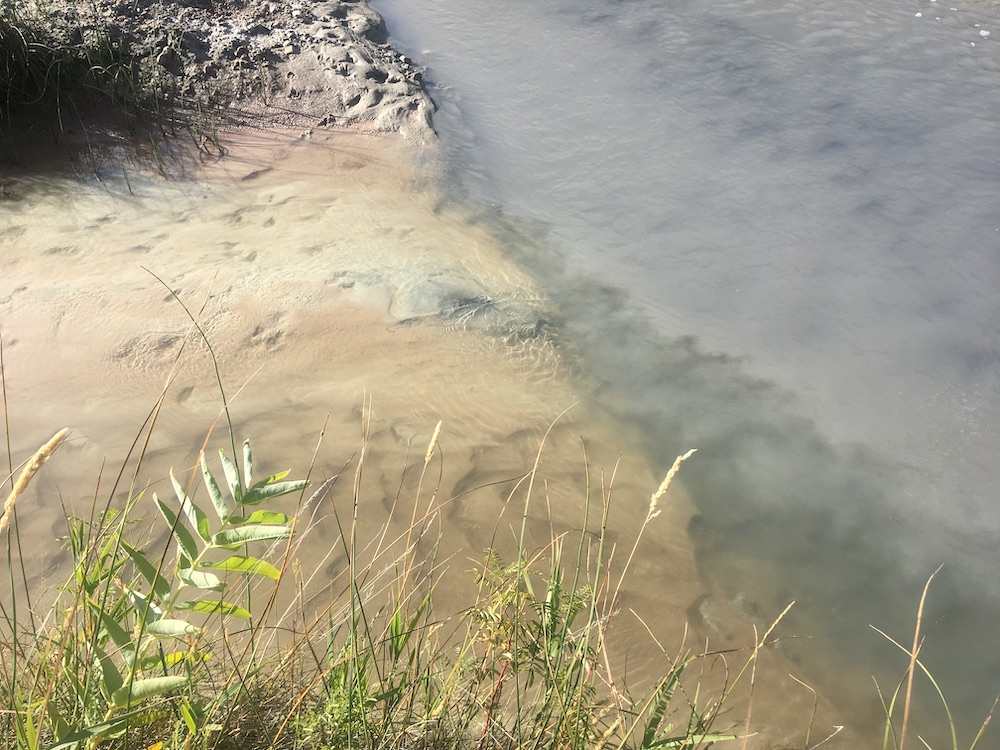
In early February, Wyoming’s Department of Environmental Quality released a report detailing the quality of our state’s surface waters. Of concern are segments of two creeks, Alkali and Badwater, that have been used as the dumping grounds for oil- and gas-polluted wastewater. The three segments surveyed by DEQ were all listed as “newly impaired,” meaning the streams no longer support the uses they once did — including designations for drinking water, aquatic life and fish. The streams are, effectively, dead. Low oxygen levels, high concentrations of chloride and hydrogen sulfide, plus other toxic oil-field contaminants, contributed to their impaired status.
Opinion
DEQ’s report lays bare the cause of these problems: permitted oil and gas activities. The current operator in the area? Aethon Energy Operating LLC. For years, Aethon has been discharging its toxic wastewater into Alkali Creek, which flows into Badwater Creek. Although not included in this report, previous monitoring reports have shown the wastewater to have high levels of BTEX, compounds known to be carcinogenic to humans. Hydrogen sulfide can also be quite dangerous, causing anything from eye irritation to asphyxiation depending on the level of exposure. Aethon and earlier operators of the Moneta Divide oils and gas field have discharged these contaminants for decades. To make matters worse, Badwater flows into Boysen Reservoir, which is critical to local water supplies and abundant recreation opportunities. Boysen flows directly into the highly valued Wind River, and then on to Thermopolis, where it supplies our town with drinking water.
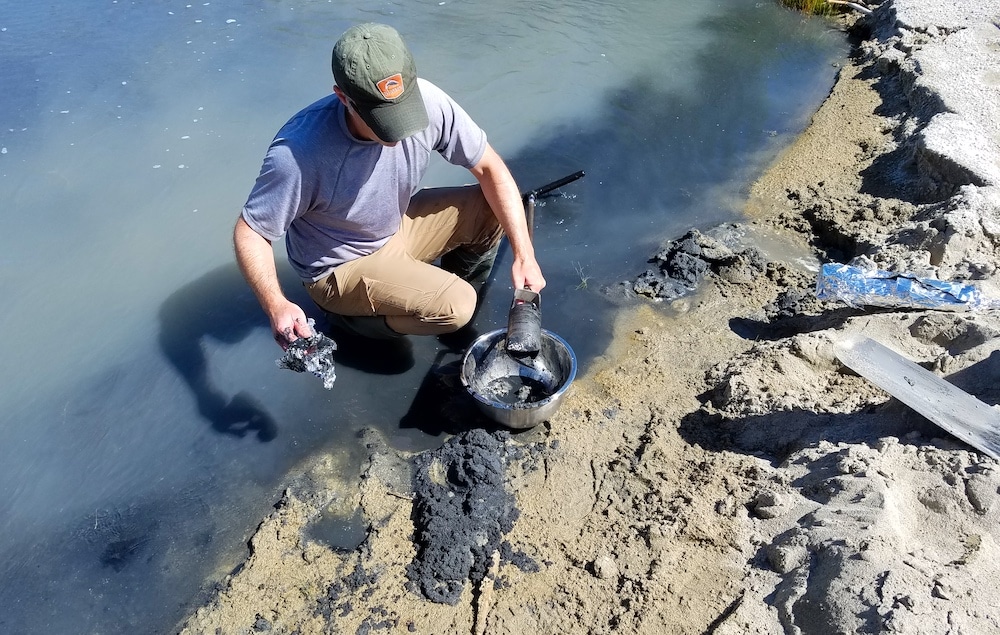
So how did it get this bad? Wyoming’s conservation community has for years called for improved regulation of Aethon’s wastewater pollution, shining a light on clear violations of the Clean Water Act. Although Aethon has received several notices of permit violations from DEQ, the state has, instead of requiring Aethon to clean up its act, repeatedly responded by relaxing permit guidelines. A 2021 permit modification removed pollution limits for radium, barium and zinc, and eliminated sampling requirements for multiple heavy metals. Changes also included a lengthy compliance period for chloride limits — Aethon has until September of this year to reduce chloride levels. In the meantime, wastewater pollution of Alkali and Badwater Creeks has continued, resulting in a drastic situation. The creeks are incapable of supporting aquatic life and, due to the presence of arsenic, are no longer suitable for drinking water or fish consumption. Sediment deposits on the creek bed form a black sludge containing iron sulfides and other contaminants. This toxic sludge ranges anywhere from six inches to six feet deep.
DEQ has taken the first step in addressing these long-standing problems by recognizing the stream segments as impaired, and that is commendable, but more must be done. Aethon finally plans to bring its reverse osmosis water treatment facility back into operation soon, which will help greatly with treating wastewater before it’s discharged.
However, Alkali and Badwater Creeks are already severely degraded, perhaps irreparably, because Aethon for years has not been held accountable. Worse yet, Aethon wants to drill over 3,000 new wells in the area with no plan for how it will treat the additional wastewater. The company’s reverse osmosis plant can treat a maximum of 25,000 barrels of water per day, yet Aethon currently produces an average of 24,000 barrels per day. Expansion of the gas field is not possible and cannot be permitted without a magic wand at the ready to deal with water pollution.
Aethon’s surface water discharge permit will be up for review in 2025. Given that the current disaster in Alkali and Badwater Creeks is a direct result of permitted activities, DEQ must rework the permit to prevent further contamination. To address cleanup, DEQ should engage experts to ascertain best practices for a problem of such scale.
Wyoming’s water resources are scarce and precious. Contamination of this scale, to the benefit of industry profits, must not go unnoticed and uncontested. Aethon has damaged two creeks and put the Boysen Reservoir, Wind River, and water supply of Thermopolis at risk. We love Wyoming for its incredible landscapes. We must speak out to protect our land and water resources and to ensure that those who come after us inherit the same natural beauty that we have been lucky enough to enjoy.


Its a real shocker when you find out ” the solution to pollution is dilution ” even if the discharges go into the Little Wind River, the Big Wind River, Alkali Creek, Badwater Creek and thence into Boysen Reservoir and further on into the Wind River Canyon a Class I waterway in Wyoming. And, it seems Wyoming’s water quality regulations provide ingenious methods of circumventing the intent of the Clean Water Act.
Quoting from Chapter 1, Section 9 of the DEQ Water Quality Regulations ” ——- Under no circumstances may a mixing zone be established which would allow human health criteria ( see Appendix B ) to be exceeded within 500 yards of a drinking water supply intake or result in acute toxicity to aquatic life. ” Please note that DEQ recently determined that Alkali Creek and portions of Badwater Creek are impaired and cannot support aquatic life – that is; Aethon’s WET testing failed the test and was found to kill the minnows immersed in the water. This has been going on for years and DEQ just now made the determination. The above regs use the terminology ” under no circumstances ” but I can guarantee you DEQ will find a mechanism to circumvent this reg and allow toxic mixing to continue.
Another huge problem with DEQ’s approach to the Aethon discharge permit is to allow for what I would call grandfathering of some water quality regulations based on the old Frenchie Draw water quality permits – and extend that interpretation forward INDEFINITELY to production water discharges from wells which could number in the thousands – in other words, the grandfathering wouldn’t be restricted to the original Frenchie Draw field but would be extended outside the boundaries of Frenchie Draw to an oil field which could encompass hundreds of thousands of acres. Again, DEQ will find ingenious methods of circumventing CWA regulations.
With respect to the Neptune reverse osmosis water treatment plant, DEQ allowed Aethon to shut it down about 4 years ago supposedly for maintenance reasons, in reality, Aethon shut it down to reduce costs – and they could do so, since their revised water discharge permit allowed something like 908 tons of dissolved solids to be discharged per month – so they discharged the maximum allowable at the least cost instead of being a responsible operator and trying to minimize pollutants. And DEQ allowed them to shut down the reverse osmosis plant and discharge the maximum pollutants!!!
I strongly support open public hearings in front of the Environmental Quality Council to fully explore DEQ’s failures to enforce water quality regulations – and, to explore why Alkali Creek and Badwater Creeks have not been cleaned up – the pollution rises to the level of a Super Fund site and DEQ has not required the various operators to cleanup the creeks. The EQC must review DEQ’s failures and their circumvention of water quality standards.
Wyoming: where robber barons rule, and residents bow down to their wishes, and will defend the scum to the bitter end.
Also look close at the photo in story. This “expert” is in supposedly “contaminated & polluted” toxic water and has ZERO PROTECTIVE GEAR. No rubber boots. No rubber gloves etc. no eye protection. true expert in such things absolutely doesn’t take that risk to them selves.
There is mandated quarterly testing. State limit is 10 ppm. T. O. G that does test all VOC/BTEX. So unless test sampling is falsified (easy done) then they in violation. Energy labs in Casper does them. Since it public water. Stop in get sample bottle and pull one and pay for results. Not that expensive. Then you have results in your hand. Pull sample of sludge as well. Take photos document. Then you know.
The DEQ is second in line to shoulder the blame for the mess that is frenchie draw.
There is no such thing as an oil and gas company that puts the environment as a priority. DEQ has never held any of the frenchie draw producers accountable. DEQ has turned a blind eye for decades. If not for the public outcry, DEQ would still be in the same bed as aetheon.
Chuck. Go test the water. Or pay for someone to pull sample. Only a T. O. G TEST of the water will determine if they are in violation. It around $150. Takes 5-7 days. You can mail or fed ex sample in. With test results in hand then you have proof. Until then it all hear say.
As usual, your projection has missed the mark Mr skow.
A local Riverton lab handled the sampling and testing for encana until the lab was sold. Riverton is a small town. Frenchie draw is even smaller when you are working in the same area. Notice of violations were filed against encana monthly. DEQ never enforced them.
Chuck. Get your ducks in row and take it up the food chain. EPA will listen. Start in Denver office. You also understand the new Methane tax in place don’t you? That hammers VOC’s. It in place and in affect for 2024! For the Record. This discharge goes against everything DEQ/Wyoming oil gas has watched over for last 30 years! It is wrong to discharge that quality of water.