

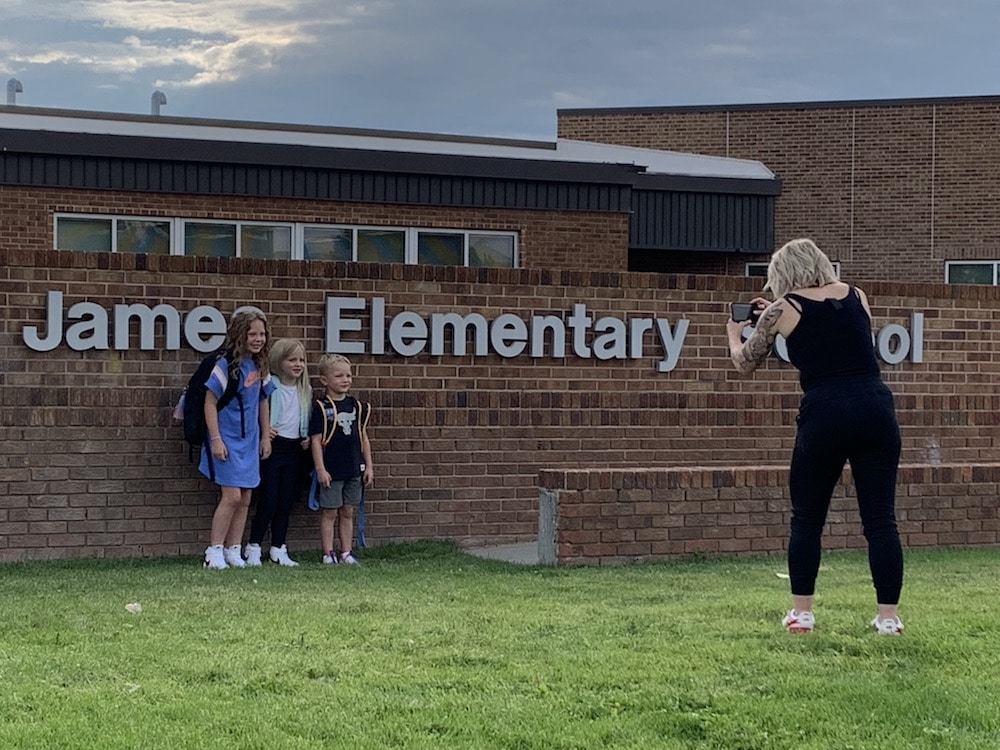
What if your address didn’t determine your public school?
As WY-TOPP state assessments show, student performance varies widely throughout the state. And right now only those who reside in high-performing districts can send their children to those high-performing schools.
Opinion
If Wyoming adopted an open enrollment process, however, parents would be able to choose a different school within their district, county or the state (depending on the scope of the law) than the one assigned to their child or children. Before people who reside in one of those high-performing locations protest that new students might push scores lower or cause behavioral or other problems, let’s explain how the process works.
With open enrollment, admission to state public schools would not become a free-for-all lottery. Given the vast distances people must drive between cities in Wyoming, geography would limit where students could apply. Second, students who live in the district would take priority over those out of it. So, the number of seats open to out-of-district students would be limited to the overall capacity of the school and parents’ willingness to drive their children to a particular school, if transportation is not included. Still, families who previously had no options for their children — aside from moving — would have the ability to seek a better fit for their children without disrupting their lives or paying for private school.
Nationally, the concept carries wide bipartisan support. A Morning Consult poll from 2023 shows that 76% of Republicans and 68% of Democrats want open enrollment. Specialized programs, avoiding bullying and better student performance are three of the reasons parents choose to move districts or schools.
Research by California’s nonpartisan Legislative Analyst’s Office found that the districts that lost the most students from open enrollment responded by improving their offerings and “made above-average gains in student achievement over the past several years.” It also found that students who switched schools were able to attend an average of five to seven more classes, including art and music, foreign languages and college preparatory classes not offered in their home districts. Other studies have shown that students in open enrollment states move to higher-performing schools.
Since COVID, the public school population has declined in Wyoming and nationally, with more parents choosing homeschooling and private schools. Open enrollment could be a way to keep more families in public schools as it would allow them to pick the school best suited to their children without having to exit the system. And given the declining school age population, it could become even more important to retain students
Senate File 109 “Open enrollment within Wyoming school districts,” sponsored by Sen. Evie Brennan of Cheyenne, is a good start to introducing open enrollment to Wyoming on a large scale. While it would not allow cross-district student transfers, given Wyoming’s geography, that is less of an issue than in more densely populated states where multiple cities border one another. If passed, it requires, starting in the 2026-2027 school year, that districts add policies allowing students to enroll at any school within the district. It also prioritizes current students and their siblings who live in a school’s attendance area. And it requires districts to publicly post on their websites the number of vacancies in each grade level every 12 weeks at a minimum.
If schools don’t have the capacity to admit out-of-district students, they don’t have to accept transfers. And schools do not have to accept students who have been suspended or expelled or are in the process of being suspended or expelled from other schools.According to the Reason Foundation, 16 states offer cross-district open enrollment and 13 offer it within districts. Wyoming legislators should make the Equality State the next one. Your family’s address and socio-economic status must not determine a child’s success.


It is a tragedy in my mind to pit communities and community schools against each other via education. This ability to transfer students from one school to another does not serve the children/teens who attend the schools. Perhaps the issue has to do with effectively supporting the schools and teachers instead of micromanaging from outside the buildings.
There are no doubt parents with backgrounds in education that affect their view of what they deem an “excellent” education. Having taught in a number of small to medium sized schools, I have seen deficiencies in some classrooms, but I don’t see a problem is solved by pulling kids out of a school to put them in a “better” school. The practice of parents relocating their kids when they have deemed the school as insufficient gives kids permission to assume that when a problem comes their way or when they are told they don’t have to do what a teacher demands, they can simply leave the problem instead of addressing it.