

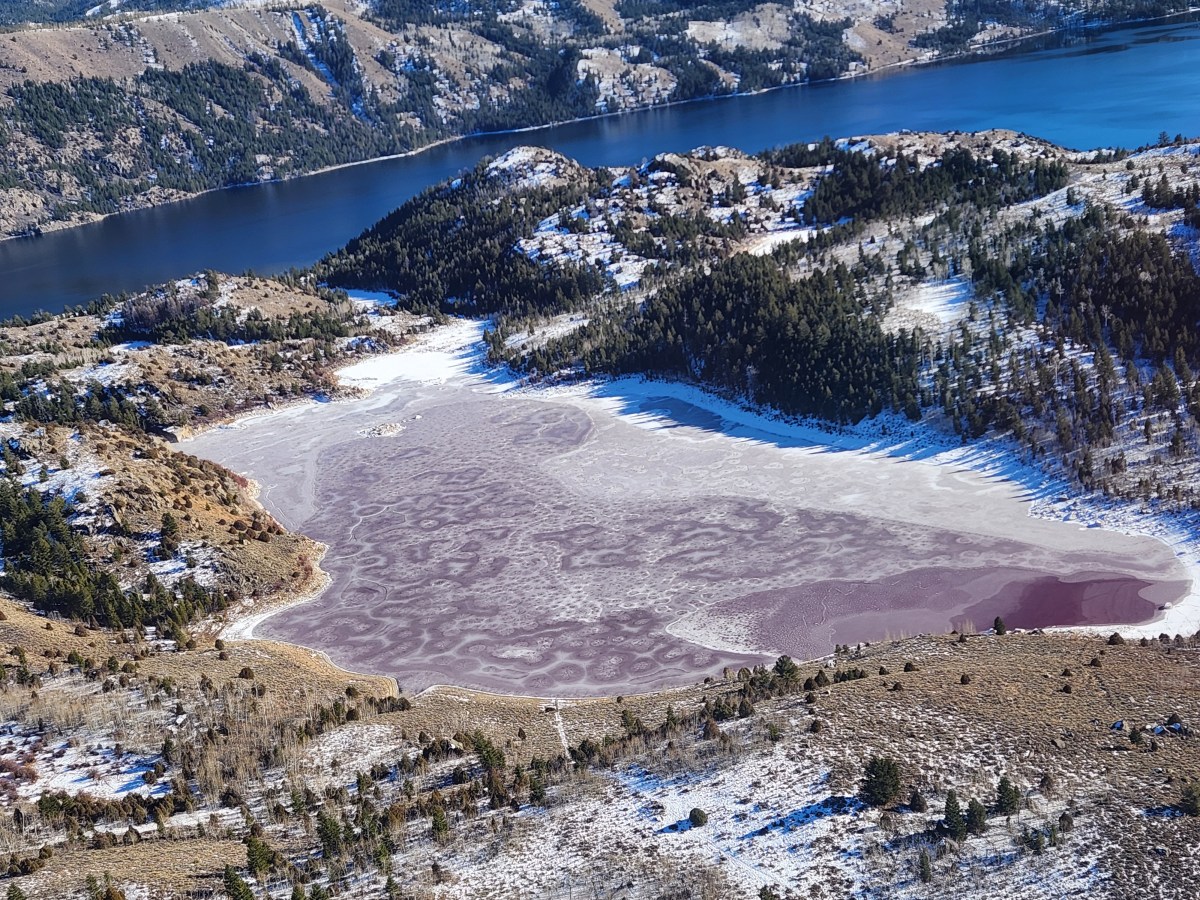
A once-prized trout fishery in the Pinedale area that raised concerns in late 2024 when it turned the color of a taconite tailings pond is again struggling with water quality.
The ice just came off many lakes along the Wind River Range’s western front, including Little Soda Lake, which shed its deep red color over the winter. Yet almost immediately — within just a few weeks at most — environmental regulators detected potential issues with the still-frigid water. Samples were taken by the Bridger-Teton National Forest last week, and results just came in.
“A harmful cyanobacteria bloom recreational use bloom advisory has been issued for Little Soda Lake,” Wyoming Department of Environmental Quality officials announced in a public notice Monday.
Notably, the bloom detected in the high-elevation water body, located at 7,600 feet and just a half-mile from crystal clear Fremont Lake, marks Wyoming’s first verified harmful cyanobacteria bloom of 2025, according to the state’s monitoring website.
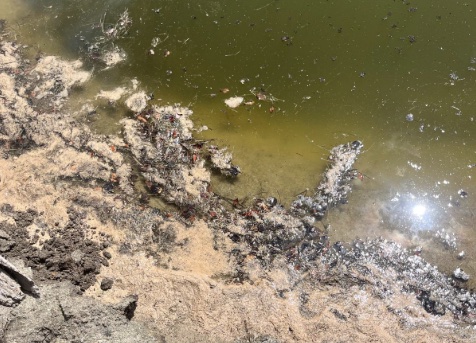
Harmful cyanobacteria blooms are often associated with warm weather and nutrient pollution, like runoff from agricultural operations, though they can also plague the backcountry. Occurrences typically pick up pace late in the summer and early fall.
While Little Soda Lake harboring Wyoming’s first harmful cyanobacteria bloom of the year is surprising, it’s unclear if the potentially toxic water is a remnant from last year.
“It’s unknown, but a warmer-than-average winter combined with recent warm weather may be contributing to conditions that allow HCBs to appear earlier than usual,” DEQ spokeswoman Kimberly Mazza wrote in an email.

DEQ was able to acquire a cyanotoxin sample, Mazza said. Results are pending, but eventually the sample will give the state agency more insight into the toxicity of the cyanobacteria suspected to be a factor in Little Soda Lake’s crimson color.
Land managers and environmental regulators should learn a lot about what’s going on in Little Soda Lake in 2025. The water body will be sampled monthly, according to DEQ’s 2025 sampling and analysis plan.

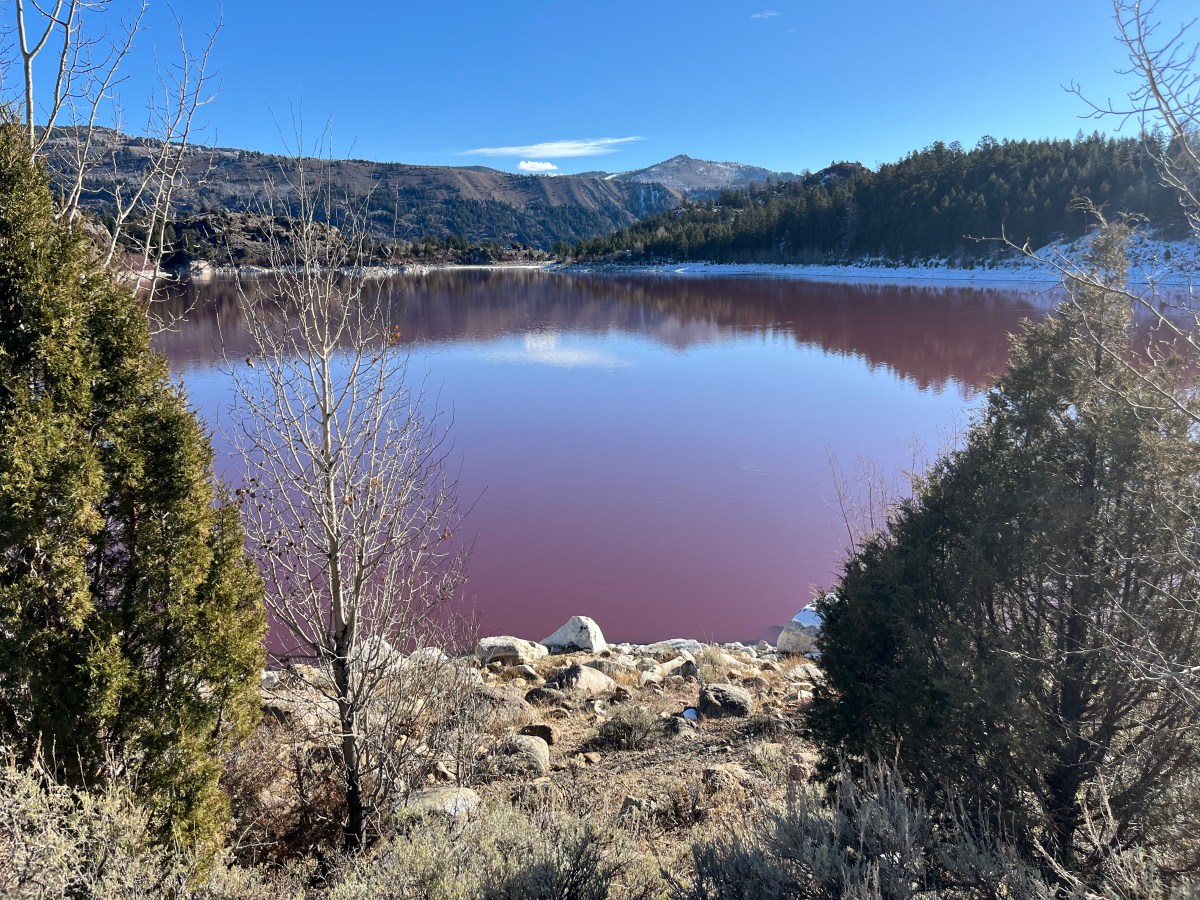
Routine monthly monitoring is typically reserved for lakes that have “high to very high” access and recreational use and toxic bloom potential. Exceptions were made for Brooks Lake and Little Soda Lake.
“These waterbodies were classified as very high priority due to significant public interest,” DEQ’s plan says.


This really is very solvable problem and can be done economically. About 30 days is all that is needed. Maybe $25,000. Maybe and that on high end.
Thanks Mike for keeping this issue in the forefront.
Something has happened to the entire watershed and it started over 30 years ago. A wetland was built and shortly thereafter water quantities in the area were reduced. While many wanted to blame the wetland, science suggests that wetlands hold water and release it more slowly, not actually reducing the amount of water available. Prescribed burning also occured throughout the area and in most cases leads to greater amounts of water being made available, not less. We lost fish in the main Soda Lake, much to all of our chagrin, and still have few answers. Even after the construction of the wetland water flowed into Soda Lake proper. Now, you are lucky to see any of that flow.
Little Soda Lake is in the same watershed and that is also of interest when looking at the area.
I don’t know if any answers were ever discovered as to the overall loss or drop of the water table but it would be of interest to many of us.
I agree with the with livestock being the cause, I have personally watched cattle wade out in the lake and take a dump while fishing, and you could see their feces all over on the lake bottom
I didn’t know cows could fish.
smells a lot like livestock runoff and plenty of pollutants (“nutrients”)