

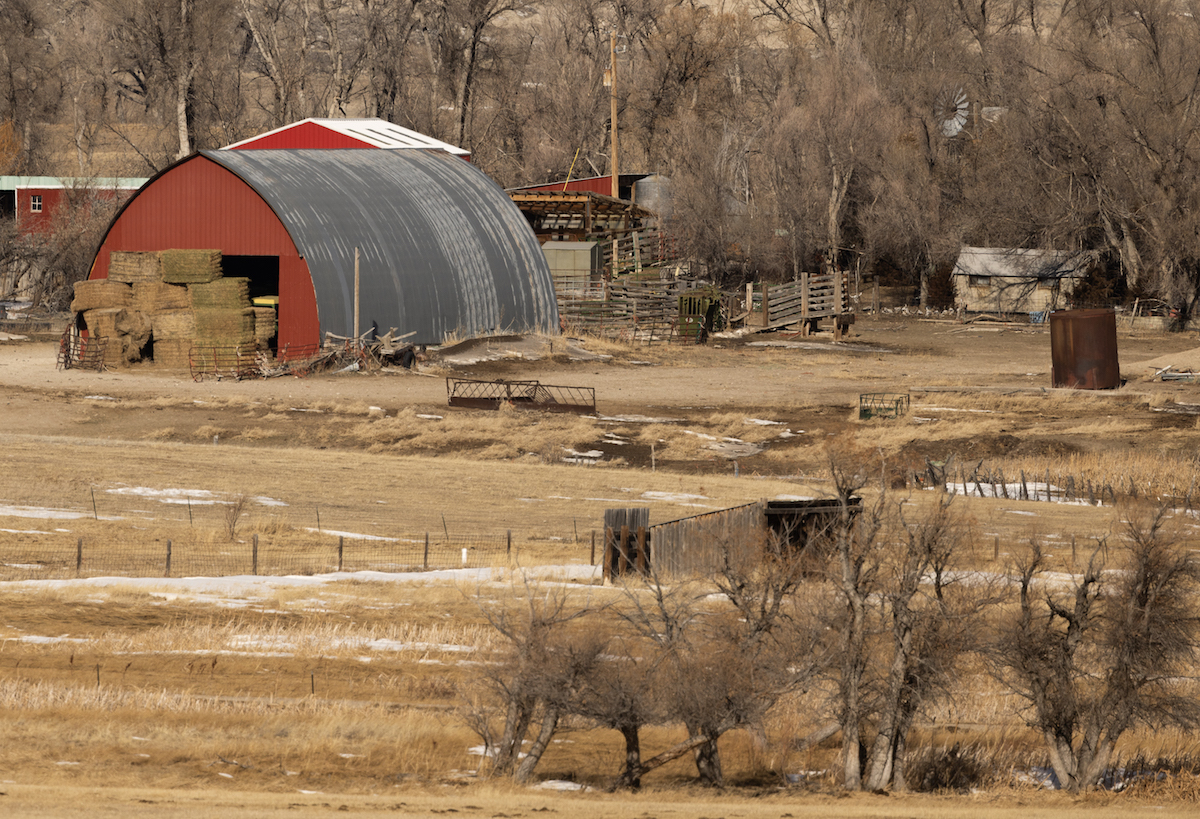
For many years, we cut our winter wood from storm-downed cottonwood along one of the creeks at our family’s ranch. In two or three days, we’d cut the year’s supply for our house in town. The first day was spent scouting a good location where there was a tangle of wood not far from a flat area where we could park our ancient tractor and a six-horse trailer. We’d set up a 36-inch circular saw blade mounted at the end of a hinged platform on which you could place the length of wood to be cut. The blade was driven by a leather belt connected to the power take-off of the tractor. It was a little nerve-wracking pushing the wood toward those steel teeth that were inches from both the hands of the person holding the wood in place and the hands of the person who picked up each cut piece as it fell to be thrown into the horse trailer.
Opinion
Sometimes the woodpile we found was so tangled we couldn’t pull the branches apart. Using the winch at the front of our Jeep — nearly as old as the tractor — we’d wrap a loop of steel cable around a log to pull it free. In logging, the person who wraps the cable around the log is the choker setter, and maybe because I’d done this work briefly as a young person in the Pacific Northwest, this was often my task. If I picked the right log, its release would untangle the pile, and we could pull out what we wanted to cut.
When the horse trailer was full, we drove to town and stacked the wood in the garage and in an attached shed. Most years, we cut more wood than would fit under cover — you never know how long winter will last — so some wood would be stacked just inside the fence along the alley in full view of passersby. Squirrels ran in and out of the stacked wood, and neighborhood kids sometimes took a piece or two for some game they were playing.
As I brushed snow off the top of the pile, I imagined that if it were really cold, a person could step quietly under cover of night through the gate and into the yard to take a few pieces of wood for a fire. There was a wheelbarrow by the woodpile that such a person could use to haul off the wood. As each piece hit the wheelbarrow’s metal bottom, it’d ring like a bell. I’d turn in my sleep and smile, remembering my father-in-law who always left the keys in his truck and the doors unlocked. “You never know when someone might have an emergency and need a vehicle,” he told me.
Time passes and things change — our ranch, which is mostly split estate, has largely become a rural industrial site for extensive fossil fuel extraction. Older members of the family have died and the younger have become the older. We’ve admitted how dangerous that unprotected circular saw blade was. The tractor and the Jeep wait patiently in a shed. We buy our firewood from a local woodcutter who delivers it in half- or quarter-round pieces. I stack it and later split it into smaller pieces to burn.
Just as in the past, I often have some wood left over from the previous year. This fall, I again stacked the excess wood in the alley, but outside the fence, where anyone could reach it as they passed by. A few days after stacking the wood, I was working in the yard and noticed that the wood pile looked different. I hadn’t yet taken any pieces to split and burn, so I asked my wife, who heats her pottery studio with wood, if she’d taken some. “No,” she said, “it’s so warm I don’t need a fire yet.”
“That’s weird — something’s different. I don’t know. It’s not how I stacked it.”
A week or so later, the weather changed. I went to the woodpile in the alley and when I picked up the first piece to split, I found a dollar bill wedged below it. Someone had taken a piece of wood and left me a dollar. I thought of my father-in-law leaving the keys in his unlocked truck, and of how little we know of the needs of others. And I thought how nice it was to find the dollar, a reminder that people mostly try to pay their way.
Maybe I’ll put a jar out by the woodpile with a note — take what you need, leave what you can.

The sentiment in this piece was worthwhile. I agree that people should share and help each other out but it seems a little out of touch. It’s nice to allow people access to your firewood if they need it but most of the people I know struggling to afford housing or pay their heating bills don’t have wood stoves or fireplaces. Most are living in crappy rentals with jacked up rents or trailers. Even if an old rental house has a wood stove in it you can’t use it because the landlord won’t insure it. So wood burning feels like something people who already have money would do. So it’s nice and all, but it’s not really stepping up quite as much as it sounds.
what a heartwarming tale of kindness to our communities starting with a wood pile made available to those in need! Love your stories David.
David, if we all possessed half the work ethic, love of life, and commitment to public service as your father in law did, we would in living in a far better world today. Thanks for your column today.
Your comment made Dollie smile, when I read it to her. Thanks!
a recent article: 40% of people earning $300,000 or more live paycheck to paycheck, even worse, for those that earn between $300K & $500K it’s 41%. While 16% of wage earners between $200K n $300K live paycheck to paycheck. Reasons given: (1) lifestyle creep (2) living in areas with a high cost of living (3) debt burden, and (4) lack of sufficient planning. Learning to live within our means is valuable lesson that we all should learn, and that would include any and all politicians. There are wants and then there are needs. Take a lesson from “the greatest generation”!
Nice story, David