


WyoFile’s local news initiative partnered with KHOL 89.1 FM, Jackson Hole Community Radio, to produce this story.
For as long as Jim Rooks has lived in Jackson Hole, the north end of town has always been eclectic.
Over his many decades, an odd mix of government buildings, rafting company headquarters, and mom and pop shops have been the first buildings to welcome any visitor driving in from Grand Teton National Park.
“It’s just been kind of a mix match, like a potpourri,” said Rooks, a former history teacher fresh off a four-year term as a town councilor.
That era could soon be coming to an end, or at least the more laid-back feel for that stretch of town. Mogul Capital, a Utah-based developer, has plans for a mega-sized, multi-use project spanning 11 lots and nearly an entire city block. The project calls for 109 hotel rooms, 17 free-market condos, 16 condos designated for workers, a restaurant, spa and underground parking.

Mogul’s project could be the town’s largest private commercial development to date, with original plans calling for a complex four times the size of Jackson’s Target store. The unprecedented scale came as a shock to not just the public, but to the elected officials who placed a 6-month construction moratorium on commercial buildings to study the impacts of large developments.
Though the project has been scaled back, both the public and elected officials have expressed concerns that the designs are still overly “heroic” and threaten town character.
Concerns about aesthetics, housing workers and traffic have dominated the discourse so far. But Rooks has long felt that the above-ground focus is a distraction from what he said is a legitimate public health threat that lurks beneath the site itself.
The Teton Texaco gas station that once fueled up cars on a portion of the site stored gasoline in underground tanks, as is typical for most gas stations. In 1989, it was found that the tanks had leaked, leaving behind a plume of chemicals.
Benzene, a known carcinogen, was one of them. Trace amounts of the chemical was already known to have found its way into Jackson’s water wells before, on the other side of town.
“The environmental aspects of this property are more important than almost any other one in this county because there is a massive benzene plume in the soil right here,” Rooks said.
By 1990, the Wyoming Department of Environmental Quality had begun remediation on the site, which included removing two 6,000-gallon gasoline tanks, one 500-gallon waste oil tank and one 500-gallon heating oil tank.
The town of Jackson said that much of the contaminant has been “remediated or dissipated,” though oversight for the cleanup has been the sole responsibility of DEQ.
In a town of high-value real estate, the undeveloped lots stand out. In Jackson, people fall into two main camps when it comes to development on top of the plume. For some, development introduces more risks. For others, it could be the solution that brings in private dollars to address a potential public health problem.
Carlin Girard, executive director of the Teton Conservation District, is with the latter.
“It’s not hard to look at a private development that’s excavating a large area on top of a contaminated site and removing that material as a bad thing,” Girard said.
But from another lens, it could be an additional remediation tactic that brings in money for an expensive cleanup.
Jackson resident Fred Becker isn’t so sure. For now, nothing can convince him that the site is safe for development unless all of the contaminated groundwater and soil is removed ahead of breaking ground.
But, according to Mogul’s latest plans, that won’t be the case.
“The current development plan, based on preliminary feedback from WDEQ, leaves the remaining impacted soil and groundwater at the Teton Texaco site undisturbed by building above grade in this portion of the North Cache property,” Mogul’s Vice President Brent Layton said in an email.

In a March 5 letter to the town, Mogul Capital stated that the company was “seeking to avoid excavation in the plume by reducing the subgrade parking and infrastructure.” The project originally called for building two stories underground and has since scaled that back to one.
“Mogul is committed to working in close coordination with [DEQ’s Storage Tank Program] and has retained experienced environmental consultants to ensure redevelopment of the North Cache property occurs consistently with environmental requirements,” Layton added.
But Becker, a licensed hydrogeologist and trained environmental engineer, said leaving the benzene in the ground before developing on the land introduces a few risks.
“Even a crawlspace above a groundwater table, if you have benzene in the groundwater, that vapor comes up out of the water, comes through the soil and it will come through concrete,” Becker said.
Becker said a ventilation system must be installed to take care of that risk, something Mogul said it was looking into in its sketch plan.
The cleanup for a site like where Mogul wants to develop is complicated by the area’s high water table, meaning the construction site requires a lot of dewatering.
“Containing that contaminant load during all of this [cleanup] is something that I am a little concerned about,” said Girard, who also has a background in water resources management.
Both Becker and Girard hope to see constant monitoring to make sure that the contaminated soil and groundwater do not enter the stormwater system, regardless of how Mogul ultimately addresses the plume.
“Soil cleanup is relatively easy. The easiest and least expensive, if you can do it, is just to dig it out and find a new home for it, which is a hazardous waste landfill,” Becker said.
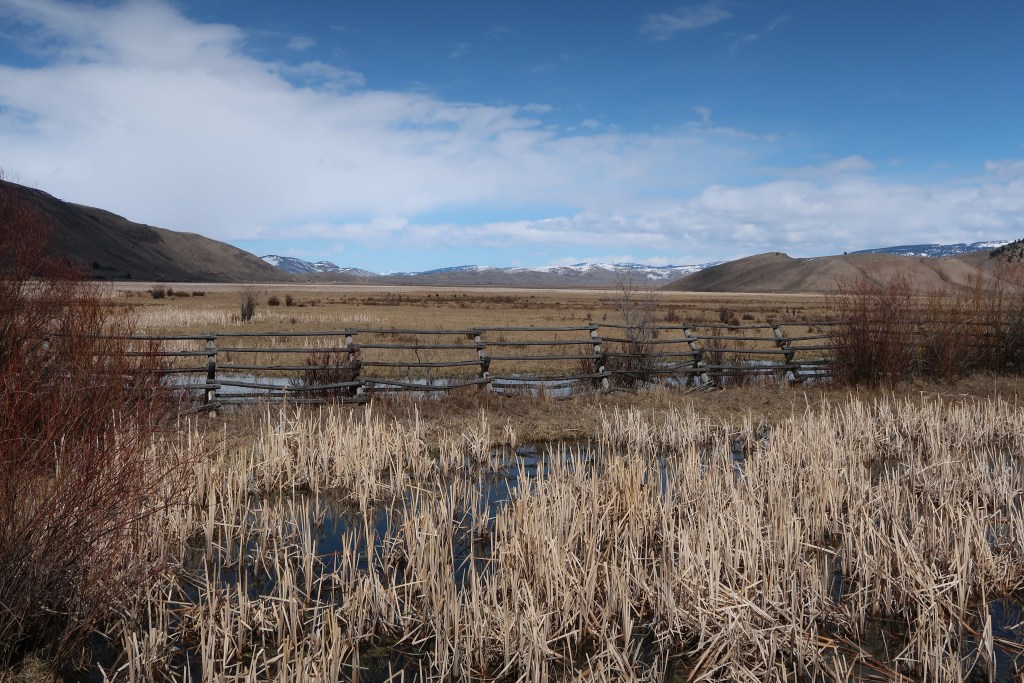
Groundwater remediation, however, is much harder, according to Becker, who is also a board member of Protect Our Water Jackson Hole, a nonprofit focused on water quality. He’s also concerned that the benzene in the groundwater could contaminate nearby Flat Creek amid the cleanup, which is in the direction the plume is already slowly migrating.
Jackson Mayor Arne Jorgensen doesn’t know how the town or the developer will handle the plume just yet. He anticipates that the town council will require another opinion from a third-party consultant in addition to the geotechnical report Mogul will produce.
Until then, it’s hard to say what the plume means for the future of Mogul’s sprawling project.
“Some may propose that you don’t disturb it and then you cap it and leave it in place,” Jorgensen said. “Others would suggest that you might want to go in and get rid of the contaminated soils and just get them off-site.”
Regardless, Rooks hopes the town council will hold the developer to a high standard. The council is slated to vote on the developer’s sketch plan during their Monday evening meeting.
Rooks cautioned that though it may be the first project of this scale, it likely won’t be the last. With Jackson having a few other known benzene plumes, it might not even be the only project that involves a cleanup.
This article has been updated to include Becker’s role as a board member for the nonprofit Protect Our Water Jackson Hole. — Ed.

With a coal is the future mentality Wyoming will help make it so everyone soon shares this type of problem. Burn baby burn
As long as people keep screaming the magic buzz words of “affordable housing”, projects like these will continue to be shoved down our throats in this town.
It’s a shame that we are going the way of all towns that sprawl. The folks in this area call themselves “environmentalists” yet, their heat is on 9 months out of the year, everything they eat and otherwise consume comes from thousands of miles away, so many live in palatial homes that require flotillas of support staff to maintain. It’s the “Emperor’s New Clothes” here. If someone waves the green bucks around, the building will get approved. Good thing we’re surrounded by public land . . . for now. Too bad only the rich “environmentalists” can enjoy it. And, yes, I point the finger at myself as well – I am one of the people I complain of. We can do better. We can plan better, fellow frogs in the boiling water. Thank you
Well this is or has been put off by City, County and State Environmental agencies since it was discovered so over that amount of time hopefully they have budgeted for this cleanup as they did for bike paths. Back in the 1990s Avila Beach California had a$ 200,000,000+ clean up involving over 6 city blocks although a completely different type of spill contamination these can of Worms are huge to do properly and legally unless the environmentalists turn hypocritical. Deep Deep pockets needed for this project, just in environment cleanup and disposal of contaminated soils and liquids. Prayers 🙏.
I wonder if Teton Texaco has any accountability for this. Typically, companies dissolve and leave the taxpayer to clean it up.
I wonder if Barrasso, Lummis and Hageman are in this developers pocket.
This problem should not still be. It extremely simple to add the correct microbial consortium to the source of contaminants and they will fallow and consume the contaminants. Thus rendering them inert. I have done this for last 30 years. I have even cleaned up dry cleaning solvents. They are known as TCE/PCE. I cleaned up 80 acres of perched ground water at 17’ in 6 months. Another site in California where ground water at 30’ contained gasoline with MBTE in 95 days. All overseen by state/EPA and Corp of Engineers. Spills happen. Very simple and economical to clean up. Process is called BIOREMEDIATION.
Excellent and very informative article!
Jackson hole Wyoming has become one big smelly shit hole. Go to town any given time and all you can smell is sewage. What a shame.
I will just say based on my years of cleaning up contaminants that Benzene and other “natural” components of gasoline are quite easy to clean up, compared to the man-made additives or chemicals corporations added to the product. I will also contend that Wyoming’s clean up response for leaking UST was far better than most states as it took primacy on all leaks which allowed for a more robust clean up actions to occur.
The cleanup of gasoline contaminates can be done by just adding air or oxygen, but when it comes to Lead or PFOS materials used in ski wax, those become problematic. It sounds like the developers have a plan for the gasoline materials but the real looming environmental issue impacting our drinking water is the PFOS contamination and that nut is almost impossible to crack without unlimited funds.
Don’t worry the government has a plan for PFOS as it will just ignore the problem by removing them from sampling or regulation as what the public doesn’t know will not hurt you. (sarcasm but true)