

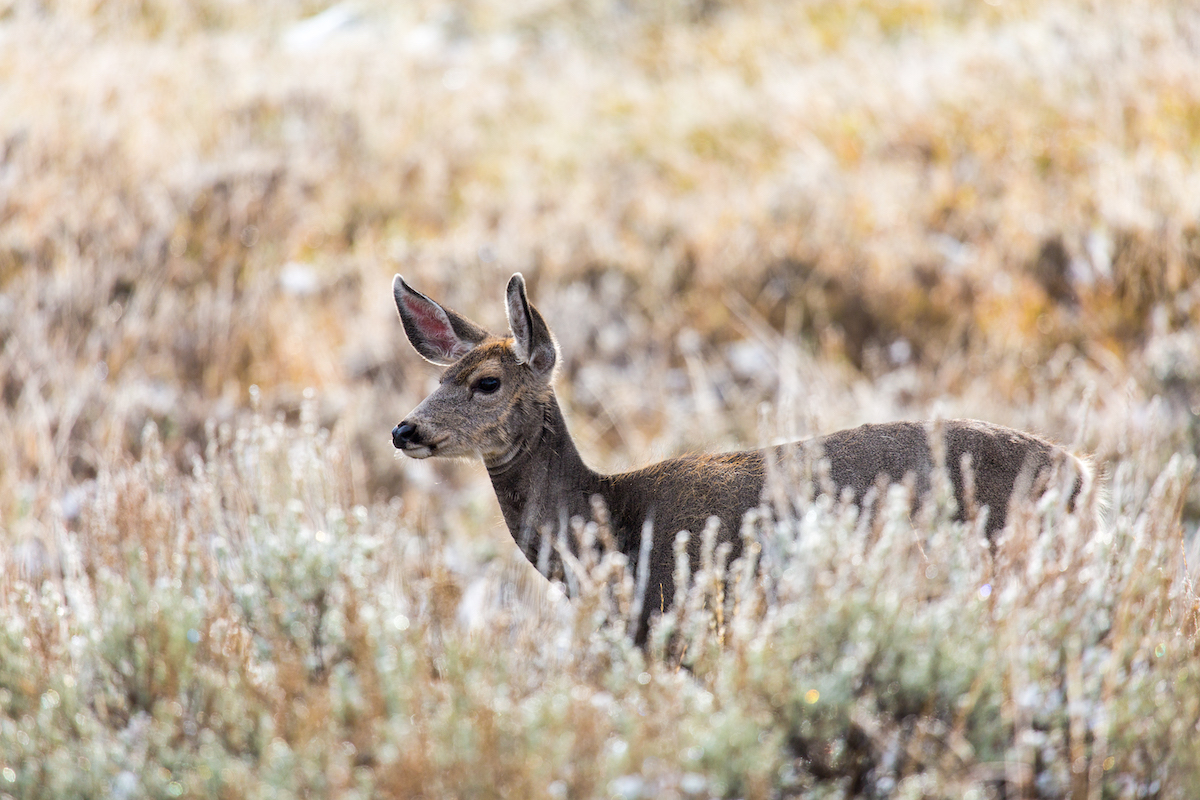
Each fall, millions of hunters across North America make their way into forests and grasslands to kill deer. Over the winter, people chow down on the venison steaks, sausage, and burgers made from the animals.
These hunters, however, are not just on the front lines of an American tradition. Infectious disease researchers say they are also on the front lines of what could be a serious threat to public health: chronic wasting disease.
The neurological disease, which is contagious, rapidly spreading, and always fatal, is caused by misfolded proteins called prions. It currently is known to infect only members of the cervid family — elk, deer, reindeer, caribou, and moose.
Animal disease scientists are alarmed about the rapid spread of CWD in deer. Recent research shows that the barrier to a spillover into humans is less formidable than previously believed and that the prions causing the disease may be evolving to become more able to infect humans.
A response to the threat is ramping up. In 2023, a coalition of researchers began “working on a major initiative, bringing together 68 different global experts on various aspects of CWD to really look at what are the challenges ahead should we see a spillover into humans and food production,” said Michael Osterholm, an expert in infectious disease at the University of Minnesota and a leading authority on CWD.
“The bottom-line message is we are quite unprepared,” Osterholm said. “If we saw a spillover right now, we would be in free fall. There are no contingency plans for what to do or how to follow up.”
The team of experts is planning for a potential outbreak, focusing on public health surveillance, lab capacity, prion disease diagnostics, surveillance of livestock and wildlife, risk communication, and education and outreach.
Despite the concern, tens of thousands of infected animals have been eaten by people in recent years, yet there have been no known human cases of the disease.
Many hunters have wrestled with how seriously to take the threat of CWD. “The predominant opinion I encounter is that no human being has gotten this disease,” said Steve Rinella, a writer and the founder of MeatEater, a media and lifestyle company focused on hunting and cooking wild game.
They think, “I am not going to worry about it because it hasn’t jumped the species barrier,” Rinella said. “That would change dramatically if a hunter got CWD.”
Other prion diseases, such as bovine spongiform encephalopathy, also known as mad cow disease, and Creutzfeldt-Jakob disease, have affected humans. Mad cow claimed the lives of more than 200 people, mostly in the United Kingdom and France. Some experts believe Parkinson’s and Alzheimer’s also may be caused by prions.
First discovered in Colorado in captive deer in 1967, CWD has since spread widely. It has been found in animals in at least 32 states, four Canadian provinces, and four other foreign countries. It was recently found for the first time in Yellowstone National Park.

Prions behave very differently than viruses and bacteria and are virtually impossible to eradicate. Matthew Dunfee, director of the Chronic Wasting Disease Alliance, said experts call it a “disease from outer space.”
Symptoms are gruesome. The brain deteriorates to a spongy consistency. Sometimes nicknamed “zombie deer disease,” the condition makes infected animals stumble, drool, and stare blankly before they die. There is no treatment or vaccine. And it is extremely difficult to eradicate, whether with disinfectants or with high heat — it even survives autoclaving, or medical sterilization.
Cooking doesn’t kill prions, said Osterholm. Unfortunately, he said, “cooking concentrates the prions. It makes it even more likely” that people will consume them, he said.
Though CWD is not known to have passed to humans or domestic animals, experts are very concerned about both possibilities, which Osterholm’s group just received more than $1.5 million in funding to study. CWD can infect more parts of an animal’s body than other prion diseases like mad cow, which could make it more likely to spread to people who eat venison — if it can jump to humans.
Researchers estimate that between 7,000 and 15,000 infected animals are unknowingly consumed by hunter families annually, a number that increases every year as the disease spreads across the continent. While testing of wild game for CWD is available, it’s cumbersome and the tests are not widely used in many places.
A major problem with determining whether CWD has affected humans is that it has a long latency. People who consume prions may not contract the resulting disease until many years later — so, if someone fell sick, there might not be an apparent connection to having eaten deer.
Prions are extremely persistent in the environment. They can remain in the ground for many years and even be taken up by plants.
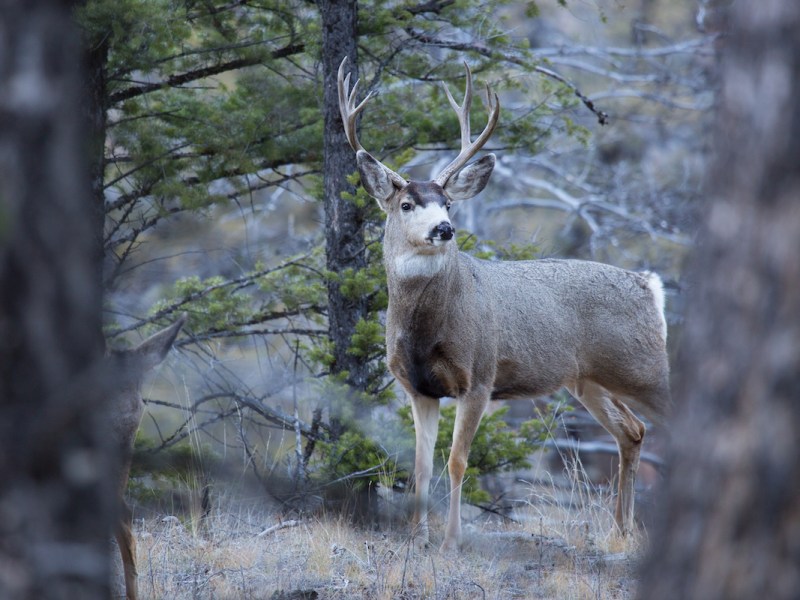
Because the most likely route for spillover is through people who eat venison, quick testing of deer and other cervid carcasses is where prevention is focused. Right now, a hunter may drive a deer to a check station and have a lymph node sample sent to a lab. It can be a week or more before results come in, so most hunters skip it.
Montana, for example, is famous for its deer hunting. CWD was first detected in the wild there in 2017 and now has spread across much of the state. Despite warnings and free testing, Montana wildlife officials have not seen much concern among hunters. “We have not seen a decrease in deer hunting because of this,” said Brian Wakeling, game management bureau chief for the Montana Department of Fish, Wildlife & Parks. In 2022 Montana hunters killed nearly 88,000 deer. Just 5,941 samples were taken, and 253 of those tested positive.
Experts believe a rapid test would greatly increase the number of animals tested and help prevent spillover.
Because of the importance of deer to Indigenous people, several tribal nations in Minnesota are working with experts at the University of Minnesota to come up with ways to monitor and manage the disease. “The threat and potential for the spread of CWD on any of our three reservations has the ability to negatively impact Ojibwe culture and traditions of deer hunting providing venison for our membership,” said Doug McArthur, a tribal biologist for the White Earth Nation, in a statement announcing the program. (The other groups referenced are the Leech Lake Band of Ojibwe and Red Lake Band of Chippewa.) “Tribes must be ready with a plan to manage and mitigate the effects of CWD … to ensure that the time-honored and culturally significant practice of harvesting deer is maintained for future generations.”
Peter Larsen is an assistant professor in the College of Veterinary Medicine at the University of Minnesota and co-director of the Minnesota Center for Prion Research and Outreach. The center was formed to study numerous aspects of prions as part of the push to get ahead of possible spillover. “Our mission is to learn everything we can about not just CWD but other prion-like diseases, including Parkinson’s and Alzheimer’s disease,” he said. “We are studying the biology and ecology” of the misfolded protein, he said. “How do prions move within the environment? How can we help mitigate risk and improve animal health and welfare?”
Part of that mission is new technology to make testing faster and easier. Researchers have developed a way for hunters to do their own testing, though it can take weeks for results. There’s hope for, within the next two years, a test that will reduce the wait time to three to four hours.
“With all the doom and gloom around CWD, we have real solutions that can help us fight this disease in new ways,” said Larsen. “There’s some optimism.”
KFF Health News is a national newsroom that produces in-depth journalism about health issues and is one of the core operating programs at KFF—an independent source of health policy research, polling, and journalism. Learn more about KFF.

Since prions are not living, they can’t “evolve”. Bacteria and viruses can and do mutate but the same characteristics that make prions hard to eliminate also prevent them from such changes.
I don’t pretend to be an expert on this matter but my recollection from my readings is that CWD and mad cow disease are very, very similar and there is a possibility of mutation of CWD such that it becomes infectious to humans. Dewey points out that this possibility is remote though. I recall seeing a short 15 minute news piece on 20/20 or 60 minutes about 20-25 years ago where a man from NE Colorado who worked with livestock died of symptoms quite similar to mad cow disease in humans in England – it was inconclusive of course and didn’t mention whether an autopsy or review by CDC was performed. He lived in the area where CWD spread from the domestic elk farm. Anyway, I don’t rule out the possibility of mutation or ????
Just because it has never transferred to humans doesn’t mean it can’t or won’t. I know the general belief is that it is not transferable. But, I err on the side of caution. I am super careful handling wild meat. I thoroughly clean equipment in between animals. And, no meat is ever eaten until it has been tested. Fortunately, I’ve never had an animal test postive.
Sorry , but I have to consider the journalism reporting on CWD and even some of the researching to be alarmist. I’m no pathologist, but I have to ask something that does not appear in the senastional reporting of late . If Transmissible Spongiform Encephalopathy a/k/a CWD a/k/a Zombie Deer disease is a threat to humans, why hasn’t that happened yet? After all, the prion has been found in 30 US states, four Canadian provinces , and —importantly — Scandanavia . In the case of the latter, Norway and Finland in native Reindeer herds. There are cultural entities who raise reindeer and subsist on reindeer, and the prion was not imported there, it was already there. So why have there been no cases of human encephalopathy originating in animals among the people who are intimate with those animals ?
The fault in a lot of reporting on CWD stateside is the prion was first ” discovered” and diagnosed by a pathologist in Colorado in 1967 , some 67 years ago. That was by no definition an example of a Patient Zero scenario in a pandemic. I think it is safe to say the prion has been around for a very long time ( centuries ?) and obviously is global. Or something a lot like it.
There is the second flaw in the research reportage. Using Covid-19 as a somewhat parallele xample, zoonotic pathologists have know there are literally thousands of coronaviruses that coexist with hundreds of species of mammals, birds, etc. One of those viruses happened to mutate into a form that was inflictive. Now granted, viruses aren’t deformed proteins, but the point remains: why hasn’t the TSE prion gone human with all the opportunity to do so over a long time frame ? I would not be the least bit surprised to learn some form TSE has been in the wild for millennia. Especially given there are theoretically millions of variations of proteins to be “deformed ” in the pool all us mammals swim in. TSE begats BSE begats Keutzfeld Jakob ? Who the heck knows ? There are countless proteinoic permutations along an ancient timeline , changing all the while. Where are the victims ? I do know a TSE prion can viably survive in clay soils under stable conditions for way more than a century. Viruses have been existent on Earth for 3 billion years. Proteins even longer, since all life is requisite of them.
I’m asking the journalists to insert this line of thinking into their queries. The long timeline and the circumstantial evidence and the obvious range of possibilities about prions—> mammals interaction needs to temper the reporting. User the long wide perspective , please. I happen to doubt that the likes of transmissible Mad Cow and Chronic Wasting disease are no more statistically dangerous to any number of humans than they have ever been. Statisitically not zero, but very very low…
very short sighted thinking. Remember mad cow disease? The prions that caused that have also been around far longer than we are able to document, but they were able to “jump” species.
“this probably wont happen” is a terrible reason to not prepare for something, since there are no known cures for prion diseases.
Mr Vanderhoff:
Your comments were very welcome they make sense and I greatly appreciate your sharing information with us!
Footnote : I want to add another point to my missive, somewhat darker . Anytime I see a lot of media focus in the realm of science on something that poses a threat to humans , the Cynic in me says look around and see who is trying to get a 6-figure grant to study it…or who’s putting up that grant money.