

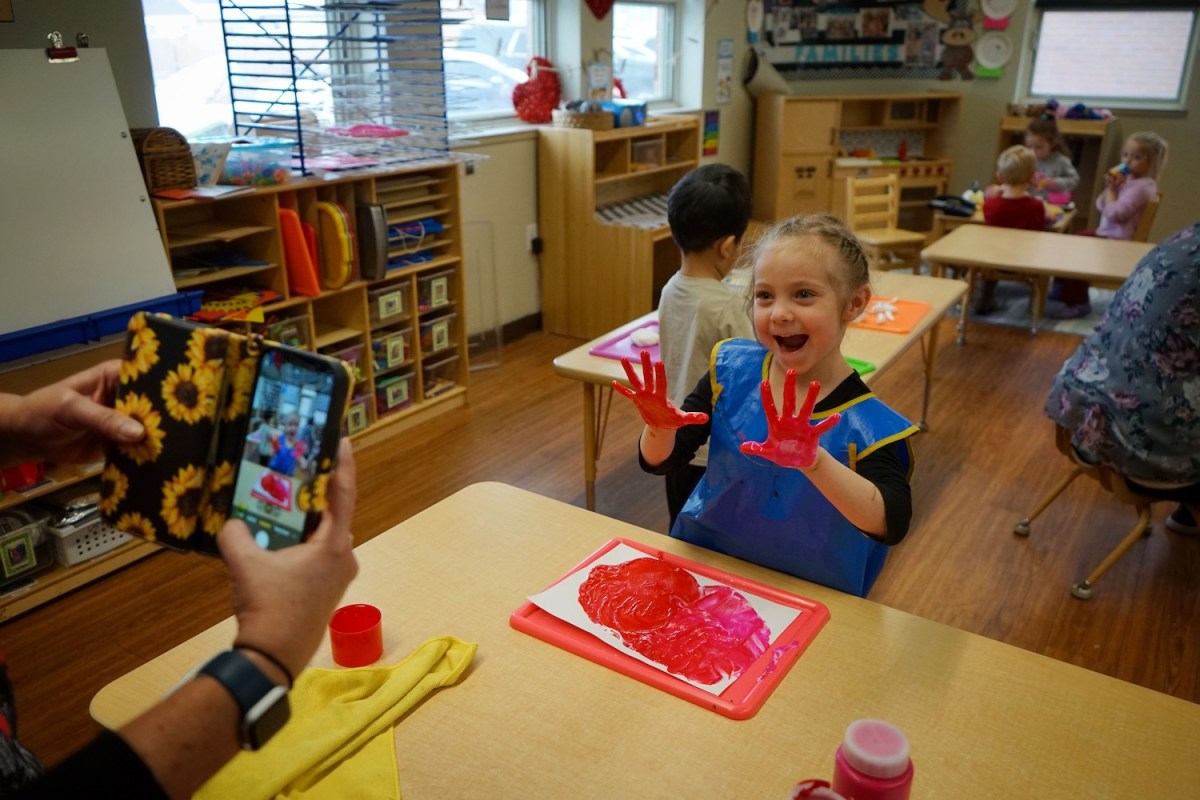
Income-qualified families will still be eligible for pre-K education cost support following intense negotiations between members of the House and Senate Thursday over a controversial school voucher bill.
Whether to cover pre-K was the most significant difference between the House and Senate versions of House Bill 199, “Wyoming Freedom Scholarship Act” after each chamber amended and then passed the measure. The House bill did not give money for pre-K costs, the Senate bill did.
A Joint Conference Committee, composed of three representatives and three senators, met to hash out this incongruity. The compromise they finally passed is this: While families with K-12 students have universal access to $7,000 per student to pay for private school costs, families with pre-K students must be at or below 250% of the federal poverty level to apply for the $7,000. That translates to a maximum of $80,375 annually for a family of four.
Early childhood education is very popular in the Senate, said Sen. Chris Rothfuss, D-Laramie, who fought during negotiations to fund it at the highest level possible.
“The Senate strongly supported pre-K. That amendment outperformed the bill itself,” he said, by five votes.
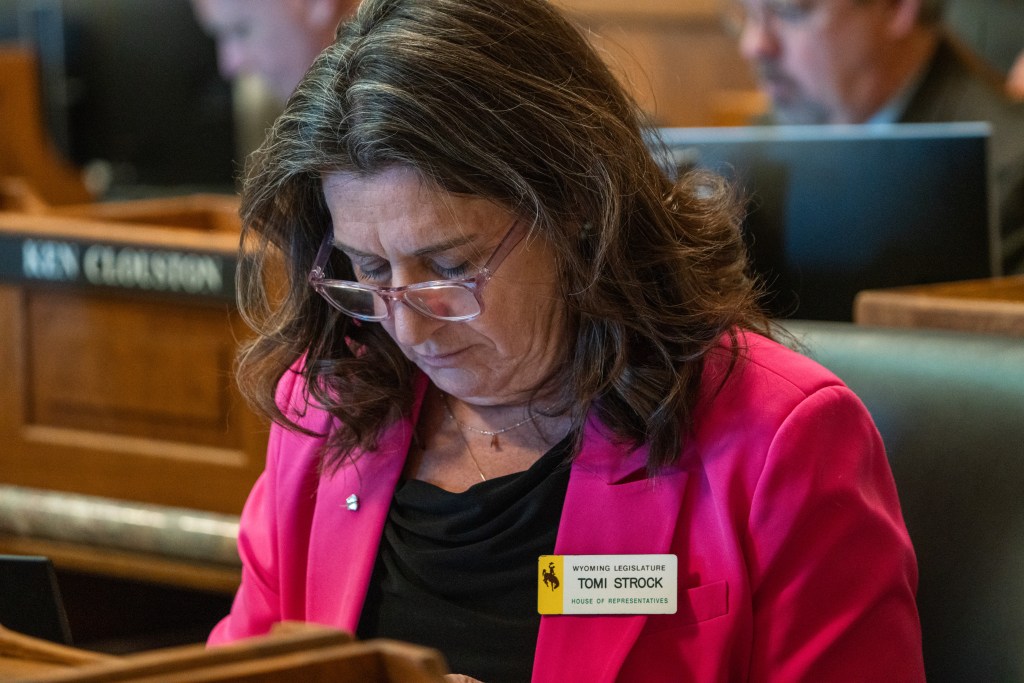
Rep. Tomi Strock, R-Douglas, provided the counter to Rothfuss, advocating against inclusion of pre-K, which she said amounts to the government paying for daycare.
“This becomes socialism,” Strock said. “Is this what we’re wanting in our state?”
The new version of the bill — which has become one of the most hot-button measures of the 2025 legislative session — must obtain approval from each chamber before heading to Gov. Mark Gordon’s desk. House Bill 199 has triggered a torrent of constituent comments in the form of emails, texts and calls to lawmakers from critics who call it unconstitutional and supporters who favor school choice.
What the bill does
Though the focus of Thursday’s discussion, pre-K is just one facet of HB 199.
The measure would transform and expand an existing state education savings account program that gives public money to income-qualified families to help them pay for pre-K programs, homeschooling costs or private school tuition. The education savings account program was passed last year.
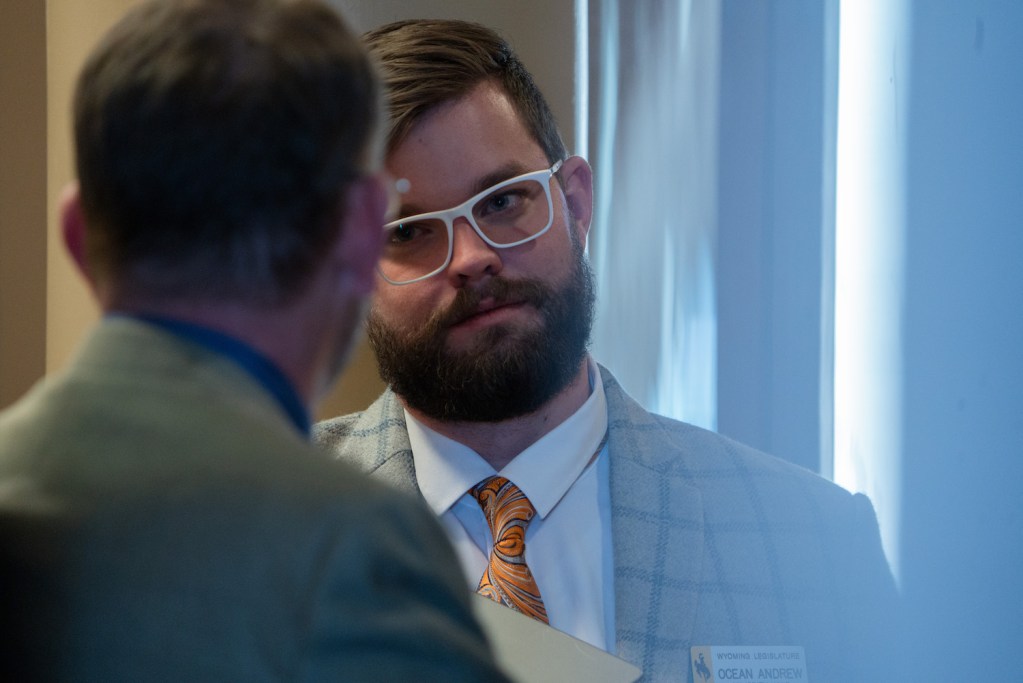
Version 2.0, sponsored by Rep. Ocean Andrew, R-Laramie, proposed to offer up to $7,000 per student regardless of a family’s economic needs. Along with making the program universal, in its original form, the Freedom Scholarship Act bill dropped: the preschool component, a requirement that participating students take statewide assessments or similar nationwide tests and a requirement that providers be certified by the Department of Education. It has been touted as a major step forward in the school-choice movement.
As House representatives debated HB 199 in January, several made repeated attempts to reinstate pre-K, assessment requirements, certification and income requirements, as well as tweak other aspects of the bill. Many also pleaded for their colleagues to just let the education savings accounts, which launched in January, actually roll out to observe how the system works.
The vast majority of the amendment attempts in the House were soundly defeated, though the certification requirement was reinstated. The Freedom Caucus, which wields a majority in the House, helped push the bill through the body largely unchanged with overwhelming support.
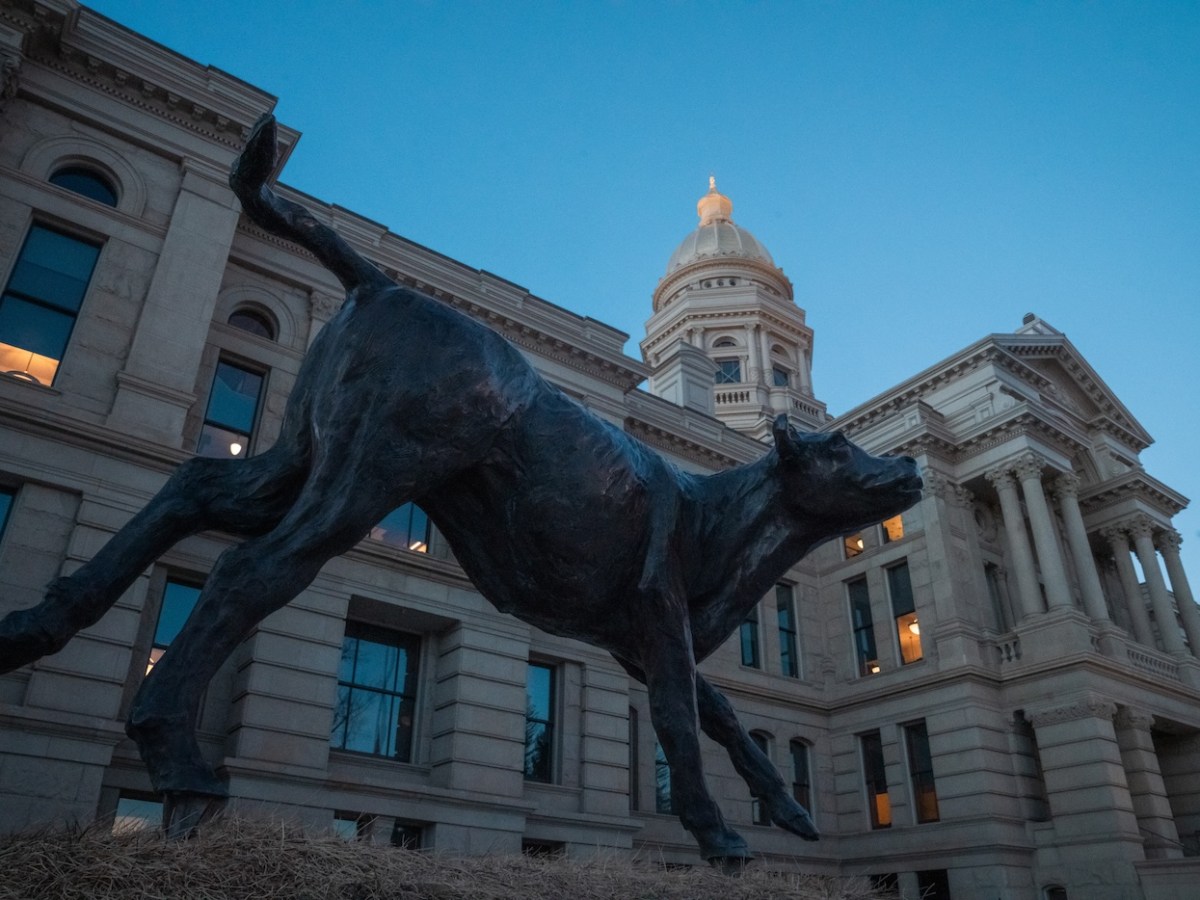
When it came to the Senate, attempts were again launched to transform the measure, this time more successfully. Senators tightened up the certification process language, reinserted language to require a statewide or nationally normed assessment for students, changed the name of the account to the “Steamboat Legacy Scholarship Act,” — a nod to the iconic bucking bronco in the University of Wyoming logo — and reinstated the pre-K component.
The Joint Conference Committee negotiation took place to settle those four points of incongruity.
Committee members passed the Senate changes on the name, assessments and certification with little trouble. But concurrence on pre-K proved trickier.
Because Wyoming doesn’t provide its own pre-K in the public education system, Andrew said, he worried that inclusion in the program could cost the state a lot of money. He did say, however, that a means test requirement was palatable.
Other committee members advocated for keeping pre-K.
“I am a strong supporter of the pre-K piece of this,” said Rep. Martha Lawley, R-Worland, “based on a lot of research on the needs of our communities and the needs of parents to provide an opportunity for their kids to be ready for kindergarten. It’s an issue that’s continuing to impact education as a whole.”

Members went back and forth with proposals on what the pre-K income-qualification should be and if recipients should receive the entire $7,000. After several amendments failed and committee members took two breaks, they landed on families earning up to 250% of the poverty level being able to qualify for the full $7,000.
Constitutional?
Many critics would argue finer negotiations are moot because the bill’s fundamental mechanism is unconstitutional.
Article 7, Section 8 of the Wyoming Constitution reads: “Nor shall any portion of any public school fund ever be used to support or assist any private school, or any school, academy, seminary, college or other institution of learning controlled by any church or sectarian organization or religious denomination whatsoever.”
When Gov. Gordon partially vetoed the education savings account bill last year, he pointed specifically to constitutional concerns when he narrowed eligibility to families at or below 150% of the federal poverty level. That referenced the constitutional language that prohibits the state from giving money to individuals “except for the necessary support of the poor.”
Sen. Charlie Scott, R-Casper, welcomed litigation to test the constitutional questions. “There’s good constitutional arguments on both sides, and we’re only going to find out by trying it with a real-life case and seeing what the Wyoming courts will say,” he said during an earlier Senate debate.

A family with two kids can get government welfare in the amount of $14,000 per year just to claim they are homeschooling. 4 kids? That’s $28,000! Heck, I had 8 children – I could have gotten $56,000 per year!!! With absolutely no requirement to actually use the money to educate my children beyond saying I did.
I homeschooled. I never spent more than a thousand a year for materials, total, even when all 8 were being taught at once. My children are grown now, 4 got full ride university scholarships. 2 have masters degrees now, 2 others have bachelors, 3 are military, and so on. All for $1000 a year or less.
$7000 per student is welfare, pure and simple. We are paying people to have more children! And, even worse, the wealthy can get this money also. There’s no means testing – once again, the rich get richer, but this time they can take some poor along, and as an added bonus they can wreck the public school system while they do it.
There is NO accountability in this bill. They don’t even have to email 5 things they taught this week. Republicans are all about cutting out waste and fraud and holding agencies accountable for spending their money wisely. And then there is this bill…… where they lobby to throw money at random parents with no strings attached
Oh, and by the way, it’s unconstitutional.
Totally unconstitutional.
This needs to be challenged immediately.
Today’s “Pre-K” education was illustrated quite well in Huxley’s Brave New World.
Societal conditioning and brainwashing.
No funding without ACCOUNTABILITY.