

I can’t help but try to understand the position so many of our elected officials have taken in opposition to funding mental health in general and the endowment to support a 988 hotline in particular. Both initiatives help those with mental health issues and individuals contemplating suicide.
All of these elected officials hold themselves out to be strong supporters of the Second Amendment. After each and every new example of mass gun violence, and after extending their thoughts and prayers to the suffering families, these self-proclaimed Second Amendment supporters are quick to say it is a mental health problem, not a gun problem. Oh, really.
Opinion
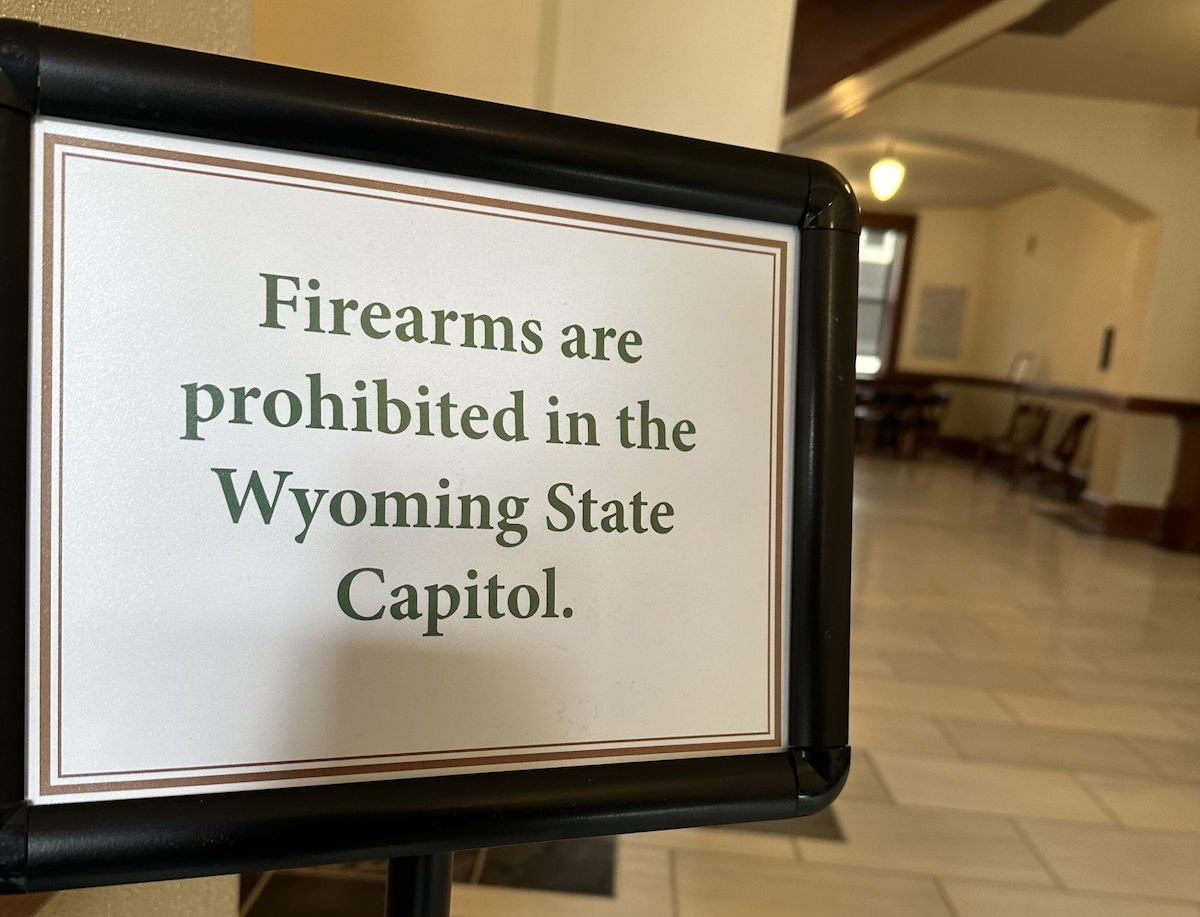
Senate President Ogden Driskill was spot on when he characterized the revival of the gun-free zones bill as absolute insanity. What is just as insane is these elected officials most opposed to funding the 988 suicide crisis hotline and the expansion of Medicaid also hold themselves out to be strong Second Amendment supporters. These same elected officials opposed to Medicaid expansion and the 988 hotline are also the strongest opponents of gun-free zones in schools, public buildings and private businesses as well as red flag laws.
Medicaid expansion would provide mental services to those who otherwise would be unable to afford treatment. The full funding of the 988 suicide hotline would provide much-needed help, and help proven to be successful, to those contemplating suicide.
Are these elected officials practicing calculated, opportunistic hypocrisy, or simple cluelessness? For years, Wyoming has been ranked first nationally in the per-capita rate of suicide. Some 75% of Wyoming suicides involve guns, and suicide attempts with guns, as opposed to other means of suicide, are nearly always fatal. Suicide is a problem with a significant mental health component. Yet, when these same elected officials have the opportunity to fund an endowment to support a 988 suicide hotline for individuals suffering from mental health issues or have the opportunity to expand Medicaid, which would increase availability of mental health services, these Second Amendment advocates head for the financial hills.
Maybe these elected officials have somehow gotten the impression treatment for mental health is free.
Gov. Mark Gordon, to his credit, has held high-profile suicide prevention forums in communities across the state. Unfortunately, when he could have thrown the considerable weight of his office behind full funding for the 988 hotline endowment, he went MIA. When it comes to supporting the expansion of Medicaid, the governor is also MIA.
It’s time to call out these elected officials who continually proffer their unwavering support for the Second Amendment for what are really anti-Second Amendment positions.
As we all know, there are a myriad of calls from blue-state elected officials for gun regulations that go well beyond what the vast majority of Wyoming citizens would find acceptable. By failing to back up their views claiming suicides and gun violence are mental health issues with meaningful actions such as fully funding the endowment for the 988 hotline and Medicaid expansion, these same elected officials are playing into the hands of those advocating broader, anti-Second Amendment solutions to these problems.
We don’t have to look any further than some current proposals in Colorado to see how this might play out in the future. It is time for these elected officials, including Gov. Gordon, to go beyond talking the talk and begin walking the walk.

Kim Love nailed it. Doublethink, holding two or more contradictory beliefs at the same time, is pervasive and dangerous. All of us do it – especially teenagers, as evidenced by my two children assuring me that they can both stay up late and wake up early (they can’t). Doublethink is also an exceptional political tool. It allows lawmakers to express concern about the mental health crisis, stoke fears about increasing gun violence all around us, and advocate for more guns for everyone everywhere. It doesn’t make a whole lot of sense. What’s even stranger is that it seems like it’s becoming more effective than ever before. Even when doublethink is called out, as Mr. Love has done, there are too many people who don’t seem to care or are incapable of critically evaluating their own thinking. Which isn’t surprising. A group that requires everyone to think the same and vote the same to prove their loyalty does not want critical thought and open dialogue. And without that, people start thinking that simply believing something makes it factual.
Amen, Kim Love.
I live in the neurotically gun-happy town of Cody , thus have many opportunities to discuss firearm regulations . I’m pretty sure a census would show Cody has more guns than people.
As such , you almost never hear a strident Cody gun owner bring up the topic of mental health as even being a valid point of discussion on the wide topic of gun policy. It’s maybe not taboo, but they certainly check it at the door like those good old days when you had to surrender your piece when entering a saloon. Ask them straightaway what they are personally doing to keep guns away from obviously dangerous or mentally ill people and you are likely to be the recipient of a grunt and a scowl …’ not my problem ‘. ( Except it is.)
Here’s one thing I’ve learned about firearm psychology: If the gun advocate still doesn’t believe that any gun control must include strong mental illness measures , just test them. Tell them ( hypothetically ) ” I think you might shoot somebody so I’m going to ask you nicely to turn over your gun “. They go ballistic.
Yup. The strident gun owners who are Second Amendment absolutists to the bone marrow usually have diagnoseable Obsessive-Compulsive Disorder . They just can’t do life without their guns. No way. Which brackets the societal problem.
Sad , isn’t it?
Well said.
Hopefully, this reaches the ones who most need to read your comments. Not that they will do anything; that’s been their MO.
Kim Love is spot on. Legislators want to blame mental health for all the carnage caused by gun but don’t want to do anything about it. There is so much that needs to be done and, yes, some of it requires the expenditure of taxpayer money. But it is money well spent to address a subject that has gone unaddressed for far too long.
I think if there is a special session and the Orwellian Party called the Freedom Caucus try and get all restricted areas to be gun zones bill reintroduced we will then know where the real issue clearly lies. It be nothing but a move backwards to the mid 19th century
Will just lead to more issues down the road. Mental health has been ignored since all state hospitals closed. Society as whole has suffered since that effort was lead by California. Now both party’s ignore it. GOP is as bad as Democrats for ignoring mental health. Drug use both Recreational and illegal use has compounded issues. Incidence in Illinois yesterday FIRMLY illustrated that problem. USA is sliding into Pagan nation status