


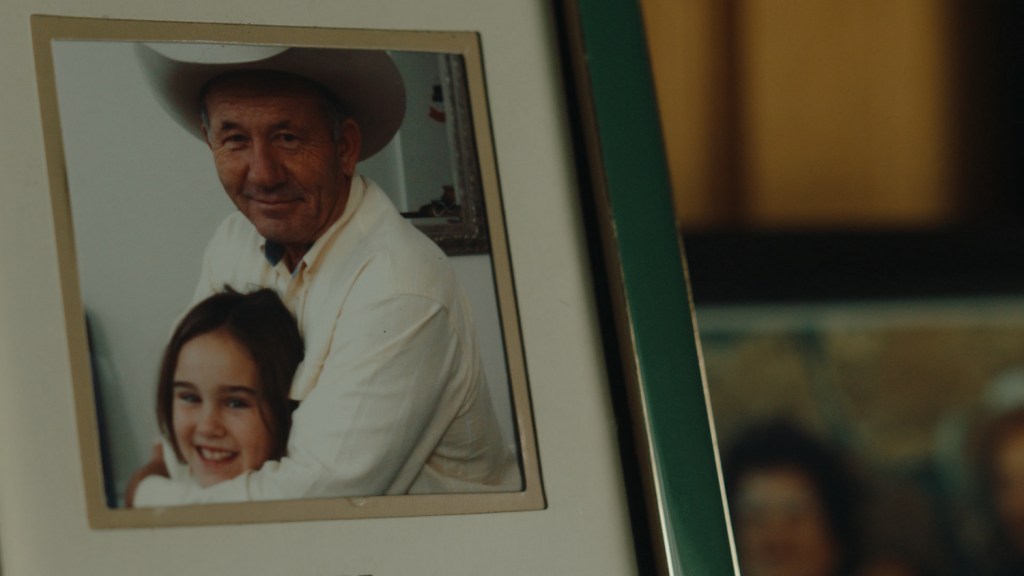
As a young girl, Jenna Murray watched her grandfather stitch up an injured horse one day at her family’s ranch on the Wind River Indian Reservation. She observed intently as he sewed with calm expertise. His hands were too large to tie the knot, and he asked if she could assist in the final step.
Murray didn’t hesitate, didn’t balk at the blood or tremble while tying. When she finished, she said, her grandfather announced she would one day be a surgeon.
Today, the young Eastern Shoshone woman attends medical school at the University of Utah, where she is interested in addiction recovery and maternal health care. Her path into medicine wasn’t straightforward; she was waylaid, slowed and nearly deterred. And just as her connection to the reservation played a major role in going into medicine, that connection helped her stick to the track that she almost fell from.
Murray’s story is featured in a new short documentary, “Winding Path.” The film, which screened at Sundance Film Festival and is currently on the festival circuit, weaves together broad rural health care struggles with Indigenous issues and personal demons that many individuals battle.
It’s all been a bit overwhelming for Murray, putting her story out there, seeing her face on the screen and receiving applause at a prestigious event like Sundance. But, she said, she’s growing more comfortable as she sees how it touches viewers.
“The amount of people who have been moved by it, or learned something new … I didn’t expect that,” she said. “And so that’s been really cool. And makes it worth it.”
A split childhood, a formative place
Murray grew up in Las Vegas, but spent summers visiting her large extended family on the Wind River Indian Reservation, where her paternal grandparents had a ranch. Her grandfather, Larry Murray, was a well-known educator, coach and rancher with an easy smile and a major role in her life.
On those summer trips, she rode horses, worked on ranch projects, spent hours with cousins and learned about her heritage through powwows and ceremonies — it was a “formative” time. It also contrasted with the Vegas version of her life, which was more fast-paced, diverse and citified. “It really felt like two different worlds, honestly,” she said.
It was also on the reservation when her grandfather recognized her fascination with medicine and proclaimed Murray would be a surgeon.
As she grew into her teenage years, Murray became more invested in her life and friends in Las Vegas. She didn’t visit the ranch as much. One day in 2011, her grandfather, who was 70, suffered a heart attack in his barn. His wife performed CPR for 40 minutes waiting for EMS to arrive.
If the medical emergency would have happened in a city, Murray said, he likely would have survived. But by the time he was transferred to Casper, it was too late.

Despite, or perhaps fueled by, the loss, Murray worked hard in school and during her pre-med college classes. But she also started drinking, and it got out of control. When she was asked to leave her graduate program due to her erratic behavior, it was a wake-up call.
She was devastated, she said, but began seeing a Native counselor who exposed her to a culturally centered method of therapy. Encouraged by him, Murray returned to the reservation. There, she said, the land helped her heal. She was sober by the following year and regained her medical track with a new interest in culturally tailored addiction treatment for Native people. Inspired by her grandfather’s heart attack, she is also interested in issues of rural health care access as well as preventative health.
After she finishes her second year of med school, she plans to transition into doing her Ph.D work at a Native community health center in Salt Lake with a focus on substance use and pregnancy.
A week in Wyoming
Documentary co-director Ross Kauffman and producer Robin Honan came across Murray’s story as part of the work their company, Red Light Films, does telling stories related to the university’s Native American Research Internship program. Murray participated in the program.
Kauffman is an Academy-Award-winning director who has made critically acclaimed films such as “E-Team” and “Born into Brothels.” Honan has also won an Oscar.
“They knew that Jenna had a story to tell,” but also intuited that she “was willing to share her story, because not everyone is,” said co-director Alex Lazarowich, a Cree filmmaker from Alberta, Canada.
When they asked Lazarowich to join the filmmaking team, it was a no-brainer. “I felt like it’s a really awesome opportunity to tell a positive story about the Wind River Indian Reservation,” she said.
The team spent a week in Wyoming last summer filming Murray on her family’s ranch and meeting friends and family members. Lazarowich, who had never been to Wyoming, was “blown away” by the beauty and scope of the landscape.

Lazarowich makes films for Indigenous people to watch, she said. “Because for me growing up, I never saw a lot of people who looked like me or reflected back at me or my experience.”
In this case, she also wanted to share Murray’s story “so that someone out there who’s Native could see it and be like, ‘Wow, maybe I could do that, too.’”
Plus, she said: Google Wind River Indian Reservation and grim stories of poverty and violence pop up. She hopes the film can dilute that perception.
“To show people another version, I think is like the best thing that we could do with this film,” she said. She also hopes it leads to meaningful conversations about rural health care access and other Indigenous health issues.
Murray didn’t originally get why filmmakers were interested in her story, and admits it was a little uncomfortable to have the camera pointed at her. She also didn’t initially understand the gravity of getting into Sundance. By the time the festival was over, she had walked red carpets, felt the reverberation of audience applause and heard really positive feedback. She thinks the film struck a chord as a hopeful story rather than a bleak reservation portrayal many are used to.
“They did a beautiful job,” she said. “And I don’t regret it at all.”
Though traveling the festival circuit now, the film will have a Wyoming screening on Aug. 7 in Riverton during the Native Education Conference at Central Wyoming College. The film will also be available to screen online soon.

Great story. I wish her well. USA wastes so much young talent. That needs to change. Instead of funding never ending wars we should be sending EVERY KID to higher education for free. No reason these colleges universities should be charging students. FUND OUR KIDS NOT WARS.
How did summers (How often did she visit? How long did she stay?) “shape” her any more than living in Las Vegas? What barriers did she have to surmount? Do a story on someone who grew up there and became a surgeon. It is not an easy place to survive as a child.
Good story and great writing.
Jenna Murray, you’re an inspiration. Good luck to you.
Where can I see this film?