


CHEYENNE—Some Wyomingites could face more barriers accessing mental health services starting this July — depending on whether lawmakers choose to approve a one-line change to a sweeping behavioral health law that’s already on the books.
On Monday, before having a chance to debate the proposal, lawmakers in the Wyoming House of Representatives voted down a bill that would have maintained through July 2026 existing state-covered community mental health center service eligibility for patients with health insurance. The change would most significantly affect lower-income people with high-deductible employer-sponsored health insurance, which can be inconsistent when it comes to covering mental health services.
But the idea isn’t dead yet: Tuesday evening, the same proposal appeared on the Legislature’s roster of bills, but as a Senate file sponsored by Sen. Fred Baldwin, a Kemmerer Republican. (The original bill was sponsored by the Legislature’s Labor, Health and Social Services Committee.)
“House Bill 5 — what’s now Senate File 115 — I think was totally misunderstood in the House,” Baldwin, a physician assistant and chairman of the Senate Labor Committee, told WyoFile Wednesday. He was optimistic the bill would be introduced in the Senate.
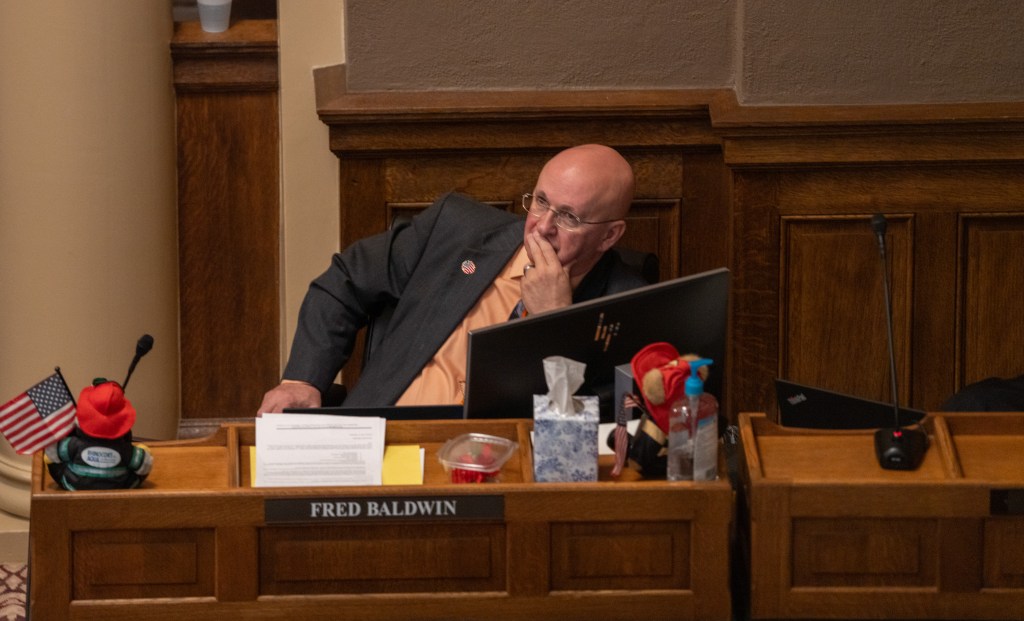
“I think we can get it off the floor, we can get it back over to the House,” he said at the time.
The Senate version cleared introduction Thursday. It has a good chance of making it into law now that it has cleared this initial hurdle, given that a majority of lawmakers in the House voted in favor of the change.
The bill would change one line in a law that legislators passed in 2021, and add a sunset date of July 1, 2026 to that change. The 17-page 2021 measure legislated a sweeping redesign of the behavioral health care system governing Wyoming’s 10 community mental health centers. The redesign, which kicks off this July, prioritizes care for certain populations, changes the reimbursement structure from the state to the centers and puts in place incentive payments for these centers when patients’ health and overall social wellness improves.
Wyoming’s Department of Health and other agencies had worked on this legislation for years before its introduction in 2021. Even so, lawmakers passed the bill with the understanding that the sweeping legislation still needed to be ironed out.
“We anticipated that it would not be perfect and that there would be changes that needed to be made,” Andi Summerville, executive director of the Wyoming Association of Mental Health and Substance Abuse Centers, told WyoFile. “In past legislative sessions, we’ve had the support of the Wyoming Legislature to make those changes.”
In 2022 and 2023, the Legislature passed amendments to the legislation. But the proposed change this year faltered Monday in the House, failing to reach the two-thirds approval threshold to be considered during the short budget session.
Members of the far-right Wyoming Freedom Caucus and other lawmakers who typically fall along Freedom Caucus lines made up the group that voted down the bill. Rep. Jeanette Ward (R-Casper), a public member of the Wyoming Freedom Caucus (some caucus members are anonymous), requested that the bill be taken off the consent list and discussed — an action lawmakers can take when they object to a bill’s introduction.
The Wyoming Caucus — a Republican group created in response to the Wyoming Freedom Caucus — denounced HB 5’s failure in a Monday newsletter.
“Its failure to even reach introduction spells disaster for those who rely on these services to maintain their well-being,” the newsletter said.
Ward told lawmakers Monday that the bill “expands the population eligible for state-funded treatment” and “sets the stage for future increased expenditures” under the behavioral health redesign program. Rep. Ben Hornok (R-Cheyenne) speaking on the House floor Monday, called the bill “a Trojan horse for Medicaid expansion in Wyoming.”

(Medicaid expansion would allow more people to qualify for health insurance under Medicaid, a jointly funded federal-state program. Lawmakers in Wyoming have rebuffed attempts to pass Medicaid expansion for more than a decade.)
Following Hornok’s comment, Rep. Dan Zwonitzer (R-Cheyenne), the House Labor Committee chairman, stood to refute his claim.
“Mr. Chairman, this bill has nothing — nothing — to do with Medicaid expansion.”
The proposed change isn’t related to Medicaid expansion. It would maintain the eligibility for state-covered services at community mental health centers that Wyomingites with health insurance currently have.
The bill would also have “[no] significant fiscal or personnel impact,” according to the Wyoming Legislative Service Office. That’s because, regardless of how many people these community mental health centers serve, their funding from the state remains fixed. The state spends about $100 million every two years to fund services at community mental health centers.
The 2021 behavioral health redesign bill, as currently written, restricts eligibility for state-covered mental health services. So, if the proposed change isn’t passed, then some patients will no longer have access to certain mental health services — depending on their health insurance coverage and their ability to pay out of pocket — starting this July. Their health concerns would have to become more severe before the state could cover services for these patients.
Substance use residential treatment programs, for example, are often not covered by health insurance programs like Medicaid, Summerville told WyoFile. Although a patient’s need for a substance use residential treatment program might put them in a higher level of priority — and thus allow the state to cover this service — it’s conceivable that this wouldn’t necessarily be the case.
“The problem is, if you’re turning away people at the first stop, they think maybe they can’t get care, or they’re depressive or suicidal and something bad happens,” Zwonitzer told WyoFile on Wednesday.

The House and Senate labor committees had time to work on the bill between last year’s session and the current one. Hornok, the Cheyenne Republican who spoke against the bill Monday, actually voted in favor of the legislation at the Labor Committee meeting in September. In an email, Hornok didn’t say why his vote changed from the September meeting, but reiterated his belief that the bill aims to “figure out what Medicaid expansion would look like and cost.” Reps. Sarah Penn (R-Lander) and Ward, who sit on the House Labor Committee, voted against the bill at that committee meeting and again on the House floor.
Zwonitzer said it goes against tradition in the Legislature to vote down a bill on the floor that came out of your committee without alerting the committee’s chairman ahead of time — something he said lawmakers didn’t do before taking a vote on HB 5.
“It just never used to happen in the old days,” Zwonitzer said. “It was a severe breach of decorum historically, but apparently it’s now fair game.” He added that the effect of not passing the bill may not have been explained properly in detail. “So I share some fault, blame, for that.”
The death of several committee bills earlier this week elicited a similar comment from House Speaker Albert Sommers (R-Pinedale) Tuesday.
“If you were on a committee and you voted against a committee bill and didn’t at least tell your chairman that you were going to vote against that committee bill, I think that violates a basic trust that we’ve had in this Legislature for a long time,” Sommers told lawmakers.

A terrible, ignorant decision by the far right Freedom Caucus in the House. I am glad the bill has been resurrected in the Senate.
I cannot believe these so called freedom caucus people. If you can’t identify yourselves in this bunch of ignorant people, you apparently aren’t proud of being a member.
We remain in the top level of sucides in the nation and lawmakers want to REMOVE access?
I don’t know who is worse, the clowns who willingly identify themselves as being in the “Freedom Caucus” or the cowards who are too scared to let their voters know they’re part of it