

CHEYENNE—After stalling in earlier meetings, the Wyoming State Loan and Investment Board voted Thursday to award $5 million in “unmet housing needs” grants to communities across the state.
The discussion was marked by debate over what projects — and whom — the funds would support, as some expressed concern about using government funds to support Wyoming residents who are not U.S. citizens.
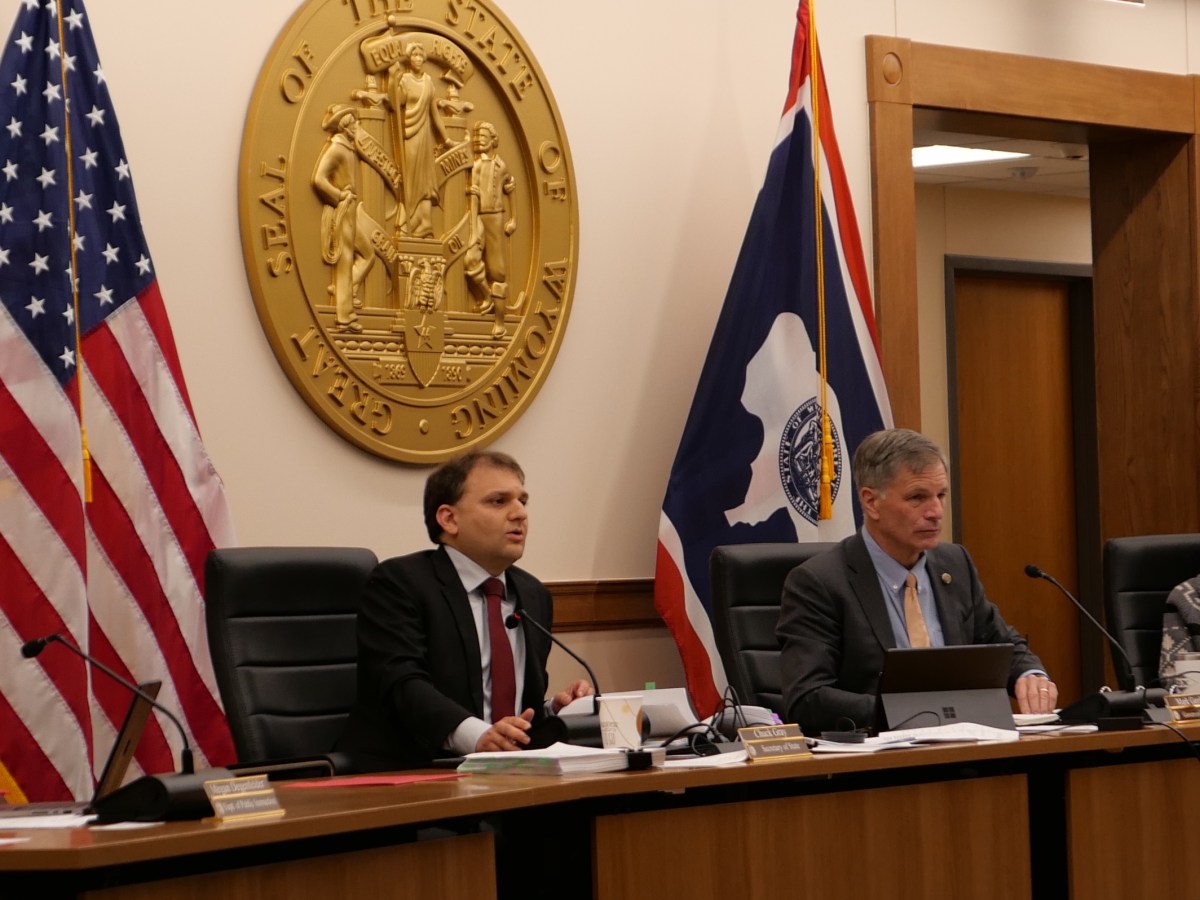
The special meeting addressed the Unmet Housing Needs Grant Program, which had been abruptly tabled April 2 following a heated confrontation between Gov. Mark Gordon and Secretary of State Chuck Gray. That earlier session collapsed when the board failed to reach a consensus on Gray’s proposal to mandate citizenship verification for housing beneficiaries, culminating in a moment where the governor told the secretary of state to “shut up,” for which the governor has since formally apologized.
The Wyoming Legislature had appropriated $5 million in 2023 for infrastructure, water and sewer projects to support housing, and the Office of State Lands and Investments received 22 applications totaling more than $53 million in requests. For many Wyoming towns, these grants represent the last leg of funding needed to unlock local development as housing concerns continue to grow.
To meet this $5 million cap, the state evaluated applications based on their ability to leverage existing planning and provide a high yield of new housing units per dollar of state investment, leading the board to prioritize a specific set of projects while denying funding for several others.
The citizenship debate
Superintendent of Public Instruction Megan Degenfelder introduced a “global” amendment to the program intended to bridge the ideological gap regarding citizenship status that had fractured the board previously.
“In the last few weeks, I’ve worked with the Trump administration to ensure that we’re aligned to their vision of the future of housing benefits,” said Degenfelder, who is running for governor this year with President Donald Trump’s endorsement.
She said that her amendment, crafted in consultation with federal Housing and Urban Development officials, would require grantees to verify that individuals residing in or purchasing funded housing are U.S. citizens or “eligible aliens” under Section 214 of the Housing and Community Development Act of 1980. However, this inclusion of “eligible aliens,” which covers legal resident aliens, drew sharp criticism from Gray, who has aligned himself with Trump as he runs for the state’s lone seat in the U.S. House of Representatives.
“The state benefit should not go to resident aliens,” Gray said, later adding that it “is problematic in my mind.”
Gray moved to strike the language protecting resident aliens, but his motion failed for lack of a second.
State Treasurer Curt Meier countered Gray by citing the Wyoming Constitution, specifically Article 1, Section 29, which mandates that “no distinction shall ever be made by law between resident aliens and citizens as to the possession, taxation, enjoyment and descent of property.” Meier warned that excluding legal residents could violate their oath of office.
“We cannot ignore our Constitution,” Meier said. “If we, as a board, adopt this, each and every one of us could be subject to violating our oath of office.”
Gray responded, saying that the constitutional provision refers specifically to the right to attain and possess property, which he argued is “very distinct” from receiving a discretionary monetary benefit from the state.
Citizenship verification
The board also spent time refining the implementation of these checks. State Auditor Kristi Racines expressed concern over the administrative burden on small towns.
“I want to make the applicants’ tasks and reporting obligations as clean as possible,” she said. To provide flexibility, the board expanded the allowed verification methods beyond the federal SAVE program to include E-Verify or a valid Wyoming Real ID.
The board also clarified that these citizenship requirements would only apply to projects directly funding housing units, while “pure infrastructure” projects, such as sewer lines or roads, would be exempt.
Gray maintained his opposition to any project where the “loophole” for resident aliens remained due to the expanded verification methods and the inclusion of Section 214 of the Housing and Community Development Act of 1980.
“It should only go to U.S. citizens; it shouldn’t be going to noncitizens. And I think that this sort of crap sandwich approach has just kind of messed up the whole thing,” he said.
Funding awards
Despite the philosophical divide, the board systematically moved through the applications one by one, often increasing funding amounts from previous recommendations to ensure projects could be completed.
The board approved funding for the following projects:
- City of Rawlins: $750,000 for workforce apartments at the Ferguson Building. Racines noted these are not subsidized units, but “true workforce housing” rented at market rates.
- City of Buffalo: $750,000 for a sanitary sewer extension. Degenfelder suggested bumping the amount up to help the city avoid a “sewer line to nowhere.”
- City of Kemmerer: $1 million for a road construction project to support rapid growth.
- City of Cheyenne: $500,000 for the Magic Meadows Housing Project, specifically restricted to infrastructure for homes for individuals with developmental disabilities.
- City of Lander: $500,000 for subdivision infrastructure, including ADA sidewalks and curb and gutter in the public right of way.
- Town of Ranchester: $400,000 for a sanitary sewer interceptor.
- Newcastle/Upton: $400,000 for its “Dilapidated to Renovated” initiative.
- Town of Ten Sleep: $373,000 for streets and alleys.
- Washakie County: $327,000 for employee housing intended to station a sheriff’s deputy in Ten Sleep to improve emergency response times.

This meeting officially concluded the allocation phase for the Unmet Housing Needs Grant Program, as the board successfully exhausted the total $5 million appropriation.
Moving forward, the Office of State Lands and Investments will oversee the administration of these grants, ensuring that local government entities adhere to the specific conditions established during the session. All grantees must report annually to the OSLI to verify that housing beneficiaries are either U.S. citizens or “eligible aliens.”
Meier concluded the meeting by suggesting that in the future, the Legislature should consider different avenues for housing support, such as the Wyoming Community Development Authority’s down payment assistance programs, rather than tasking the state board, made up of Wyoming’s top five elected officials, with these complex infrastructure grants.

“It should only go to U.S. citizens; it shouldn’t be going to noncitizens. And I think that this sort of crap sandwich approach has just kind of messed up the whole thing,”
Chuck is correct here. There is a proper way to become a citizen of the US. Trespassing across the border isnt it.
Exactly. Imagine that a US citizen qualifies for this housing. However, a resident “alien” is able to receive the housing based on technicalities and is not awarded to that US citizen as a result!