

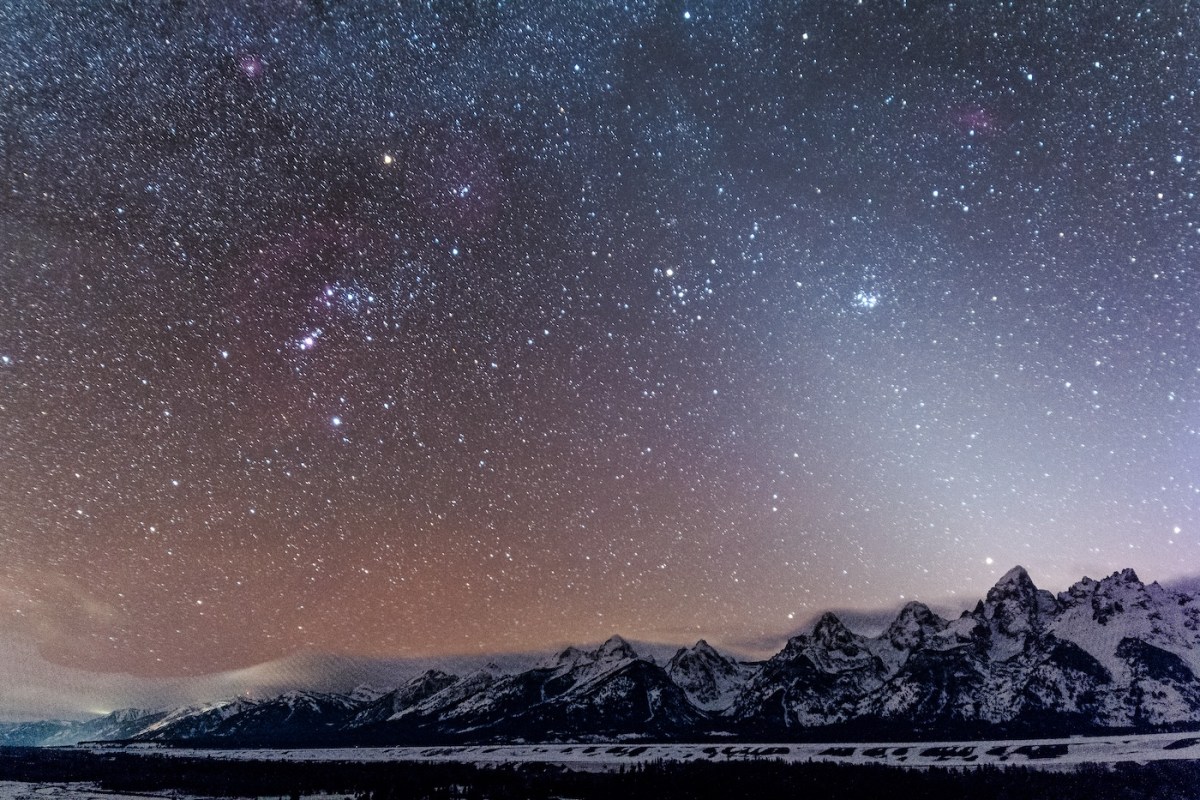
Walk outside in most Wyoming cities on any clear night, and you’ll likely see stars, maybe even a few constellations like the Big Dipper or planets like Mars. What you won’t likely see is the bright band of the Milky Way, our own galaxy’s central disk.
You’re not alone; 80% of the people in the U.S. don’t see the Milky Way.
Light pollution from parking lots and homes, commercial buildings and subdivisions is so bad that 99% of people alive today don’t experience complete natural darkness.
While globally those statistics are only getting worse, some areas show signs of improving, and one of those spots is a small slice of northwest Wyoming.
In April, Teton County became the first county in the world to receive a Dark Sky designation, meaning over the next five years, the county will make significant strides to darken its night sky.
“The designation is supposed to be a catalyst for change,” said Samuel Singer, founder and executive director of the Jackson-based organization Wyoming Stargazing. “It’s supposed to get people excited about voluntarily changing their lighting at their personal homes and residences and places of business.”
So while on the ground, it means changing lightbulbs and fixtures, in the sky, it means reconnecting with the stars that we come from, he said.
“The stars are etched into our DNA, all the chemical compounds found in our bodies, all of the atoms other than the initial hydrogen and helium that existed shortly after the big bang, were all forged in the cores of dying stars,” said Singer. “We are star people.”
Why it matters to see the night sky
A state like Wyoming should be prime for night sky viewing. It’s rural with generally minimal cloud cover. But even here, even high in the mountains, it’s difficult to escape the glow from cities.
And that matters both for how we connect with the night sky and also how wildlife survive.
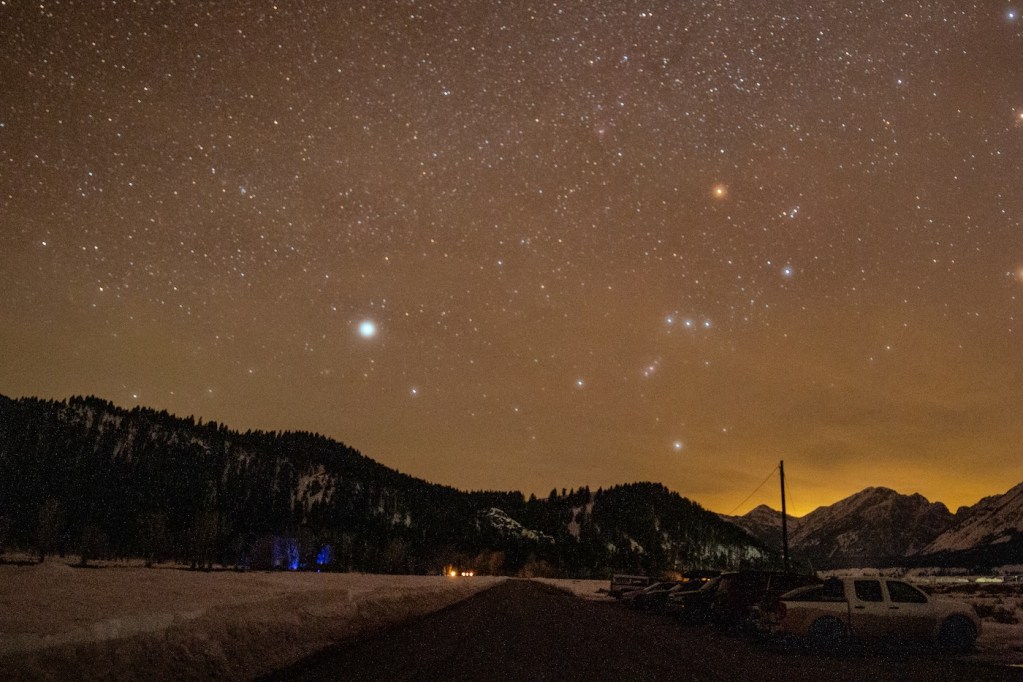
Animals from the smallest insects to the biggest mammals evolved with photo periods, essentially living, eating, flying, sleeping, walking and exploring by light or darkness created by sun and moon cycles, Singer said. Change that light and wildlife don’t know how to respond.
Baby sea turtles scurry inland instead of to the ocean, mistaking manmade lights for the moon. Moths become trapped in lights, flying and fluttering until they die, unable to escape the artificial pull. Migrating birds and bats become blinded by city lights, veering off track and often perishing, according to DarkSky International.
Those changes ripple through environments. Fewer moths and other pollinating insects mean fewer crops. Fewer bats and birds mean more unwanted insects. The list goes on.
Countless studies have also been done on the importance of light and dark cycles for our own bodies. Artificial light has contributed not only to sleep disorders but also diseases like depression and diabetes.
The answer, however, isn’t to snuff out all our lights and reverse time by several centuries. It’s to use light smarter, experts say.
Using light intentionally
Unfortunately, light pollution is only increasing. And the results are tangible. A child born today might see 250 stars at night. Fast forward 18 years, and that same child will likely only see 100 stars, said Michael Rymer, a program associate with DarkSky.
But finding a solution isn’t actually as hard as it seems. And contrary to popular belief, more light doesn’t equate to more safety. Bright lights may even make areas more dangerous at night. That might sound counterintuitive, so here’s an explanation.
Think about driving down a highway and an oncoming car still has its brights on. You’re temporarily blinded, unable to see to the sides or in front of you. And understandably annoyed. The same goes for bright lights on streets, buildings and parking lots. Not only do they make it harder for us to see, they also create harsher contrasts and deeper shadows, creating places for people to hide, Rymer said, and increasing possibilities for vehicle and wildlife collisions.
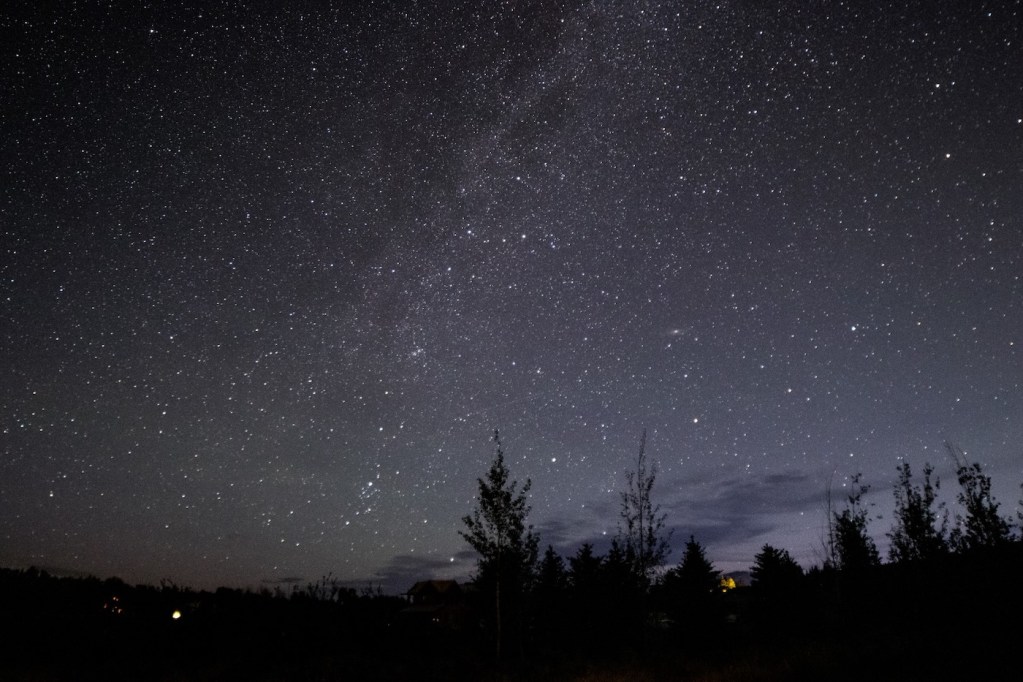
That’s why DarkSky International advocates not for less lighting but more intentional lighting. Their certification requires cities, towns, airports, parks or counties to craft plans to retrofit public lighting and ordinances that govern future lighting. The certification doesn’t ban lights in cities, Rymer said.
It first asks the area’s governing body — whether a state park, county or city — to inventory all of its public lighting. The program then includes suggested changes: using dimmers, changing fixtures to shine light down instead of up into the sky, using softer light like amber instead of harsh white light, and installing timers or motion sensors. And yes, sometimes it means removing unnecessary lights.
In Jackson, for example, the city parks department realized it had a light on a park maintenance shed, said Erik Kimball, Teton County’s sustainability coordinator. Park staff didn’t need to access the building at night, so they removed that fixture, and the stars viewed from the park became just a little bit brighter.
Where to go
Teton County, the town of Jackson and the Jackson Hole Airport, which was the first Dark Sky-designated airport, aren’t the only places in Wyoming embracing the call of the night sky. Sinks Canyon State Park was, in fact, the state’s first Dark Sky designation. And for people who want to view the night sky and the Milky Way, Singer recommends going anywhere from Devils Tower to the Bighorns to the Red Desert.
The higher the elevation, he said, and the farther away from artificial light, the better.
Singer and others are also turning their sights to the entire Greater Yellowstone Area for the next possible certification.
“I know there is a way to illuminate our cities safely and preserve our dark night skies,” Singer said. “We have examples of how that works. It’s about political will and education and science.”
And lastly, he said: “Don’t forget to look up.”


Glad that the county got the dark sky designation.
I lived in Jackson from 2000 to 2011 and was vice president of the Jackson Hole Astronomy Club. We set up our telescopes and gave “star parties” at various places, and businesses around the county as well as in GTNP.
However, the city of Jackson has a long way to go to preserve the night sky. The City installed or allowed some of the worst kind of lighting to preserve a dark sky. One of the worst examples is when the city installed new lighting on north Cache going out of town. They installed old fashion globe lights which spread light sideways and vertically instead of down to illuminate the street. An example of this bad lighting is in front of the Kudar hotel, 279 N. Cache.
Another example is in front of the Sidewinder Grill. There is a spotlight which points upwards to illuminate the US flag (by law, any flag left up overnight should be illuminated). The flag should be taken down daily and the spotlight turned off.
Due to poorly designed lighting, the faintest star you can see in Jackson is magnitude 3.5. At Jenny Lake, I could regularly see magnitude 6 to 7, highlighting the difference.
The best lighting should be fully shielded and illuminate the ground underneath the light.
I hope the dark sky designation will motivate the city and it’s residents to be better stewards of dark skies. Dark skies are as great a natural resource as GTNP and Yellowstone NP!
I had visitors from Ohio who were stunned to see all the stars we can see in Wyoming. As a home owner it would be good to know owner what kind of outdoor lighting could be used to enhance the star gazing in our neighborhood. Very interesting article. Thank you.
With nearly half of the residences vacant much of the year, keeping the lights out shouldnt be too tough.
In between jets landing in the national park, the sea turtles will celestially swoon.