


Joe and Karen Rankin’s ranch, just north of Douglas, has been in the family for 80 years. As Joe Rankin manages the ranch, he keeps track of any oil drilling underneath their land. But, due to a controversial federal proposal, his ability to influence or even comment on such operations may soon evaporate. His property and others nearby are already impacted by drilling.
“Some spots in my area right now look like a spaghetti bowl from all the pipelines that are going through,” Rankin said.
Tracking drilling, for Rankin, also means managing environmental consequences and personal headaches. Leaks from abandoned or “orphaned” wells affect his cattle and cause bovine health issues, he said. At one point during a blizzard, his herd ended up stranded in a ditch where developers were trying to build a pipeline. Another time, he found Bureau of Land Management officials driving across his pasture and had to convince them that they should not be there.
Rankin’s property is a “split estate,” meaning that he and many of his neighbors do not own the rights to the minerals underneath their ranches. The mineral rights — which are owned, in this case, by the BLM and leased to interested oil and gas companies — are separate from surface rights to the ranch’s grass, soil and buildings. And mineral rights are dominant over surface property rights, meaning that the companies that acquire them often have the ability to access surface property and house equipment there, even if the landowner objects.
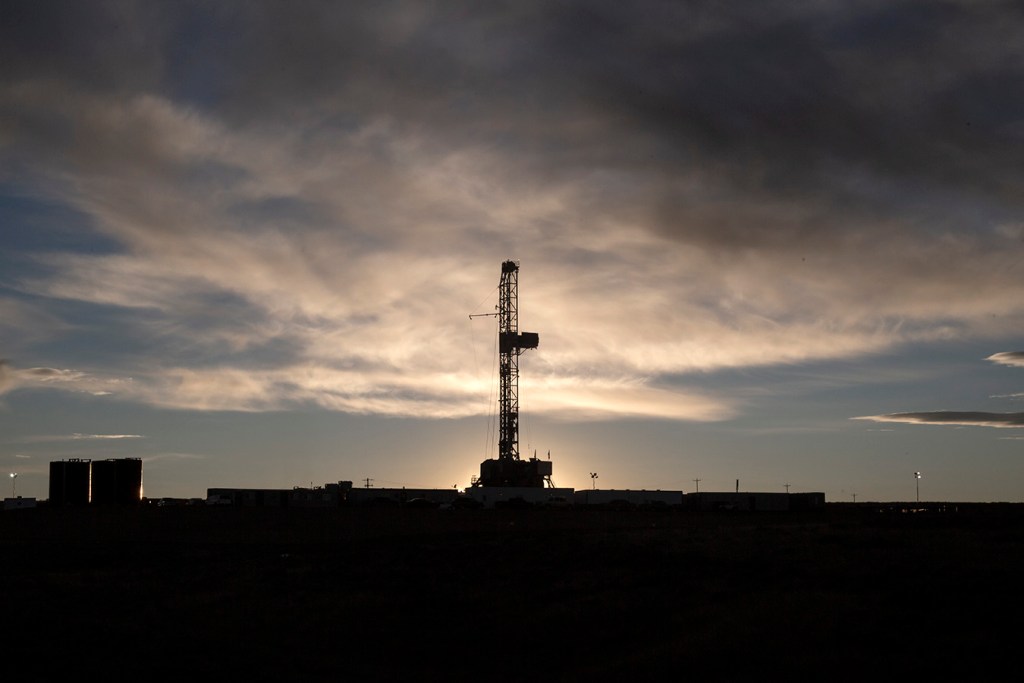
Historically, the public has been given a total of 90 days to weigh in on any leasing of BLM-managed minerals. Oil and gas companies were also required to identify surface owners whose land may be impacted by proposed underground development, and the BLM was required to notify them. But soon, Rankin and other Western landowners may lose that right: In a June leasing proposal, the BLM proposed reducing the general public comment period to 10 days and eliminating the landowner notification requirement for split-estate land. Separately, the agency also wants to reduce the minimum bonds companies are required to pay in case drilling is abandoned without environmental cleanup. The changes would apply to oil and gas as well as to other subterranean natural resources managed by the agency.
The public comment window for the BLM’s proposed changes ends Monday. Comments are accepted here.
Industry interests praised the proposal as beneficial for smaller companies and important for growth. But many landowners and local government officials say the proposal will remove public input, impede landowner rights and jeopardize community health.
Wyoming’s influential ranching lobby opposes the changes to public comment, and Douglas Mayor Kim Pexton, Montana state Rep. Shelly Fyant and New Mexico rancher Don Schreiber penned a joint op-ed in WyoFile criticizing the split estate proposal and the other two changes. All told, there are nearly 58 million acres of split-estate land across the U.S., an area roughly the size of Wyoming. Montana and Wyoming have the two largest amounts: over 11 million acres, an area five times larger than Yellowstone National Park and the Wind River Reservation.
‘Count your fingers’
The division of land rights is common in the rural U.S., especially in the West. It’s partly a relic of early 20th-century policy intended to promote Westward expansion while preserving underground minerals for extraction. North of Douglas, most landowners own split-estate land, according to Rankin. Wyomingites and other Westerners have spent decades in state legislatures and courts battling over whose rights take precedence: companies’ or landowners’.
The proposed changes in split-estate management align with the Trump administration’s long-stated goal of bolstering and deregulating the energy industry. In a press release announcing the proposal, the Interior Department, which oversees the BLM, said it expects the change to benefit small oil and gas companies.
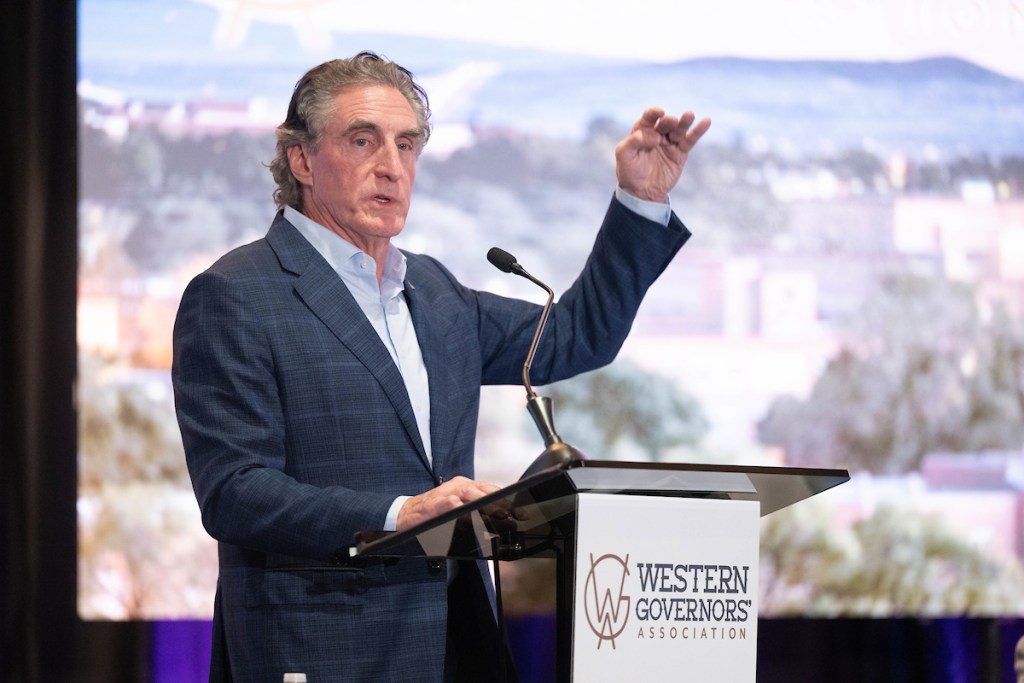
“These targeted updates cut through the red tape that has historically deterred investment, ensuring our public lands remain a reliable engine for economic growth and innovation,” Interior Secretary Doug Burgum said.
Rural communities will be impacted the most, according to Gwen Lachelt, founder of Western Leaders Network, which advocates for conservation and democracy. She added that the proposal represents a notable change from the BLM’s previous values.
“This has always been an agency that has been difficult to work with, but it has been an agency in the past that has valued the input of the public and has respected landowner rights,” Lachelt said.
For the most part, Rankin said, working with the BLM and with drilling companies has been amicable. But the experience can vary depending on the company.
“One company just falls over backwards to take care of us,” he said. “Another company, when you shake hands, you count your fingers when you’re done to make sure you have them all.”
Public comment
When companies express interest in leasing and extracting underground minerals, the BLM currently requires firms to identify surface landowners who may be impacted. The BLM is then required to notify those landowners, often ranchers, with a letter or a phone call.
Separately, the agency currently offers three 30-day periods for public comment on all leasing: during the initial scoping period, after an environmental review and then a final opportunity to protest. The proposed changes would reduce the public input period to 10 days by eliminating the first two comment periods and cutting the final protest window by two-thirds.
Jim Magagna, a rancher from Rock Springs and executive vice president of the Wyoming Stock Growers Association, called the proposed public comment reduction unreasonable.
“Our people are out busy,” Magagna said, occupied with “haying, or they’re feeding cows, or they’re calving, or they’re shipping. And a 10-day comment period?”
By ending landowner notification requirements and slashing the comment window, the BLM is essentially removing landowners’ right to comment, Magagna said. At a minimum, he added, surface owners should “definitely” be notified before minerals are put up for lease.
The BLM, meanwhile, says it doesn’t plan to notify landowners because the Mineral Leasing Act, which governs extraction on public land, doesn’t require the agency to do so. Notification, the BLM says in federal documents, “imposes undue burdens on the oil and gas industry.”

Public comment doesn’t just benefit landowners with concerns, Lachelt said. It is also good for companies that may have overlooked details of their drilling plans.
“I’ve worked with really incredible federal personnel with the BLM who take every single comment to heart, and they have improved applications immensely based on public feedback, because no one knows their land better than those people who are being directly drilled on,” she said.
BLM officials said the reduced comment period is designed to eliminate repetitive review, and that the concerns raised in public comment periods can likely be addressed through other elements of the leasing process, like larger-scale land-use planning.
“Shortening the protest period from 30 to 10 days streamlines the lease‑sale process while preserving opportunities for public input at other stages,” a BLM spokesperson told High Country News in a statement.
Bond levels
The June announcement also proposed a change to the bond levels implemented by the Biden administration, which received widespread media coverage at the time. In contrast, the recent Trump administration proposal has received far less fanfare; many Douglas landowners had not even heard of the proposal several weeks after its release. Bonds act as collateral, charged in case a company abandons a drilling site without proper environmental cleanup. The bond money is used to plug orphaned wells and repair any environmental damage.
“That is a worst-case scenario, and it is something that we work hard within our organization, within our industry to avoid,” said Aaron Johnson, vice president of public and legislative affairs with the Western Energy Alliance.
A 2023 U.S. Geological Survey analysis documented over 1,000 orphaned wells in Wyoming alone, with thousands more scattered across the West, though the study found that the rate of “orphaning” appeared to decline with newer wells. In federal documents, the BLM acknowledges that reducing the bond amounts may delay orphaned well reclamation.
From 1951 to 2024, the federal government set bond levels at $25,000 for statewide leases. In 2024, the Biden administration raised that amount to $500,000 to address inflation and prioritize covering the costs associated with cleanup.

If adjusted just for inflation, the U.S. Government Accountability Office estimated in a 2019 report that statewide bond amounts would be around $198,000. Rankin, the Wyoming rancher, supports a higher bond level.
“It gives them more incentive to care,” Rankin said, speaking of private companies.
But the Western Energy Alliance’s Johnson called the Biden-era bond increase excessive, adding that the Trump administration’s proposed reduction would likely benefit small- and medium-sized companies.
“Going from $25,000 to $500,000 is punitive, and that half a million dollars is just sitting idle,” Johnson said.
The BLM agrees.
“Returning minimum bond levels to $10,000 for leases and $25,000 statewide reduces barriers for smaller operators while continuing to ensure adequate reclamation coverage,” the agency spokesperson said.
This story was produced as part of the Western Environmental Reporting Collaborative, a partnership between Wyoming Public Media, High Country News, Report for America and local news organizations across the West.
Correction: This story has been updated to correct Karen Rankin’s name. —Ed.


If anything bad happens with water, land etc., we have that great Argentinian beef to fall back on.
eyeroll
Now retired, I represented large ranches, small oil & gas operators, larger gas companies and service companies in Wyoming for decades. Assuming that the author correctly stated the facts, I have some strong suggestions. Well bonding has always been inadequate to cover plugging and abandonment costs. Large operators sell depleted fields to inadequately capitalized small operators who frequently default on reclamation duties, leaving the taxpayers and the minimal Wyoming Oil & Gas Commission reserves to clean up. Many CBM and oil fields are never cleaned up, just ask landowners stuck with the mess. It costs $30,000-$50,000 to fully clean up a CBM location and three times that (or more) to properly plug an oil well. Bonding is an ordinary cost of business, not an excessive burden. And the idea of not notifying landowners prior to approval of drilling plans is just plain stupid. Ranchers need to protect their livestock and water sources, and can provide valuable advice about terrain and other local factors which can affect the cost of setting up drilling pads, roads and pipelines. Burgum and the BLM know better; they are just caving in to idiotic suggestions.
Folks, you get what you vote for. I would bet that most if not all of these ranchers voted for Trump. All in the name of having an R by the name. Shameful and stupid.
Over 1,000 ‘orphan’ wells at the $10,000.00 bond? Doesn’t sound like that’s working out too well. And now a proposal to lower that! C’mon! A company would have absolutely no reason to reclaim a site!
Most of the stockgroaners voted for this . . . many also campaign-funded it.
When all those RINO ranchers voted for Trump, what part of “Drill Baby Drill” did they not understand? Sounds like they want drill baby drill, but only if it’s on someone else’s land. Gas prices won’t come down while we are still at war with Iran. At least the 300,000 tons of foreign beef to be imported and sold below market value might help us save a little money so we can afford gas.
As soon as I read your headline I checked Washington Gov sites and found instantly the issue bring is OMB Russel Vought.
Me: Has vought been bothering the BLM?
Response: Yes—Vought’s OMB has bothered the Bureau of Land Management quite directly.
In August 2025, OMB instructed BLM to stop or restrict spending connected with:
Renewable-energy projects
Wilderness management
Cultural-resource protection
Land acquisition
Wild-horse and burro management
Certain contracts, cooperative agreements, travel and routine obligations
This was more than a proposed future budget cut; it was an operational spending directive affecting money already available to BLM. E&E News report
Vought’s FY2026 budget then proposed reducing BLM from roughly $1.4 billion to $936 million—about one-third. Conservation programs alone faced a proposed $198 million reduction. The underlying objective was fairly clear: weaken conservation, renewable-energy and land-protection functions while redirecting BLM toward faster oil, gas, mining and timber development. Official DOI budget request
However, Congress largely stopped the budgetary demolition. The enacted FY2026 legislation gave BLM approximately $1.3 billion—$479 million more than Vought’s request—and specifically retained money for conservation, threatened species, trails and renewable energy. It passed the House 397–28 and the Senate 82–15. Congressional appropriations summary
So the short version is:
Vought attempted to starve BLM’s conservation side and turn it primarily into an extraction-permitting agency. Congress restored most of the money, but the administration has continued changing regulations, priorities, personnel and land-management plans from inside the agency.
==============
That said. Most of what Vought has claimed or ordered threated is unconstitutional. He is in the Executive Group. Like the Pres. They have no power over laws, altering laws, removing your funds, making you promote Trump’s Policies, none of that. However, Call Your Senator, and tell them what is going on. Ask for clarification. Call the GoA and ask the same questions.
I’m on my way to my Substack site to write this up. I’m writing you directly because I guessed that no one in Congress has bothered giving you a call.
I hope you are bothered less in the coming year
Glenn Hefley (just a writer)
The problem is you voted for Trump.
Please remind me – who did they vote for again?
Private (surface) property rights be damned! Keep voting Republican, there won’t be anything left to worry about.
Meh, I’ll bet about 99% of the ranchers complaining about this are simply getting exactly what they voted for. Trump.