


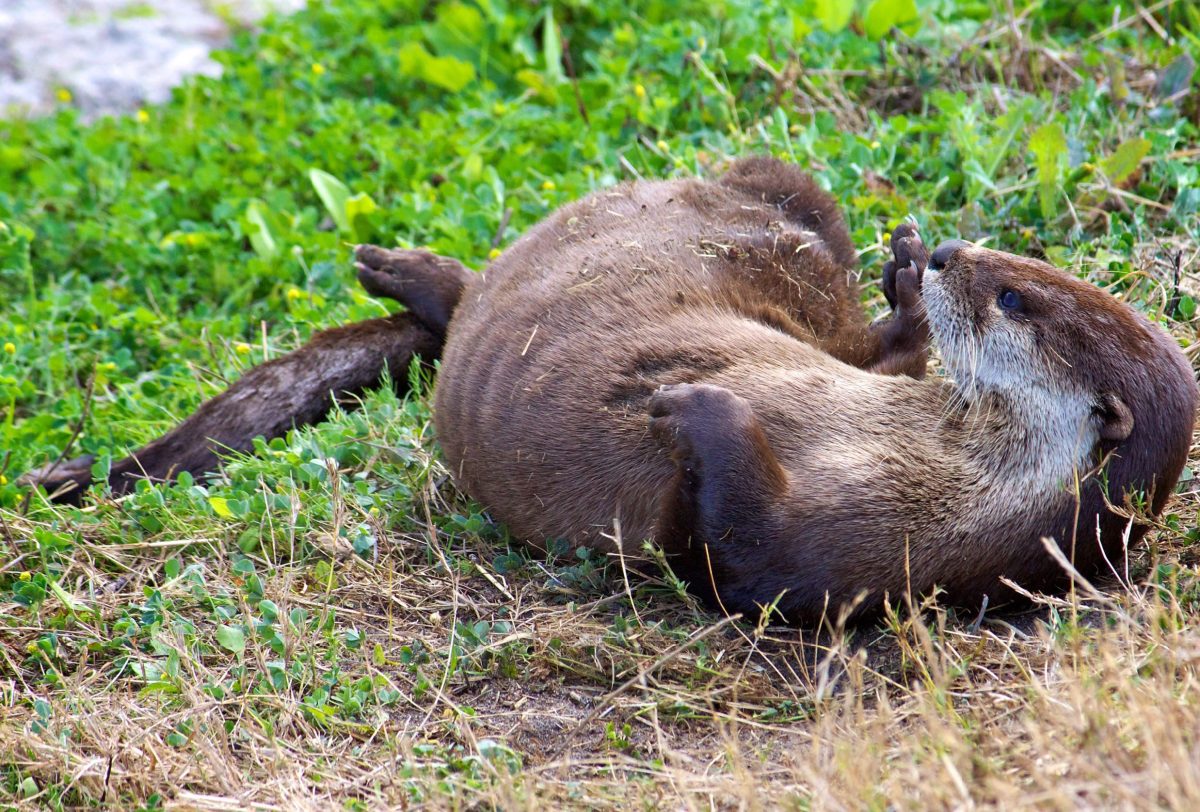
House Bill 45 – Removing otters as protected animals is fewer than 100 words, yet still manages to speak volumes about what Wyoming values and what it doesn’t.
Opinion
The measure, to be considered in the upcoming 2025 general legislative session, proposes striking otters from the list of “protected animals” in Wyoming statute 23-1-101, a list that also currently includes black-footed ferrets, fisher, lynx, pikas and wolverines.
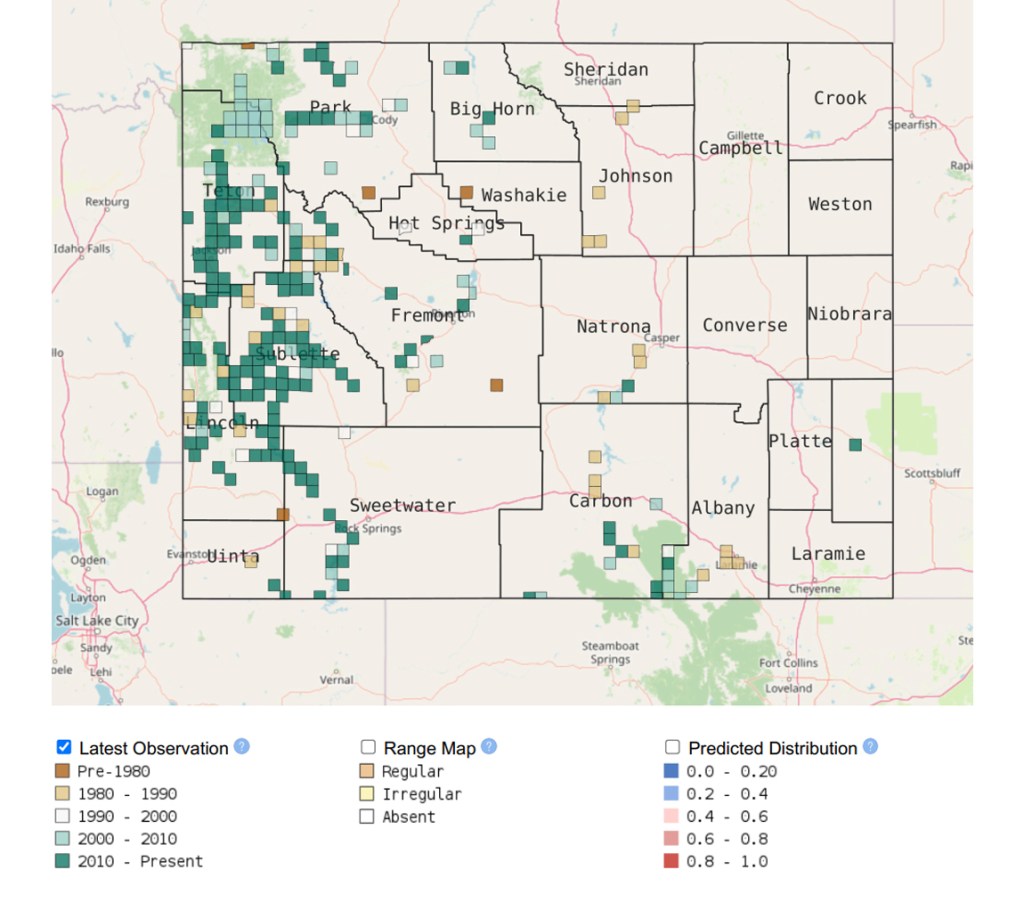
By removing North American river otters from the protected species list, the bill’s 11 sponsors seek to legalize the killing of Lontra canadensis, a practice prohibited in Wyoming since 1953. It is an extraordinary move, given that we lack robust estimates of their abundance in Wyoming. They are most common in the Yellowstone, Green and Snake River drainages, and are rare or absent from all others. Their spread along waterways in Wyoming is painstakingly slow, especially compared to the recovery of otters in surrounding states. Why? This is unclear, although oil and natural gas development is likely affecting the species along the Green River. Declines in native fishes may also be responsible for the limited recovery of Wyoming’s otter populations.
The sponsors offer two reasons publicly in support of the bill.
One is that otters are making a tentative recovery in Wyoming. Having been extirpated over much of the state, their numbers have slowly increased, particularly in western Wyoming. Unlike the neighboring states of Colorado, Kansas, Nebraska and Utah, where otters were extirpated, Wyoming never wiped them out completely. We can thank that stroke of luck to the creation of Yellowstone and Grand Teton National Parks, which served as de facto wildlife refuges. In the last 70 years, the species recolonized some of its old haunts, in parts of Lincoln, Sublette and Sweetwater counties.
Another stated reason for the bill is the supposed “nasty disposition” of otters. They may bite trespassers in their habitat, regardless of whether they are the two-legged or four-legged variant. Rep.-elect Mike Schmid (R-Pinedale), one sponsor of the bill, likes to mention an incident in which several youngsters took a float trip near La Barge some years ago. They got bit. Such attacks on people are extremely rare. Only 44 cases of otter attacks have been published worldwide since 1875, compared with over 4.5 million dog bites annually in the U.S. A bite from an otter, which weighs as much as a cocker spaniel, may land you in the emergency room, but it’s unlikely to put you between two planks. The risk of such bites can be minimized by exercising common sense around their habitat, particularly when they have kits. Otters, like other wild mammals, may run and hide, or defend themselves. As Wyomingites, isn’t that their right under the state’s stand-your-ground law?
But sticking up for themselves isn’t otters’ only offensive quality. Schmid also seems troubled that otters eat fish and might discover his brother’s artificially stocked pond.
There is a third reason for this bill. It is one to whisper quietly, as it is the most important. Otters are a resource, like land, minerals, timber, water or grass. Trappers want access to what they believe is a recovering species. Otter pelts retail for $90 – $150. Trapping native furbearers is considered a healthy recreational pursuit — for the trapper, if not the animal. Trappers are a small, influential constituency for the Wyoming Game and Fish Department. Bowing to their wishes was a recurring theme of Brian Nesvik’s tenure, the recently retired director of WGFD. It has been a long, slow road to get WGFD, and its commissioners, to agree to minimal reforms to the state’s trapping regulations, such as setbacks of traps from public trails.
Trapping was one of the main methods of otter extirpation across North America in the last 100 years. The species recovered in neighboring states through expensive reintroduction efforts that lasted decades. So, as soon as the species shows signs of recovery in Wyoming, our first official response is to resume harvesting pelts? There is something amiss with this kind of stewardship. It is more akin to ecological vandalism.
Thanks to research biologists like Merav Ben-David and her students at the University of Wyoming, there is a growing understanding of otters’ critical role in maintaining ecological integrity and supporting the biological diversity of our landscapes by moving nutrients from aquatic environments to riparian riverbanks. The presence of otters and beavers is a sign to land managers that riparian areas are in good shape. They are likely to remain so, provided keystone species like these are allowed to flourish.
Bob Budd, a Wyoming writer, the chairman of Wyoming’s Sage Grouse Implementation Team, executive director of the Wyoming Wildlife and Natural Resource Trust, as well as a former rancher. He has a strong and practical interest in ecology. In an eloquent set of essays about land management called “Otters Dance: A Rancher’s Journey to Enlightenment and Stewardship,” Budd asked: what are river otters worth in a landscape?
My best guess as a retired veterinarian: River otters alive are worth considerably more than a bunch of trophy pelts.

I ♡ Otters¡¡¡¡¡
It is Wyoming so don’t expect much as far as animals go
Removing an animal from the protected list for no other reason than to allow them to be trapped ?? That just sounds wrong on so many levels.
The filed bill (45) simply deletes the word “otter” from the protected list. No mention of adding them to the list of furbearers, where they could be trapped.
So, would that mean they would be treated like predators? Then they could be killed at any time by any means. Maybe a new Wyoming sport could be created. namely running down otters with jet skis; the only stipulations being you can’t have it in possession, even if only to take it out for a drink.
As to the issue of trapping, about 10 years ago I came upon a fawn deer caught in a coyote trap, less that 50 feet from a road. I got it out of the trap, but it was too weak to move. I contacted Game and Fish and the fawn was eventually put down. Now I have known a lot of responsible trappers and respect their right to do so. I have enjoyed hunting and harvesting deer since the 1960s. This one incident by an irresponsible trapper has left a sour feeling in me.
In reference to proposed House Bill 45 dealing with river otters, have we become so greedy as humans that we can’t share our waters and resources with wildlife?
More often than not, when the Wyoming legislature starts in on wildlife issues, I cringe at the thought off what will they think of next, and here we have proposed House Bill 45 dealing with river otters. Have we become so greedy as humans that we can’t share our waters and resources with wildlife? As a retired Wyoming Game Warden, I had a chance to wander a lot of southwest Wyoming and have observed otters from LaBarge Creek to Flaming Gorge Reservoir, including several on the Seedskadee National Wildlife Refuge. I’ve seen them catching and eating crawfish and fish, generally carp, white suckers, and sculpins.
I’ve heard stories about otters eating trout from privately stocked ponds. I guess if I build a pond in an area where animals that prey on fish live, and get permitted then stock it at my expense, can I expect the legislature to help me solve my problem if some of my fish disappear? And if otters sometimes hurt people, should we make it easier for them to be killed? What about other species of wildlife that occasionally hurt people?
I spent quite a bit of time during my career checking traps and trappers, and I guess I’d have a little more sympathy for them and their ability to catch certain species of wildlife if some (not all) were a little more ethical and used a little more care in their activities. Trapping is hard work and can be expensive. Marking traps, checking traps regularly, setting and maintaining snares, things like that are required. I guess since many of the trapped animals have fangs and claws and eat animals that we like, are we supposed to look the other way when some trappers don’t follow all the rules.
River otters have been protected for a lot of years for a reason. Let’s not get hasty about taking that protection away. I still enjoy watching several on a semi-regular basis along the Green River Green Belt trail near the town of Green River. I’d like to be able to continue watching these amazing creatures.
Once again, Wyoming, elect idiots, expect idiocy.
Money talks.and tells dirty tales. Great write up and thanks for publishing these nefarious efforts to harm more wildlife.
For Pete’s sake, leave the otters alone. They are part of our ecosystem. PS, there are far more important matters to address in the legislative session than otters.
Sienna, I agree. ‘Tis small beer compared to stuff coming down the pike in the 2025 legislature.
It is a big issue for river otters. They may not follow draft bills or read WyoFile regularly, but they can read a riparian habitat. They let our species know when it is recovering. This is no small thing.
An aside: I heard yesterday that poorly-set traps caught one dog on a ski trail at Chimney Rock and another in Happy Jack, both in southern Albany County. Our failure to properly regulate trapping has effects big and small for multiple species, big and small.
My apologies, Serena, for getting your name wrong.
Wondering if this is what we should expect out of the Freedom Caucus.
Thank you Donal O’Toole for this intelligent and thoughtful article. Not that it will have any impact on Mike Schmid or any other trapper. Wyoming trappers are motivated by money and to that end are a scourge on Wyoming wildlife. Also a scourge on family pets and wildlife who are not permitted to be trapped, although WGFD wouldn’t know it because trappers don’t report these illegally trapped animals as is required. I am hoping the science will prevail and the legislature will kill this bill – but many members of the legislature – including Mike Schmid – aren’t moved by science if there is money involved. So sad.
Thank you for the notice of this proposed bill. In my family, every (live) otter sighting is a delight and fond memory.