


A legislative task force is considering ways to improve a law designed to keep Indigenous children connected to their families, communities and cultures amid custody disputes.
The Indian Child Welfare Act of 1978, which set federal standards for custody proceedings involving children from federally recognized tribes, was recently upheld by the U.S. Supreme Court’s ruling in Haaland v. Brackeen.
Uncertain how the high court would rule, the Wyoming Legislature enacted a mirror version of the federal law during the 2023 session in the event federal protections dissolved.
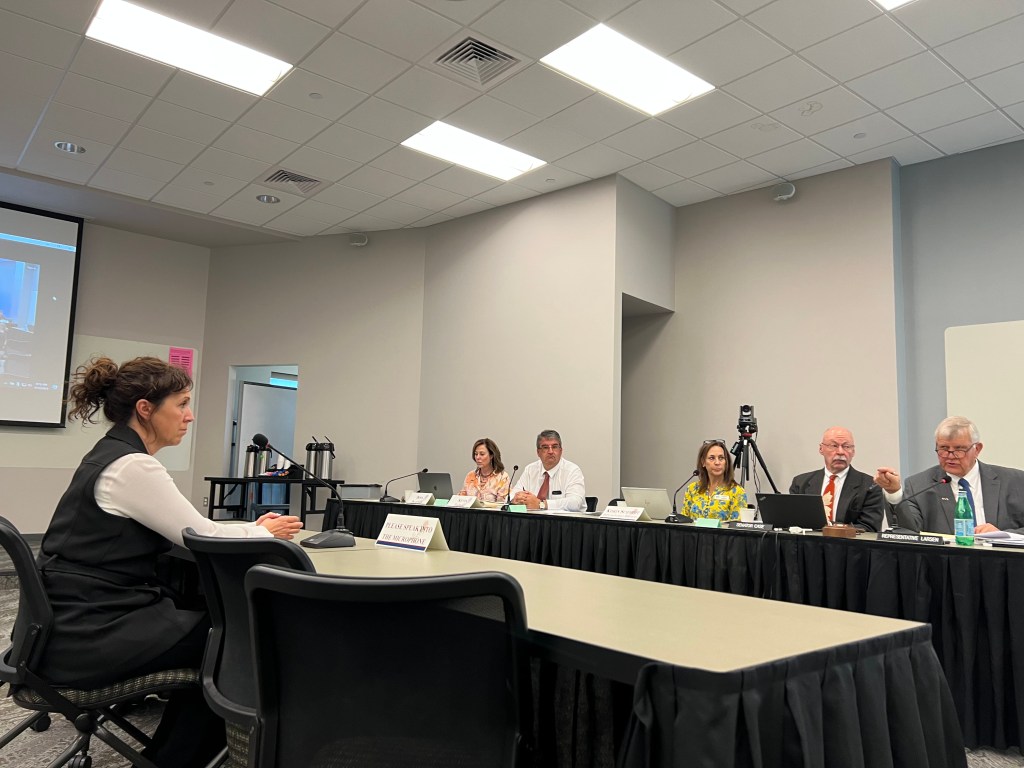
That state law is set to sunset in 2027, so the Legislature formed a task force to consider more permanent solutions. The panel met publicly for the first time on July 12. With the federal law now on sure footing, the committee focused instead on closing legal gaps that still lead to kids entering state or other non-tribal custody. The panel also considered enhancements that have been successful in other states.
Juvenile delinquency and other instances of state custody
Before Congress passed the Indian Child Welfare Act, more than a third of Indigenous children had been removed from their homes and placed in non-Indian homes or institutional settings. Seeking to end this systematic disruption of Native American families, the law gave preference to tribes when an Indigenous child is involved in a custody proceeding pertaining to child-welfare issues such as adoption, abuse and neglect.
In simple terms, it established a priority for placing children with, first, a member of an Indigenous child’s extended family. If that’s not an option, the child would next go to another member of their tribe, or if that’s not possible, a different tribe.
To achieve that end, the law requires the agency handling proceedings for an issue such as neglect to notify the relevant tribe so its members can either participate or transfer the case to their tribal court.
As it stands, the federal law only applies in cases involving adoption, abuse or neglect. For most of the meeting, the panel debated a provision in state law that also subjects juvenile delinquency cases to the family- and Indigenous-first priority.
That provision requires tribes be notified of court proceedings in delinquency cases involving their children, in the event they want to transfer the issue to their tribal courts or have a say in the proceedings. Federal law makes no such requirements.
This inconsistency resulted from an oversight while drafting the legislation and should be removed, said Korin Schmidt, director for the Wyoming Department of Family Services and a member of the panel.
“We think it was just a matter of how quickly this all came about,” Schmidt said.
But other task force members believe its inclusion can strengthen tribal say in any question of state custody.
Delinquency resulting in juvenile incarceration is no small consideration in Wyoming, as the state has one of the highest youth incarceration rates in the country.
A census in 2019 revealed that Indigenous children were incarcerated at a greater rate in Wyoming than any kids of any other ethnic or racial groups — and at a rate four times higher than their white peers.
Some of the juvenile placements can last for years, so the desire for tribal oversight makes sense, said task force co-chairman Rep. LLoyd Larsen (R-Lander).
There is already a blueprint for tribal involvement in delinquency cases in Fremont County and Hot Springs counties, home to the Wind River Reservation, where special contracts allow for close interaction between tribal governments and district courts.
In both counties, all child welfare cases are directly transferred to the Northern Arapaho or Eastern Shoshone family services departments rather than the state agency.
Further, juvenile delinquency cases can also then be transferred to internal tribal courts if the tribe requests to do so.
That policy does not, however, apply statewide.
“We have a great working relationship with Fremont County and Hot Springs County, however, we need to expand that,” said Karen Returns to War, the co-chair of the Northern Arapaho Business Council.
“Hopefully, the rest of the counties in the state of Wyoming are going to abide by the same qualifications, and the tribes will have more say regarding the placement of our children,” Returns to War said.
The question of state custody over child placement also emerges in the case of the safe haven law, applied when a child is relinquished after birth, said Jennifer Neely, the state ICWA coordinator and tribal liaison from the Department of Family Services.
“The hope is, perhaps while we’re evaluating the ICWA statute and potential that maybe we could also use this opportunity to enhance some of our existing [laws] to support it,” Neely said.
The task force did not reach any conclusions at the July 12 meeting, but plans to bring amendment proposals to the panel’s next gathering.
Other states
Since Congress passed the law more than four decades ago, other states have made their own changes. Wyoming is considering incorporating some of them.
Clare Johnson, attorney for the Northern Arapaho Business Council, proposed adopting two changes made by the state of Washington. Both would strengthen the abilities of tribal attorneys during proceedings tied to the law.
One proposed amendment would allow tribes to define terms for custody placement beyond the federally applied standards, said Johnson, citing the consideration of geography as one example.
She also raised the issue of allowing tribal attorneys to practice across state lines, even where they are not licensed, for the purpose of cases involving the law.
“It saves the tribe a lot of money,” Johnson said. “Instead of having to find local counsel, pay pro hoc fees, I can be admitted solely to represent the tribe for the purpose of an ICWA case.”
This provision in Washington and Nebraska has permitted Johnson to litigate such cases there.
Beyond Wyoming
If the task force elects to clarify and strengthen the application of the Indian Child Welfare Act, its decision extends beyond the Eastern Shoshone and Northern Arapaho tribes to affect all federal tribes represented in the state.
For example, if the state law’s delinquency inclusion holds, Wyoming will be required to notify a tribe — whether, say, in Arizona or North Carolina – whose child is brought before a Wyoming court.
It will be important to streamline the process of notifying tribes in states where the law applies differently, Neely said.
The task force is next expected to meet in late August or early September.

This article clarified the difficulties some Tribes encounter in addressing oversight of their future generation. There should be one set of notification regulations so that all Tribes are treated equally.
Great informative article. Thanks!