

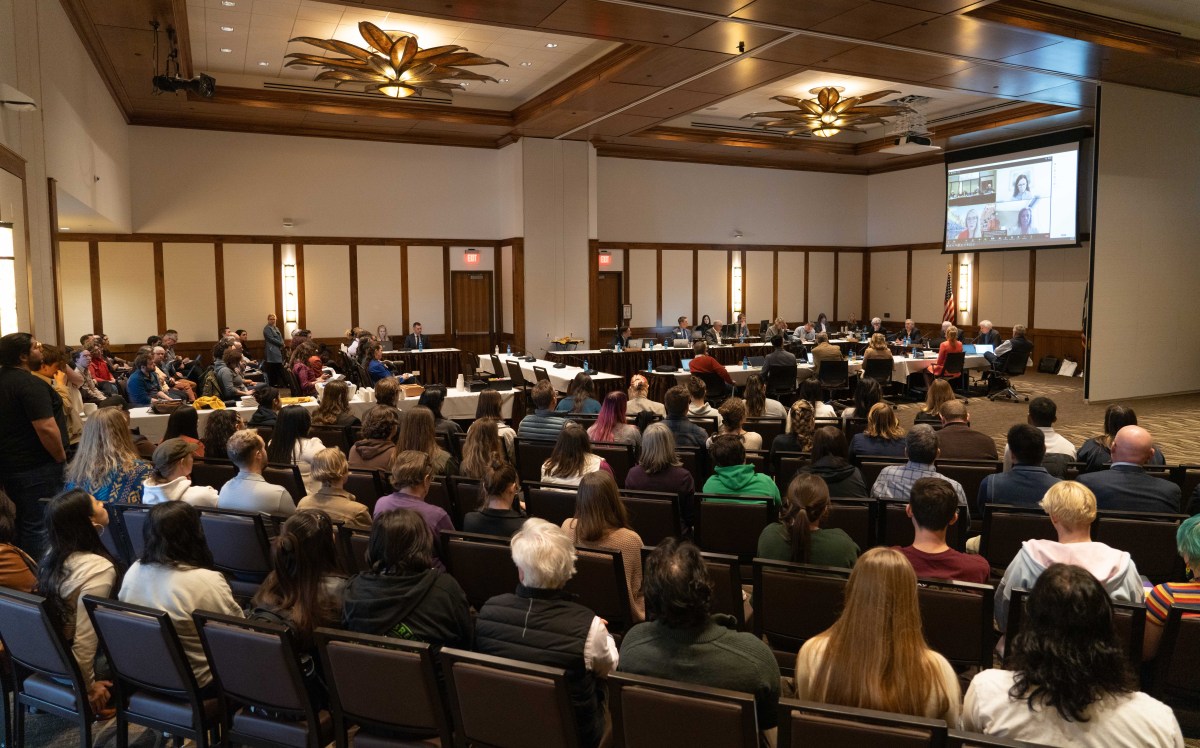
University of Wyoming trustees heard their community’s pleas Thursday, vowing to find ways to preserve what they consider essential programs that are housed in the school’s Office of Diversity, Equity and Inclusion.
This comes after the Wyoming Legislature passed a budget item that restricts UW from spending state money, endowments or matching funds on the DEI office and DEI resources.
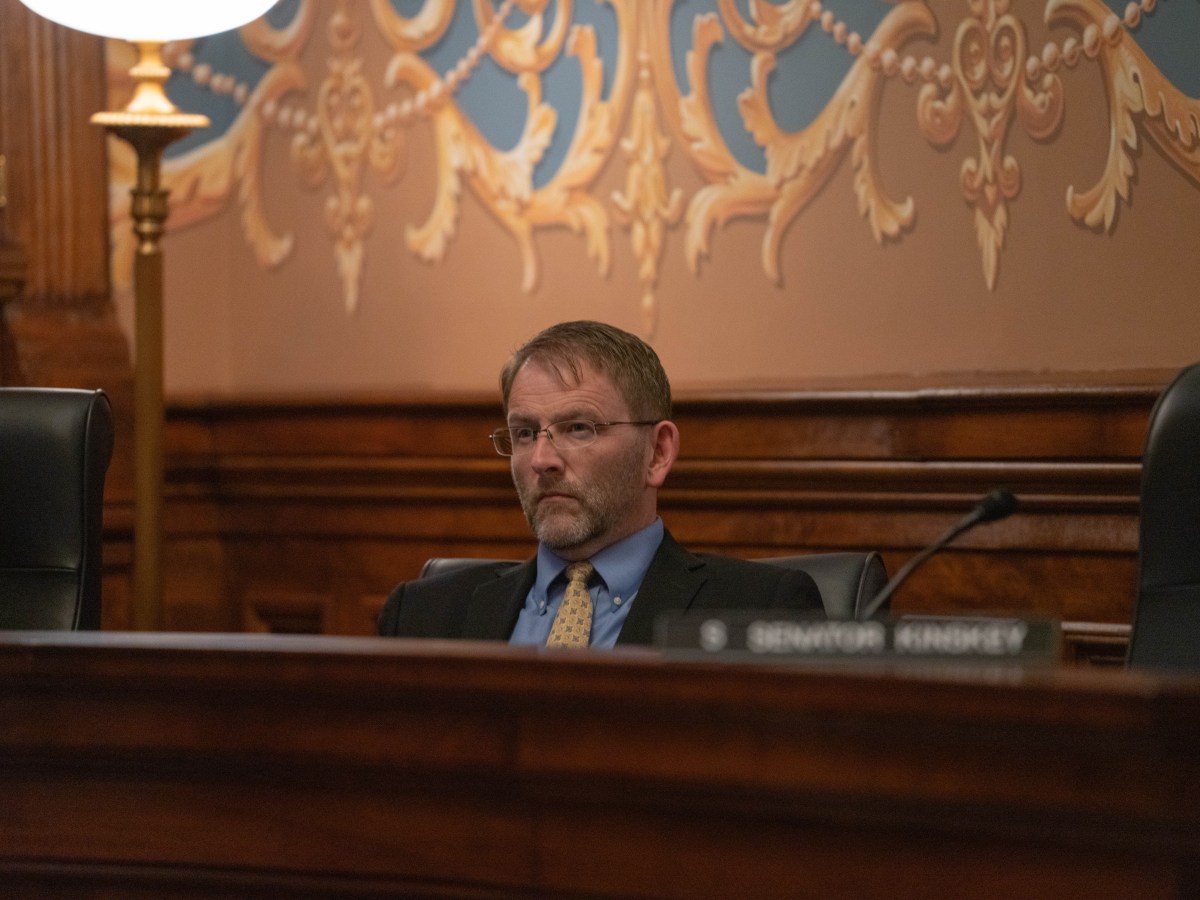
“The real question here is what is the evil that the Legislature is trying to address?” Vice Chair Kermit Brown, a former lawmaker himself, said Thursday. “I think we’re a victim of labels, and we’re a victim of misunderstandings and we’re a victim of broad brush, generalistic statements.”
Support for diversity, equity and inclusion
Like many institutions and colleges, UW operates an Office of Diversity, Equity and Inclusion and a raft of associated programs that broadly aim to support a diverse faculty and student body that may need help navigating higher education. Such programs have come increasingly under fire in recent years from conservatives, who question their value and even assert they are sources of discrimination. Those concerns prompted the Legislature’s funding restriction.
But all who came to speak Thursday supported DEI programs and services. There were two bouts of public testimony, ranging from students who depend on DEI programs to faculty who see them as a key indicator of whether they belong at the Wyoming institution. So many people showed up at the afternoon session that dozens of chairs were added and a wall between rooms was removed, still leaving many standing.
Starting at around 11 a.m., people shared with the trustees anger and tears, along with a hope that UW wouldn’t succumb to political pressures that grew from fears in other states.
Some also believed the mental health support in the office saves lives and keeps students in Wyoming when they may feel like outsiders otherwise.
Stephen Dillon, director of UW’s School of Culture, Gender and Social Justice, felt that many students are more vulnerable to harm than him, but said he was “kicked and strangled and spit on as a young person for being who I am.”
“In college, a friend had his head bashed with a baseball bat for being gay, and another friend was stabbed and sexually assaulted for being transgender,” he told trustees.
But Dillon’s friends had the support of faculty, staff, majors, minors, events and what are now considered DEI programs, he said, helping “us know that there’s more work to this world than bigotry, hate, small-mindedness, ignorance and fear.”
Faculty and staff also spoke about how they see the DEI office as a signal of how supported they’d be at UW.
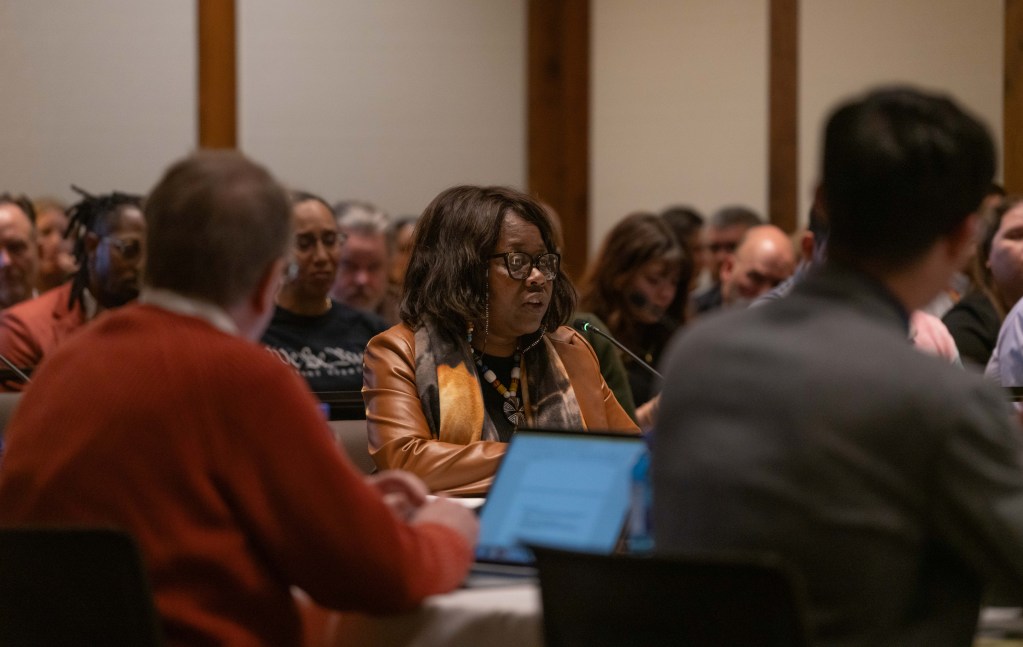
Camellia Moses Okpodu felt community-wide support when she became the first African American dean for the UW College of Arts and Sciences, she said. Since then, she’s been named one of the top 10 Black biologists in the nation over the last 30 years.
But she’s had doubts about staying at UW or encouraging others to join the university amid discussions around DEI programming and cuts.
“I was relieved to hear your comments today,” she said to trustees, who were supportive of DEI. “Because I was really contemplating, ‘Do I stay here?’”
Trustees highlighted what they felt was a disconnect between what lawmakers in Cheyenne saw as DEI and how it worked at UW.
Brown said school leaders should create a list of things legislators talked about this session in reference to DEI and what’s being done at the DEI office in Laramie.
“My guess is the majority of [items on that list] that we are doing are acceptable and are not on the list of the horrors that the Legislature was addressing,” he said.
Megan Degenfelder, the state’s superintendent of public instruction, said she’s heard concerns around Wyoming about DEI unconstitutionally violating civil rights by putting some races above others and by “suggesting that American education is systemically racist or any person is racist by simple virtue of their race, sex, political beliefs,” she said.
This makes it clear, for her, that UW needs to differentiate its programs aimed at welcoming diverse students and unconstitutional programming she believes exists in other states.
DEI programming at UW includes support for veterans, Native American students, first-generation college students and others.
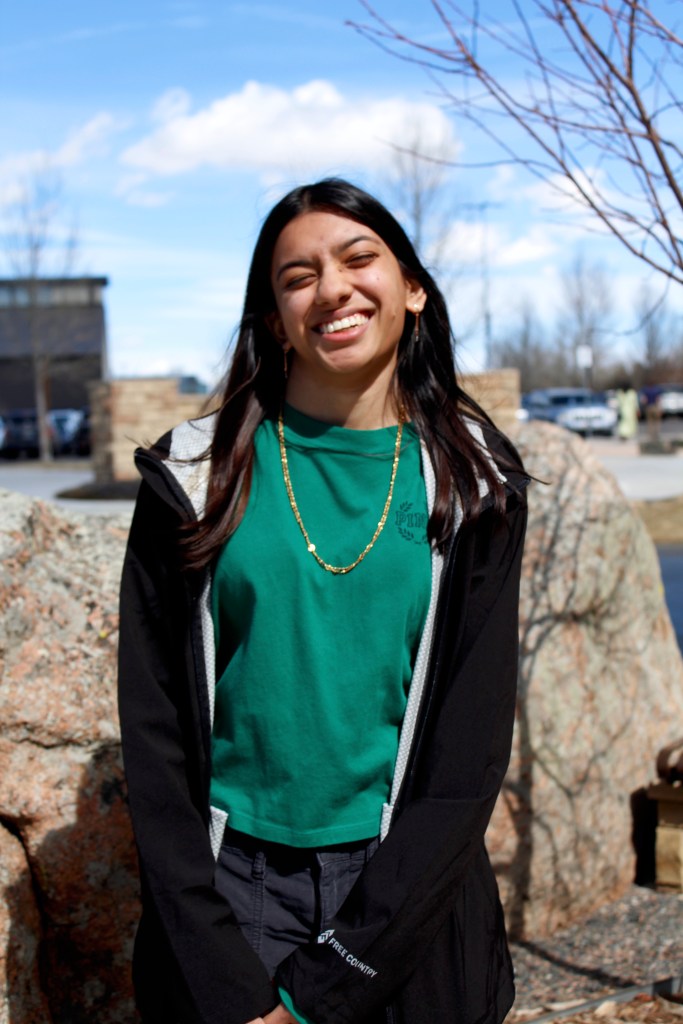
Priya Chaudhari spoke as someone who is both a first-generation American and a first-generation college student — groups the Office of DEI helps support at UW.
“Without these diversity efforts, I would not have gone to college,” she said. “I didn’t think there was a place for me there, especially in a place like Wyoming, where I felt like I was in the minority. These diversity efforts are what keep students like me on campus.”
Chaudhari runs a group for Asian Americans on campus, but she’s also concerned about its future since her group works so closely with the Office of DEI.
Legal issues
Trustees noted there’s an issue with the budget footnote banning certain spending on DEI: It doesn’t define what “diversity, equity and inclusion” means.
Seidel said Thursday that, contrary to what lawmakers have claimed, its programs don’t favor one group over others.
Senate Majority Floor Leader Larry Hicks (R-Baggs) said during the session it actually promotes “division, exclusion and intolerance.”
And another failed bill from this session defined DEI as “any program, activity or policy that promotes differential or preferential treatment of individuals or classifies such individuals on the basis of race, color, sex, national origin, gender identity or sexual orientation.”
However, that doesn’t apply here since there’s no definition on the books now, many trustees noted.

So what happens if programming is run out of another office, or the office’s name changes? Because generally, Seidel felt most of the programs in UW’s office are essential.
For example, the DEI office houses Title VI, keeping the school in compliance with federal requirements to receive funding. That title — part of the Civil Rights Act — prohibits discrimination based on race, color, or national origin.
“The Office of Diversity, Equity and Inclusion examines whether there was an adverse impact on the individual’s work or education environment and whether individuals outside of the protected class received more favorable treatment,” UW’s website states. “If there was an adverse impact on the individual’s work or education environment, the Office of Diversity, Equity and Inclusion considers whether there is a legitimate, nondiscriminatory reason for the action.”
The Office of DEI also oversees Americans with Disabilities Act compliance, Seidel said.
And beyond that, Seidel said certain federal agencies — like the National Science Foundation and Department of Energy — and even state statutes require certain things that fall under the Office of DEI or a theoretical DEI definition.
This lack of a definition may also be a loophole, though, as many of these programs could possibly be supported elsewhere in the university or considered non-DEI.
That said, there’s still an issue with the budget, if it goes into law as the Legislature passed it: UW’s block grant has been cut by about $1.7 million over the biennium — the approximate amount the university spends on the Office of DEI.
Regardless of where cuts need to be made, or whether external funds need to be raised, one UW employee’s request was perhaps the most poignant.
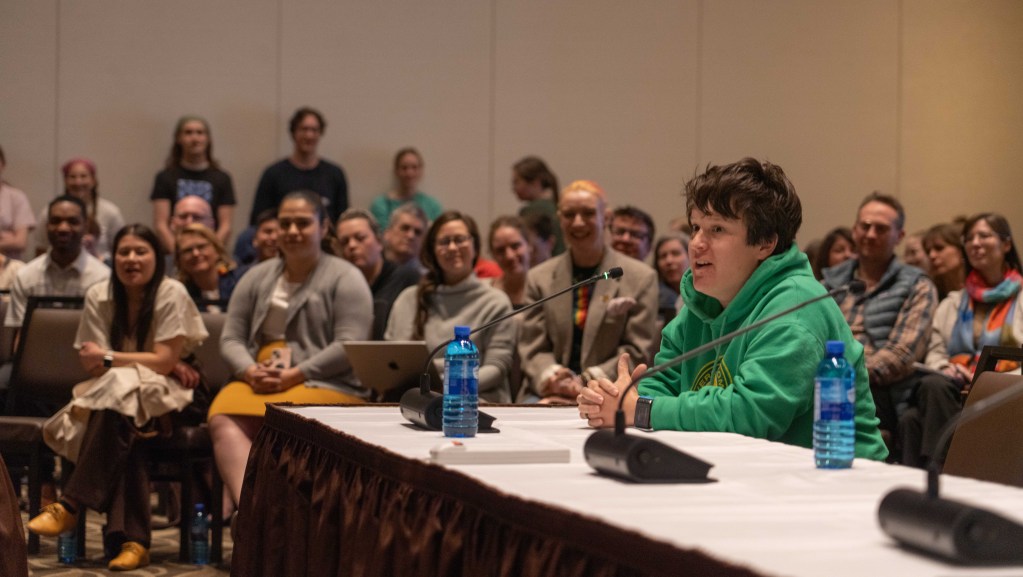
“Please fight for us,” Beck Herman said.
And indeed, Seidel believes he can.
“Our commitment to you is to continue to do the things that we believe are essential for you, and that’s why we do them,” he said.
Trustee Chair John McKinley said he would plan on making time during the board’s May meeting to hear back from Seidel’s office about what he thinks can be saved — and how — if the governor allows the ax of this year’s budget to fall.
Gov. Mark Gordon has until Saturday at midnight to decide whether to veto this footnote or let it pass into the final budget.
WyoFile will continue to report on Gordon’s decisions to sign, veto and allow legislation to go into effect without his blessing. His deadline for all legislation passed during the budget session is Saturday.



As a retired clinical social worker, I believe tthere is no need to organize students as victimized groups to offer them services they need as individuals. Mental health counseling has always been offered to students – it does not need to be under DEI. Same for academic support. Organizing services under DEI for specified victim groups is self-defeating in creating the society we want, where our young people see themselves as individuals whose own actions will determine their success in life.
That DEI is bad should be “self-evident” to any real American. If we are all to enjoy life and live together in peace we must bid goodbye to identity politics and get all DEI workers new jobs where they can’t do any more harm.
Perception is definitely reality in this instance. For a better understanding by the general public, it would seem incumbent on UW to explain the reason for the existence and the role and policies of the DEI Department on its campus.
Veto please.
Funny, but diversity and inclusion is never discussed when recruiting a good football team, is it? UW students may have to leave the state to get jobs in their fields.At that point their bosses and fellow workers may be “diverse,” which means many different identities the graduates will have to deal with. You are not preparing UW students for roles in the world without a healthy Diversity program.
The testimony given by students, staff and faculty was powerful stuff. An Interested reader can see it by going to https://wyolinks.uwyo.edu/trusteesmar24/
At a time when, as one speaker put it, “cruelty is the point” of defunding UW’s DEI office, the one sour note was struck by Megan Degenfelder. The state’s superintendent of public instruction knew she had to thread a needle yesterday. While speaking to a skeptical university audience, she simultaneous sought to reassure Wyoming voters who respond to racist, homophobic dog whistles. She echoed concerns that national DEI efforts violate the US constitution and civil rights law.
How likely is that at UW?
Trustee chairman John McKinley merits thanks for his courteous treatment of all speakers. He waived the 3-minute speaking limit, and a requirement for people to sign up days in advance. Thank you, John.
Well when Wyoming elects a 33 year old Nepo baby from the oil industry, what did you think you would get? Professionalism? Wear that cross and spew out dross is all Megan can do.
John McKinley is a class act and the state and UW are lucky to have him!
‘What is the evil the legislature is trying to address?’ Prefect. This is another example of the Wyoming legislature trying to address out of state GOP right wing demands and ideals with no basis or understanding of the UW program specifically at all. The focus on these non-Wyoming issues take your eye off the fact they don’t have any answers for the real Wyoming issues of diversifying our economy, lack of affordable health care, rising drug and mental health issues and lack for support for women in our Equality State. Please asked these questions of your legislative representatives and please remember their answers at the ballot box this November.
A bunch of antiquated bigots with political motives should not be in charge of anything related to education.
Good to hear seidel is pushing back. I hope he doesn’t get railroaded by the ignorant people who proclaim themselves as leaders.