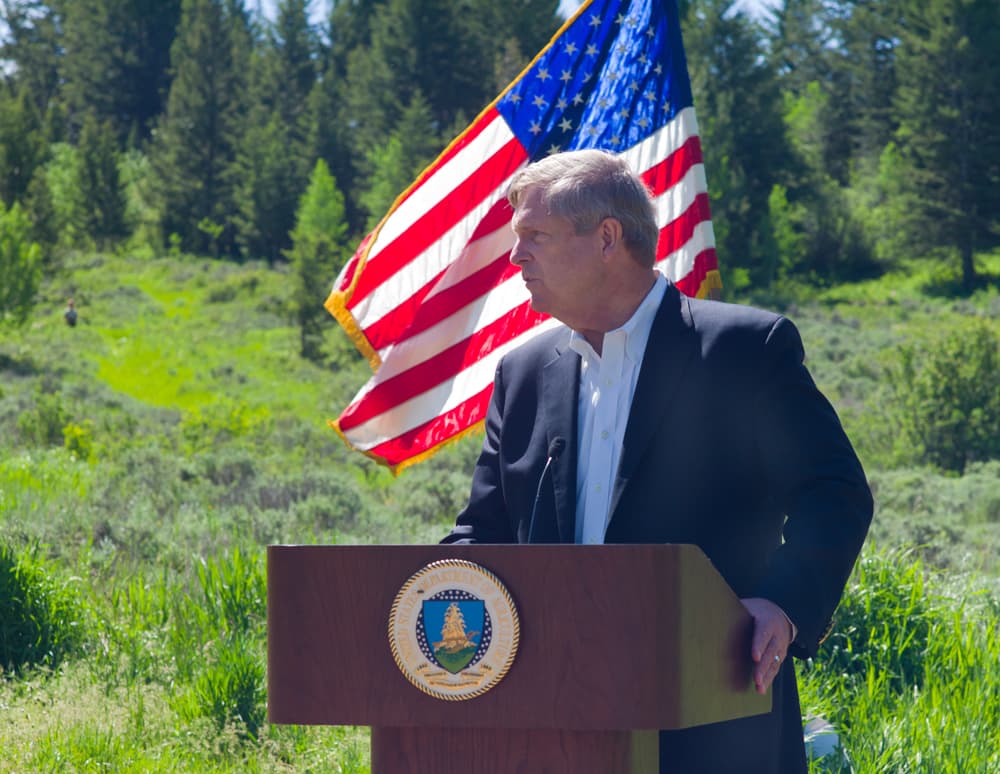
JACKSON — U.S. Secretary of Agriculture Tom Vilsack said his agencies can be “better partners” with states, but that the federal government won’t divest western land holdings.
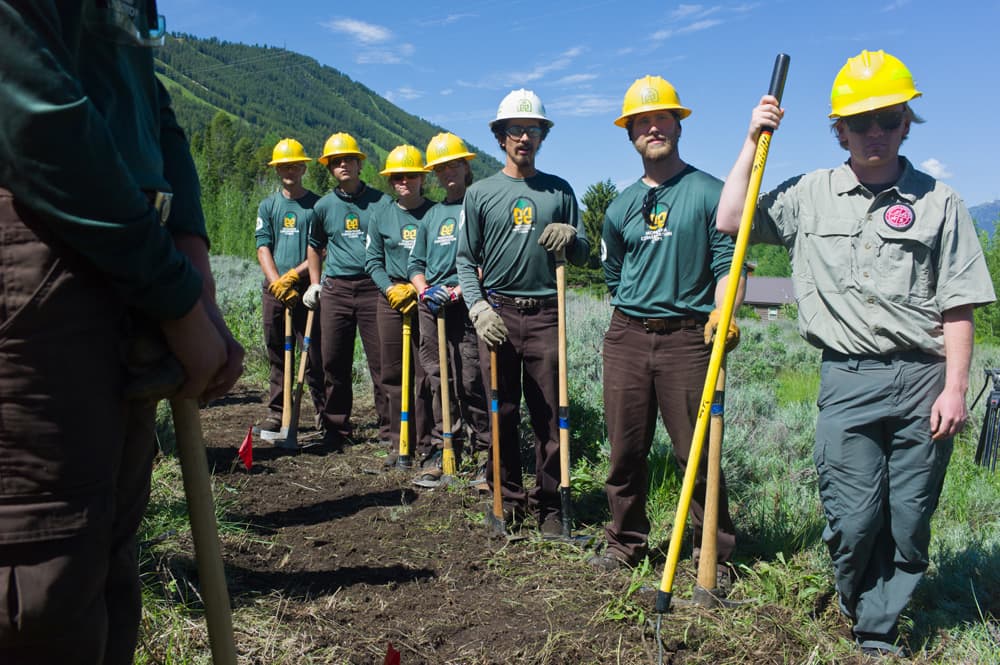
Vilsack spoke at a trailhead where an AmeriCorps crew was rerouting the popular Putt-Putt hiking and cycling route. He said he understands the challenges faced by Wyoming where 48 percent of the land is federally owned.
Yet the forest around him “is indeed a national treasure,” to be shared with all Americans, he said. The Bridger-Teton National Forest’s Snow King Mountain framed him on one side, the heavily used Cache Creek Canyon on the other.
“I don’t think I’d be in favor of abdicating — turning over — that [management] responsibility,” he told a group of trail workers, including a team from the Bridger-Teton. “I’m not prepared to say ‘Here’s the deed, governor.’ That’s not going to happen.”
Vilsack used ski areas and the fees they pay as an example of why some westerners feel left out of policy matters involving their own backyards. Ski area fees go to Washington, but by law they’re not reinvested in the places where they were collected.
“The current system doesn’t allow that,” Vilsack said.
Fighting fires and climate change
As he and U.S. Forest Service Chief Tom Tidwell mingled with trail crews, they also addressed questions about climate change and forest fires. Vilsack reiterated a call to Congress for better emergency firefighting funding.
The current firefighting system requires the U.S. Forest Service to dig into its operating budget in big fire years. The largest 2 percent of fires should be considered natural disasters and should be covered by a separate, emergency account, he said.
Fully 70,000 communities and 45 million homes are in the wildland-urban interface where wildfires threaten, Vilsack said. Today, one community in California was evacuated because of fire, one of 23,000 that have started so far this year, he said.
Firefighting costs take away from restoration projects and even from programs that help reduce fire risk, Vilsack said. Yet it’s important to keep American forests healthy, Tidwell added, because they capture 14 percent of the CO2 generated in the country. That, in turn, ameliorates fire-causing climate change, Tidwell said.
“The first thing we can do is make sure we maintain and restore our national forests,” Tidwell said of the climate challenge
The Forest Service is trying to plan for the warmer future, he said. But he didn’t embrace a recent paper that predicted a likely chance of Yellowstone-area forests being denuded by wildfires by the middle of the century.
The Coming Climate cited a peer-reviewed 2011 study that said conifers would likely be replaced by grassland and shrubland. Tidwell said he was not familiar with the Teton County report but agreed some species of conifers are in trouble.
“Are we going to be able to maintain whitebark pine?” he asked. Americans can expect “different mixes of conifers,” especially in southern, forested regions, Tidwell said. “Some of the species we see today are going to change.”
Nevertheless, “50 years from now we’re still going to have a forest environment,” he said of the Yellowstone area. There may be more open meadows, he said.
Tidwell’s agency is focused on rapid restoration of burned areas that need help, among other efforts. The issues extends beyond the federal holdings, however.
“It’s got to be economically viable for someone to keep forests on their private land,” Tidwell said. Novel approaches are needed, like a new method that’s been developed to laminate small-diameter trees into large beams. That could make hazard-fuel reduction more viable.
Tidwell and Vilsack chatted extensively with the trail workers. Members of an AmeriCorps crew from Montana each get about $1,000 a month and will work through October.
“We camp out and I don’t have to share a motel room,” said Amanda Garant, a member of the Montana Conservation Corps whose leather gloves were worn through. “I’m just so grateful for the trail system. I’m proud of it every day.”
Tidwell said he likes talking with the workers. Even in the midst of the Yellowstone ecosystem where trout beckon, he’s more refreshed from learning from his team than he is from hiking in the backcountry.
“To be able to listen to them, that’s my fun,” he said.
See related story — Vilsack touts fed’s rural aid.