

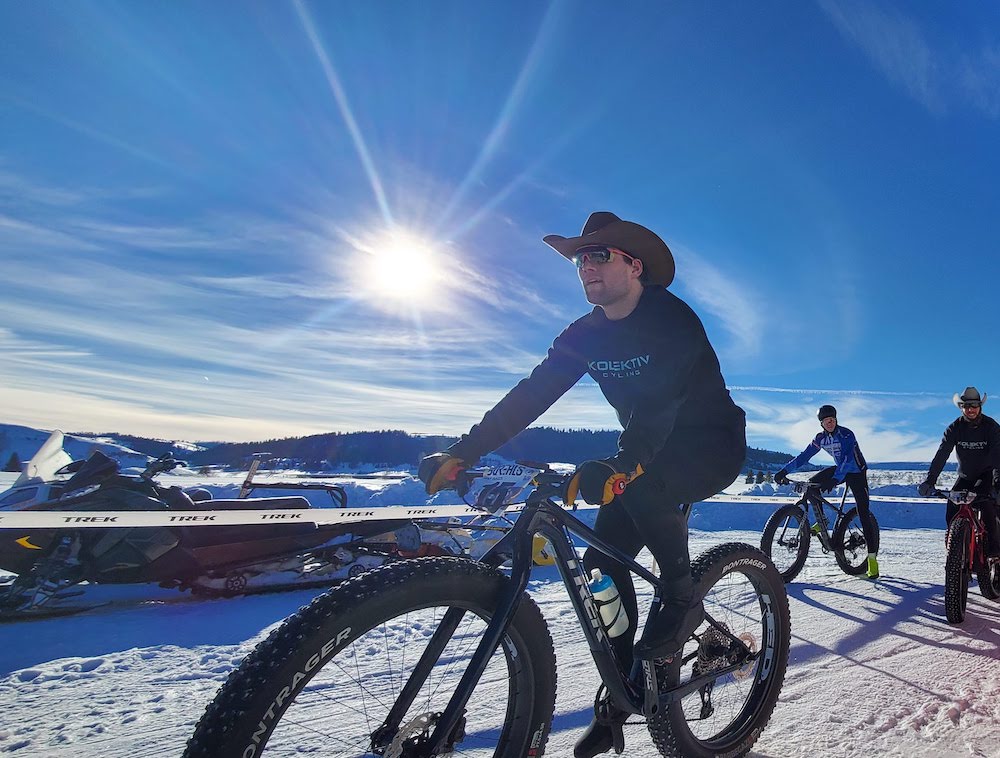
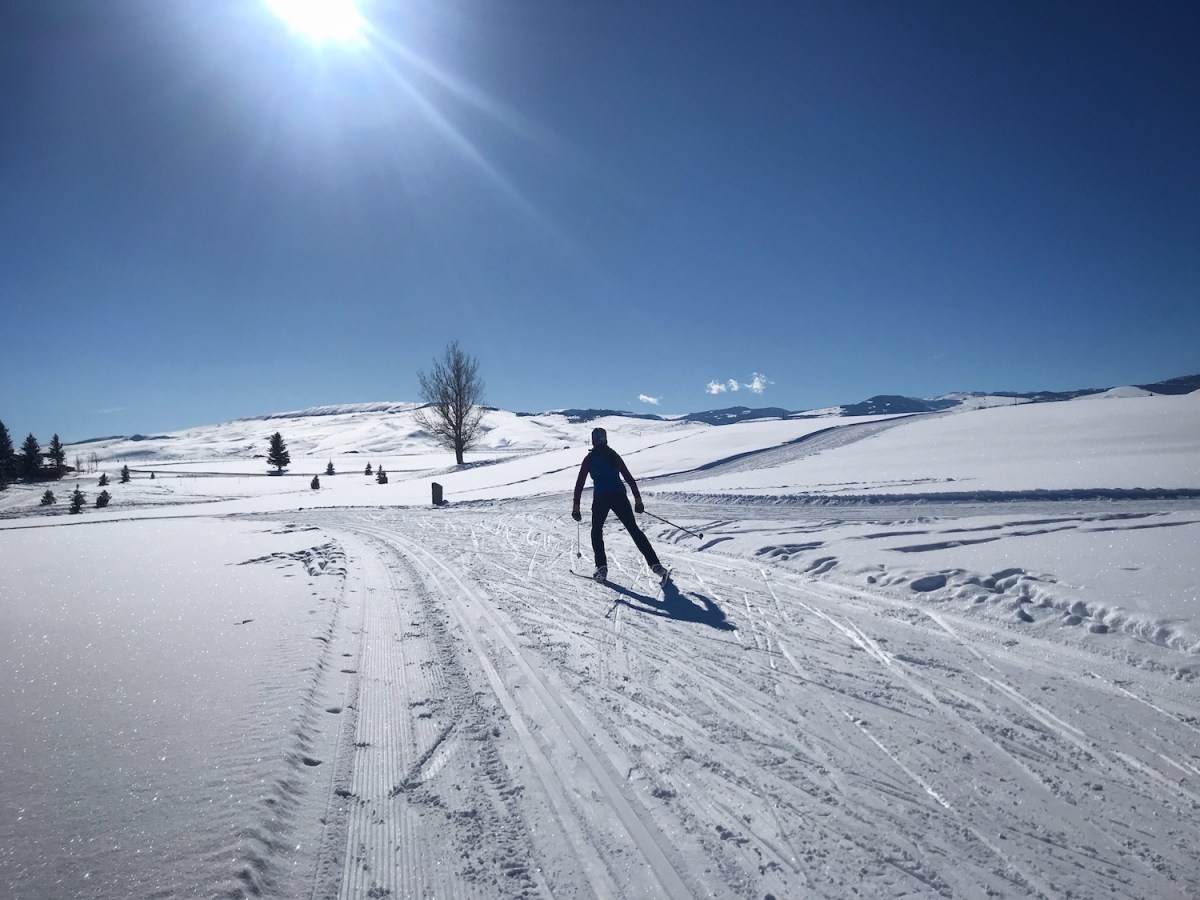
Want to see more trails at your local cross-country-ski spot? Concerned about protecting wildlife from mountain bike disturbances in the dense forest? Think there are too many cars in the parking pullout of your favorite fishing hole?
If you’re interested in the growing outdoor recreation industry’s economic or environmental impacts on Wyoming, keep an eye on Senate File 40 in the upcoming legislative session.
The bill would establish the mechanisms for awarding grants to outdoor recreation projects statewide, and increase the state’s financial role in shaping the growth of activities like snowmobiling, hiking and boating in Wyoming.
What does it do?
Outdoor recreation advocates chalked a victory last spring when the Legislature created a new $6 million trust fund to generate grants for trail building, camping infrastructure and other such developments.
Lawmakers didn’t, however, provide a way to spend the money, leaving the trust fund idle. That’s where SF 40 – Outdoor recreation and trust fund administration comes in. The bill defines who will oversee grants and set the rules for how the money can be spent, and identifies where future funding for the account will come from.
The bill would create a nine-member trust account board appointed by the governor and confirmed by the Senate, which would include resident representatives of Wyoming’s judicial districts. Wyoming’s Office of Outdoor Recreation manager would act as secretary.
“What it’s going to do is establish that board and allow it the authority to go through the rulemaking process, which is all public, transparent stuff,” said Office of Outdoor Recreation Manager Patrick Harrington, the current would-be secretary of the panel.
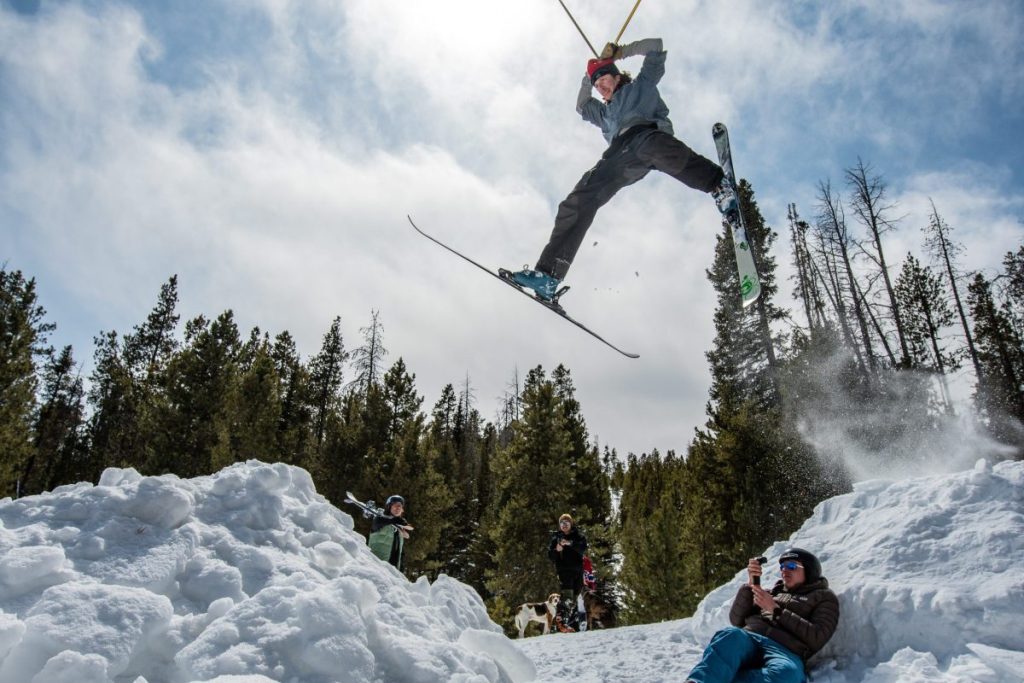
The board would consider applications, and may award any grant under $200,000. Projects exceeding $200,000 would need approval from the Legislature’s Select Committee on Natural Resources.
Grants could be for planning, design, construction and maintenance of outdoor recreational infrastructure, or for the acquisition of public access easements necessary to enhance outdoor recreational infrastructure. Eligible applicants would include municipalities, tribal governments and nonprofits.
The bill also creates a new biennial $6 million appropriation to the trust fund, along with $50,000 for the board’s rulemaking and administrative costs.
Why it matters
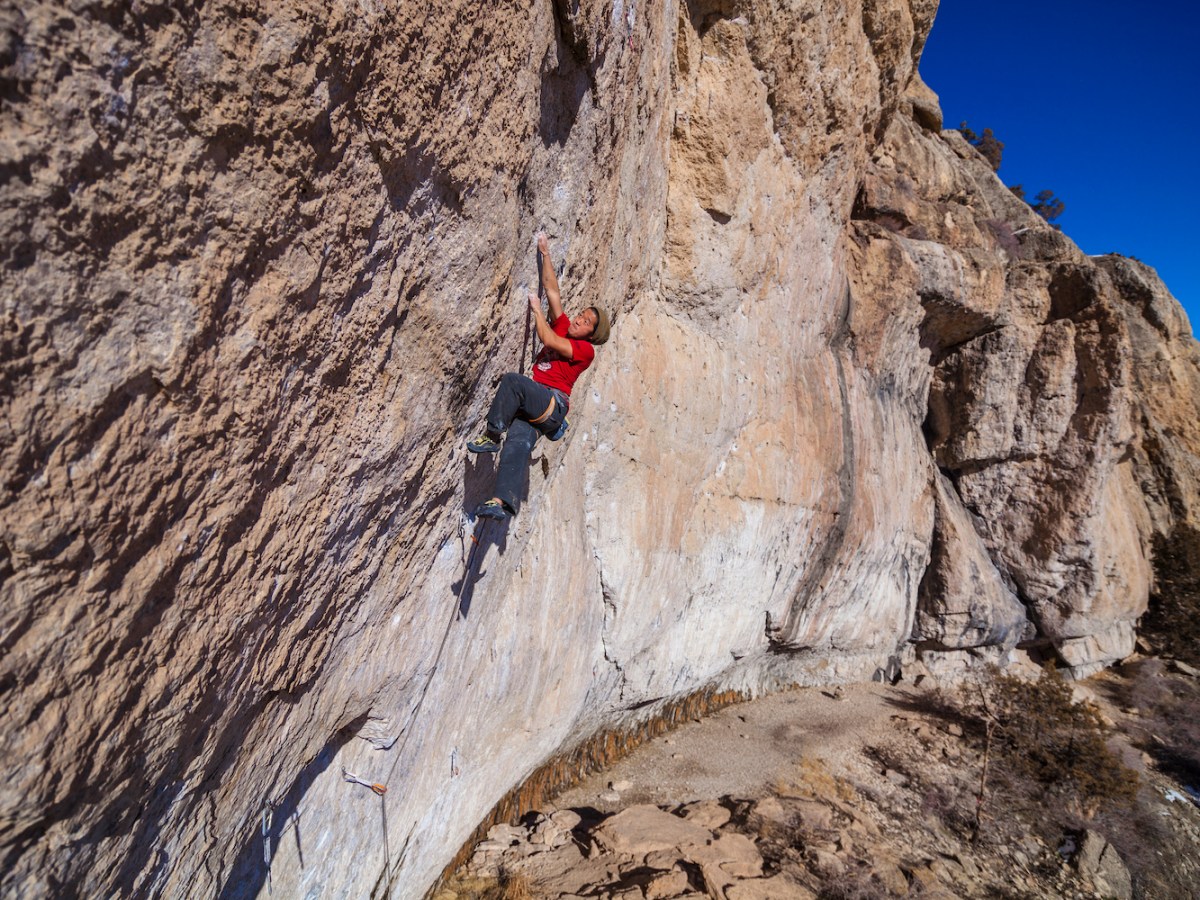
More people are coming to Wyoming to recreate. Outdoor-recreation visitations have been trending upward for decades, but the COVID-19 pandemic brought an unprecedented spike and new level of awareness, including when user conflicts or concerns over wildlife bubbled up.
At the same time, the industry has been flexing its economic might. Wyoming’s outdoor recreation economy increased to $2.02 billion, or 4.1% of the state’s GDP in 2022, according to the U.S. Department of Commerce’s Bureau of Economic Analysis. That number is up from $1.5 billion in 2021.
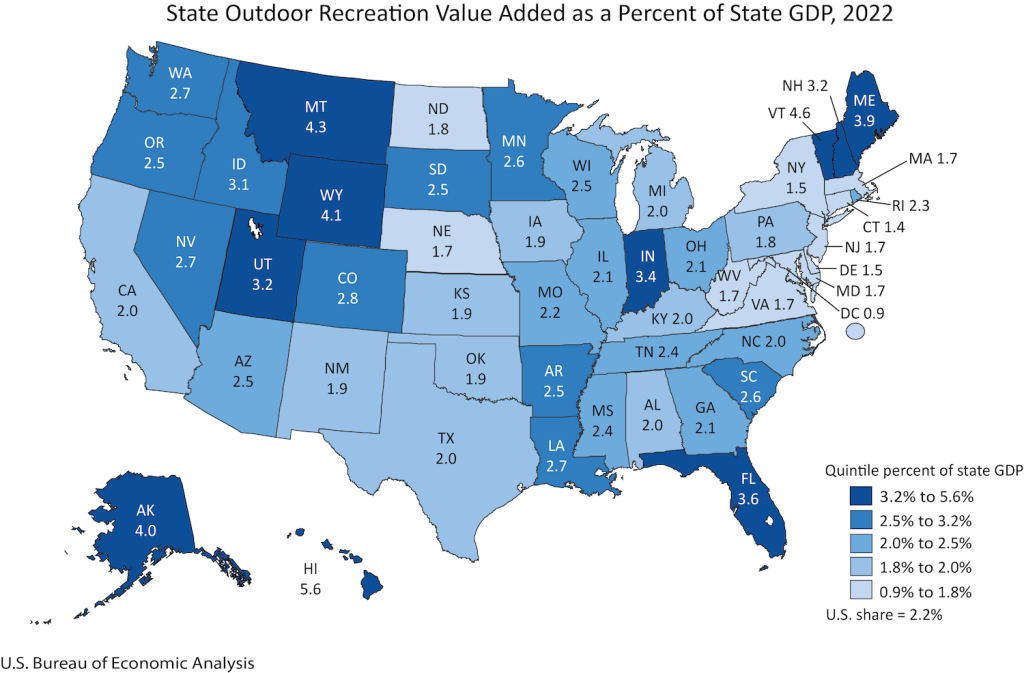
“Wyoming’s outdoor recreation economy is the fourth-fastest growing recreation economy in the country,” Harrington said. He sees that as the result of work already done to promote and welcome outdoor recreation. “We’re really off to the races, and we’re starting to see some of those really positive impacts already.”
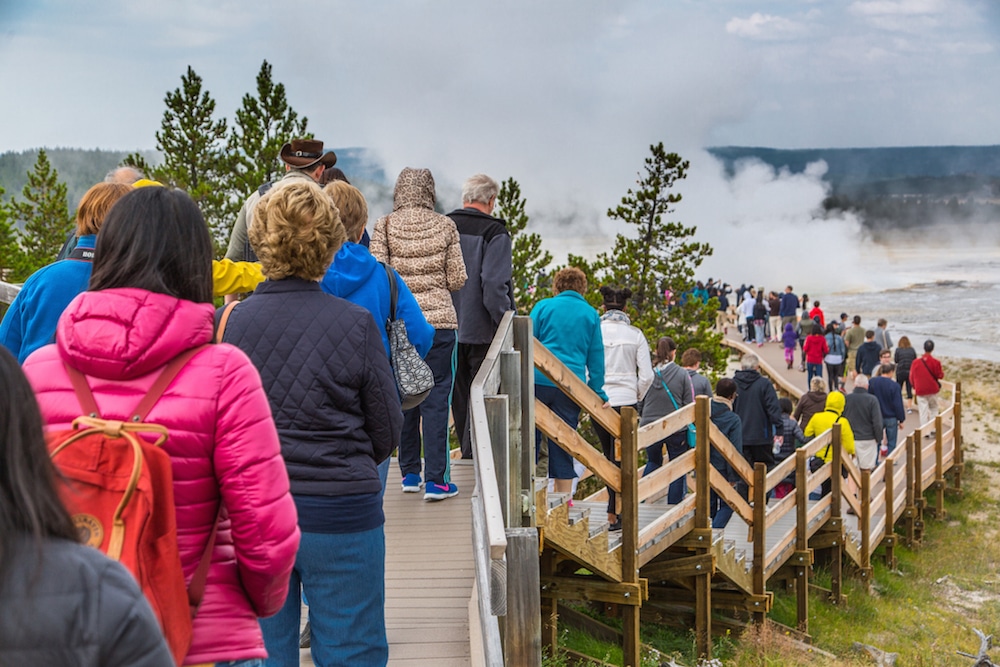
Other reports have emerged tallying economic boons from sports like climbing and snowmobiling. Still, a common refrain is that Wyoming doesn’t want to become another Colorado; outdoor users here cherish the big empty spaces they recreate in. Aside from showing economic promise, there’s concern that unprecedented levels of activities on public land put a growing strain on facilities, trails, resources and local housing markets.
Advocates say Wyoming should take the steering wheel now to help guide the industry’s growth and ensure crowds don’t negatively impact the state’s wildlife and landscapes. Skeptics want to protect the state’s long-held values of unpopulated wild places. It promises to be a tricky balancing act.
The demand
Wyoming’s Office of Outdoor Recreation leans on a refrain that if the state has a say in how developments occur, it can facilitate projects that protect user experience as well as natural resources.
“We talk a lot about ‘educate, disperse and concentrate,’ and I’d see the trust fund as really one of our best tools to create that positive impact that makes sense for Wyoming,” Harrington said.
That was also part of the thinking behind Wyoming’s inaugural outdoor recreation-related grants, a program rolled out in 2022 with $14 million mostly from the American Rescue Plan Act.
The reception was overwhelming. The Wyoming Outdoor Recreation Grant Program received nearly 117 pre-applications totaling $72 million in requests after opening its initial round.
That’s evidence of the demand for investment in outdoor recreation in the state, Harrington said.
Strict federal guidelines related to COVID impacts have made it difficult to award grants that qualify, however. To date, the grant program has awarded just $2.6 million for six outdoor recreation projects. That means the pot of money, which has grown since the launch, still has nearly $20 million left that has to be spent by the end of 2026.
A state trust fund program would have fewer strings attached than federally funded initiatives, Harrington said, which should create more freedom for awarding recipients.
“What we will see is an incredible broadening of those rules,” Harrington said.
So far, program awards include $1 million for Albany County’s Pilot Hill trailhead; $72,000 for the Wind River Reservation’s St. Lawrence Trail rehabilitation and $487,000 for the City of Cheyenne’s Belvoir Ranch trailhead, among others.
The Wyoming Outdoor Recreation Grant Program is currently open for applications.
Who to watch
The Legislature’s Travel, Recreation, Wildlife & Cultural Resources Committee drafted the bill during the interim, looking to the Wyoming Wildlife and Natural Resource Trust as a model for governance and allocation.
The committee’s co-chairs, Sen. Wendy Schuler (R-Evanston) and Rep. Sandy Newsome (R-Cody), helped usher it out of committee.
Expect to hear from Wyoming’s new director of State Parks and Cultural Resources Dave Glenn, whom Gov. Mark Gordon appointed in November. Glenn has worked for the division since 2015, and has long been involved in the conversation. Harrington will also likely be in the Capitol, as well as Wyoming Office of Tourism Executive Director Diane Shober and Chris Brown with the Wyoming Hospitality and Travel Coalition. Conservation and wildlife groups will likely send lobbyists as well.
Gordon himself has shown support for the outdoor recreation and tourism trust fund.
Not everyone was a fan of the concept last spring. Sen. Cale Case (R-Lander) expressed concern that whatever body ends up in charge of the grants must go through a careful review process to ensure the state’s wild places don’t end up overdeveloped.
For more legislative coverage click here.
CORRECTION: This story has been updated to reflect the correct value of Wyoming’s outdoor recreation in 2021. -Ed.


This is very exciting for people who enjoy the trails and outdoors in Wyoming.
I hope this bill gets amended to include a mandatory consultation and approval process from the Wyoming Game and Fish. Human encroachment poses the largest threat to wildlife in this beautiful state, and I would hate to see someone’s desire to go hiking become the reason we lose our abundant wildlife.
Thanks Katie. But there’s a giant error with this article’s economic figures. Outdoor recreation $ HAVE increased rapidly: primarily big ticket items like motorized recreational vehicles but also more expensive, special types of bicycles, skis, guns, etc, along with new recreational infrastructure and increased secondary dollars from out-of-staters for food, lodging, fees etc.
But from one MILLION- something dollars in 2021 to 2 BILLION-something in 2022 (4% of Wyoming’s GDP)?
A ludicrous impossibility.
Shame on everyone who read this piece before publication.
For that matter, why am I the first reader to comment on this? It’s simple math.
Hi Caryn! Thank you for pointing out the dollar amount error. We’ve issued a correction and the story has been updated to reflect the correct value of Wyoming’s outdoor recreation in 2021.
I realize the financial benefit of this legislation, however should Wyoming be for sale? For those of us that enjoy the solitude of the outdoors, this appears to be an attempt to bring more people (money) into the state without consideration to the impact on wildlife & the people who live here, for Wyoming’s ability to enjoy your personal space. As stated we have already seen a substantial increase in outdoor activity, I am sure the people who reflect that increase also enjoy solitude not found
in their state. Do we really need an influx of more people? lets use our money to explore ways to keep our economy strong, to provide a stable income to the people who have chosen Wyoming to be their home,. This would be a long term economic solution.
John your absolutely correct, in Wyoming we need to figure out how to keep the Fossil Fuels industry strong. The huge benefits out weight the few negatives. If we wait until we have black outs with no power and people start dying, it will be to late. Not only Wyoming, but all the United States needs Wyoming energy. It’s time to stand up and fight to keep Wyoming Fossil Fuel industry strong.