

Does the First Amendment actually protect free speech? Most Americans think so. In many instances, including my personal experience, I know that it doesn’t.
Opinion
Comedian Jimmy Kimmel’s comments on his late-night talk show about MAGA’s reaction to the assassination of conservative leader Charlie Kirk sparked the latest national controversy over the First Amendment.
I’d like to take readers back to 1994, when free speech was part of my lawsuit against Cheyenne Newspapers Inc. after I was fired for refusing to wear an anti-union button during our newsroom’s attempt to unionize. (If you’d like to learn more about the case, you can read this earlier column.)
Free speech was part of my complaint against the company, because the right to wear a button to express any opinion has long been recognized as protected under the First Amendment. Co-plaintiff Kelly Flores and I were expressing the right not to wear a button that expressed an opinion we did not share with the company’s management.
While we were silent, our message was clear: that’s free speech too.
I still maintain that both the U.S. and Wyoming constitutions protected us. The former, though, is often interpreted by the public as the right to say anything, with exceptions for speaking to incite violence or cause other harm. But that’s not always how it works.

Despite the First Amendment saying, “Congress shall make no law … abridging the freedom of speech,” our case was rejected by a federal court in Cheyenne.
But the story doesn’t end there. Because the Wyoming Constitution also offers free speech protection for the public and the press, our lawsuit was transferred to the state district court in Gillette.
We got our hopes up because the Wyoming Constitution says, “Every person may freely speak, write and publish on all subjects, being responsible for the abuse of that right.”
While Wyoming is a right-to-work state where an employer can fire an at-will worker without cause, workers can’t be fired for discriminatory or retaliatory reasons. I believe suspending workers without pay for a month and then terminating them for not wearing a button is textbook retaliation!
But the judge still ruled in the newspaper’s favor. We appealed to the Wyoming Supreme Court, which heard our case. In fact, because it was an intriguing civil lawsuit, the high court decided to hold the hearing at the University of Wyoming College of Law so students could attend.
One of the justices, Larry Lehman, asked what I considered the best question that day: Does an employer have the right to demand a worker have a swastika shaved into the hair on the back of his head? In other words, does that demand reasonably go beyond the scope of firing a worker for not complying with management’s order in an at-will state?
The question took me — and the newspaper’s attorney — by surprise. All I remember is that he stammered throughout his response and never actually answered the justice’s question. I thought this would work to our benefit.
But apparently, the correct answer was yes, you can demand an at-will employee to wear a button or swastika or anything else without violating the worker’s free speech rights. When the Wyoming Supreme Court ruled several months later, it voted 5-0 to uphold the lower court’s decision.
Guess who wrote the opinion? Justice Lehman.
Here’s one of his conclusions: “Terminating an at-will employee for exercising his right to free speech by refusing to follow a legal directive of an employer on the employer’s premises during working hours does not violate public policy.”
Lehman added “that irony exists in this case because the employer purports to be an advocate for free speech.”
One of the reasons I decided to sue for wrongful termination is I wanted to establish there are limitations to what companies can ask an employee to do without violating their free speech rights. Wearing a button totally against my belief that workers have the right to form a union to collectively bargain was the ideological sword I was willing to die on.
I must admit I was devastated when I lost the case, and it shook my faith in the fairness of the justice system and its interpretation of the First Amendment’s protection of free speech.
But losing didn’t break me, and I’ve continued my journalism career for more than three decades. I was confident none of my employers would order me to do something against my principles, and that’s proven true.
I want to stress that I hold no ill will against the Wyoming Tribune Eagle, a paper I proudly worked at for 18 years. The management team responsible for my leaving left long ago, and publications owned by Cheyenne Newspapers Inc. were sold to a different publisher.
The Tribune Eagle has an excellent editor, Brian Martin, who has the wisdom to regularly run my WyoFile column, which helps me stay in contact with long-time Cheyenne readers from my days as an editor of the Wyoming Eagle. I greatly appreciate his support.
And the Tribune Eagle now has a union. I’m happy I was part of that fight.
About a year after Drake v. Cheyenne Newspapers Inc. was decided, an attorney friend attended a legal conference in California. After a particularly boring run-down of recent cases, a lawyer offered what he called “some comic relief.”
Of course, he was referring to my case. I feared that the discussion might be about the lawsuit being frivolous or not pertinent to the issue of free speech. But the speaker explained that Wyoming is one of the most anti-worker states in the nation. I agree.
He detailed the case and said that in any other state, Flores and I probably would have won. My interpretation: We had the misfortune of being fired in an anti-union state where the highest court did not respect the Wyoming Constitution’s guarantee of free speech for all citizens.
I still believe in the First Amendment. But don’t count on it being a lifeline to your employment.

I don’t know where to start with this issue.
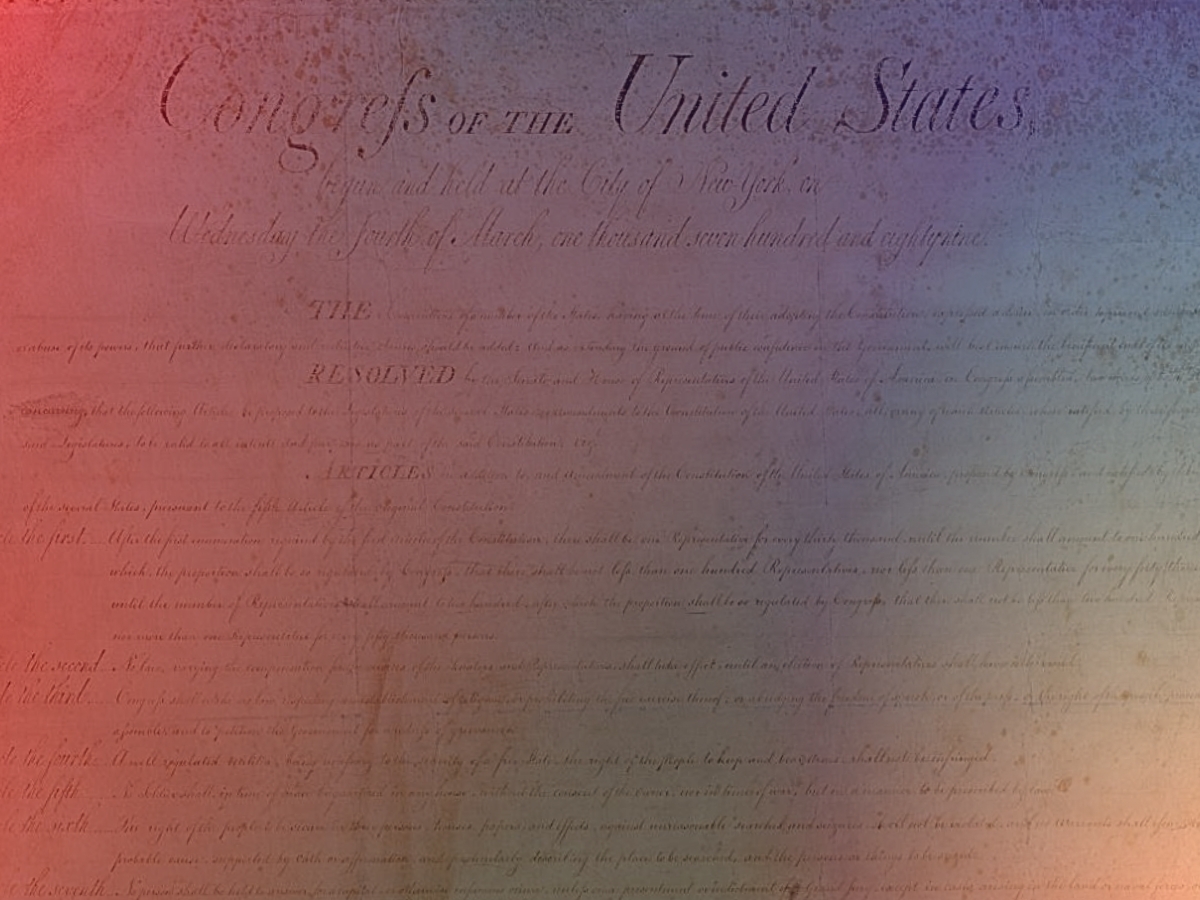
But, I would like to state this before I get started. The picture WyoFile used of the constitution for both Kerry’s and Rod Miller’s opinion piece is not a very good picture. It’s colorful but other than that you can’t read it Obviously just my right to free speech. It is also WyoFile right to post what they think is a good picture. Or maybe the picture symbolizes something that I don’t understand. I still have the right to Express that don’t like it. (Or do I)
First, let me clarify something . At the time of Mr. Drake’s lawsuit Wyoming was and still is a right to work state.
Now for clarification of a right to work state. The right to work law essentially states that you do not have to belong to a union for a company to hire you…..However you still receive all the benefits of that union.
Most people don’t know the meaning of a right to work state . At the time of Mr. Drake’s case I was working for the Department of Labor and statistic for the state of Wyoming. After this case started to roll in. Both employees and employers wondering what right to work state was.
Right to work is very misleading.
Politicians tout this as we are great right to work state. I don’t know if the legislators even know what it is. Or they know what it is, but it sounds really good when you’re running for office. (. A question I would like you the reader to consider. Does free speech protect lies.)
THE GREAT SPAGHETTI INCIDENT. So I only mention this as a sideline to what I really want to wright about. My direct boss at the department of labor knew that I was a pretty good cook and he asked me if I would help cook a spaghetti dinner that was a fundraiser to help with expenses related to Kerry’s case. I cooked so much spaghetti that this day I do not eat spaghetti. The fundraiser was at a union hall here in CHEYENNE.
Now, to the story I really wanted to tell you. One day I got a call at the Department of labor. An Individual had applied for a job building the Express pipeline, which is a huge crude pipeline which terminates in Casper, Wyoming. He told me that he was denied a job because he refused to join the union. I called the employer who was the subcontractor for the main contractor. I asked them if they had denied this individual job because he was not in the union. They then said something to the extent that those were the rules or laws in the state they came from. I told them that Wyoming was the right to work state and that you could not deny employment to a person that did not want to belong to the union. They understood.
I then talked to the Commisioner of Labor about it as it was a very large project He felt that we should go over and talk to the main contractor and potentially some of the subcontractors on the job and explain to them Wyoming’s right to work law. It was a long drive there and where we met there was a lot of Sagebrush and the meeting was in Trailer. Lots of heavy equipment and a very deep trench. The Express pipeline has a diameter of 24 inches and the trench it was probably 6 feet wide and 8 feet deep
We met with the company officials and the head of the union and explained to them the situation and they pretty much understood it. They said they were not aware of our law.
They agreed to letting the individual go to work for them.
We then met with the individual that was denied the job. We told him that he would get the job. As we were leaving we told him to be careful as there were mostly union members working the job and that the trench was pretty deep.
My point in the story is that free speech is not free any more and if you stand up against the currrnt administration view of free speech you may get buried
Free speech is a right and not just a right if the right determines what we say is wrong. Is the dangerous rhetoric coming out of the president a right to free speech. Well senator Lummis said it was.
I disagree
In Mr. Drake’s defense, he told the newspaper that he would explain the companies concerns over unionizing, but he would not wear a button. The company also brought in a union breaking attorney from back east. That’s their right.
I believe the court made the best decision they could at the time, but it was wrong.
Long live free speech
Thank you. I had not known of this case previously. I am sorry you were treated so shabbily by the State of Wyoming court system and your employer. It is apparent that “right to work” in Wyoming really means you have no rights at work.
I am so sorry that you lost your case, but I am glad that it all worked out in the end. You didn’t mention it in your article, but some other anti-union bias was due to your case being post-Reagan. before Reagan, employment-at-will was known as right-to-work, an example of Orwellian Newspeak—which makes it sound good for the employees. But Reagan gutted the National Labor Relations Board. I was involved in two pre-Reagan anti-union cases, but the pro-union side (of which I was a part) won. I’ve always joined the union, if there was one where I worked, as I figured I was benefitting from the union.
Your case, not to mention mine, would be even worse in Trumpworld—although the Wyoming court’s decision in your case sets a precedent for the current régime’s using the U.S. Constitution as a dartboard, starting with Freedom of Speech. The régime appears to be saying, “Freedom of Speech for me—none for thee.
“I still believe in the First Amendment. But don’t count on it being a lifeline to your employment.”
We probably disagree on your premise, but completely agree with your conclusion.
Kimmel got fired correctly and rehired correctly and still isn’t funny. During COVID a lot of comedians got fired for being funny.
Perhaps ABC can carry a political commentator masquerading as a comedian for a while. Or maybe they can rerun “Girls on trampolines”, Kimmel’s claim to fame. Personally I would like Johnny Carson instead.
Free speech is in Amendment 1, because it will always be the Number 1 right to be litigated. Thank you for your contribution to the bar.
Sorry, no. You don’t have free speech while on the clock and many times, employers have code of conduct rules that employees must agree to that covers speech off the clock if it can be deemed to be damaging to the company’s image. You really need to educate yourself about what the 1st Amendment actually says. Freedom of speech doesn’t mean freedom from consequences.