



Elevated concentrations of ozone — a human health hazard — have returned to the Upper Green River Basin south of Pinedale after years of coordinated efforts to plug leaks and reduce emissions from oil and gas production facilities there, according to the Wyoming Department of Environmental Quality.
Spikes in wintertime ozone can occur when there are volatile organic compounds and nitrogen oxides present — in this case, mostly from oil and gas emissions. When the wind doesn’t clear pollutants out of the area, the trapped VOCs and NOx can get baked by sunlight — from above and reflected off snow — converting them to ozone.
“At or above 71 parts per billion [of ozone] for an 8-hour average, children, older adults, people with respiratory problems and people who are active outdoors should limit prolonged outdoor exertion,” according to the DEQ. Several air quality monitors in the region have indicated low-lying ozone at concentrations above 55 ppb over an 8-hour average on several days this winter, posing a “moderate” respiratory risk.
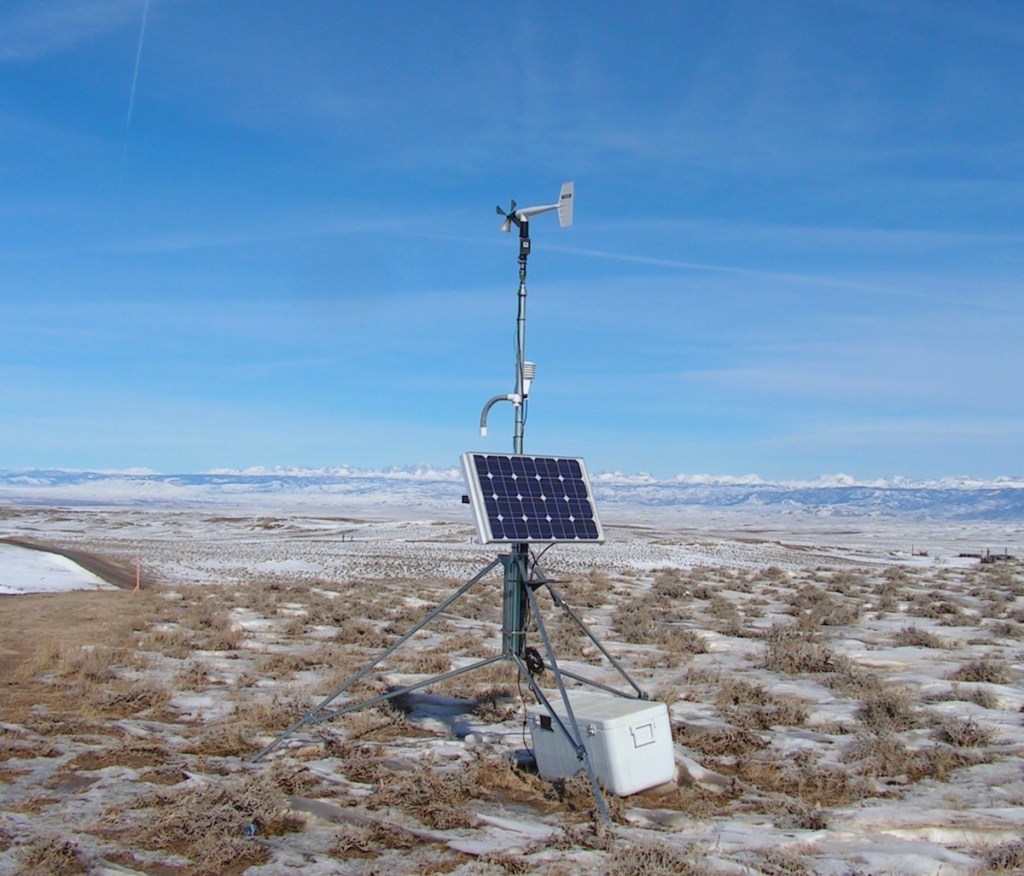
Several spikes reaching into the “unhealthy for sensitive groups” range were measured in March, according to DEQ’s WyVisnet website.
The Daniel South monitoring station measured:
- 1-hour high of 80 ppb March 9
- 8-hour average high of 74 ppb March 9
- 8-hour average high of 73 ppb March 10
The Juel Spring monitoring station measured:
- 1-hour high of 74 ppb March 5
- 1-hour high of 73 ppb March 9
- 1-hour high of 73 ppb March 10
- 1-hour high of 74 ppb March 21
The data is preliminary, DEQ officials noted, and will be verified in coming months.
“I check [ozone levels] everytime I’m getting ready to go skiing to decide where to go,” Sublette County resident Linda Baker said. While skiing on Sunday, when some ozone monitors indicated a moderate risk, “I was pushing it pretty hard and coughing a lot.”
Baker serves as executive director of the Upper Green River Basin Alliance, which has pushed for more comprehensive emission controls and better emissions reporting to prevent ozone spikes and inform the public. Despite a slew of voluntary emission controls and coordination between DEQ and oil and gas operators over more than 15 years, the industry still poses an unacceptable air quality risk for an area that should have pristine air, Baker said.
Those efforts “obviously haven’t gone far enough,” she said. “This has been going on for two decades, and industry has the capacity” to lower emissions.
Ozone actions
Ozone — the essential ingredient in “smog” — began to spike in the region in the mid-2000s with the proliferation of deep natural gas production in the Pinedale Anticline.
The U.S. Environmental Protection Agency designated the Upper Green River Basin a “nonattainment” area in 2012 for not being in compliance with the 2008 National Ambient Air Quality Standards for ozone. The designation essentially pressures the state to either bring the region back into compliance or face losing its primacy — or state authority — to implement the federal standards.
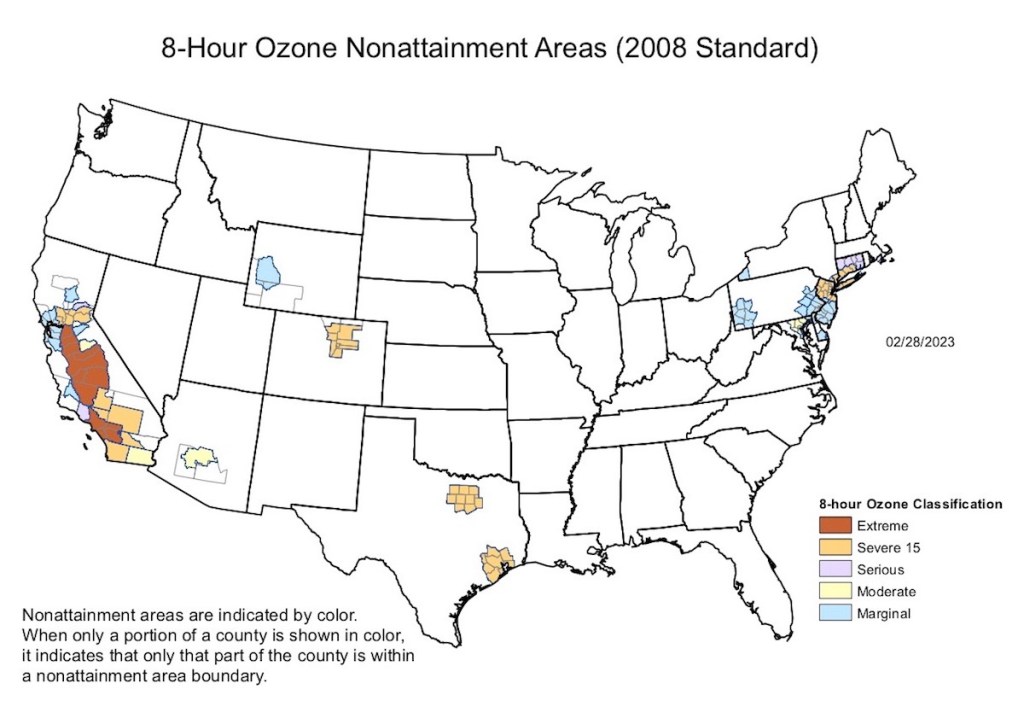
The DEQ and operators in the region have since implemented programs to reduce wintertime ozone to bring the area out of nonattainment status. That included installing a network of air quality monitors and establishing a voluntary ozone response plan with operators in the region. The plan calls on operators to reduce flaring, unmitigated emissions and industrial truck traffic when weather forecasts indicate conditions might be ripe to convert VOCs and NOx into ozone.
The action plan has been activated three times so far this winter: March 7-8 and March 19.
Meantime, operators like Jonah Energy have spent millions of dollars to retrofit facilities to prevent leaks of raw gas and refine operations to reduce emissions and flaring as it continues drilling and producing natural gas in the area. Flaring is when raw gas is ignited at the smokestack to prevent safety hazards.
“We recognize we can’t change [weather] conditions,” DEQ spokesman Keith Guille said. “All we can change are those precursor [VOCs and NOx] emissions. I think it’s worked really well.”
But, Guille noted, there are years when ozone spikes are persistent, most recently in 2019. Still, DEQ believes the region is in good standing, Guille said, and it is “assessing a pathway for submitting a request to EPA in the near future” to remove the nonattainment designation.
As long as there’s plenty of snowcover in the basin, though, there’s a chance ozone can spike, he said. “Industry is definitely working hard with us to go out there and reduce those emissions, and our staff goes out there to do inspection checks.”
This story was updated to clarify Wyoming DEQ’s timing for a request regarding nonattainment status. —Ed

My question is, I worked in the petroleum industry for 40 years. While working and living in the San Joaquin Valley, the oil industry was using off gas from producing wells to power co- gin power plants to produce electricity.Worked and Owned property in Pinedale and why wouldn’t that work there and would that help to reduce pollution?
What about the DEQ ozone monitoring station at South Pass? While prevailing winds normally take the ozone elsewhere, sometimes it comes our way. Has it been a bad winter for ozone in our area, too?
Other factors that contribute to high levels of ozone are the use of wood burning stoves for heat in the winter. When it gets cold and no wind, the smoke just hangs there. Another factor is the pollutants that travel up the Green River from the Trona plants in Sweetwater county. All you have to do is go south from Pinedale on highway 191 while observing the color of the air to the west. An obvious haze travelling north. It isn’t just the oil and gas industry folks.
Emissions from Sublette County energy exploration and production has put public health at risk. The State has conflicted interests. The federal Interior department has a mission to conduct lease sales and perpetuate oil and gas development. The regional EPAs are understaffed and technically limited. State DEQ has a mission that is mixed. “IE make it work environmentally” thus my conclusion is if we want secure public health, if we want a reversal of the negative effects of climate change, if we want no winter ozone in Sublette or any place else then leave the gas in the ground.
It is ludicrous that this remains an on going problem in Wyoming. Residents have played a high price for Wyoming’s love affair with oil and gas. Why do we allow this to continue?