

Lawmakers will soon take a second pass at drafting legislation to ban hemp-derived products like delta-8 — which have similar intoxicating properties as marijuana — while preserving the state’s fledgling hemp industry.
Earlier attempts at threading this needle were scrapped at a September Joint Judiciary Committee meeting in Casper as an unhappy crowd showed up to defend industries many of them felt were just getting off the ground.
“The first draft went too far in terms of causing a threat to our hemp farmers, and we didn’t want to go there,” Art Washut (R-Casper), co-chair of the committee, told WyoFile. “So we got that completely removed. And what we’re focused on now are the delta-8 products, delta-10 products that we’re seeing, advertised and sold at so many locations around Wyoming.”
Both hemp and marijuana come from the cannabis plant, but federal lawmakers have stated they intended to legalize hemp as the non-psychoactive product, often used for its fibers and CBD oil. Many Wyoming officials have backed the state’s growing hemp sector, with Gov. Mark Gordon appearing at a 2019 summit in Casper focused on supporting local ranchers who grow the crop.
“The first draft went too far in terms of causing a threat to our hemp farmers, and we didn’t want to go there.”
Art Washut (R-Casper)
Starting around a similar time, the fledgling delta-8 industry has also proliferated in Wyoming, with stores opening in towns across the state. But lawmakers have shown less interest in supporting those kinds of products.
Drafted by the Legislative Service Office, the latest proposed bill would do a few things. Namely, it would prohibit the addition of “synthetic substances” to hemp and specifies that hemp can’t have more than 0.3% of any type of tetrahydrocannabinol [THC] on a dry weight basis — delta-8-THC included.
The draft defines synthetic substances as “any synthetic THC, synthetic cannabinoid or any other drug or psychoactive substance.”
Lawmakers will discuss the proposed bill at the Nov. 6 Joint Judiciary Committee meeting in Douglas.
Background
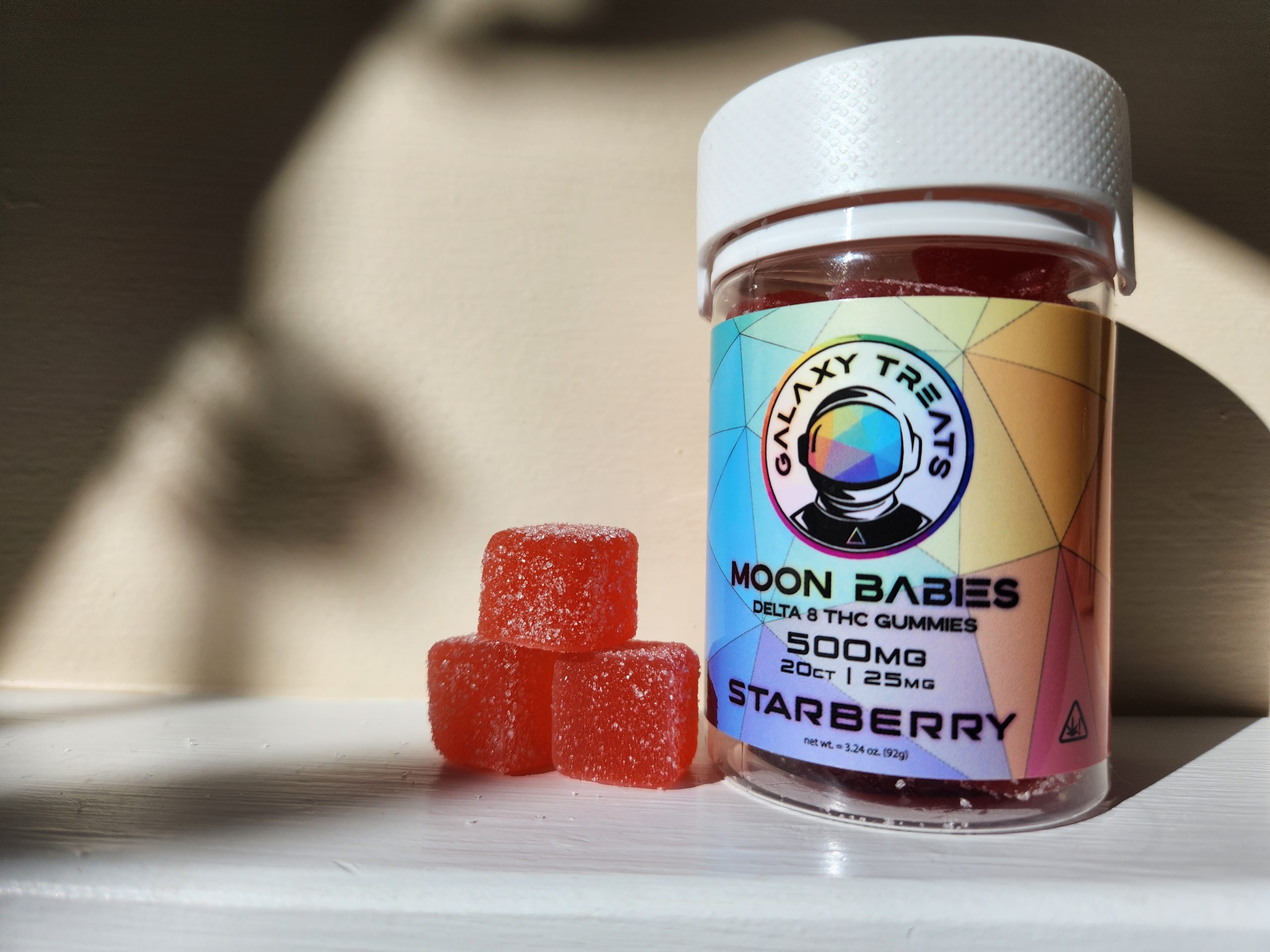
Delta-8 is one of many substances created from hemp plants that can induce marijuana-like effects. Such products include gummies, smokable flowers and vape cartridges.
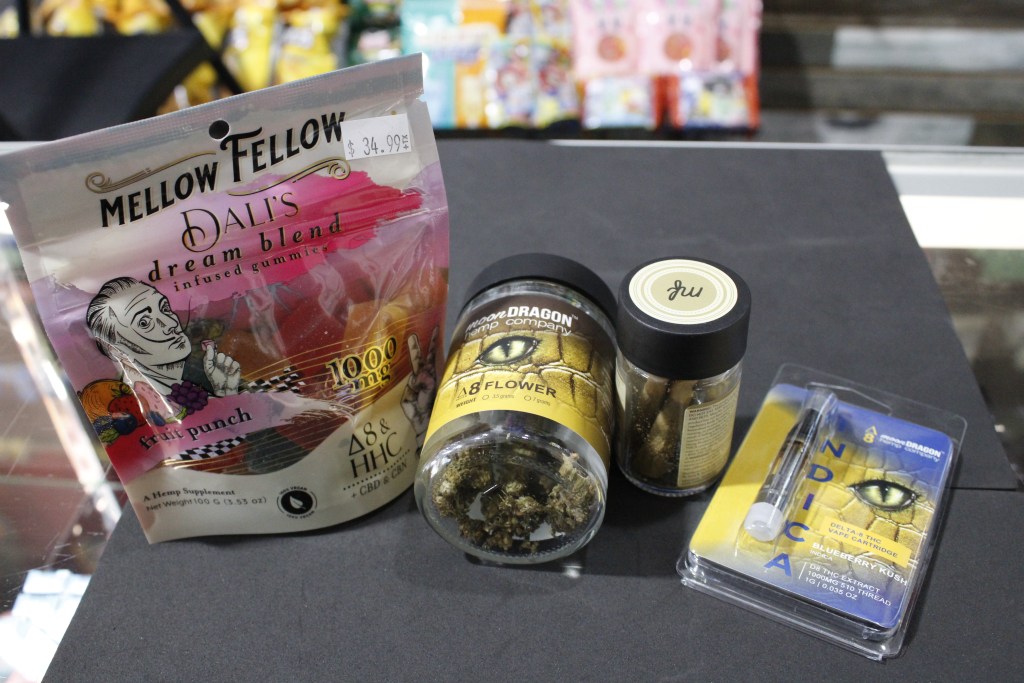
Anecdotally, delta-8 creates less of a high when smoked, earning it the nickname “diet weed.”
These products have fallen through a perceived loophole, stemming from Congress’ 2018 Farm Bill. That federal legislation — from which Wyoming adopted language — made hemp legal as long as delta-9 THC levels are lower than 0.3% on a “dry weight basis.”
By specifying delta-9, many believe Congress left open the door for other hemp-derived THCs like delta-8. Taking advantage of that perceived gap, producers have started creating different — though similarly-structured — THC compounds that produce pot-like effects.
For many head shops around Wyoming, products like delta-8 and delta-10 have been a boon to business, including for the five Platte Hemp Company stores scattered around the state.
Sam Watt co-owns that company with his wife. He’s a veteran with PTSD who has said he benefits from the substance, and largely sells to an older clientele, averaging between 47 and 61 years old. Those under 18 aren’t allowed in the shops, he said.
Upon reviewing the draft bill, Watt said this latest attempt to ban delta-8 and similar substances is still flawed.
“When I read this draft, in my personal opinion, I feel that they are not educated on the cannabis plant,” he said. “I think they are just throwing stuff on the wall verbiage-wise.”
By banning these substances, there will be repercussions to shops, workers, farms and processors around the state, Watt said. He linked this legislation to the larger debate over marijuana in Wyoming, and what he felt could be benefits to individual health and businesses, alike.
Still, Watt is clear that he’d welcome more regulations to make sure labels match products.
“In the hemp industry,” he said, “it’s a free for all. And some of these guys that I meet, they’re dumping who knows what in their gummies and now, I mean, it’s not regulated. And that’s where I push for regulation, and so it’s safe for our consumers.”
“There are folks who would love to see Wyoming become more like Colorado, and then there’s a whole bunch of people that strongly desire that Wyoming never become like Colorado.”
Art Washut (R-Casper)
Federal agencies have raised concerns about delta-8 and similar substances because they haven’t been federally vetted and could be created using harmful chemicals.
In January, there were reports of delta-8 sending Cody teens to the hospital. Last legislative session, a bill intended to limit sales of the product to people 21 and older didn’t get a single committee vote.
Rep. Washut hasn’t heard many reports of hospitalized Wyoming teens beyond those in Cody, he said, but he suspects there have been other incidents that haven’t resulted in hospitalization. However, he said a main concern is that these substances are marketed as legal marijuana alternatives.
“And people don’t want that,” he said. “There are folks who would love to see Wyoming become more like Colorado, and then there’s a whole bunch of people that strongly desire that Wyoming never become like Colorado. And therefore, that’s the genesis of this bill.”
Colorado legalized recreational marijuana in 2012, and several neighboring states have likewise eased their restrictions on the drug. University of Wyoming polling shows growing support here for legalizing marijuana, with more than half of residents saying they would back allowing adults to possess the substance for personal use. An overwhelming majority — 85% — support medicinal marijuana with a doctor’s prescription.
What’s legal again?
Among law enforcement officials, there’s broad agreement that most hemp-derived THC products are produced synthetically. However, small amounts are naturally occurring.
While synthetically made hemp products are already illegal in Wyoming, a Wyoming State Crime Laboratory official has said that workers can’t tell those apart from what occurs in nature.
“There isn’t a scientific test we can do right now to prove [delta-8’s origins],” Sarah Barrett, the lab’s drug chemistry and toxicology supervisor, testified in September.
That means it’s hard to prosecute anyone for selling these products.
On the federal level, there’s also some debate over the legality of hemp substances like delta-8. A U.S. appeals court found that the Farm Bill made delta-8 legal. However, Drug Enforcement Administration officials have stated that they consider such CBD-derived substances illegal.
Federal officials have discussed how to potentially outlaw these products, but when asked whether Wyoming will move ahead with its own legislation as feds work things out, Washut said, “Yes. Short answer.”
At Platte Hemp, Watt said he’s more worried about other drugs, like fentanyl and fentanyl additives, which are killing Wyomingites.
“Fentanyl is getting bigger and bigger and bigger,” he said. “ And these [Wyoming Division of Criminal Investigation] agents and state patrol that catch most of it, they’re overworked.”
At the end of the day, Watt said he hopes he can work with lawmakers to preserve jobs and an industry that’s grown up around these substances. He has concerns that legislators don’t understand the potential economic boon this industry can provide to a state that’s had such a hard time with energy booms and busts, he said.
“And to me, that’s where I’d like to get involved,” he said. “So I can educate them, to show them the data.”

Please be more like Colorado. Wyoming is government money dependent. Colorado is not.
There are a whole bunch of people that don’t want to be like Colorado. I find that statement very telling. Coloradans had the brains and guts to tell the Federal Government that their drug policy is flawed and that citizens can manage naturally occurring plants themselves. Wyomingites always threaten to defy the Feds but fail every time.
I would argue Colorado has not gone far enough as there is no compelling reason to make plants illegal, while there are very strong reasons to keep Meth and Fentanyl illegal. Making plants legal would generate income that could be used to educate and remediate those that cannot manage addiction. It would also free up law enforcement to pursue those pushing the man-made drugs that kill.
Wasting all this time and money on this issue is indicative of the low bar that Wyoming sets for electing its representation.
Good ole’ antiquated legislature. These boomers are so out of touch with reality. They always have that strawman argument ready to fire “we don’t want to become Colorado.” Wyoming will never become Colorado regardless of what these idiots do in Cheyenne; there are no comparisons that you can make to reach a conclusion that Wyoming will be Colorado if they don’t regulate Delta-8. First of all, it’s been legal for years now, and we haven’t suddenly turned into Denver or Fort Collins. Second of all, if they actually to the people they “represent” they’d realize that majority of Wyomingites want legalized THC.
These people hate government regulations except when it’s something they disagree with. Time for change in Cheyenne.
Small government of freedom for the needs of the common man strikes again!