


CASPER—A legislative committee narrowly rejected a proposal Tuesday to involve the state Senate in the selection of Wyoming Supreme Court justices, though some conservative lawmakers are likely to continue scrutinizing the state’s judiciary.
The decision comes amid rising criticism from Republicans of judicial rulings both nationally and in Wyoming, where judges have struck down abortion restrictions and put on hold an expansive school voucher program.
The Joint Judiciary Committee had in May voted to consider a constitutional amendment that — if approved by voters in a statewide election — would require Senate approval of new appointees to Wyoming’s high court. Though lawmakers backing the bill cast it as a restrained step toward holding judges more accountable to the public, opponents said it was a sea change that would have injected partisan politics into the judicial nominating process — and courtrooms themselves.
On Tuesday, a 6-3 majority of House members of the Joint Judiciary Committee voted to advance the bill to the 2026 legislative session. Senators, however, voted 3-2 against the constitutional amendment. A majority of committee members from both the House and Senate must vote in favor of a bill for the committee to officially sponsor it.
Lawmakers can still introduce the bill in the coming session, but it will not have the imprimatur of the judiciary committee.
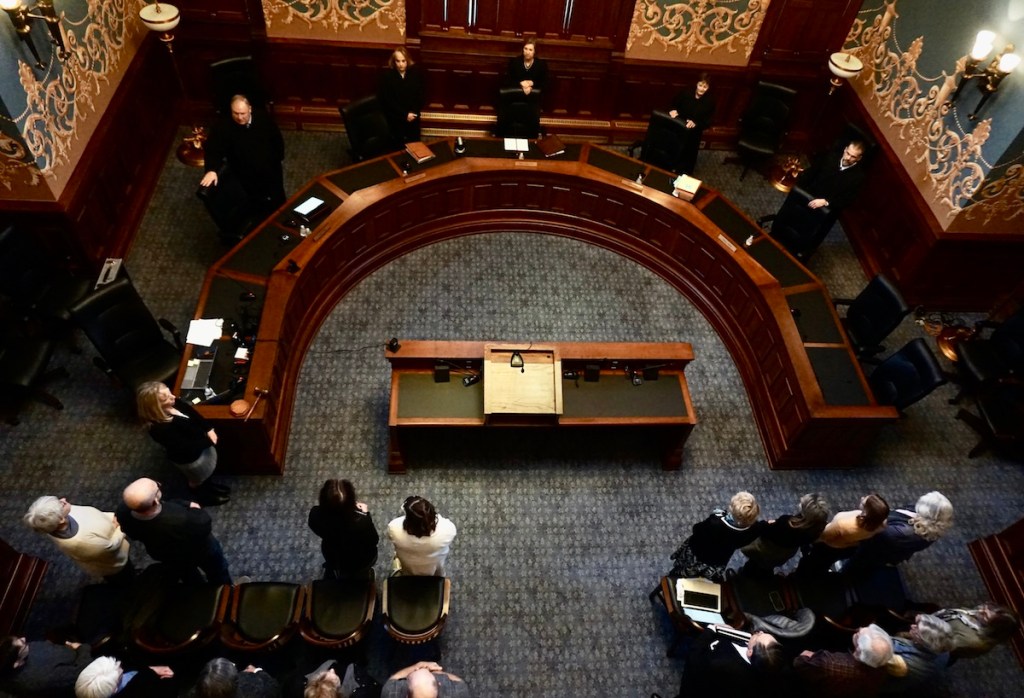
Wyoming jurists mounted a spirited opposition to the proposed constitutional amendment during sometimes tense public comments to lawmakers at the committee meeting. Personal injury lawyers spoke against the bill, as did the attorneys who defend companies and government entities against them. Both groups argued that Wyoming is one of the best states in the country at picking qualified, politically impartial judges, and they asked lawmakers not to thrust themselves into the process.
“Our system isn’t broken, please don’t become the type of activist legislature that is looking for solutions to problems that don’t exist,” Alaina Stedillie, president of the Defense Lawyers Association of Wyoming, said.
But lawmakers, particularly in the House, said they were hearing concerns from their constituents. “We need to determine if it’s just a noisy minority or if this is really a groundswell,” Rep. Tom Kelly, R-Sheridan, said. “The only way to do that is to send it to the people and have them tell us.”
Among the no votes on the Senate were the committee’s two practicing attorneys, Sens. Barry Crago, R-Buffalo, and Jared Olsen, R-Cheyenne. Rep. Ken Chestek, a law professor and Laramie Democrat, also voted against the bill.
The Wyoming Freedom Caucus began to publicly criticize the state’s judiciary this spring, following the lead of President Donald Trump, who has blasted federal judges who ruled against him and called for their impeachment. Caucus representatives have pointed to state judges’ rulings on abortion rights and public education funding that they disagree with as evidence that the judiciary is overstepping its bounds and is out of touch with Wyoming.
“A lack of public buy-in to the judicial selection process has left Wyomingites feeling confused, upset, and blindsided by the decisions reached by many on the bench,” the caucus wrote in a set of blog posts.
Attorneys who testified on Tuesday rejected that assertion. “Where is this coming from?” Stedillie asked the committee. “I don’t believe that there has been any great clamor by the citizenry of this state to say our judicial branch is broken.”
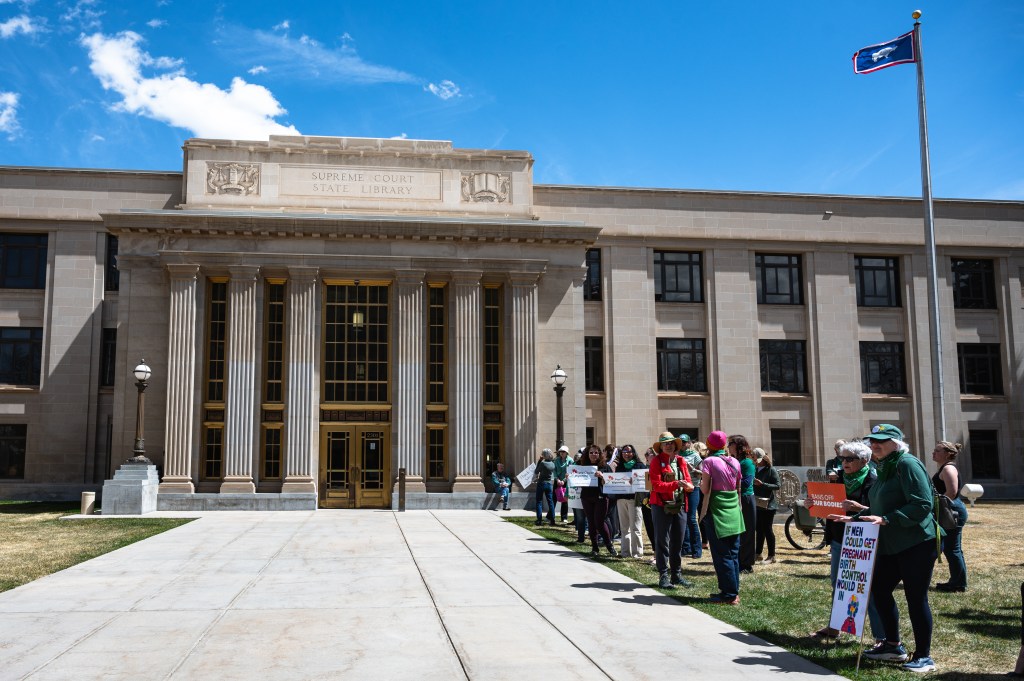
Debate over the judicial nominating process has carried forward through a summer in which many Wyomingites have anxiously awaited a ruling from the Wyoming Supreme Court on whether a complete ban on abortion, brought by the Freedom Caucus, runs counter to the state’s constitution. That ruling is expected at any time.
The most recent available polling by the Wyoming Survey and Analysis Center on the question suggests more residents approve of how the state’s judges handle their jobs than disapprove. In polling conducted last September and October, only 13% of respondents told the center they disapproved of how judges handle their jobs, while more than 40% of respondents said they approved.
Wyoming today operates under what is commonly called the Missouri Plan, where a commission reviews applicants and sends three choices to the governor for a final pick.
The Wyoming Judicial Nominating Commission is composed of six people. Three lawyers are elected by members of the Wyoming State Bar, and three non-lawyers are appointed by the governor. The seventh member, who serves as chairperson and tie breaker, is the chief justice of the Wyoming Supreme Court — a post now held by Lynne Boomgarden.
The three finalists are named, and the governor traditionally waits 30 days before making a final selection, which gives the public a chance to weigh in. Freedom Caucus lawmakers and other conservatives have availed themselves of that window to pressure the governor away from certain nominees in the past.
Citing those unfavored nominees, the Freedom Caucus has labeled both the judicial nominating commission and the Wyoming Bar Association as “a victim of left-wing institutional capture.”
Caucus lawmakers have raised different proposals to fix that alleged bias. They’ve ranged from the drastic — changing the state constitution so that Wyoming voters directly elect judges — to the incremental — pushing the judiciary to make public the names of all applicants for judgeships, not just the three finalists.
Judiciary representatives, including the recently retired state Supreme Court Justice Kate Fox, have indicated they’d consider publicizing those names. Some of the attorneys who testified at Tuesday’s meeting, however, said doing so would diminish both the quantity and quality of applicants. The state’s best lawyers will be reluctant to apply for a competitive judgeship if they know their law firm colleagues, or their clients, will learn they’re considering a career change, those attorneys said.
Lawmakers did not make any proposal to publicize all applicants’ names, which the judiciary could do itself through rule making.


What the FreeDumb caucus and trumpublicans in general don’t understand is that just because they don’t like a decision of court doesn’t mean it’s wrong. They would have us ignore years of training and study of the law legal precedent , because their feelings are hurt. The FreeDumb caucus legislators demonstrate time and again that they do not understand the law or the Constitution, perhaps their efforts would be best focused on correcting the failings of their own branch before they start tring to fix any of the others.
Excellent and accurate article. Wyoming is so fortunate to have a selection process designed to put qualified, non partisan judges on the bench whose fealty is to the law and not politics. An independent judiciary, like clean air and clean water, can be easily lost in service to other things if we don’t give it the value it deserves. Rest assured the Freedom Caucus does not want independent judges. We all need to pay attention.
Our legislators don’t have the brains to pick a judge in a farting contest.