

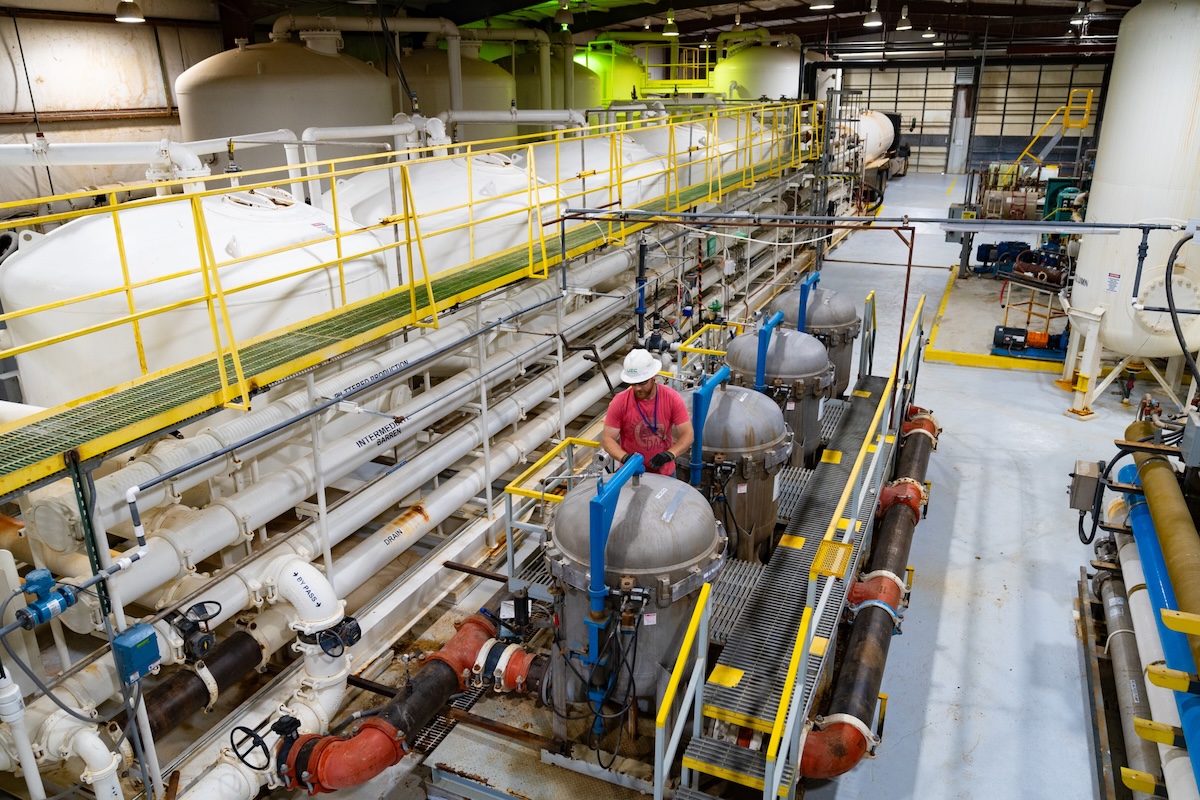
A uranium mining company is asking the state’s top environmental regulator to approve expanded operations in the Powder River Basin.
Uranium Energy Corp restarted the Christensen Ranch in-situ uranium wellfield mine in 2024 and plans to ramp up production of U3O4, or “yellowcake.” Although yellowcake is radioactive, it undergoes two separate enrichment processes — both outside Wyoming — before it becomes fuel for nuclear power plants.
Texas-based Uranium Energy Corp is asking the Wyoming Department of Environmental Quality to expand the border of existing water quality exemptions within the K sandstone aquifer, which ranges from 250 to 600 feet deep in the area, according to state documents.
Regulators authorize aquifer exemptions to allow mining companies to inject fluids into underground water sources when high natural salinity or the presence of hydrocarbons makes the water unsuitable for human consumption now or in the future.

The DEQ and U.S. Environmental Protection Agency, dating back decades, have exempted about 2,859 acres within the aquifer related to the operation. The new exemption under consideration would add about 352 acres — an 11% expansion, according to the state.
Previously, the aquifer exemptions applied to open-pit mining.
“The requested aquifer exemption is needed to update the permit for [in-situ recovery] operations,” the company told WyoFile via email. “The exemption applies to a small area within the existing project boundary already surrounded by areas where aquifer exemptions have been granted.
“The aquifer associated with this operation is not considered a potable aquifer,” the company added. “It does not serve as a source of drinking water.”
The DEQ is accepting public comment on the proposed action through Aug. 3. Comments can be submitted via the DEQ’s electronic portal, or sent in the mail to:
Lily R. Barkau, P.G., Groundwater Section Manager
Wyoming Department of Environmental Quality, Water Quality Division
200 West 17th Street, 2nd Floor, Cheyenne, WY 82002
In-situ uranium mining
Rather than digging a pit, in-situ uranium mining involves drilling a series of wells into a shallow aquifer that contains uranium ore deposits. Oxygenated water is flushed into the ore to dissolve it, then the mixture is pumped to the surface where the ore is separated in a water treatment plant.
Such operations are required to ring the mining area of the aquifer with monitoring wells, clean up the production water and return the majority of it to the aquifer.
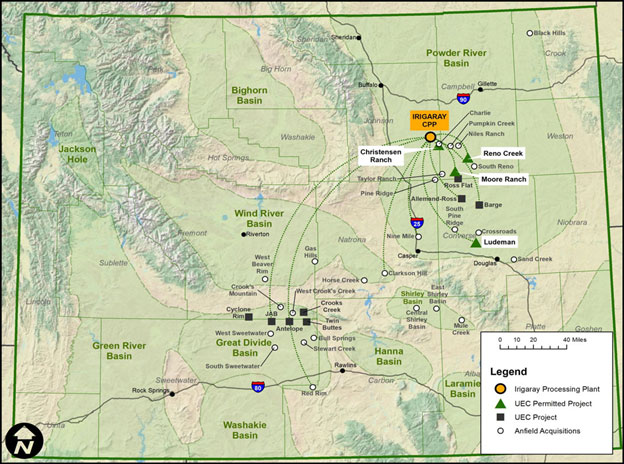
In-situ mining is the preferred method among the handful of uranium companies that are reviving legacy operations in Wyoming, including Uranium Energy Corp’s Christensen Ranch mine, which straddles the Johnson and Campbell county border near the Pumpkin Buttes.
After resuming operations there in 2024, the Texas-based company shipped its first drum of yellowcake in 2025, according to Uranium Energy Corp’s website. The company’s Wyoming operations include the Irigaray processing plant near the Christensen Ranch mine and the Sweetwater “hub and spoke” facilities northwest of Rawlins.
The company claims to have the largest permitted uranium resource base in the U.S., enough to eventually reach 12 million pounds of annual production via its Wyoming and Texas operations.
At one time, Wyoming was the largest uranium-producing state in the nation. After topping 12 million pounds of annual yellowcake production in 1979, production in the state fell dramatically in the 1980s. Wyoming operations struggled to withstand several market price fluctuations until production essentially blinked out in 2019, according to one industry official.
Several legacy uranium mines in Wyoming are being reactivated on what industry officials say is a more sustainable price due to increasing demand for nuclear energy.
Of the six active uranium mines in the U.S., four are in Wyoming, according to the U.S. Energy Information Administration.

Sure when we take water from the deep non potable aquifers there is no danger that the aquifers which have potable water will drain into the deep aquifers. NOT.
Dustin would you please do some investigation into cones of depression
Hmm…..A plan to inject toxic (likely) crap into a relatively shallow aquifer. Sounds like something the Wyoming DEQ should have no problem with.
UEC infers that it is a Texas based organization when it is actually based in Canada and the original parent company was Peabody Coal doing business in Canada. They (Peabody) saw the interest in Uranium and decided to get involved. UEC moved to Texas because Texas is an agreement state, which means they (UEC) did not have to deal with the USNRC. Their track record there is a matter of record on the “WISE-Uranium Project” site which can be accessed on the internet. A very well sourced site for anything and everyone involved in uranium in Wyoming and world wide.